176 blog articles for ‘Nam,’

Member updates

ChangeKitchen CIC CEO named as one of 2026’s leading UK female founders

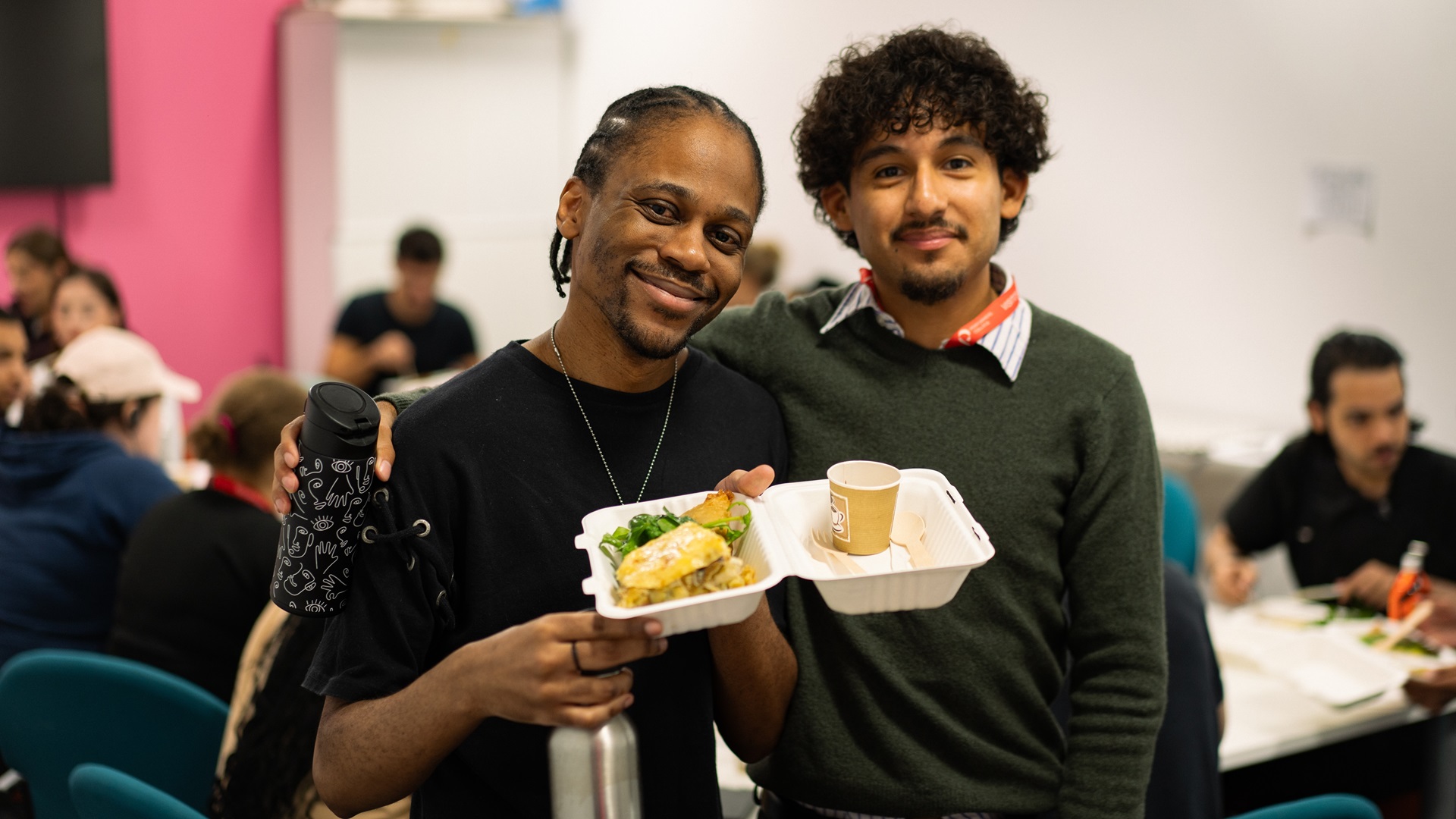
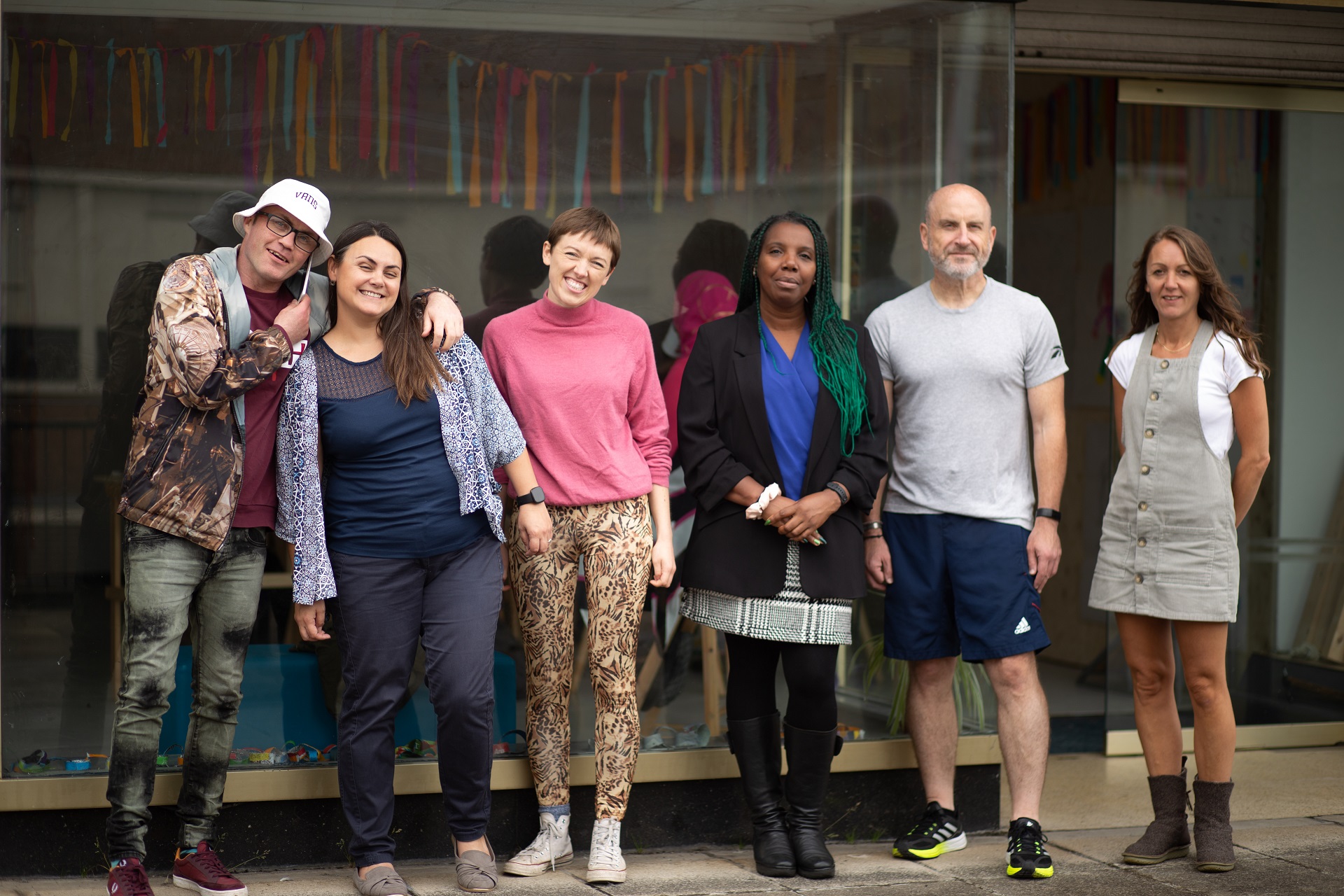
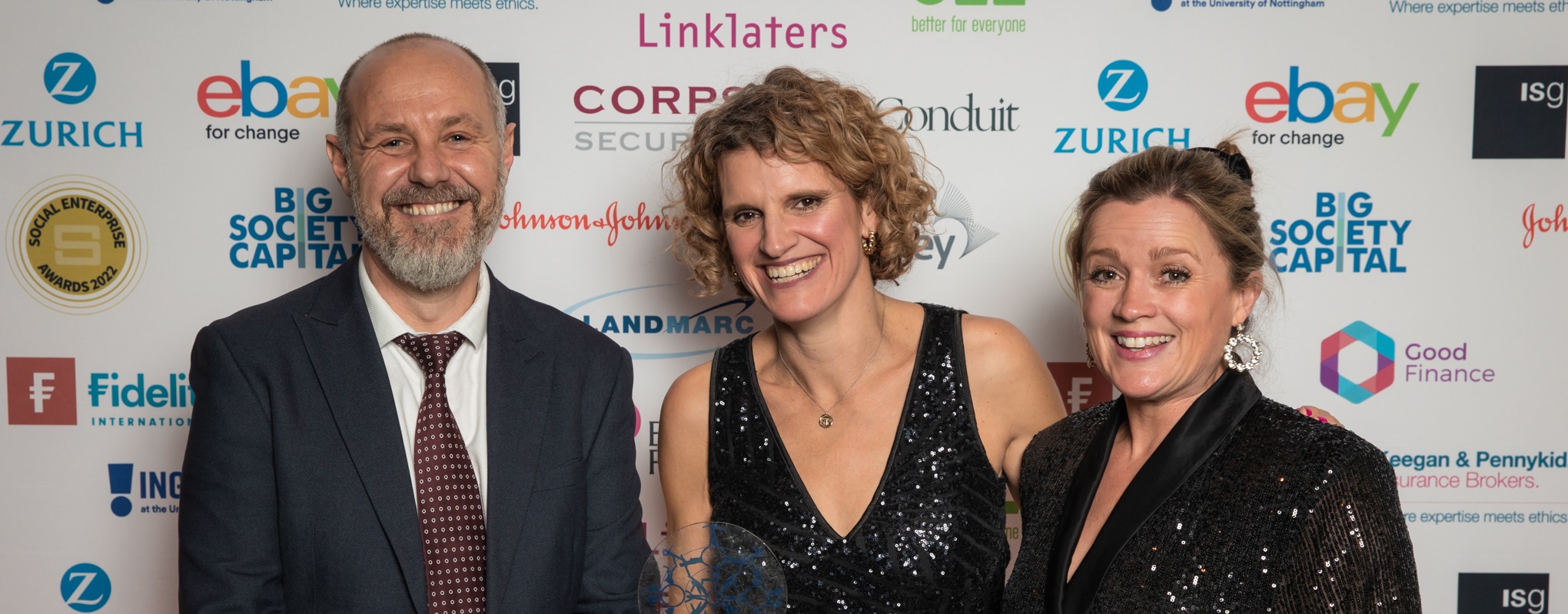
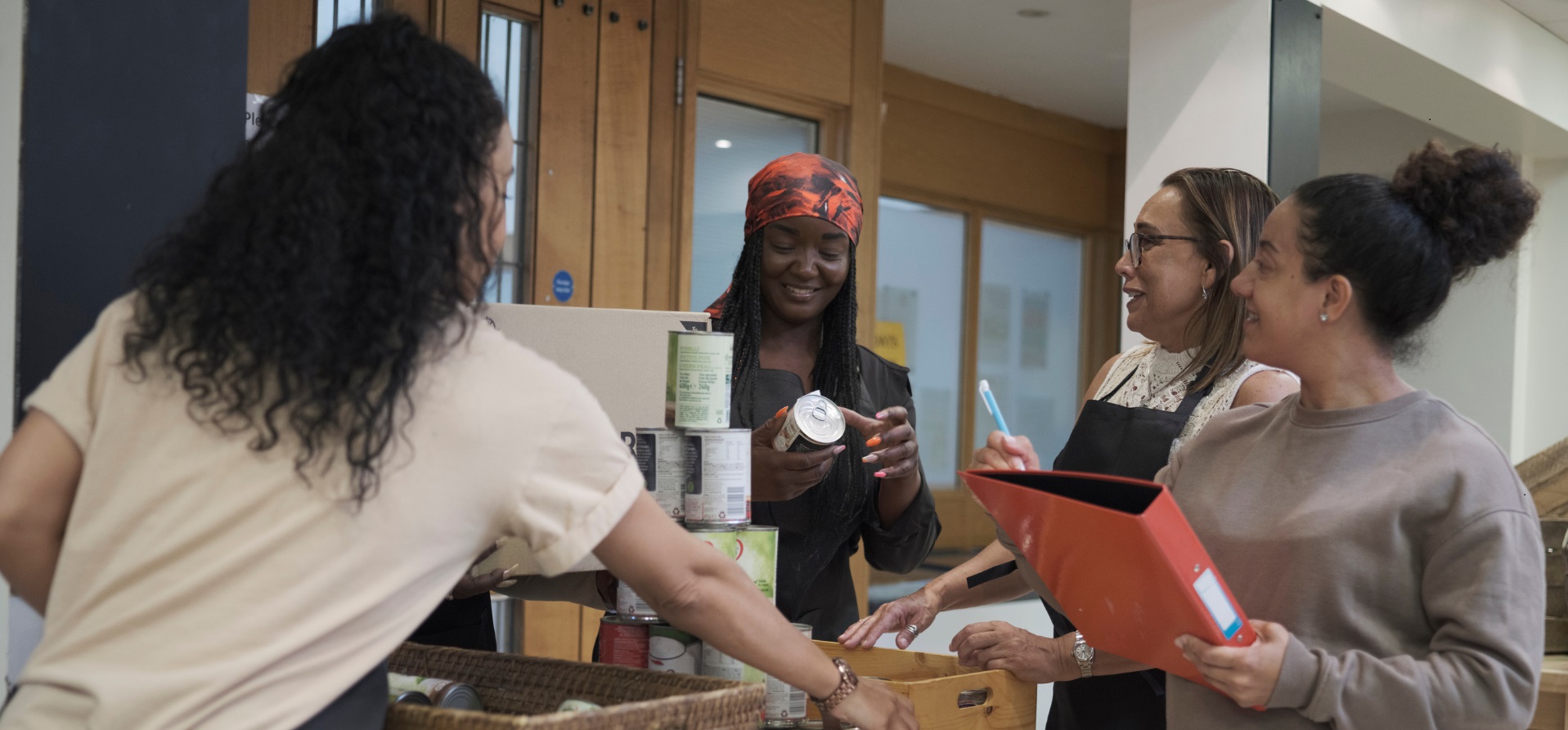
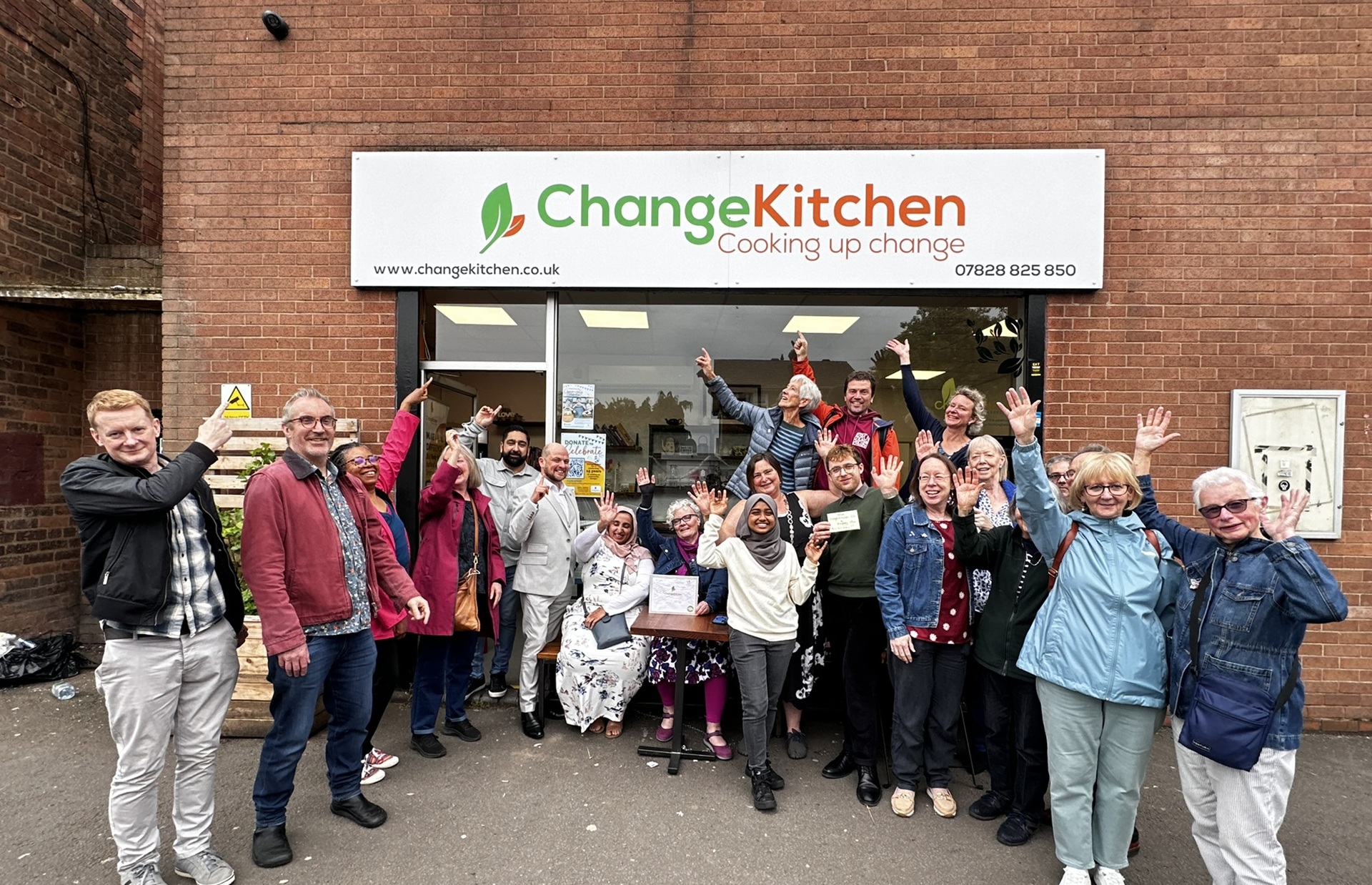
Dr Birgit Kehrer, founder of award-winning ChangeKitchen CIC based in Balsall Heath, Birmingham, has been recognised as one of the UK’s 100 most inspiring female entrepreneurs. Birgit, who founded her business in 2010, will be featured alongside leading female founders from across the country as part of Small Business Britain’s f:Entrepreneur #IAlso100 campaign, which celebrates the multi-achievements of women running businesses in the UK. The campaign celebrates 100 exceptional women across the UK who are driving innovation, growth, and positive impact in their communities, while running successful businesses. Birgit is being profiled for her achievements as a leading social entrepreneur committed to tackling food injustice one climate-friendly meal at a time, and providing volunteering, training and work experience opportunities to those marginalised from recognised, more mainstream, employment routes into the hospitality sector. On being featured in this year’s #IAlso100 lineup, Birgit said: “I am genuinely humbled, and delighted, to be named in this prestigious national list of female entrepreneurs. Looking at those who feature in the 2026 list, there are many female leaders who are incredible role models and whom I find equally inspiring.” “Being recognised through awards such as this f:Entrepreneur 100 is so much more than just a ‘nice badge’ – it helps give people, particularly women, a voice and an aspiration to achieve more. I’m privileged to have collaborated with, and supported, some wonderful people through ChangeKitchen CIC and our work as a professional, sustainable catering service and Kindness Café specialising in plant-based menus.” Launched in 2017 by Small Business Britain, the f:Entrepreneur campaign aims to raise greater awareness of the impact of incredible female business owners across the country, and help provide inspiration and role models to the wider small business community.  “It is brilliant to feature Birgit in this year’s #IAlso100 campaign. All of the female entrepreneurs in this year’s line-up are inspirational and remarkable role models,” said Michelle Ovens CBE, CEO and Founder of Small Business Britain. “Their creativity, leadership, and community impact show exactly why supporting female founders is so important, not only for the UK’s economic growth but for the positive difference they make to wider society.” The #IAlso100 campaign offers a host of events, training, and networking opportunities to boost skills, capability, and confidence.  Female entrepreneurship continues to make a powerful economic impact, with estimates suggesting up to £250 billion could be added to the UK economy if women started and scaled new businesses at the same rate as men.1 To view the full list of the 100 female business owners featured in this year’s f:Entrepreneur #IAlso100 campaign, visit https://f-entrepreneur.com/ialso-100-2026/. About ChangeKitchen CIC A pioneer of climate-friendly, socially-driven catering ChangeKitchen CIC is widely recognised as the Midlands’ only fully climate-friendly catering social enterprise, delivering high-end corporate, private and third-sector catering while creating deep, measurable social impact. Over the past fifteen years, ChangeKitchen CIC has become a quiet powerhouse in Birmingham’s social economy, using food as a bridge into opportunity, dignity and community. Their work includes: 95,000 free meals cooked and distributed since March 2020, with 200 to 400 meals still provided weekly. Nearly 10,000 bespoke emergency food parcels delivered to people in crisis. 20 to 50 supported work placements offered every year to people furthest from the labour market. Growth from 2.5 staff to 12, many of whom joined following supported placements. Employment of survivors of modern slavery through partnership with the Jericho Foundation’s Equiano Programme. 50 to 100 tonnes of surplus food saved from landfill annually. A fully climate-friendly kitchen powered by low-carbon energy, composting, recycling and zero-waste principles. changekitchen.co.uk

09 Jan

Continue reading

3 min
Member updates

PossAbilities named one of The Sunday Times best places to work 2025

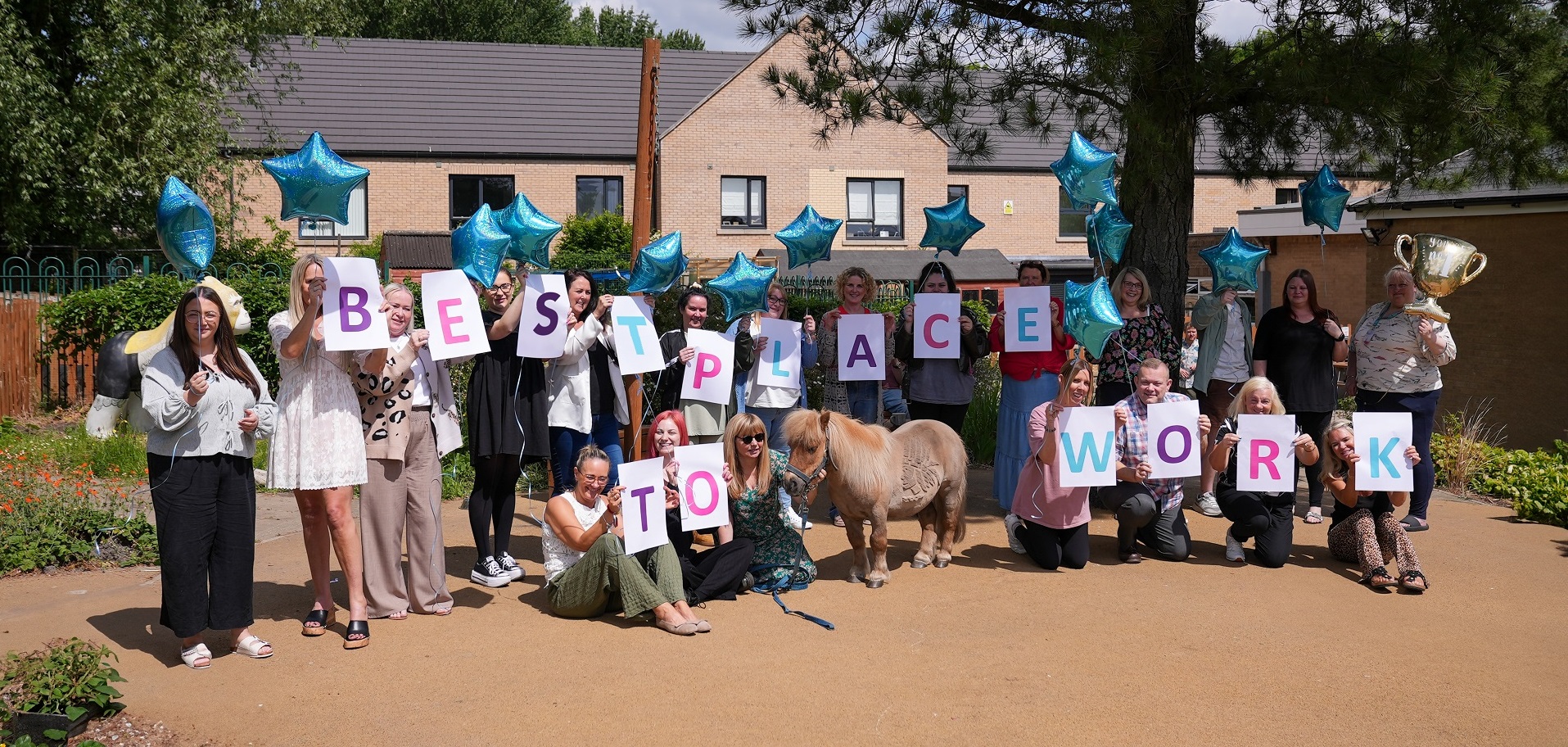
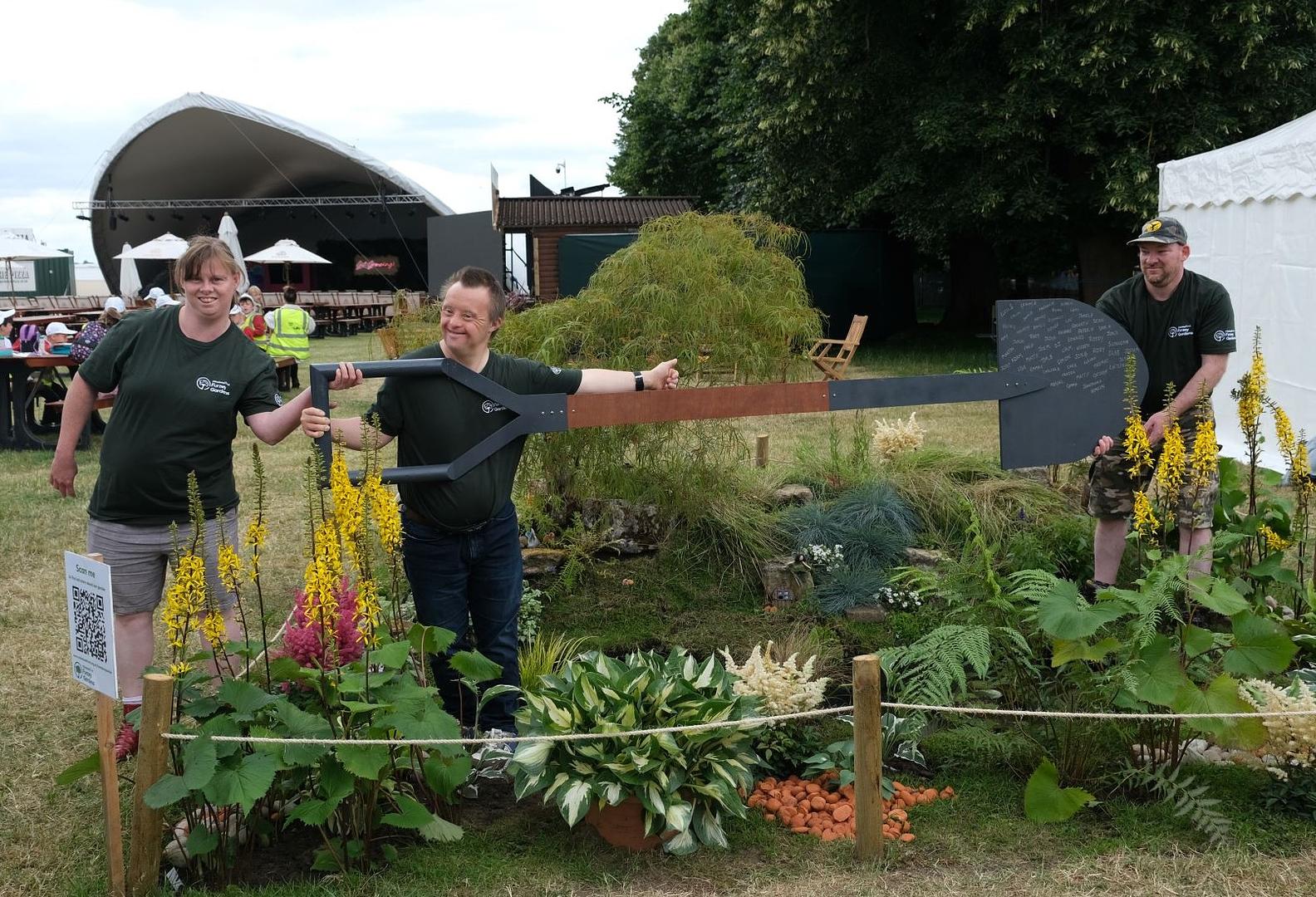
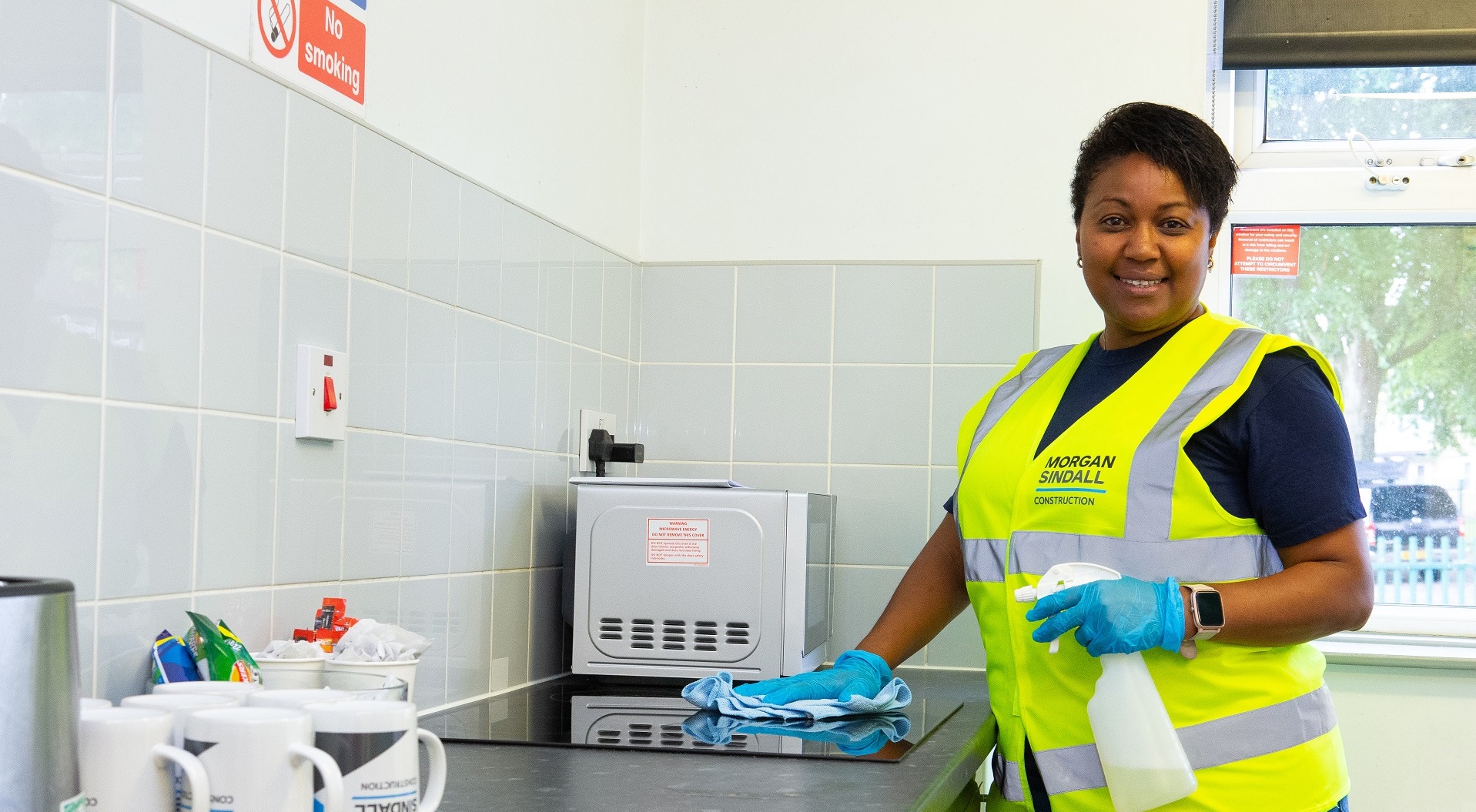
PossAbilities, the vibrant social enterprise on a mission to help people “live the life they choose,” has been officially named one of The Sunday Times Best Places to Work 2025 and they’re absolutely buzzing. The award celebrates outstanding workplaces across the UK, highlighting organisations that lead the way in employee engagement, wellbeing, inclusion, leadership and team spirit. Even more impressively, this was PossAbilities’ first ever year entering the awards and they’ve gone straight into the Big Organisation category with a bang! Unlike traditional awards, this recognition isn’t handed out by a judging panel, it’s earned through honest, anonymous feedback from the people who know the organisation best: its staff. PossAbilities people shared what it’s really like to work there, and the message was clear: this is a workplace full of heart, humour, and purpose. At the core of PossAbilities’ work is a powerful mission of supporting vulnerable people to live independently, connect with others, discover passions and build fulfilling lives . But that commitment doesn’t stop with the people they support it extends to the people doing the supporting too. Professor Donna Hall CBE, Chair of the Board, said: “We are incredibly proud of our talented team and everything they deliver. This recognition is a direct result of their passion, commitment, and the exceptional leadership of our incredible CEO Rachel Law, her team and across PossAbilities. We care deeply about the work we do, and just as much about creating a happy, inclusive, and inspiring workplace where everyone can thrive.” From support workers and coordinators to the back-office wizards who keep everything ticking, PossAbilities is powered by people who bring compassion, creativity and energy to their work every day. And that energy is infectious, shaping a culture that’s supportive, forward-thinking, and fun (yes, fun is allowed at work). This Sunday Times award confirms what PossAbilities already knew: that making a social impact and being a great place to work aren’t mutually exclusive, they’re a perfect match. possabilities.org.uk About PossAbilities PossAbilities are a social care organisation delivering a range of services to adults across the Northwest and West Yorkshire, including supported living, outreach, day services, shared lives, short breaks and an employment service.  We support individuals to live the life they choose.

28 May

Continue reading

2 min

Member updates

TCES named as 1st online special school in the country to pass quality inspection

TCES National Online School – whose pupils have special educational needs, with many at risk of becoming ‘ghost children’ through missing out on school entirely - has been named as the first online special school to be accredited under the Department for Education’s new Online Education Accreditation Scheme (OEAS).  The clampdown scheme was launched in response to growing concern about the quality and safety of an unregulated and rapidly growing online education sector. In a blog post explaining the scheme, National Director of Education, Christopher Russell, has identified the risks as: ‘Anyone - qualified or not – could cobble together an unsafe platform, plan a few lessons, and start to charge fees to unsuspecting parents. That’s bad for children, bad for their parents, and it's also unfair for the good online providers that are proud of their work and welcome independent oversight.’ A two-day inspection, during which inspectors spoke to children, parents and the Local Authorities who fund TCES National Online School places, concluded that the school had met all OEAS quality standards: ‘Led by the proprietor, leaders and staff are driven by a strong moral purpose to improve children’s academic and pastoral outcomes. They expertly intertwine education and therapy, working tirelessly to identify, reduce, and often, eliminate the barriers to learning children have faced.’  ‘In line with TCES’ other schools and services, TCES National Online School provides for pupils’ holistic development through a five-part curriculum: academic and vocational, enrichment, engagement, therapeutic and pupil leadership. The curriculum is designed to meet pupils’ educational, therapeutic and SEMH needs and is mapped against the targets in pupils’ EHC plans. When joining the provider, pupils are enrolled as full-time learners, with timetables specific to their needs. As they develop trust in their tutors and build in confidence, pupils access an increasing range of learning opportunities.’ Welcoming the first-of-its-kind quality mark, TCES Founder and CEO Thomas Keaney says:   ‘Being the first online special school to achieve the Department for Education’s quality mark is a huge achievement for my team. It proves that we’re doing what we set out to; provide a first-class, well-rounded education for children with special needs, anxiety and other challenges that make it impossible for them to attend school in person.   ‘Just as importantly the quality mark provides vital reassurance for families and Local Authorities. Now they can look for an online provider with the OEAS quality mark and know that we meet the standards demanded by the Department for Education.’ 10-year-old Daniel has a diagnosis of autism and ADHD and has been studying with TCES National Online School since May 2023. Prior to joining TCES, Daniel’s attendance at his mainstream primary school had fallen to around 50% and getting him into school had become increasingly difficult for his mum Louise, who says:  ‘I used to dread waking up in the morning to get Daniel into school. Sometimes I couldn’t get him there until midday or 1pm.  I felt like I was failing as a mum because he was suffering so much. I want him to have an education, but not at the expense of his mental health. Daniel could certainly have become one of the so-called ‘ghost children’ without TCES National Online School. His school said they couldn’t meet his needs, I would have had to take him out and maybe try home-schooling, but I don’t have any training in that area. Everything could have become very, very difficult for us both. Since he’s been with TCES, I’ve seen Daniel thrive and be independent. He’s excited rather than stressed. He’s calmer, happier, he knows he’s in a safe environment and doesn’t feel threatened.’ TCES CEO Thomas Keaney continues: ‘Most TCES National Online School pupils have Education Health and Care Plans (EHCPs) owing to their medical diagnoses, special needs, or mental health challenges. Often, they are victims of a broken system which has seen them permanently excluded with no other school that will take them, or waiting years for a special school place in a sector where chronic underinvestment means that need far outstrips supply.  For these families, online school is not a lifestyle choice, a nice to have, it’s quite simply the only way that their complex and vulnerable children can access the education they are entitled to. With more than 36% of children with EHCPs persistently absent, and more than 3,000 reportedly waiting for a special school place, it’s high time we stopped thinking of attendance in a physical school as the only solution. Today is a first for the online education sector, and I hope it sends a clear message that online special education – be it interim or permanent – is a viable option for the future. Regulating the sector must be just the start of the journey for the Department for Education. Next it must consult, invest, and plan for the expansion of state-funded online special schools, rather than allow a two-tier online school system to open up where only those parents who can afford it get the specialist education their children deserve.’ About TCES TCES National Online School has been providing a full online curriculum and school experience to pupils since 2020. It is part of the family-owned, social enterprise group, The Complete Education Solution (TCES). TCES was set up in 1999 by founder and CEO Thomas Keaney whose authentic commitment to inclusion means that no child has ever been permanently excluded in the Group’s 24-year history, and there are no fixed term exclusions either.  Increasingly, pupils referred to TCES National Online School have been out of school for long periods, and at substantial risk of becoming ‘ghost children’ and/or being drawn into criminal and other forms of exploitation owing to a chronic lack of support for them and their families. Working to the same therapeutic education principles used in TCES bricks and mortar schools (rated Good with Outstanding features by Ofsted) TCES National Online School aims to prepare pupils to ‘step down’ into physical mainstream or special schools wherever possible. Pupils attend TCES National Online School for a minimum of six weeks, with the average placement lasting 28 weeks. However, pupils also attend for longer periods where appropriate. The OEAS inspection report confirms that ‘no pupils leaving the provider [TCES National Online School] become NEET’ (not in education, employment or training).

18 Jan

Continue reading

5 min

Member updates

Homeless startup named one of UK’s Top 15 startups by LinkedIn

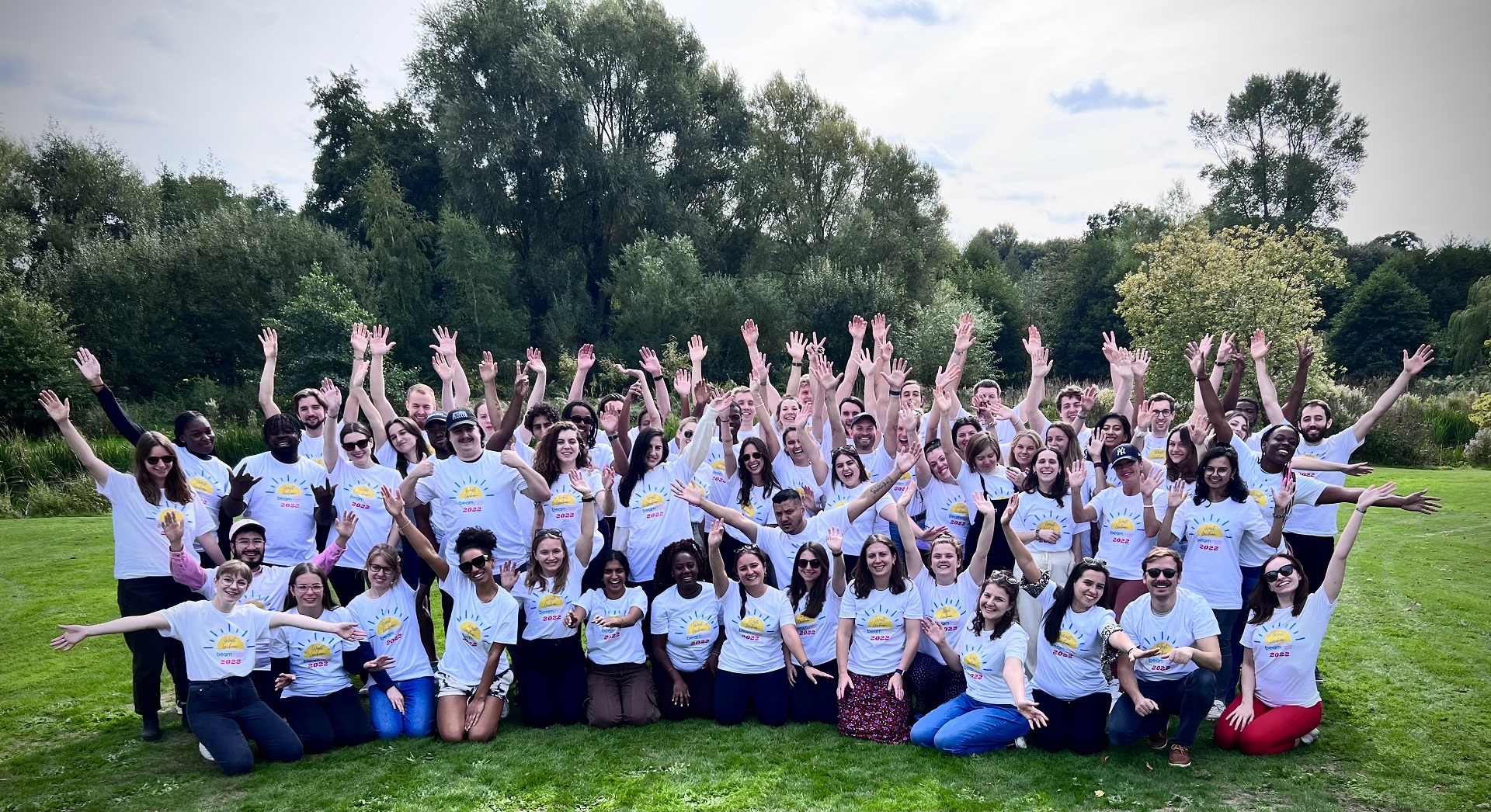
28 September 2022 Beam, a social impact startup supporting homeless people and refugees into stable jobs and homes, has been named one of the UK’s top 15 startups by LinkedIn. Other companies on LinkedIn’s 2022 list include Monzo, Revolut, Multiverse and Octopus Energy. LinkedIn’s prestigious annual list, now in its sixth year, features 15 UK companies that are rising to the challenges of the moment and continuing to innovate and gain attention in 2022. Launched in 2017, Beam uses crowdfunding to remove the financial barriers facing homeless people and refugees. It then matches them with forward-thinking landlords and employers like Arriva, Bupa and Pret. Last month, the company reached a milestone of supporting 1,000 people into stable jobs and homes.  Beam’s 70-person team is headquartered in Hoxton, East London but operates in England, Scotland and Wales with ambitions to operate globally. Alex Stephany, Founder & CEO of Beam, said: “Over the past 12 months, the Beam team has more than doubled in size and continues to attract talent from the world’s best startups and scaleups looking to use their skills to accomplish truly meaningful work. Beam’s goal is to become the most positively impactful company in the world, and redefine the positive role that business can and should play in society. Being named by LinkedIn as one of the UK’s top 15 startups is an exciting validation that we’re on the right track.”  LinkedIn Top Startups leverages exclusive LinkedIn data focused on member actions on the platform, including employment growth, engagement with the company and its current employees, job interest, and attraction of top talent. More information on this year’s winners can be found here. beam.org

28 Sep

Continue reading

2 min

News and views

The impossible deal

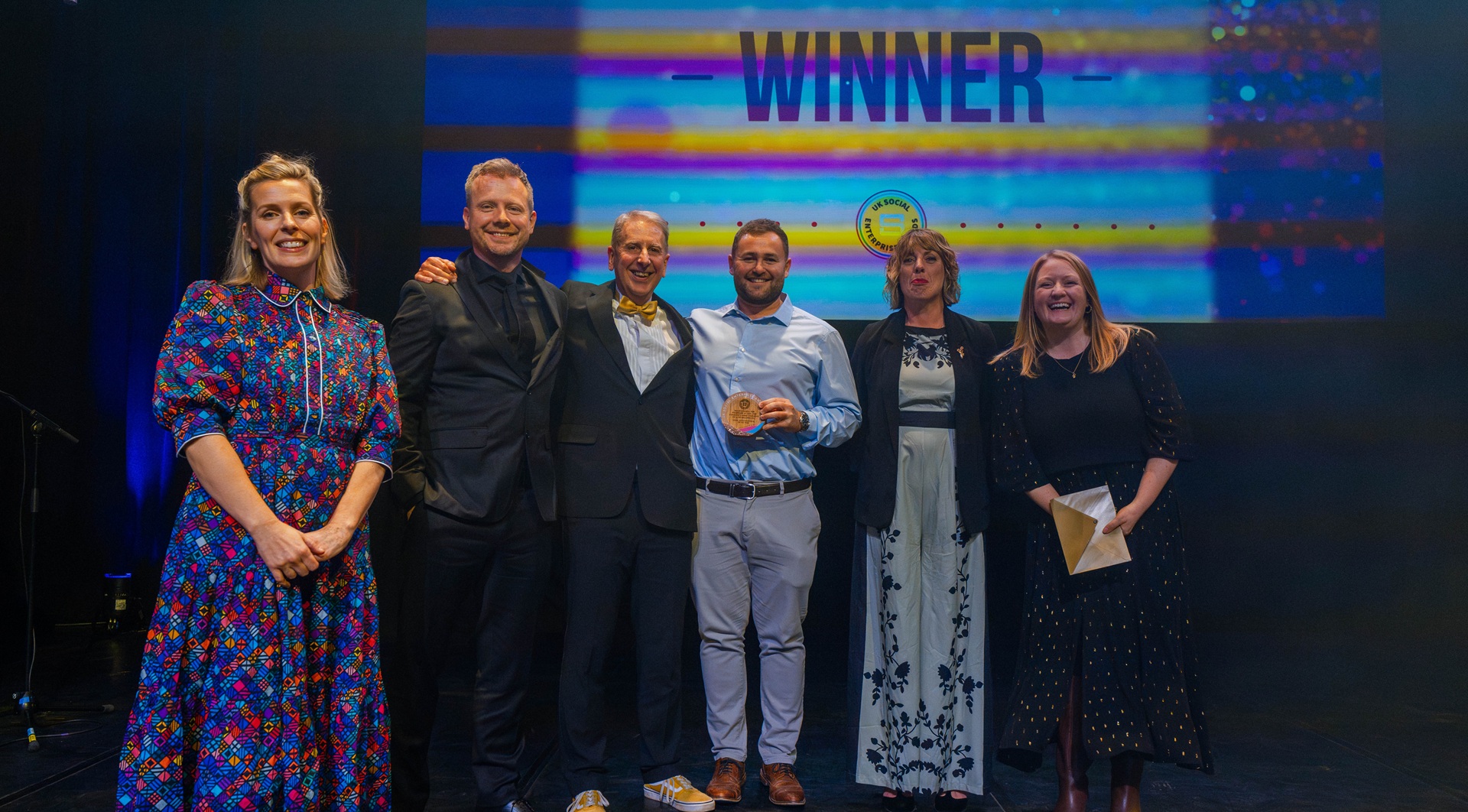
Most lenders would reject an applicant with no track record of the project they needed £300K for. But WCVA is no ordinary lender. We spoke to one of the winners of the Social Investment of the Year award at last year's UK Social Enterprise Awards to find out how it happened. When Tai Heulwen CIC – the name translates from Welsh as "sunshine houses" -approached WCVA's social investment team, they had an idea about creating a children’s residential home, but not much more. No property in mind. No successful track record in that sector. Just a vision: to open a new residential home for children in care in Wales, run on social rather than profit-driven values.  For most lenders, that conversation might have ended pretty quickly.  "It was going to be 100% finance for a startup organisation," says Alun Jones, who leads WCVA's social investment work. "From a lender's perspective, you've got no guarantee it will be signed off by Care Inspectorate Wales as suitable premises. And you've got no guarantee the local authority will actually place anybody there."  The risks didn't stop there. With months of renovation work ahead and no income coming in, interest would simply roll up, meaning the borrower could owe more by the time they opened than when they started.  So why did WCVA say yes?  The legislation changing everything  Part of the answer lies in a seismic shift in Welsh policy. New legislation means that, within a five-year transition period, all residential childcare in Wales must be delivered by local authorities, charities, or not-for-profit organisations. To prevent profiteering from looking after vulnerable children, the private sector is out.  "The legislation is something of a challenge to the sector to make it work in a practical sense," says Jones. "It’s up to us as the sector to find some solutions. Somebody has got to start taking some risk. And we thought, well, why not us?"  WCVA had done something similar a decade earlier and knew it could work. But this time, Jones saw a smarter way to structure the deal, one that would dramatically reduce the risk for everyone involved.  The missing piece  WCVA was already lending to a second organisation: Community Impact Initiative (Cii), a social enterprise whose model involves buying properties, renovating them, and either renting them out long-term or selling them on. Cii had the skills, the experience, and critically: a strategic ambition to become a long-term property owner.  Jones put two and two together. "I said, why don't the two of you get together? Because this sounds like the perfect solution. I'll happily lend money to a builder who knows what they're doing."  The structure they landed on was elegant. Cii would buy and renovate the property to Tai Heulwen's specification. If it gained approval from Care Inspectorate Wales, Tai Heulwen would become the tenant, which suited them perfectly, since they'd concluded they were a childcare company, not a property company. And if approval was never granted? The enhanced fire safety spec, such as having sprinklers and reinforced doors was the only real difference from a standard residential home. Cii could rent it out or sell it on. The downside was manageable.  "Putting the two together took not all the risk, but a huge lump of the risk out of the whole process," says Jones. How the money works The final loan structure was split across both organisations. Tai Heulwen received around £120,000 to cover furnishings and the revenue costs needed to bridge the gap between opening and receiving their first council payments.   Cii received £200,000 over 25 years for the property purchase and renovation, secured against the building itself. Both loans carry an initial base rate of 7%, fixed for the full term, with discounts available for paying the Real Living Wage and committing to a climate action plan.  The plan is for WCVA to eventually hand Cii's loan over to Ecology Building Society (another socially-minded lender) once the property is tenanted and proven. That frees up WCVA's capital to fund Cii's next project.  The build has hit some bumps - a scaffolding contractor went under, causing delays - but the home is now expected to be completed by summer 2026 and will accommodate up to five children. Recognition on the national stage The deal caught the attention of judges at the UK Social Enterprise Awards, where WCVA, Tai Heulwen and Cii were named joint winners of the Social Investment of the Year award - the second time WCVA has taken the prize.  For Jones, the win meant more than the trophy. "We go under the radar a little bit and just bump along doing what we think is right," he reflects. "To go to a UK awards and win it — you go, actually, we've got a reasonable idea of what we're doing here." UK And with Wales's voluntary sector now tasked with filling a gap that legislation has created, WCVA hopes this deal is more than a one-off. It's a proof of concept and an example to governments everywhere of what can be achieved when socially minded investors and social enterprises work together. 

20 Apr

Continue reading

4 min

News and views

The rules are there – so why aren’t councils using them?

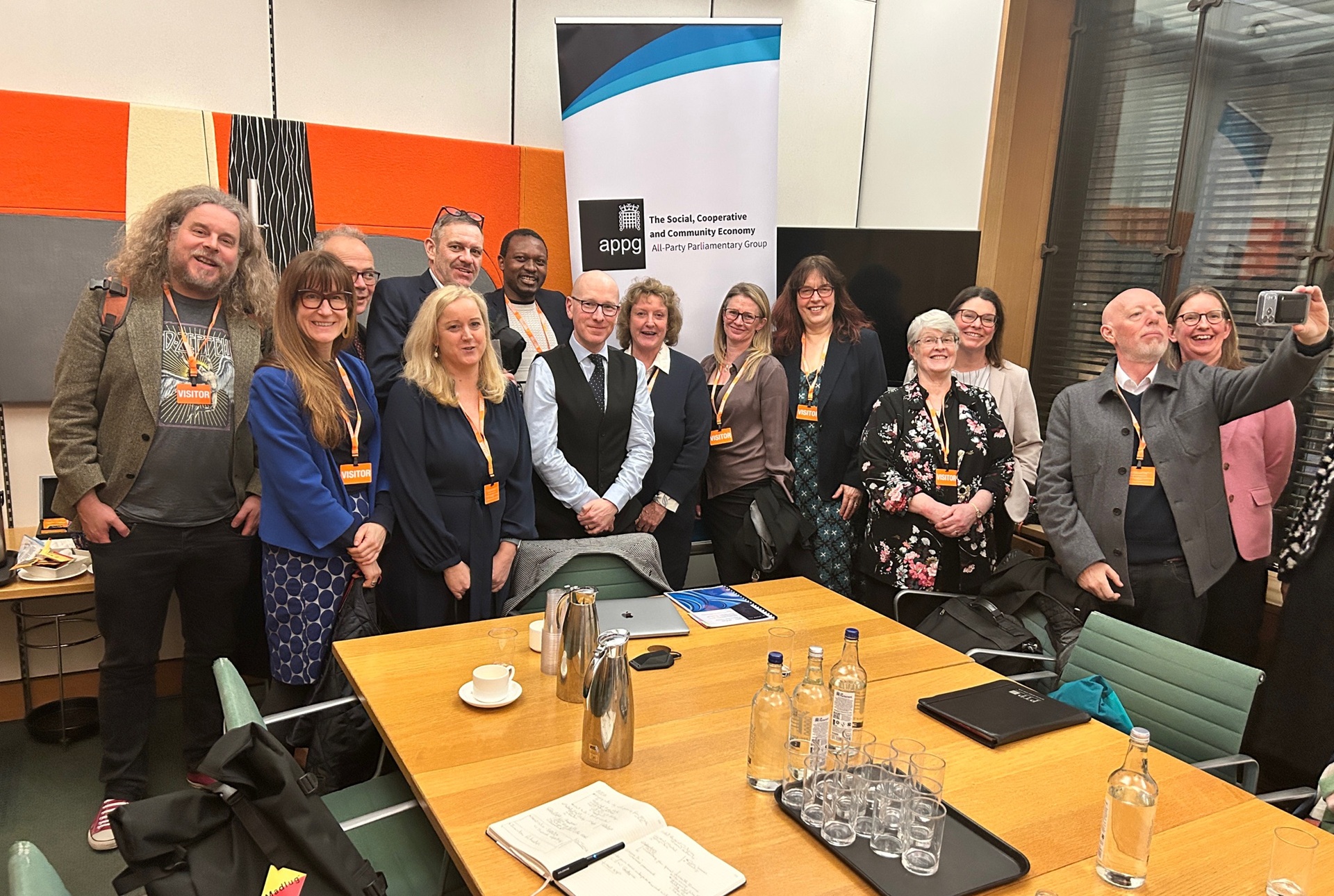
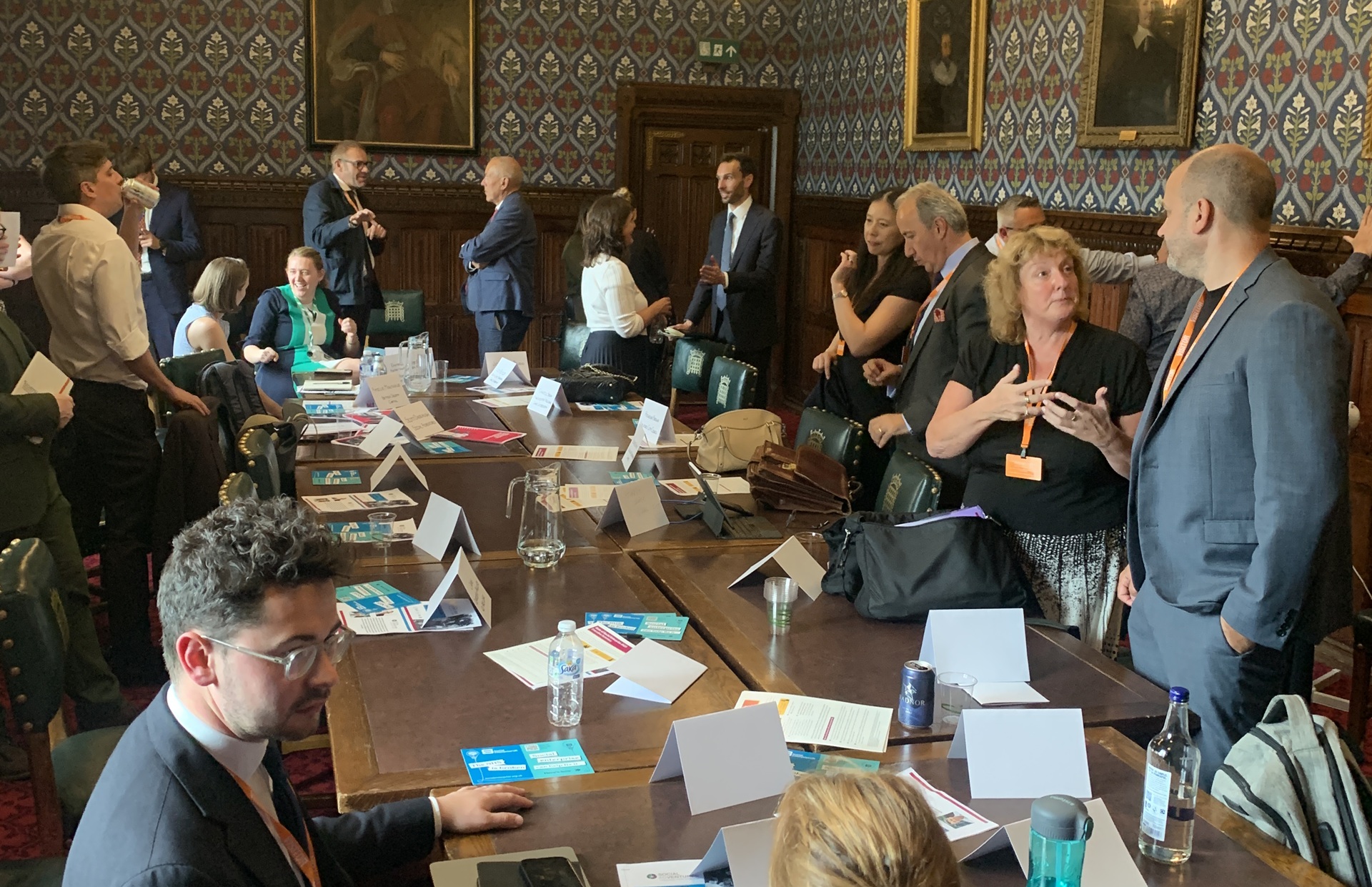
Social enterprises, local authority councillors, corporate supporters and legal experts recently met with MPs to discuss why existing procurement legislation is failing to deliver the social value it promises – and what needs to change. Why are local authorities not making greater use of the powers they already have to procure from voluntary, community and social enterprise (VCSE) organisations? That question framed the latest meeting of the All-Party Parliamentary Group on the Social, Cooperative and Community Economy, chaired by Patrick Hurley MP. Social enterprises, councillors, corporate partners and legal experts shared evidence with MPs on the barriers preventing procurement legislation from delivering greater social value through public supply chains. The backdrop for the discussion was the Procurement Act 2023 and the National Procurement Policy Statement, which together set clear expectations that public bodies should use procurement to deliver wider social, economic and environmental outcomes. The challenge under scrutiny was straightforward: if the legislative levers already exist, why are so few councils using them effectively? Is TOMS the wrong tool? A consistent theme was the over-reliance on the Themes, Outcomes and Measures (TOMS) framework as a proxy for social value. Mark Simms, Group Chief Executive of P3, argued that TOMS is poorly suited to people-centred services. He described procurement exercises where required metrics – such as apprenticeship numbers or job creation – bore little relation to the realities of service delivery. This, he argued, disadvantages honest providers while rewarding those willing to over-promise. Sandra Hamilton, Consultant at Stone King LLP, went further, suggesting that people-focused services require a fundamentally different procurement approach. With adult and children’s social care now accounting for an estimated 75% of local authority spending, she argued that a one-size-fits-all market procurement model is structurally unfit for purpose. Bristol City Council has already acted on this insight. Councillor Sibusiso Tshabalala confirmed that the authority has moved away from TOMS entirely, replacing it with contextual measures aligned to contract size and local priorities. Capacity, risk and the guidance gap Anne Epsom, Assistant Director at Surrey County Council, offered a candid local authority perspective. She acknowledged that under-resourced councils often default to TOMS because it is readily available and familiar. Her call was for clearer, centralised guidance: a shared methodology that would reduce the burden on individual officers trying to drive best practice through lengthy internal processes. She also highlighted the persistent gap between what the Procurement Act mandates for central government and what is binding on local authorities – a distinction that undermines consistency and ambition. Levelling the playing field Terry Murphy, CEO of Sheffield Social Enterprise Network, proposed a simple structural change. Rather than requiring social enterprises to repeatedly evidence their social value through lengthy tender responses, commissioners could ask a single, binary question: is the organisation legally required, through its governance, to deliver social or environmental benefit? Verification could be as straightforward as a Companies House check, with a positive answer attracting a score. If social value is embedded in an organisation’s legal structure, Murphy argued, it should not need to be restated in every procurement exercise. Amanda Johnston of Social Enterprise Northern Ireland highlighted another underused lever: government minimum thresholds. A small legislative amendment allowing direct awards to social enterprises below this level, without challenge, could significantly increase access to public contracts at the lower end of the market. Towards honest procurement A broader cultural shift also emerged as essential. Several speakers called for a move from transactional to relational procurement, particularly in complex, people-centred services. Mark Simms reflected on P3’s role in the Covid-era Everyone In programme, where services were mobilised rapidly on the basis of trust and shared risk to safeguard homeless people from infection, often before contracts were finalised. Transparent discussions about costs, risks and delivery constraints enabled faster and more effective responses. He described this as an example of “honest procurement” – focused on problem-solving rather than contractual compliance. Sue Racster from Amey echoed this approach, describing the company’s shift towards more intentional partnerships with VCSEs, shaped by listening to what social enterprises need in practice rather than imposing top-down solutions. Accountability and transparency Finally, Councillor Tshabalala raised the issue of accountability. He proposed the use of civic platforms rooted in neighbourhood forums, enabling communities themselves to verify whether promised social value has been delivered locally. Such approaches could build on existing place-based infrastructure and give residents visibility over commitments made in their name. He also highlighted a persistent imbalance: while councils routinely require suppliers and grant recipients to report on impact, they publish no equivalent account of the social value generated through their own procurement. A standardised framework for annual social value reporting by local authorities, aligned with budget decisions, could close this gap and strengthen public accountability. What happens next The APPG will continue to gather evidence throughout April, with a report expected in late spring or early summer. The aim is to clarify what local authorities can already do under existing legislation – and to identify where further changes to law, guidance or practice are needed to unlock the full potential of social value in public procurement.

01 Apr

Continue reading

4 min

News and views

Bringing together cross-sector leaders to shape the future of social value – reflections on the Social Value Leaders’ Summit

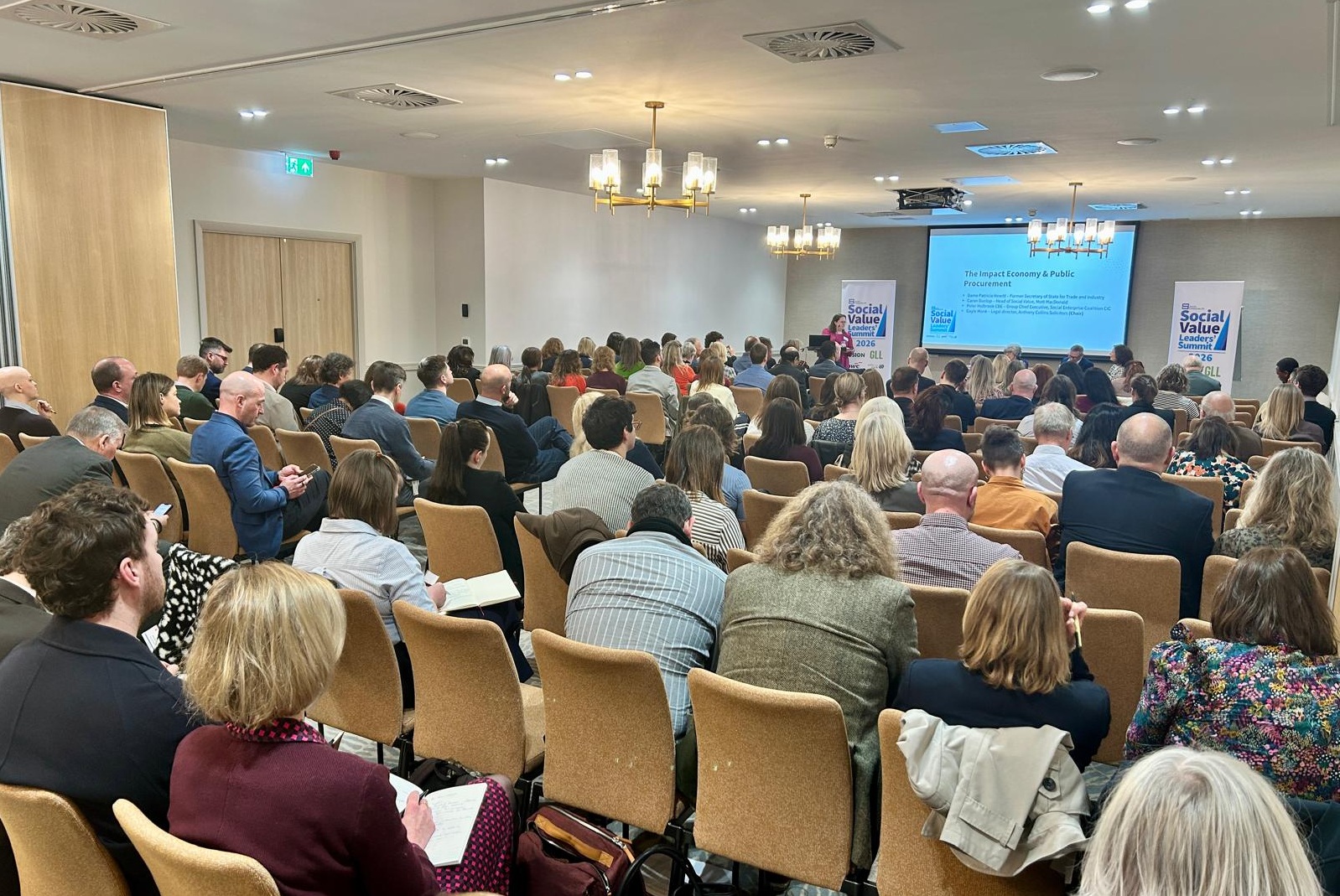
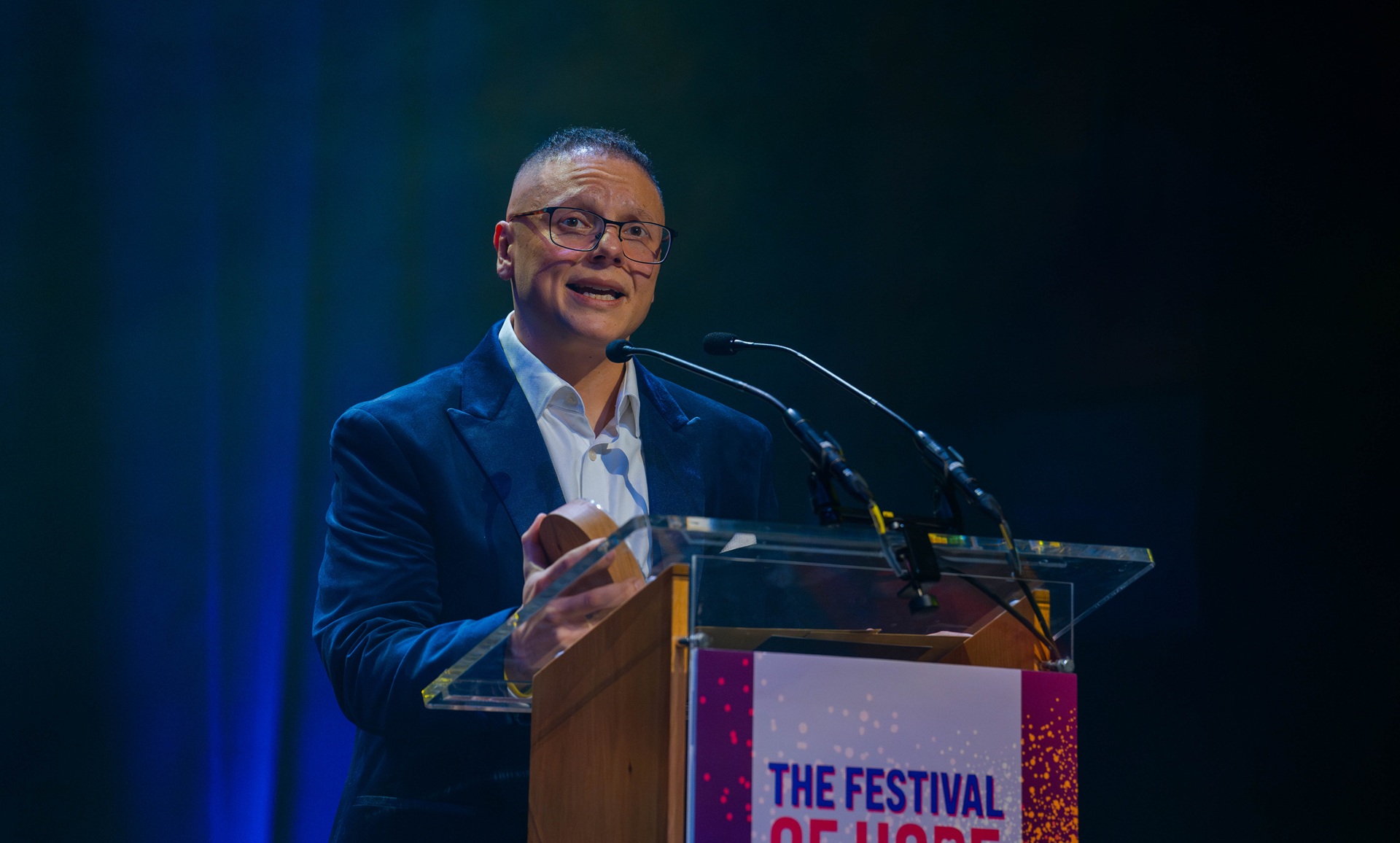
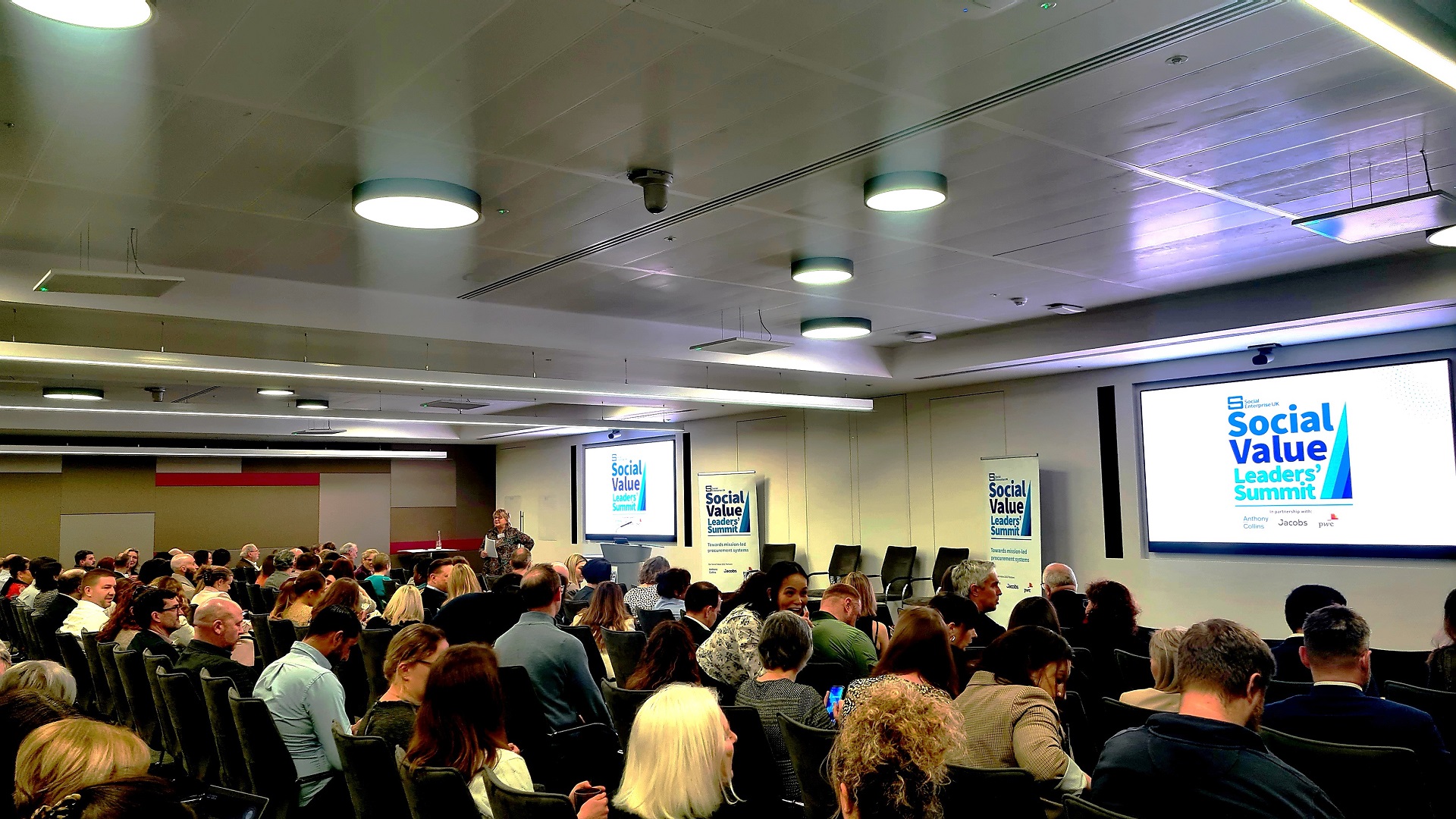
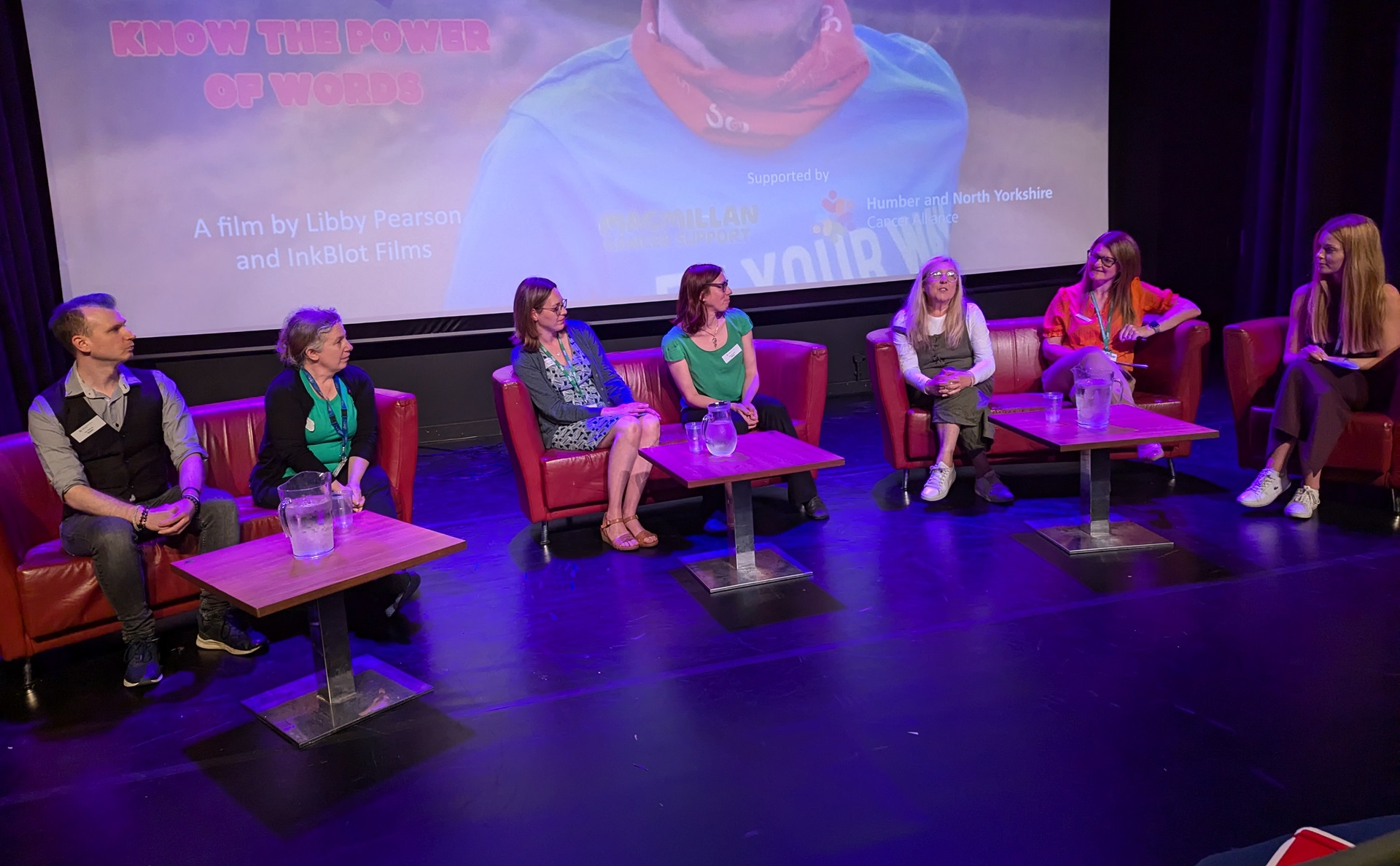
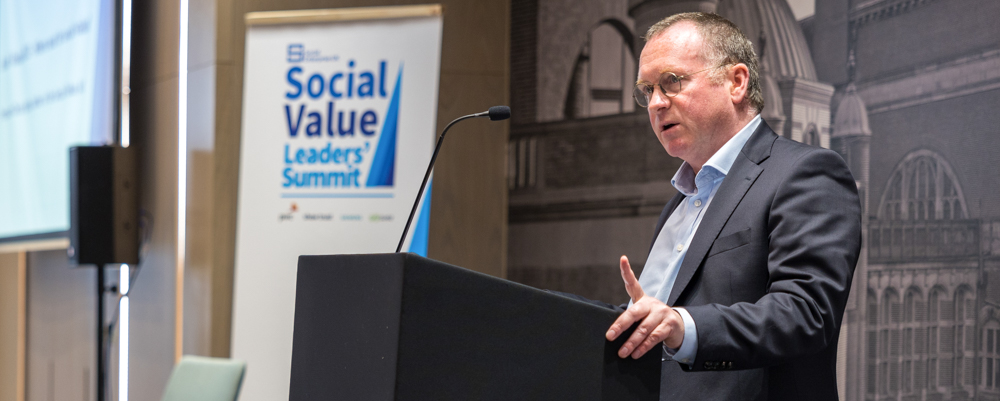
On Wednesday 25 March 2026, leaders from across the private, public and social enterprise sectors came together at the Strand Palace Hotel to discuss and debate the future of social value, one year after the passing of the Procurement Act and the opportunities it presented to social enterprises. The Summit opened with an introduction from Nancy Park, Social Value leader at event partner PwC. She set the tone for the day, stating that “social value is no longer a footnote, it is a differentiator.” Josh Babarinde OBE MP delivered our opening keynote and praised the bold language of the government’s National Procurement Policy Statement (NPPS) and its commitment to maximising procurement spend with VCSEs. Yet he was frank about the gap between ambition and reality: over the last five years, only 4% of public sector contracts were won by social enterprises, and only around 5% of the sector engages in government contracting at all, hinting that he had some idea why that was. As a former social entrepreneur himself, he said he understood the burden of completing a 200-page pre-qualification document as a small organisation with limited resources. His verdict on the ambitions of the Procurement Act were frank: “The Act gave us the tools, the statement gave us the direction, what we now need is the political will to follow through and the cultural change needed across the economy.” The gap between policy and practice proved to be a recurring theme throughout the day. Co-creation, missions and creating a common good economy Our second keynote was delivered by Mariana Mazzucato CBE, Professor in the Economics of Innovation and Public Value at University College London, who in a sweeping speech covered everything from the social value inherent in the Notting Hill Carnival to the moon landings. The overarching themes of her speech were the importance of co-creation and lived experience in designing procurement systems, the importance of uniting across sectors to tackle the “wicked challenges” we collectively face, and the need for new economic thinking to underpin systems and create a “common good economy”. She gave a passionate argument for embedding missions as a unifying factor to bring different economic actors together around a common purpose, and also warned of the dangers of the state being too reliant on outsourcing to consultants when it should be empowered to proactively shape markets, not just fix them. But what of procurement?  Professor Mazzucato stressed the vital role of procurement in driving forward towards an economic system that works for people.  It can be a tool to work with communities to shape services and can also serve to unite sectors in a common purpose, creating new markets and directing spend towards the achievement of a particular goal - after all “the first thing they did to get to the moon was redesign procurement.” How is public sector procurement changing and what is the role of the impact economy? Crown Representative for the VCSE sector Claire Dove CBE confirmed that VCSE spend targets set under PPN01 (a procurement notice looking at how central government departments should implement the NPPS) will be subject to quarterly ministerial review and re-profiled upward if insufficiently ambitious. Both she and the Department of Transport’s Robert Vaughan stressed the importance of VCSEs registering on the new central digital platform, noting that a “lack of pipeline visibility” remains a key barrier to more VCSEs being in the supply chain. Jo Jarvis of National Highways recognised progress in more VCSEs being in supply chains, but agreed with Babarinde, who had earlier highlighted the limitations in government department VCSE spend being only recognised on direct contracting. Jarvis also that this should be extended to indirect spend as well, given that so much work is done through sub-contractors. What was apparent from the panel was that this is very much a turning point for how government departments engage with social value and in government being held accountable for purchasing from social enterprises. As Claire put it, “the conversation on how to build in social value is (now) normal.”   The final panel session of the morning looked at how recent developments, such as the creation of the Office for the Impact Economy affect and impact public procurement and social value. Dame Patricia Hewitt opened by stating that “there has been a huge amount of positive change on social value over the recent years.” However, the main focus of the discussion hinged on the reality of the challenges social enterprises are currently facing, and the limitations of the Office for the Impact Economy, with Peter Holbrook saying that it’s “focus on philanthropy and impact investment should be a means to an end rather than an end in itself.” Whilst talk of the impact economy was welcome, there is a danger that government may forget the immediate issues facing social enterprises from the impact of the rise in employer NI contributions to how social enterprises working within the NHS have once again been left out of being funded to meet a new NHS pay deal, which will make it harder for them to compete with other organisations in the health service. Caron Dunlop, speaking from her experience driving social value at Mott MacDonald, said that the Office for the Impact Economy is, “part of a long-term journey to bring change” and that theres is a need to improve contract management, saying that  “contract management is where the gaps are” when it comes to unlocking real social value. Bringing the experiences of those in the room to the front of discussions Workshop discussions highlighted three consistent themes: social value is too often treated as an add-on rather than a core contract requirement; buyers and suppliers need to agree desired outcomes upfront rather than leaving social value to be measured retrospectively; and impact measurement tools such as the TOMs framework risk shifting focus away from real outcomes and towards a tick-box exercise. Some of these insights will be included in a report by the All-Party Parliamentary Group on the Social, Cooperative and Community Economy later this year. A big thank you to our workshop chairs for facilitating the discussions and feeding back to the whole room – Clare Connolly, Gareth Hart, Alison Ramsey and Kate Welch. From rewilding to community energy – combining environmental and social impact What have beavers got to do with social value? This is one of the things we found out from Deputy Mayor of London for Environment and Energy Mete Coban MBE, who not only mentioned the rewilding of London (introducing beavers back to the city - the first two being called Justin and Sigourney Beaver...) but how effective environmental policy is fundamentally linked to improving social outcomes and the lives of disadvantaged communities who are disproportionately impacted by the climate crisis. He talked about how Hackney Light and Power, a community energy scheme, inspired Ed Miliband to create Great British Energy and how investment in renewables and in community energy can empower local communities to take control of their own energy and save money on their bills. Echoing Professor Mazzucato’s comments on the need to co-create and include communities in decision-making, Mete ended his speech by stressing that “how you do policy is important – you’ve got to bring communities into it.” A new way to fund social value Innovation like this was also on show in the final session on new ways to fund social value. Karl Harder introduced Abundance, an investment platform that allows the public to invest in local authority schemes and receive interest on their investment - a low-cost borrowing model for councils that builds trust and creates a “community of place-based citizen lenders.” Matthew Conroy concluded the proceedings by showing how Unity Trust Bank is offering an alternative to mainstream banking with its commitment to investing in social enterprises and other purpose-driven organisations. Thank you to all our speakers and to everyone who took part in the Summit, especially our partners – Fusion21, GLL, PwC and Unity Trust Bank. Big thank you to our fantastic compere, Sarah Crawley Beaumont OBE and to the Strand Palace Hotel for hosting the event. Continue the conversation and join the Better Commissioning Coalition What was clear throughout the summit was that we’re at a pivotal moment when it comes to embedding social value in public and private sector procurement. The ambition is there to use social value as a tool to improve the livelihoods of communities up and down the UK, but the practicalities of embedding it across contracts remain difficult, with too many barriers still in place for both VCSEs and the forward-thinking organisations which look to work with them. The Better Commissioning Coalition seeks to bring together a group of cross-sector experts committed to developing a programme of work that demonstrates what procurement can do when social value is placed at its core. If you’re interested in finding out more or would like to be a part of this timely, exciting new programme, visit this page and fill out the expression of interest form at the bottom.

30 Mar

Continue reading

7 min

News and views

“Forget you’re a social enterprise!”

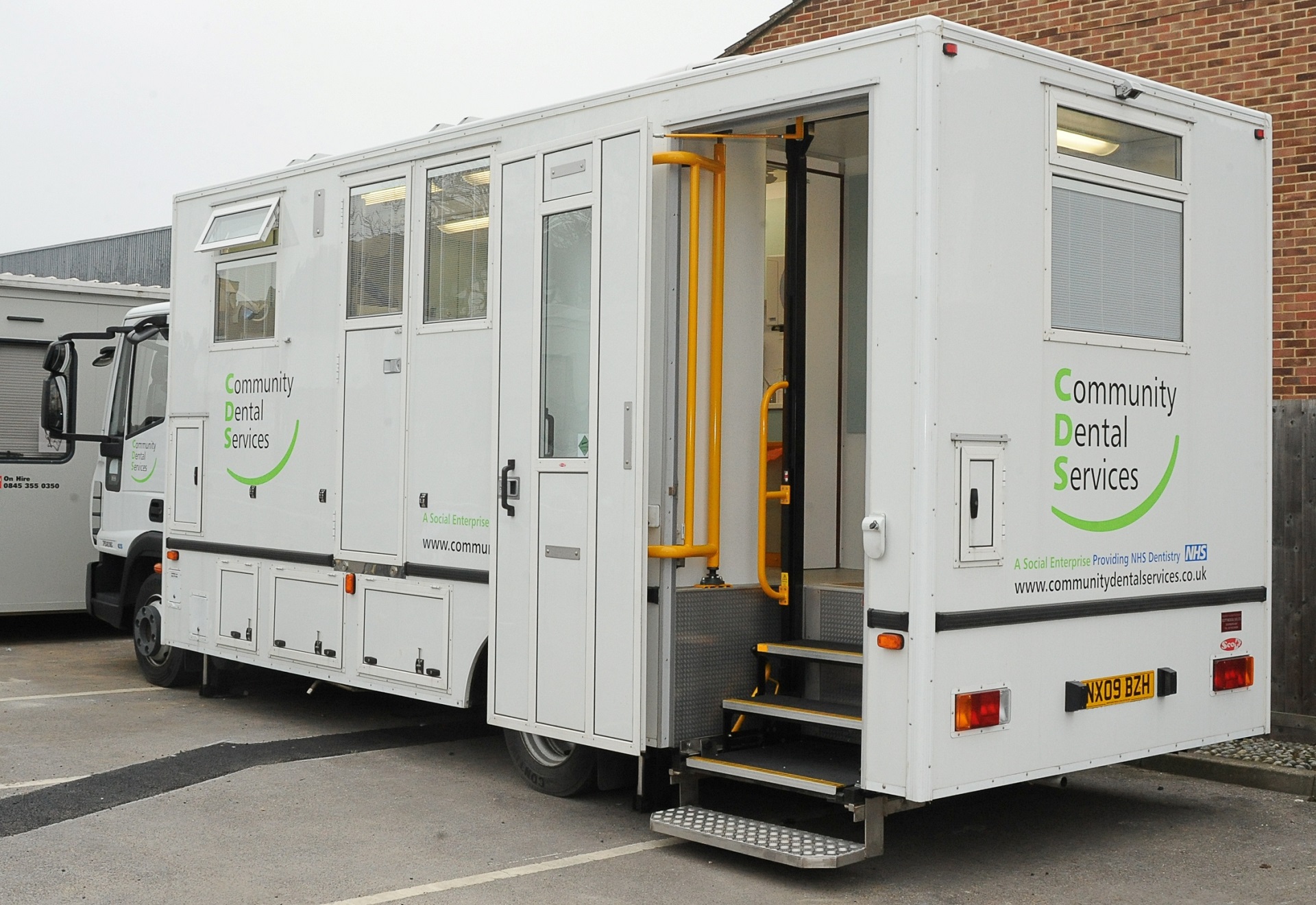
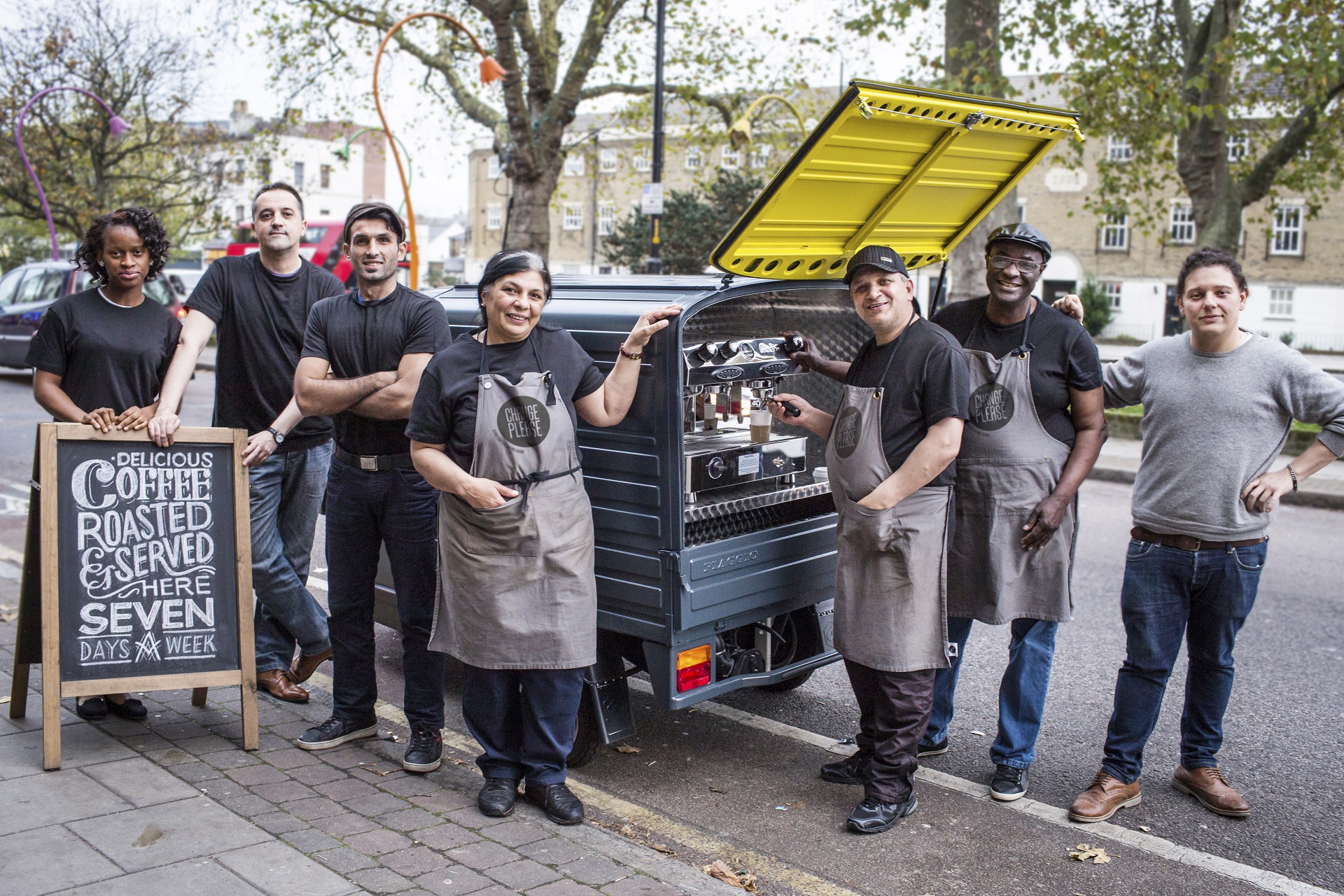
Social Enterprise of the Year award winners Change Please tell us how they’ve achieved growth and impact during nearly eleven years in business. You can’t miss the headquarters of Social Enterprise of the Year award winners Change Please, the coffee company that tackles homelessness. Outside the commercial unit they occupy on a small trading estate in Peckham in south London is a huge pink bus with ‘PROVIDING ACCESSIBLE DENTAL CARE’ emblazoned across it. This was the result of ‘Smile for Change, ’ a partnership with Colgate in 2021, as 40% of rough sleepers endure severe mouth pain. The bus houses a mobile dental clinic (fitted out by fellow social enterprise Community Dental Services). “What’s important is putting yourself in their shoes – what's the benefit for them?” Change Please’s founder and CEO, Cemal Ezel, says when asked how he establishes these kinds of partnerships with household name brands (Virgin and Mastercard are some others). “If you position your offer in line with that benefit, it’s a shortcut to them wanting to work for you. Think big and align your values with theirs to ensure it’s a partnership that’s not going to cause mission drift,” is his tip. As a social enterprise that has been in business for nearly 11 years and works in eight countries, Change Please has proved to be a resilient and successful business.  In that time, they’ve trained 1167 people as baristas (amazingly, more than 100,000 hours of training), giving them a route into work whilst also ensuring all the wraparound support necessary for a stable life is there. This can include help with accessing food banks or financial services, therapy, or housing advice. Amongst their formerly homeless graduates are refugees, care leavers and ex-prisoners. Not all of them fit the image that comes to mind when we first hear the word ‘homelessness’ – for some, it’s hostels or sofa surfing – but 42% of training graduates have been on the streets. For all the amazing work they do, we visited their HQ to find out how it felt to win in the Social Enterprise of the Year category at the UK Social Enterprise Awards last year. Having been shortlisted several times before, Cemal was shocked to hear their name announced on the night and, for the first time, hadn’t written notes just in case they did – but says the win has already benefitted the business. “Winning the award has already been an incredible bonus for us because lots of the Buy Social Corporate Challenge partners have already reached out, and we’re meeting with them to see how we can partner with them in the longer term,” said Cemal. Change Please already supply coffee to many businesses, such as the David Lloyd leisure centres, Avanti West Coast trains and the Department of Work and Pensions. How have Cemal and his team built such a resilient business? “First and foremost, forget you’re a social enterprise. How good is your product in the open market and then, as a bonus, how does it do good? We believe only 4% of organisations or individuals go out of their way to compromise on price, quality and convenience, so if you can focus on making your product as good as it potentially can be and see your social impact as a bonus, you’re going to win all day long.” Other organisations similar to Change Please have been established in their wake, something Cemal says he is pleased to see. The competition has motivated them to pivot with new innovations, and the next step is the development of an AI solution to homelessness in partnership with the Cabinet Office. The app (currently being trialled) signposts to different kinds of support available and allows users to upload official documents in 55 languages, assisting with a variety of required bureaucratic actions. If moving with the times is a sign of a business determined to endure, the longevity of one of the UK’s most visible social enterprises looks certain to be extended still further. changeplease.org

20 Mar

Continue reading

3 min
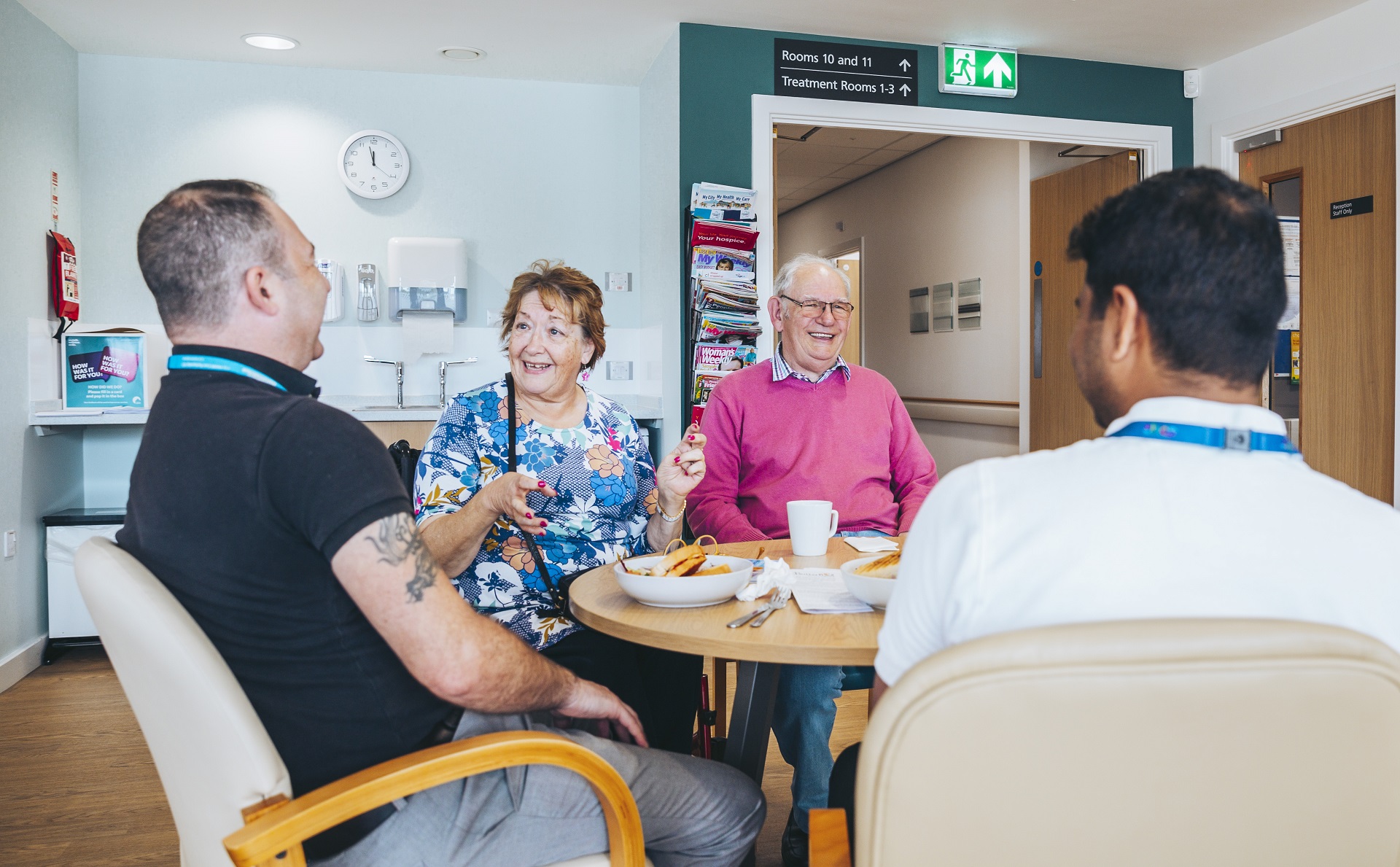
Social Value Leaders' Summit 2026

Agenda

Welcome to the Social Value Leaders' Summit 2026! We have a packed agenda today, designed to bring to light key developments in social value through expert-led panel discussions and speeches. A key part of the day will be this afternoon's roundtables, which will provide an interactive forum for attendees to share their own experiences. Here's our agenda for the day: 9:45: Introduction by Nancy Park - Social Value Leader at PwC 9:50 - 10:00: Our facilitator for the day, Sarah Crawley Beaumont OBE, will run through the planned schedule Procurement Act year one - from promise to practice 10:00 - 10:15 Josh Babarinde OBE MP Josh will look at what's changed one year after the passing of the Procurement Act in our opening speech. Keynote speech - the common good economy 10:15 - 10:45 Professor Mariana Mazzucato - Professor in the Economics of Innovation and Public Value at University College London Professor Mazzucato will ask the question of what does ‘good’ looks like in economics and whether you create social value without a sense of the common good? Mariana advises policy makers around the world on innovation-led inclusive and sustainable growth and has been listed in GQ’s Top 50 most influential people in Britain, Wired’s 25 leaders shaping the future of capitalism, and by the New Republic as one of the 3 most important thinkers about innovation. The national picture – government's vision for social value 10:30 - 11:15 Claire Dove CBE - Crown Representative for the VCSE sector Jo Jarvis - Procurement Director, National Highways Robert Vaughan - SME and VCSE Champion for the Department of Transport Jo Pritchard OBE - Social Enterprise UK Board member Find out more about the government's vision for social value from the VCSE Crown Representative, Claire Dove. You'll also learn how two leading social value practitioners are responding to the new procurement framework and working with VCSEs. The discussion will provide essential insights into emerging policy frameworks and strategic priorities, and will also explore whether the ambition and enthusiasm for social procurement described in last year’s Procurement Act has motivated procurement teams at national and local levels to enthusiastically target contracts offering more social value. 11:15 - 11:30: COFFEE The impact economy and public procurement 11:30 - 12:15 Dame Patricia Hewitt - Former Secretary of State for Trade and Industry Caron Dunlop - Head of Social Value, Mott MacDonald Peter Holbrook CBE - Group Chief Executive, Social Enterprise Coalition Gayle Monk - Anthony Collins Solicitors (Chair) This expert panel will look in depth at how procurement can be used as a tool to drive the impact economy - a timely discussion following the launch of the Government's new Office for the Impact Economy. 12:15 - 13:00: LUNCH Roundtables 13:00 - 13:40 - Rountable 1: Barriers to embedding social value – what's getting in the way? 13:45 - 14:30- Roundtable 2: Accountability gaps – why does social value get lost after contract award? Attendees will be split into groups for discussions based on the above topics. It's a chance to share your own experiences of social value, point out examples of best practice and openly discuss the barriers faced in embeddeding social value across commissioning and procurement. Your workshop groups will have been allocated to you at the start of the day and correspond to the stickers on your name badge. 14:30 - 14:45: COFFEE From barriers to breakthroughs - responding to what the room told us 14:45 - 15:15 Clare Connolly - Fusion 21 Gareth Hart - Plymouth Social Enterprise Network Alison Ramsey - Scape Kate Welch - Social Enterprise Acumen The chairs of the roundtables will feedback key findings from both sessions. Afternoon keynote 15:15 - 15:25 Mete Coban MBE - Deputy Mayor of London for Environment and Energy New ways of funding social value 15:25 - 16:00 Matthew Conroy - Head of Impact Propositions, Unity Trust Bank Karl Harder - Director, Abundance Jovan Owusu-Nepaul - Head of Public Affairs, Social Enterprise UK Local authorities are getting creative in finding ways to fund community projects that create social value by borrowing money from local people and paying them interest.  Find out more in this, our final session of the day. 16:00 - 16:15 - Closing Remarks 16:15 - 17:00 - Networking This agenda is subject to change The Social Value Leaders' Summit is supported by:

17 Mar

Continue reading

3 min
programme

Better Commissioning Coalition

Be part of the change makers driving a holistic approach to public procurement. Making public procurement a force for good We are at a turning point in history where mission-driven procurement needs your expertise. Join the Better Commission Coalition for the benefit of your organisation and the future of social value. A landmark opportunity At Social Enterprise UK we have been championing social value for the last 15 years. We are proud of the leading part we played in the Social Value Act in 2012, and in continuing to make the case for it through groundbreaking research and advocacy. An important recent development is the National Procurement Policy Statement (NPPS), published in February 2025, which recognises the power of public procurement and the potential of social value. It promises a mission-based approach that is ‘more joined up’ and ‘pushes power out to communities’. There is huge potential in taking this approach if social enterprises, delivering better health outcomes, good work, and stronger communities, are enabled to play their part. The Procurement Act and the NPPS are both positive starting points, but we need the change carried out day-to-day through thousands of commissioners nationwide, with government driving cultural change over time. Join the Better Commissioning Coalition To take this vision forward, we are seeking to bring together a group of cross-sector experts committed to developing a programme of work that demonstrates what procurement can do when harnessed to the levers of government. How? We'll do this by demonstrating what better commissioning can achieve through a combination of research, stakeholder engagement and publications, focusing on three key areas that align with government policy: economic growth, local impact, and better work. Join us if you're: A corporate, driving social value through your supply chains A public body committed to commissioning services that maximise social value A social enterprise or charity delivering services to the public or private sector which demonstrates the additional value that comes through working with the VCSE sector The Better Commissioning Coalition can help amplify your work, position you as a driver of change to government, and showcase you as an organisation driving real transformative change in the UK's commissioning and procurement landscape. Why be part of the coalition? Influencing and engagement Exclusive engagement with key social value stakeholders: Ministers, departmental officials, local authorities, political and public sector leaders Profiling opportunities at high-profile events such as the Social Value Leaders' Summit Guaranteed participation and contribution in at least three roundtables with public and private sector leaders across the country Shaping evidence delivery Share your expertise and contribute to content development, from reviewing findings to developing outputs for the programme Position your organisation as leaders in public procurement, through best practice examples featured in case studies and thought leadership pieces Co-design solutions in key thematic areas: policy, leadership & culture, measurement and implementation Peer to peer expertise exchange Knowledge exchange with coalition partners by attending regular briefings to identify key trends and share intelligence on better commissioning Communications and events Dedicated blogs, op-eds and written communication for agreed key target media Opportunity to provide quotes/reactions when the Coalition addresses key issues and topical news stories Brand recognition on all outputs Headline sponsorship of the Social Value Summit, the UK’s leading leadership conference on Social Value, bringing together 150 leaders from across the public, private and VCSE sectors The Better Commissioning Coalition is supported by Fusion21 and GLL Get involved If you'd like to take part and find out more, fill out the below form and we'll be in touch!

11 Mar

Continue reading

3 min

Events

Social Value Leaders’ Summit 2026

The Social Value Leaders’ Summit has become an agenda-setting event for policymakers, commissioners, business leaders, social enterprises, charities and social value practitioners who wish to see a procurement system which delivers better public services, better value for taxpayers, and better social and environmental outcomes for the country. Last year’s Summit took place just after the passing of the Procurement Act and a raft of policy initiatives and guidance, which have the potential to transform the procurement landscape. Attendees heard directly from the Minister responsible for overseeing the reforms, Georgia Gould MP, as well as cross-sector leaders who discussed in depth what they may mean for social value. This year’s Summit, the 10th to take place, will look at what’s changed one year on with a key focus on how social value can be used as a tool to build a fairer and more resilient economy. This year’s event Date and time: 10:00am – 4:30pm, Wednesday 25 March 2026 Location: Strand Palace Hotel, Central London Audience: 200 delegates (invitation only) Attendees will hear from expert speakers from across sectors, combined with interactive workshops where participants can share their own experiences and insights. A focus of the Summit will be on practical tips and peer learning – looking beyond theory to bring real examples and learnings from practitioners on the coalface. There will also be plenty of time outside of sessions to network and connect with fellow attendees. Speakers include Professor Mariana Mazzucato – Professor in the Economics of Innovation and Public Value at University College London Josh Babarinde OBE MP Mete Coban MBE - Deputy Mayor of London for Environment and Energy Dame Patricia Hewitt - Former Health Secretary / ICS Review Lead Claire Dove CBE - VCSE Crown Representative Angela Halliday - Co-chair Social Value Task Force, Sodexo Rachel Taylor - UK Government and Health Industries Leader, PwC Key themes Maximising social value to build a fairer and more resilient economy Sharing best practice from across sectors – Find out how public bodies, private companies and social enterprises are working together to create social value. You’ll hear examples of how different organisations are using social value as a tool to drive economic growth, support the communities they work in, and use commissioning to drive positive social and environmental outcomes. Throughout the day attendees will have opportunities to bring their own insights of what is, and also importantly, what isn’t working when it comes to delivering social value. The Procurement Act One Year On – What’s changed? From mandatory reporting for government bodies on their VCSE spend to making the procurement process easier for contracting bodies and social enterprises – get an update on where we’re at a year after the Procurement Act went live, what progress has been made and where the potential for change may not have been realised. What the new Office for the Impact Economy means for social value – hear from representatives from this new Department set up to support purpose-driven businesses partner with government and investors. Find out what role it will play in driving forward the social value agenda and what this will look like in practice. A legal perspective – how can the new procurement framework be used to expand the potential of social value? Can contracts be reserved for social enterprise or charity (VCSE) providers, and how are the changes in the Act affecting organisations outside of central government, from local authorities to private companies? We’ll be looking at the possibilities within procurement legislation and guidance to truly embrace the potential transformative impact of last year’s changes. Attendees will also be the first to hear about our plans for a new, exciting piece of work which will create the next steps needed towards better commissioning, cross-sector working and a new future for mission-driven procurement. The Social Value Leaders' Summit is delivered in partnership with: Who’s it for? The Social Value Leaders’ Summit is an invitation-only event. If you’d like to attend the Summit and work within one of these sectors, please fill out the expression of interest form below, and we’ll be in touch. Local authority leader, social value lead or a role responsible for commissioning services. Procurement or social value lead at a private company A social enterprise or charity leader with a proven record of delivering services to central or local government. Academic with a focus on social value delivery and implementation Sign up to find out more Please note if you work for a public sector organisation, tick the second box - business/organisation other than social enterprises.


14 Jan

Continue reading

4 min

News and views

Reflections on social procurement at SEWF 2025

Charlie Wigglesworth, Managing Director of Telos, reflects on this year's Social Enterprise World Forum in Tapei, the UK's status as a leader in social procurement, and the lessons that can be learnt from dynamic initiatives in East Asia. I’ve been lucky enough to sit on the board of the Social Enterprise World Forum (SEWF) for the past six years. Whilst a combination of Covid and being a new parent has limited my attendance to just two events in this time, the event in Taipei was a timely reminder of the incredible convening power of SEWF and the extent to which social enterprise is a truly global movement, with over 1000 participants from more than 65 countries. Discussions on social procurement have become increasingly prevalent at social enterprise events in the past 5-6 years. As someone who has been heavily involved in this space for the past ten years it’s been great to watch it grow in the consciousness of the social enterprise sector at large as something of interest and importance. I often felt leaving these conversations however that our work in the UK was well ahead of most of our international peers and that the topic was being talked about rather than done in practice. This is resolutely no longer the case. My big feeling upon leaving Taipei was that not only is social procurement now happening in all parts of the world (something we’d already identified in our State of Social Procurement report for World Economic Forum) but indeed the best practice, growth and ambition now rests elsewhere. To take our hosts in Taiwan as an example, there is a coordinated approach from government, the private sector and social enterprise to drive social procurement activity. Driven from government through the Small and Medium Enterprise and Startup Administration (SMESA) under the Ministry of Economic Affairs, there is the Buying Power Procurement Award, which recognises buyers and suppliers through awards and public acknowledgment, encouraging collaboration and public-private partnerships. The impact is clear: cumulative procurement has reached NT$11.8 billion (c. £289m), with a record NT$4.1 billion (c. £100m) in 2025 alone. This growth curve is far faster than we’ve been able to achieve in the UK or Europe. Perhaps the most impressive single example came from SK Group, South Korea’s second largest conglomerate (behind Samsung Group). SK have a Double Bottom Line (DBL) management framework to create simultaneous growth through economic and social value, and see social enterprise engagement at the heart of this endeavour. Through their corporate foundation the Center for Social Value Enhancement Studies (CSES) they are investing in social enterprises, creating their own, and finding ways to integrate them back into their wider supply chain. What lessons can we learn in the UK and Europe? I think it’s clear that other markets are leapfrogging us in terms of the pace with which they’re developing social procurement. A critical factor in this is the ability to align ecosystem approaches around the central idea of buying from social enterprises. Rather than looking at this in isolation, places like Taiwan and South Korea are looking at the whole system, and how they can align government procurement (both policy and practice), investment, and private sector procurement to drive social enterprise growth. Whilst all these pieces exist in the UK, for example, they remain more disparate – there is much work to be done and much to learn. Charlie is Managing Director of Telos a social enterprise set up by Social Enterprise UK to help global corporations drive social, economic and environmental value through core business activity. He also sits on the board of the Social Enterprise World Forum.

16 Dec

Continue reading

3 min

Member updates

NEMI Teas launches TRAMPOLINE Teas — the everyday tea that gives every brew a lift.

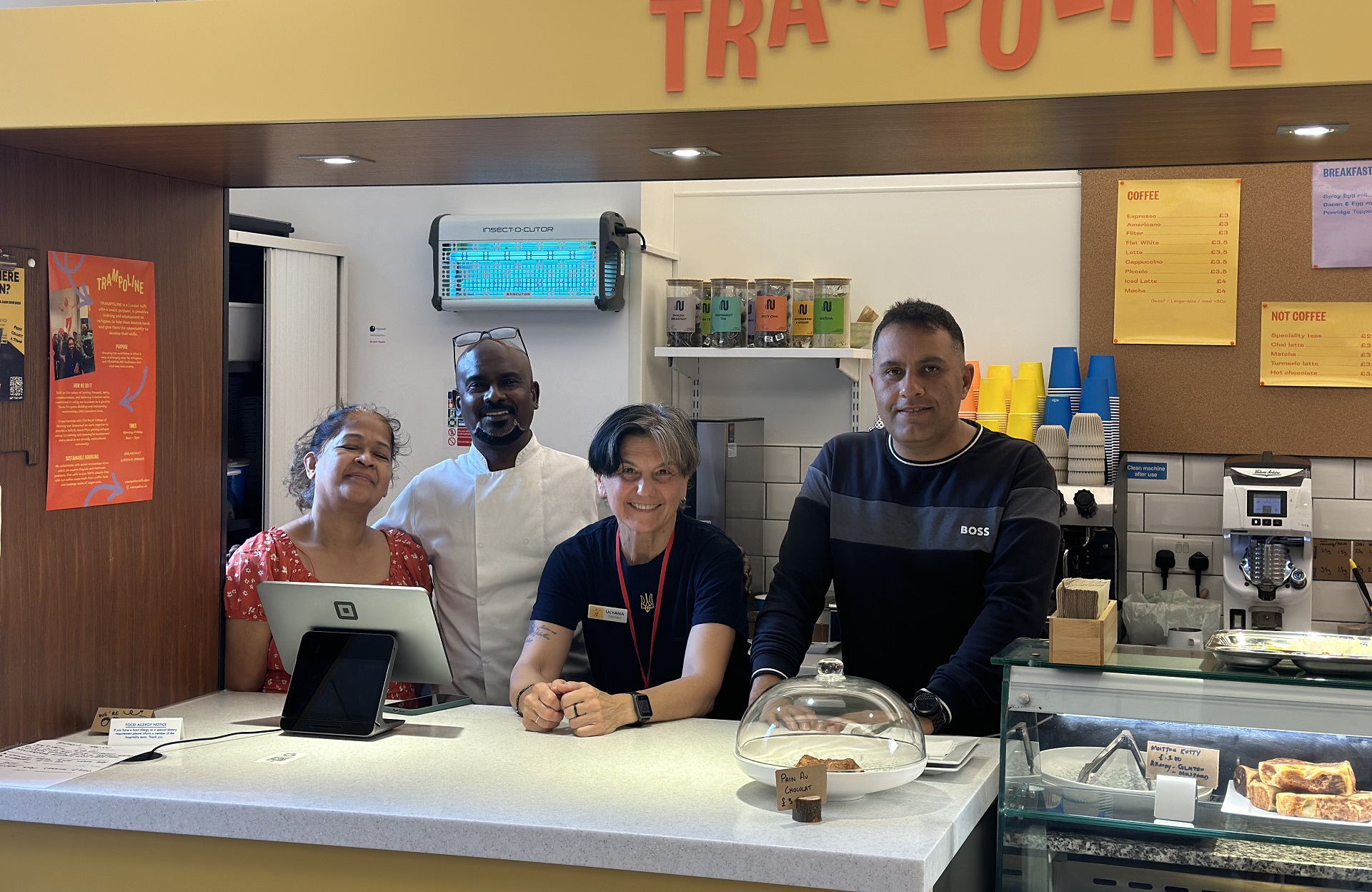
Profits reinvested into refugee training and employment through Changing Journeys programme. Award-winning social enterprise NEMI Teas has unveiled TRAMPOLINE Teas, a new range of Fairtrade and Rainforest-Alliance certified blends created for schools, offices, hotels and caterers who want quality, value and social impact — all in the same cup. Designed for high-volume foodservice, TRAMPOLINE Teas delivers consistent, great-tasting blends at competitive prices, while reinvesting profits into refugee training and employment through the Changing Journeys programme run at TRAMPOLINE Cafes across London. Participants gain confidence, hospitality skills and real work experience to help them take their next step into meaningful employment “TRAMPOLINE Teas is our answer to a clear market need for accessible, ethical tea in high-volume hospitality,” said Pranav Chopra, Founder of NEMI Teas. “Operators no longer need to choose between value, quality and social impact.” “This range proves that everyday doesn’t mean average,” added David Ryan, Growth Director. “TRAMPOLINE Teas brings taste, consistency and purpose together — a small switch that helps businesses create big impact through everyday choices.” The Line-Up: Familiar Favourites A feel-good family of eight blends — crafted for every mood, moment and menu: English Breakfast Earl Grey Green Tea Peppermint Tea Lemongrass & Ginger Decaf English Breakfast Red Berry Chamomile Available in enveloped tea bags (250s) and bulk catering packs (1100s). Certified, sustainable and built for volume TRAMPOLINE Teas is designed specifically for high-volume hospitality environments, offering operational simplicity alongside strong ethical credentials: Registered social enterprise Fairtrade and Rainforest Alliance certified teas Industrially compostable teabags & envelopes Blended and packed in a UK facility powered by renewable energy Following successful pilots with leading UK caterers earlier this year, the range received strong feedback on taste, consistency and ease of service. TRAMPOLINE Teas is now available to order across the UK. For more information or to request samples, visit trampolineteas.com or email bounce@trampolineteas.com. People-Powered Impact Every box purchased supports refugee training and employment opportunities through TRAMPOLINE Cafes located in Angel and at the Royal College of Nursing. Each brew helps someone bounce forward into work. Every sip supports a new start. About NEMI Teas NEMI Teas is a King’s Award-winning, certified social enterprise based in London. We craft high-quality, Organic and Fairtrade teas while supporting refugees into meaningful work.Our profits are reinvested into our TRAMPOLINE Cafes, which provide structured hospitality training and living-wage work experience for refugees through the Changing Journeys programme. Impact Snapshot In the 12 months to 31 October 2025 12 individuals supported through training and employment pathways 3,500+ hours of paid work experience delivered Partnerships with leading hospitality organisations, including The Hotel School, ThomasFranks, and Houston & Hawkes

12 Dec

Continue reading

2 min

News and views

Defending defence? Can social enterprises engage meaningfully with defence-driven growth plans?

Social Enterprise UK’s Director of Research and Policy, Emily Darko reflects on a trip to Plymouth, a Social Enterprise City, where she took part in a panel discussion on how and if social enterprises can play a part in the city's plans for defence-driven growth. The Ministry of Defence is investing £4.4 billion over 10 years to upgrade Plymouth's naval base, a transformative sum for a city where defence comprises 14% of the economy. The city is also set to gain a share of £250 million announced in the Defence Industry Strategy. The investment promises jobs, skills development, housing, regeneration, and broader social value. In theory, this defence-driven growth will create jobs, skills, and growth – and will contribute to regeneration, housing, skills development, transport infrastructure and wider social value. But in a world where violent conflicts claim an increasing number of lives, should the social enterprise movement be contributing to socially impactful defence solutions? Can it? A coop making socially impactful bombs – made from repurposed materials, embedded with flower seeds to rewild land they fall on? Probably not. But when government announces long-term, multi-billion pound defence investment, social enterprise must have a role to play to ensure the investment is spent as impactfully as possible. On Social Enterprise Day, I joined stakeholders in Plymouth to address this question. In a global context where people are increasingly likely to die as a result of violent conflicts, it makes sense to question investment which includes actors active in production of weapons. Personal and professional stances may vary. There is a spectrum of potential: ignore – avoid/boycott – engage – influence – change. For those who opt to actively participate, what to do? The collective experience of social enterprises offers answers. Making Engagement Count For those who choose to participate, good intentions aren't enough. History shows that promised social benefits often become secondary to primary objectives unless mandated and monitored. Collaboration, co-creation, partnership and fostering mutual respect are core components of progressive commissioning and procurement. Big business, government, civil society, social enterprises speaking different languages and bringing different value. Pulling this all together isn’t easy – but is powerful. And when done well, worth the bother. Most businesses, like government, and indeed most humans, are driven by fundamental pressures – understanding and using these to shape change is key. Big business will, broadly, comply with legal and regulatory requirements, react to competitor behaviour and market conditions, and respond to pressure from consumers and stakeholders, particularly where it influences one of the other conditions – or of course financial performance. This is why policy matters. Promises of jobs, skills development, housing, and regeneration risk being secondary to delivering primary goals of upgrading the naval fleet unless they are a mandated requirement, and providers held to account on delivery – not upfront plans. So what does meaningful engagement look like in practice? Early and sustained dialogue: Team Plymouth's plans for pre-delivery engagement on regeneration and skills development provide a foundation. Local infrastructure organisations like Plymouth Social Enterprise Network can translate deep community expertise to government and business stakeholders, building partnerships that demonstrate the value social enterprises deliver. Dialogue with substance, hearts and minds won through evidence of the solutions social enterprises provide, derisking use of those solutions through partnerships. Addressing process and regulatory barriers: Standardised measurement tools can exclude impactful actors. Procurement processes that favour economies of scale don't necessarily deliver impacts of scale. Complex requirements, slow payments, and perverse incentives risk sidelining better providers. These structural issues need tackling at both local and national levels. Strengthening regulation: This means pushing for regulatory support – nationally, through strengthening Social Value and Procurement legislation, in line with proposals raised earlier this year through the Procurement Act consultation. And locally, through Plymouth’s social enterprise strategy and economic growth plan. Ongoing monitoring: As investment flows, maintaining constructive dialogue matters. Plymouth has seen both successful regeneration and entrenched deprivation. Social enterprises understand the barriers and complexity of solutions and these insights can and should inform delivery throughout the decade ahead. A Vision for 2035 In 2035, Plymouth could be a city with an upgraded naval base alongside a thriving economy, with most of the £4.4 billion invested locally. Skilled locals with transferable skills employed across engineering, marine conservation, manufacturing, and construction. Sustainably-built affordable housing that is changing health outcomes for communities facing intergenerational poverty. A strengthened cultural sector and creative industries contributing to the 'Ocean City' identity. Local SMEs and social enterprises embedded throughout supply chains, providing community services that outlast the construction phase. This vision is achievable but only with intentional design, accountability, and sustained engagement from diverse stakeholders. Does achieving this offset concerns about engaging with companies exporting arms to conflict zones? This doesn’t need to be binary. It is possible to engage with the practicalities of potentially positive investment, and still maintain that a world without violent conflict and without greedy profit maximisation is the ultimate goal. Plymouth has a deep heritage as a defence city. It is also a thriving Social Enterprise City. And that gives us reason for hope.

03 Dec

Continue reading

4 min

News and views

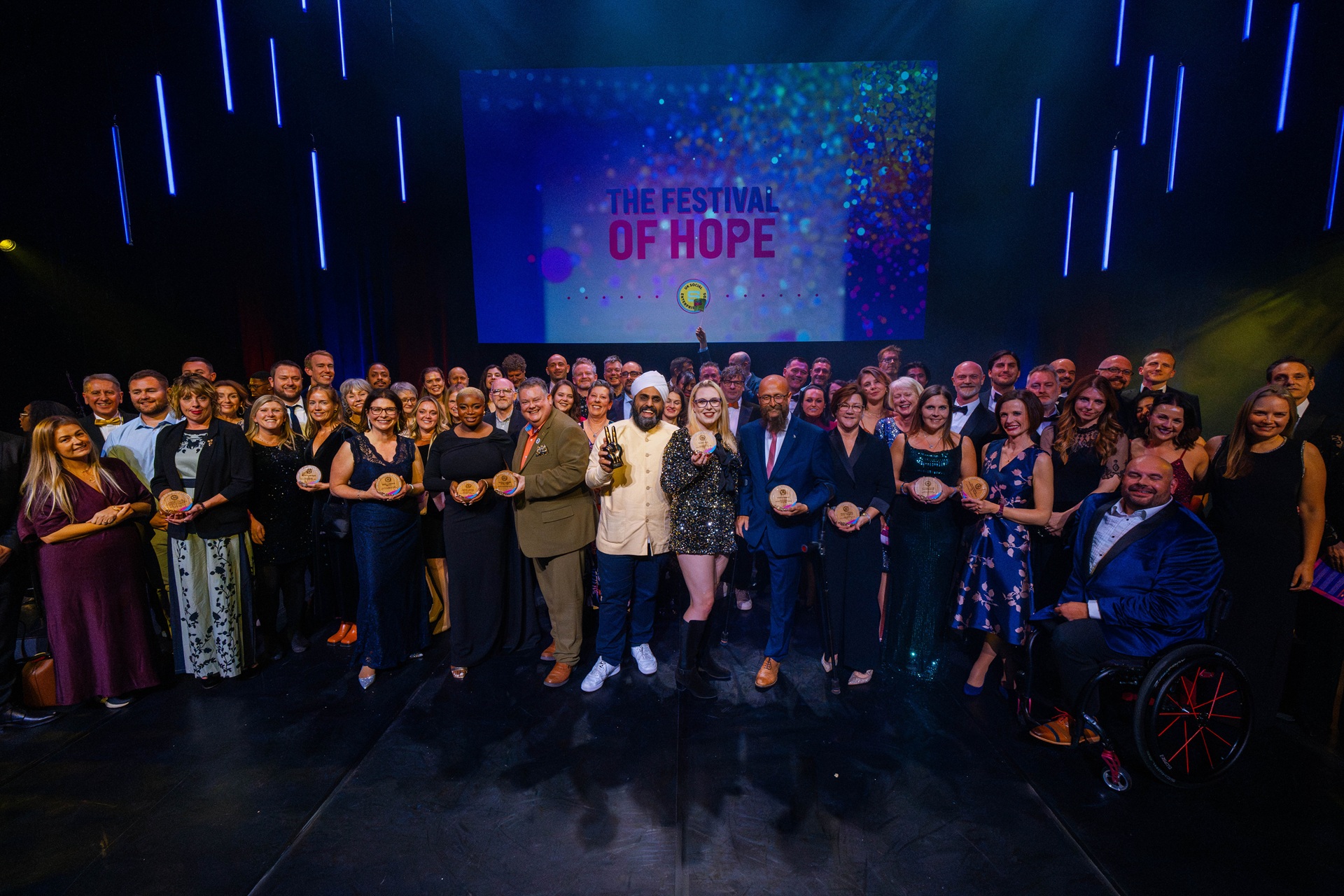
The winners of the UK Social Enterprise Awards 2025

The winners of the UK Social Enterprise Awards were announced at the Queen Elizabeth Hall on London's Southbank on 26 November. The evening saw the venue transformed into a Festival of Hope celebrating the makers, the community builders, the job creators, the radicals, and the dreamers who make up the social enterprise movement.  Across 15 categories the Awards showcased the strength, breadth and dynamism of social enterprises across the UK UK Social Enterprise of the Year Sponsored by Keegan & Pennykid The overall award for a social enterprise that has a clear vision, excellence in impact, and that has demonstrated and promoted social enterprise beyond the sector. Change Please Change Please is an award-winning UK social enterprise that turns great coffee into a route out of homelessness. Founded in 2015, the organisation trains people experiencing homelessness as specialty-level baristas, pays them a Living Wage from day one, and provides housing, mental-health support and onward job placement. Profits from its cafés, wholesale supply to brands such as Google, Delta Air Lines and David Lloyd Clubs, and a global partnership with Nespresso fully fund the programme. Operating in fifteen countries, Change Please supports nearly 2,000 people a year, offsets its carbon footprint, and reinvests every surplus to expand impact worldwide. HIGHLY COMMENDED: BRAG Enterprises One to Watch Award Sponsored by PwC The One to Watch Award is for a start-up social enterprise. Key to winning this award is an ability to clearly articulate their future vision and how they are going to achieve it. EcoCoach CIC EcoCoach CIC is a mission-led social enterprise redefining how physical activity, inclusion, and wellbeing are delivered in schools and communities. Founded in 2024 by Matt Nelson, it provides trauma-informed PE, wraparound care, alternative provision, and inclusive sport programmes grounded in child-first coaching principles. With no reliance on grants, EcoCoach has grown through ethical trading and values-driven practice. Every session prioritises emotional safety, inclusion, and consistency — reaching children who are often excluded or overlooked. The organisation challenges outdated systems and leads by example, showing that real impact can be achieved through integrity, action, and a refusal to accept the status quo. HIGHLY COMMENDED: Forests with Impact Prove It: Social Impact Award Sponsored by Linklaters For a social enterprise that can truly demonstrate and communicate their impact with their stakeholders. Waste to Wonder Worldwide Waste to Wonder Worldwide is a UK-based social enterprise turning surplus office furniture into life-changing resources for schools and communities around the world. Operating the largest ethical reuse programme of its kind, the organisation has equipped over 1,500 schools in 44 countries while saving more than 1 million items from landfill. With a carbon-negative model and a mission rooted in dignity, opportunity, and sustainability, Waste to Wonder Worldwide empowers businesses to reduce waste, deliver ESG outcomes, and create real social impact, proving that when reuse is done right, it can change lives, communities and our shared future. HIGHLY COMMENDED: Turning Point ‘Buy Social’ Market Builder Award Sponsored by Corps Security For a social enterprise, public sector body or private sector organisation that has demonstrably made efforts within its own organisation and remit to create more opportunities to buy from social enterprises. CBRE Global Workplace Solutions CBRE Global Workplace Solutions supports clients through facilities and project management, advisory, and transaction services. Committed to advancing supplier diversity, CBRE has pledged to spend $3B globally with diverse and small businesses by 2025. In the UK, CBRE is a partner of the Buy Social Corporate Challenge, working in close partnership with Social Enterprise UK to increase spend with social enterprises, embed them into procurement categories, and promote their visibility through events and campaigns. Driving a 428% increase in spend with social enterprises in the last 5 years, CBRE is using its market influence to build a more inclusive, values-driven supply chain. Social Investment Deal of the Year Sponsored by Good Finance For an organisation that has been part of a great investment deal in the last 12 months that has helped the social enterprise to grow or the movement as a whole to develop and flourish. Wales Council for Voluntary Action – The Community Impact Initiative CIC and Tai Heulwen CIC WCVA as lender, brought together two social enterprises to reduce the barriers to starting a new childcare social business requiring property purchase, improvement works and capacity building revenue funding. The need for consents made property purchase high risk for childcare organisation (Tai Heulwen) alone, but was straightforward for the building enterprise (Community Impact Initiative). Bringing them together significantly reduced risk for both and for the lender who funded property purchase and improvement for Community Impact Initiative and revenue costs for Tai Heulwen. Public Services Social Enterprise of the Year Sponsored by GLL For a social enterprise for whom the majority of their income comes from the public sector and which delivers public services (for central or local government, NHS, criminal justice or other statutory body). Peninsula Dental Social Enterprise Peninsula Dental Social Enterprise is committed to improving oral health in the South West through provision of treatment, education and engagement. Working alongside the University of Plymouth Peninsula Dental school, treatment is provided by a combination of students, qualified dental professionals and a dedicated team of support staff. The clinics were established to tackle oral health inequalities, with a view of training dentists who may stay in the region once qualified, treating patients in the teaching clinics who may not otherwise have access to care, and providing and promoting oral health education in the communities served. HIGHLY COMMENDED: FCMS (NW) Consumer Facing Social Enterprise of the Year Sponsored by Expert Impact Speakers For a social enterprise that delivers a retail product or service to the general public. Zaytoun Zaytoun CIC is a social enterprise inspired by a love of Palestinian culture, communities and cuisine and a passion for sharing it with people in the UK. For twenty-one years the company has supported the resilience of Palestinian communities through fair trade – 100% of profits being reinvested into delivering this mission. Palestinian farmers have been cultivating their lands for thousands of years and continue to do so despite the challenges of farming under occupation in the West Bank. Zaytoun’s aim is to ensure this agricultural heritage continues as a viable and sustainable source of income now and for future generations. Education, Training & Jobs Social Enterprise of the Year Sponsored by Amazon Business For a social enterprise in the education, training or employment sectors that can demonstrate excellence in vision and strategic direction, and clearly evidence their social, environmental and community impact. Social Enterprise Kent CIC Social Enterprise Kent (SEK) is a dynamic community interest company transforming lives across Kent and Medway. Since 1985, SEK has empowered individuals, strengthened communities, and supported social enterprises to thrive. From innovative employability programmes and accredited training to health and wellbeing services, sector leadership, and pioneering initiatives like the AI Skills Accelerator and Social Impact Gateway, SEK creates measurable, lasting impact. Generating over £3 million annually, with profits reinvested into local communities and charities, SEK is a catalyst for social change. Every day, SEK shapes a better tomorrow through empowerment, opportunity, and collective action. Environmental Social Enterprise of the Year Sponsored by Landmarc For a social enterprise in the green and environmental sector with a clear evidenced environmental impact. The Skill Mill The Skill Mill is a social enterprise committed to creating life-changing opportunities for young people involved in the criminal justice system. It provides real-wage jobs in local environmental projects, alongside accredited training and personalised support. Focused on enabling young people to gain practical skills, confidence, and access to future employment, The Skill Mill delivers tangible community and environmental benefits. Operating across England, it partners with local authorities, employers, and youth justice services to ensure its work is locally responsive and nationally impactful. The organisation reinvests its income to support social inclusion, sustainability, and safer, stronger communities. HIGHLY COMMENDED: Seagulls Re-Use Ltd Social Enterprise Building Diversity, Inclusion, Equity & Justice Award Sponsored by Diversity Forum Social justice is fundamental to the social enterprise movement. This category is open to all social enterprises who are addressing issues around diversity, inclusion and equity. The Tax Academy CIC The Tax Academy provides tax support and tax education to those that lack the knowledge and expertise within prison to deal with their tax affairs including, but not exclusively, those with mental illness, learning difficulties, and post-traumatic stress disorder(‘PTSD’) including anxiety and depression as a result of drug and alcohol addictions. TTA is currently working with prisoners in all Welsh prisons and in particular running Tax Justice Hubs in HMP Prescoed and HMP Berwyn. HIGHLY COMMENDED: Signalise Co-op Social Enterprise Women’s Champion of the Year Sponsored by David Gold For a woman working in the senior leadership team of a social enterprise who represents excellence in her field of work. Hannah Oyewole – Young Ladies Club Hannah Oyewole is the founder and CEO of Young Ladies Club, and is a powerful advocate for Black and global majority women and girls. A survivor of abuse and adversity herself, Hannah leads with authenticity, offering mentoring, education, and emotional support to young women facing similar challenges. Her work tackles domestic abuse, inequality, and underrepresentation through practical programmes and national advocacy. Hannah’s leadership is changing lives and challenging systems, making her a trailblazer in social enterprise and women’s empowerment. International Impact Award Sponsored by Social Partnership Portal For a social enterprise working internationally, and which are having a big impact in their field. This award is open to UK-based organisations only with existing international operations. The Centre for Information Resilience CIC The Centre for Information Resilience (CIR) is an independent, non-profit social enterprise dedicated to exposing human rights abuses and war crimes, defending democracy from disinformation, and combating online harms, particularly those affecting women and minority communities. It delivers this through open-source and digital investigations (OSINT), media collaborations, strategic communications and skills-sharing and capacity-building programmes. CIR works in partnership with host country organisations and experts and provides a platform for at-risk organisations to publish their work through its Resilience Network. Headquartered in the UK, CIR operates a subsidiary office in Ukraine and delivers projects worldwide. HIGHLY COMMENDED: Change Please Community-Based Social Enterprise of the Year Sponsored by the Esmée Fairbairn Foundation This award is for a social enterprise that trades for the benefit of their community, making a real local impact. Tap Social Movement Tap Social Movement is an Oxford-based social enterprise brewery, bakery, and hospitality organisation that offers training and employment for people from prison. To date, it has created more than 100,000 hours of fairly paid employment for leavers, and today approximately one-third of its team across the company has lived experience with the UK’s criminal justice system. Tap Social was named “Consumer Facing Social Enterprise of the Year” at the UK Social Enterprise Awards 2024. HIGHLY COMMENDED: Social adVentures Social Enterprise Innovation of the Year Sponsored by Fusion21 An award recognising a social enterprise that has brought something truly innovative to market in the past year. City Health Care Partnership CIC City Health Care Partnership CIC (CHCP) is a co-owned public service mutual delivering high-quality healthcare services across Hull, the East Riding of Yorkshire, and Merseyside. Operating independently within the NHS, CHCP reinvests profits into enhancing services, workforce and communities. With compassion and respect at its core, CHCP boasts a 93% patient satisfaction rate and 78% employee recommendation rate. Offering over 50 diverse services, CHCP also supports community groups through its charity, the City Health Foundation. Guided by its values of service, excellence, equality, diversity, inclusion, creativity, innovation, and cooperation, CHCP is dedicated to improving outcomes for local communities and people. Tech for Good: Technology Social Enterprise of the Year Sponsored by Mitie For a social enterprise that uses technology to achieve social impact. Nimbus Disability Nimbus is a UK-based social enterprise, founded and led by disabled people, on a mission to transform how society understands and delivers accessibility. Through innovative technology, consultancy, and lived-experience expertise, Nimbus helps organisations become more inclusive while empowering disabled people to navigate the world with greater confidence and independence. Its flagship product, the Queen’s Award for Enterprise-winning Access Card, translates an individual’s access requirements into a set of easy-to-understand icons. Integrated with major venues and ticketing platforms, the Access Card enables businesses to instantly recognise and meet access needs - making inclusion smarter, simpler, and more consistent for everyone Awards Sponsors Southbank image courtesy of India Roper-Evans, others courtesy of the winning social enterprises

26 Nov

Continue reading

9 min

News and views

Get ready for Social Enterprise Day 2025 on 20 November!

Social Enterprise Day 2025 is coming up on 20 November! It's a global day created to raise the profile of the social enterprise movement and show the transformative impact it is having across the world. It's a great chance for you to share your stories, learn more about your fellow social enterprises, and feel part of this community, which is changing lives on pretty much every continent!  Take part in our campaign We know that social enterprises are changing the way business is done, but not enough people do! This needs to change, and this year we've come up with a fun, creative social media campaign to give you the chance to showcase what it is that makes social enterprises so special, and how they are vital to building a more inclusive and sustainable economy.  How to get involved on 20 November We've created an editable social media video graphic on Canva, which not only sets out the definition of a social enterprise (in emoji form!) but also gives you space to talk about what you do in a creative and engaging way. CLICK HERE TO EDIT AND DOWNLOAD YOUR CAMPAIGN GRAPHIC All you need to do is click on the above link and edit the final text block to talk about what you do and your impact! Just enter a short bit of text into the last box on the image to explain what impact your social enterprise creates. You can then download it as a video.For the body of your post, you could say something along the lines of:We're a proud social enterprise and today is #SocialEnterpriseDay - a moment to raise awareness and celebrate the amazing work carried out by these businesses around the world, including [insert company name]. But what is a social enterprise?...If you've not yet got a Business Canva account, and don't want to pay for one, you can use a personal email address to access the editable file for free.Alternatively, you can use this image instead, which isn't editable but sets out what a social enterprise is! (you can of course talk about your impact in the body of your post.)It's a simple action, but if we get enough organisations posting, we'll show the huge diversity of social enterprises in the UK, the problems they're tackling, and the solutions they are bringing! When to post  What's crucial to make this campaign as impactful as possible is that we all post at the same time on Social Enterprise Day. Share your post at 10am on your social media channels such as LinkedIn, Instagram and Facebookand be sure to like and comment on those of friends and colleagues in the sector! Do let us know if you've any Social Enterprise Day plans. Use #SocialEnterpriseDay and let's take over social media with our positive stories of impact, community, and a better way of doing business.If you've any questions about getting involved, please email internalcommunications@socialenterprise.org.uk.We can't wait to see your posts!

06 Nov

Continue reading

3 min
News and views

A journey around a city of social enterprises – from homes and healthcare to fishfingers

Dan Gregory, Associate Director at Social Enterprise UK, reflects upon a trip to Plymouth - a hotspot of social enterprise activity with social enterprises running everything from generating energy and delivering dental care to running cherished local assets and driving innovation, including an idea for a new social enterprise fishfinger. Plymouth was the UK’s first official Social Enterprise City. While I hadn’t visited for ten years, I had followed progress and been in contact with Gareth Hart, Chair of the Plymouth Social Enterprise Network. Gareth is a fantastic advocate for the movement, both locally and more widely, and generously hosted a visit for four members of the Social Enterprise UK team to the city. What an absolute privilege to see such energetic social enterprises in action. A refreshing break from my usual trudge and drudge of drawing up policy briefings or government consultation responses, and being roundly ignored by NHS officials, to see real, actual social enterprise getting on with it. Let’s retread our steps! Here we are at Moments café, run by Memory Matters, a social enterprise that provides dedicated support to those affected by dementia. This is a warm and welcoming place, serving homemade comfort food, and at the same time, successfully competing with Costa just around the corner. Off to Union Street, where Nudge Community Builders’ dizzying ambition is renovating and unlocking empty buildings. The Plot hosts 18 small businesses, and hosts support for women starting their own enterprise - a SHE Plymouth programme delivered by Iridescent. The old Clipper pub is now home to Plymouth Jollof Kitchen CIC. We visited a mushroom farm in the basement of the old nightclub at C103. Space in Union Corner can be booked for £6 an hour. The Millennium building is opening up for young people and CNC machines to fit out new homes. By this time next week, Nudge will probably be turning half of Cornwall into a workshop for 3D printed specialist Korean salad leaves, creating jobs for ex-offenders in a hexagonal greenhouse literally made out of hope. Then we walked to Plymouth Energy Community, which combines a mix of fuel poverty alleviation and retrofit advice, powered by community shares and cross-subsidy from solar energy generation. A local power plan before the Local Power Plan. Over the bridge to Peninsula Dental, training the next generation of dental professionals, and treating vulnerable people in partnership with Plymouth University. Then to see old friends at Real Ideas Organisation in Devonport Market Hall, brought back from the dead to house the best immersive 360 degree auditorium in Europe, co-working spaces, a cafe and more. Here we heard from the diverse social enterprise community and two of the largest anchor organisations in the city. Plymouth Community Homes manages over 16,000 homes, while Livewell Southwest provides health and social care services for people across the city and beyond, employing 3,000 staff. Among old friends and established powerhouses, we also encountered start-ups and new ideas. Plymouth Fishing & Seafood Association and the University have “co-designed a Plymouth fishfinger” which is nearing production and sets out to solve about four local problems all at once. Making use of low-value fish, reducing waste, reopening the old fishing auction hall, generating income for the local fishing community, and healthier food in schools. The social enterprise fishfinger could be the answer! While the vibrancy of this Social Enterprise Place is first and foremost thanks to the hard work of each local social entrepreneur, of course, the enabling environment also helps. We explored how Rank Foundation has invested millions in this area. Status as the world’s first Social Enterprise City has helped attract attention and resources. The Council are onside. And the long-term commitment and expertise of local experts and enablers such as Gareth, and Lindsey and Ed from RIO are undeniable factors. Together, we discussed the challenges of business rates and the availability of appropriate funding and finance. Meanwhile, billions of pounds of investment is coming to the city over the next few decades, with Plymouth harbouring Britain’s continuous at sea nuclear deterrent. What is the relationship between investment in defence and social value? What are the ethics of working with defence companies? And more widely, how can we ensure social value isn’t just an accounting game to be played by corporates? The Government’s Pride in Place money is also coming to Plymouth. How do we ensure social enterprises, co-operatives and mutuals, community businesses (or even the impact economy or IDBMs if we really must) harness these opportunities to deliver change that communities feel? Finally, we get back on the train, more aware than ever of the importance of the fight for national changes that make this incredible local work more possible, everywhere. Thank you, Plymouth, for the inspiration.

17 Oct

Continue reading

4 min
Member updates

Amplify Goods launches SUDZERØ™ for net zero

What if your soap could do more for people and planet? Growing social enterprise Amplify Goods has launched SUDZERØ™ for Net Zero and with over 84% less carbon than standard hand wash products, it’s a game changer for consumers, education, public venues and businesses alike.  SUDZERØ is an innovative powder-to-foam hand wash that is redefining handwashing and how we care for people and planet. Designed as a circular solution for Net Zero, it reduces carbon, cost and waste compared to traditional liquid soap, all while creating real living wage work experience for people facing barriers to work, including homeless and disabled people. Camilla Marcus-Dew, co-founder of Amplify Goods said: “I’ve been working for a decade in the soap industry, and this is by far my proudest moment. This innovative launch takes us closer than we’ve ever been to a truly Net Zero handwash and paves the way for real social impact at scale through the creation of even more living wage work, and the dignity and pride that comes with it.” SUDZERØ for Net Zerø Backed by a Life Cycle Assessment (LCA), SUDZERØ is estimated to deliver over 84% carbon savings compared to traditional liquid soaps. It cuts emissions across the entire lifecycle, from raw materials and manufacturing to transport and end-of-life. No shipping water. No single-use plastic. Just clean hands and a cleaner planet. SUDZERØ for Søciety Finishing, labelling and packing every pack of SUDZERØ creates about five minutes of vital work for someone facing barriers to employment. Since moving to the Crisis Warehouse in Canning Town, East London, in 2024, Amplify Goods has supported homeless and disabled people, refugees and prison leavers to earn money, build confidence and plug that CV gap. Mariusz was the first to join Amplify Goods in September 2024, and the SUDZERØ launch falls on the anniversary of him getting back into work. During this time, he’s got off the streets and is now looking for full time warehouse work. As SUDZERØ grows, organisations of all sizes can help to create opportunities for many more people who want to work. To date, Amplify Goods have already supported 18 individuals with over 740 hours of paid work experience, delivering over £820,000 in social value and offering stepping-stone opportunities that help people into long-term work. SUDZERØ for Cøst Saving SUDZERØ reduces costs to the planet and to supply chains. SUDZERØ weighs 98% less and takes up 97% less storage space than ready-to-use soap meaning reduced costs in warehousing, transportation and storage. Foaming hand wash is known to save water, estimating around 300ml less water in every wash, and with this SUDZERØ reduces cost-in-use too. Plus, the compostable sachets and refill-first approach reduce costs in end-of-life and waste management, when compared to bulky empty soap bottles. This is an innovative solution for sectors like travel, public venues and education, where cost, weight and storage limitations are a real challenge. SUDZERØ the All-Røunder SUDZERØ embodies Amplify Goods refill-first model, helping organisations shift away from single-use plastics and take steps towards a circular economy. On top of massive carbon savings and unique work creation opportunity, SUDZERØ is UK made with 94% naturally derived ingredients and scented with essential oils, plus offers: Home compostable sachets that are 100% plastic and micro-plastic free Each pack of large SUDZERØ sachets avoids the equivalent of over 66 single-use plastic bottles Uses over 65g of repurposed materials including boxes uniquely cut from repurposed cardboard. SUDZERØ is a high-performance, low-impact product helping organisations meet their Net Zero goals without compromising on quality or cost. This is a soap that challenges the ‘all foam and no action’ status quo. Kirsty Wivell, SUDZERØ Launch Manager said: “We’re proud to bring SUDZERØ to market to drive circularity, Net Zero and social value and to prove that innovation can go hand in hand with creating valuable jobs for people in our communities, and saving money too.” Turning Ambition into Action SUDZERØ has been a vision since Amplify Goods was founded in 2021, driven by a mission to create the most circular soap on the market and help organisations reach Net Zero while generating real social value. SUDZERØ has been trialling with key supply chain partners since May this year in readiness for the launch. Schools and universities alone use an estimated 20 million litres of soap annually. If just this sector switched from liquid soap to SUDZERØ, it could save over 44,000 tonnes CO2e - which is the equivalent of 22,000 long haul flights from London to New York, or the carbon that 2 million mature trees can absorb each year. It could also save up to 582,000kg of plastic and generate over 81,000 hours of paid work for people facing barriers to employment in the UK. Camilla Marcus-Dew added: “Now imagine small businesses, offices and football stadiums joining the movement too. Could something as simple as hand wash help build a better society? Amplify Goods is proving it can. “This is more than hand wash. By choosing SUDZERØ, customers support a growing social enterprise, reduce their environmental impact, and contribute to a model of business that puts people and planet first”. Business for Good Amplify Goods is a certified social enterprise redefining what everyday products can do. With a track record creating net-positive suds and scents designed to eliminate single-use plastics, support a circular economy and create stepping-stone opportunities for people often excluded from work. Working with major distribution networks across the UK and Ireland, Amplify Goods products help organisations big and small turn ambition into action within their supply chains. “At Amplify Goods we design for impact - reducing waste and single-use plastic, avoiding unnecessary and harsh ingredients, encouraging reuse and refill, and creating real social impact,” said Pasha Michaelsen, Co-Founder Amplify Goods have an honest, action-oriented approach to impact with a dual mission to soften their footprint on the planet and strengthen their handprint in communities. From working with diverse, local, SME suppliers, having verified carbon- and plastic-neutral operations, to reinvesting over 50% of profits into initiatives at the intersection of climate and wellbeing. Amplify Goods show what a net-positive business can look like. Amplify Goods’ vision is that all suds and scents circulating in the UK are designed for impact and packed with purpose—so that no brand is ‘all foam and no action’. Be First to Make the Switch Whether you're a school, business, venue or organisation on a Net Zero journey, SUDZERØ helps you cut carbon, costs and plastic, while creating real social impact in the UK. Pre-order SUDZERØ today and be part of the movement transforming hand wash into a force for good. Join the refill revolution. Pre-order now at amplifygoods.org/sudzeroOr contact us directly at interest@amplifygoods.org

04 Sep

Continue reading

5 min

News and views

Shortlist announced for the UK Social Enterprise Awards 2025

We're delighted to reveal the shortlist for the UK Social Enterprise Awards! The Awards are a celebration of everything that makes the social enterprise sector so special, and this year's shortlist really does show the strength, impact and diversity of the social enterprise movement up and down the country. Join our finalists at the Southbank Centre on 26 November for an evening of celebration, networking and hope. Get your tickets here. Here's who's made the shortlist this year: UK Social Enterprise of the Year Sponsored by Keegan & Pennykid The overall award for a social enterprise that has a clear vision, excellence in impact, and that has demonstrated and promoted social enterprise beyond the sector. BRAG Enterprises Change Please Down to Earth incredABLE London Early Years Foundation (LEYF) Platfform Tarem Services Limited The Centre for Information Resilience CIC Useful Simple Trust One to Watch Award Sponsored by PwC The One to Watch Award is for a start-up social enterprise. Key to winning this award is an ability to clearly articulate their future vision and how they are going to achieve it. BALDILOCKS Cairde na Cille Circular Design EcoCoach CIC Forests With Impact Little Green Change Our Voice Our Journey CIC Re_Store Remade Worcestershire CIO Richmount Rural Association/Macha's Orchard Prove It: Social Impact Award Sponsored by Linklaters For a social enterprise that can truly demonstrate and communicate their impact with their stakeholders. ChangeKitchen CIC Change Please Community Shop The Skill Mill Therapeutic Activities Group CIC Turning Point Waste to Wonder Worldwide ‘Buy Social’ Market Builder Award Sponsored by Corps Security For a social enterprise, public sector body or private sector organisation that has demonstrably made efforts within its own organisation and remit to create more opportunities to buy from social enterprises. BDO LLP CBRE Global Workplace Solutions ESES Communities Capital City Partnership Ernst & Young LLP Foodbuy National Highways Siemens Plc Social Investment Deal of the Year Sponsored by Good Finance For an organisation that has been part of a great investment deal in the last 12 months that has helped the social enterprise to grow or the movement as a whole to develop and flourish. Big Issue Invest - Great Oaks College Charities Aid Foundation - Oaks Rise CIC  Firstport - For You Training Livv Investment - Make CIC Resonance - Community Ventures Ltd Middlesborough   Social and Sustainable Capital (SASC) - Social adVentures Wales Council for Voluntary Action - The Community Impact Initiative CIC and Tai Heulwen CIC Public Services Social Enterprise of the Year Sponsored by GLL For a social enterprise for whom the majority of their income comes from the public sector and which delivers public services (for central or local government, NHS, criminal justice or other statutory body). Cumbria Health East Coast Community Healthcare FCMS (NW) Include Me 2 Club SCIO Peninsula Dental Social Enterprise Platfform The National House Project (NHP) Consumer Facing Social Enterprise of the Year Sponsored by Expert Impact Speakers For a social enterprise that delivers a retail product or service to the general public. Community Shop Oakhaven Care Tea People Ltd The Dusty Knuckle Bakery Y.O.U Underwear Zaytoun Education, Training & Jobs Social Enterprise of the Year Sponsored by Amazon Business For a social enterprise in the education, training or employment sectors that can demonstrate excellence in vision and strategic direction, and clearly evidence their social, environmental and community impact. Britain's Bravest Manufacturing Company ICENA LTD Social Enterprise Kent CIC The Community Impact Initiative CIC Well Grounded Jobs CIC WYK Digital Environmental Social Enterprise of the Year Sponsored by Landmarc For a social enterprise in the green and environmental sector with a clear evidenced environmental impact. ChangeKitchen CIC Datblygiadau Egni Gwledig (DEG) Seagulls Re-Use Ltd The Highland Weigh The Skill Mill Useful Simple Trust Waste to Wonder Worldwide Y.O.U Underwear Social Enterprise Building Diversity, Inclusion, Equity & Justice Award Sponsored by Diversity Forum Social justice is fundamental to the social enterprise movement. This category is open to all social enterprises who are addressing issues around diversity, inclusion and equity. Growing Well Hatch Enterprise Nemi Teas Proud Futures QueerAF CIC Signalise Co-op The Tax Academy CIC Wonder Women CIC Social Enterprise Women’s Champion of the Year Sponsored by David Gold For a woman working in the senior leadership team of a social enterprise who represents excellence in her field of work. Felicia Mattis-Rome - Business Launchpad/Tooting Works Dawn Hewitt - CHUMS CIC Jenny Williams – Habitat for Humanity ReStore Erin Hutton – Scran Academy Helen Davies - Sunflower Lounge Anna Lane - Women in Banking and Finance Camilla Rigby and Rachel Mostyn - Women's Work Lab Ria Hebden - Wonder Women CIC Hannah Oyewole - Young Ladies Club International Impact Award Sponsored by Social Partnership Portal For a social enterprise working internationally, and which are having a big impact in their field. This award is open to UK-based organisations only with existing international operations. Change Please Stand4 Socks Tea People Ltd The Centre for Information Resilience CIC UK Starfish Project WildHearts Office Ltd Community-Based Social Enterprise of the Year Sponsored by the Esmée Fairbairn Foundation This award is for a social enterprise that trades for the benefit of their community, making a real local impact. Bath Spa University Bùth Bharraigh Social adVentures Social Enterprise Kent CIC Spark York CIC Tap Social Movement The Fern Partnership Therapeutic Activities Group CIC Social Enterprise Innovation of the Year Sponsored by Fusion21 A new award is recognising a social enterprise that has brought something truly innovative to market in the past year. Amplify Goods CHUMS CIC City Health Care Partnership CIC GLL Holistic Hoarding CIC Tarem Services Limited WYK Digital Tech for Good: Technology Social Enterprise of the Year Sponsored by Mitie For a social enterprise that uses technology to achieve social impact. Beam Datakirk Digital Boost Nimbus Disability Pocket Power Signalise Co-op Talent People We are pleased to be working with Cwmpas, Social Enterprise Northern Ireland and Social Enterprise Scotland to deliver the Awards. Awards Sponsors If you're interested in sponsoring the Awards read through our sponsor pack or contact christopher.morgan@socialenterprise.org.uk.
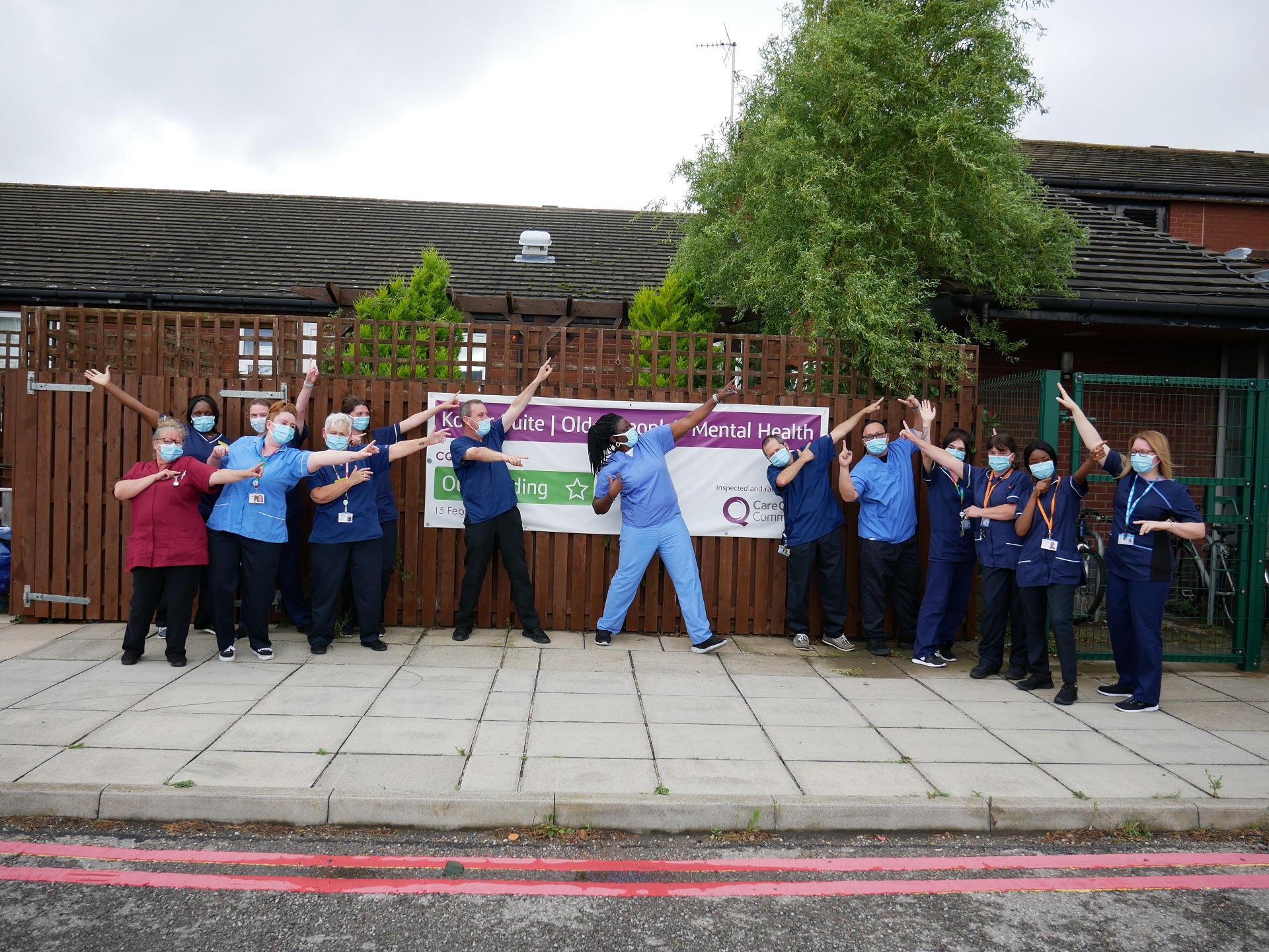
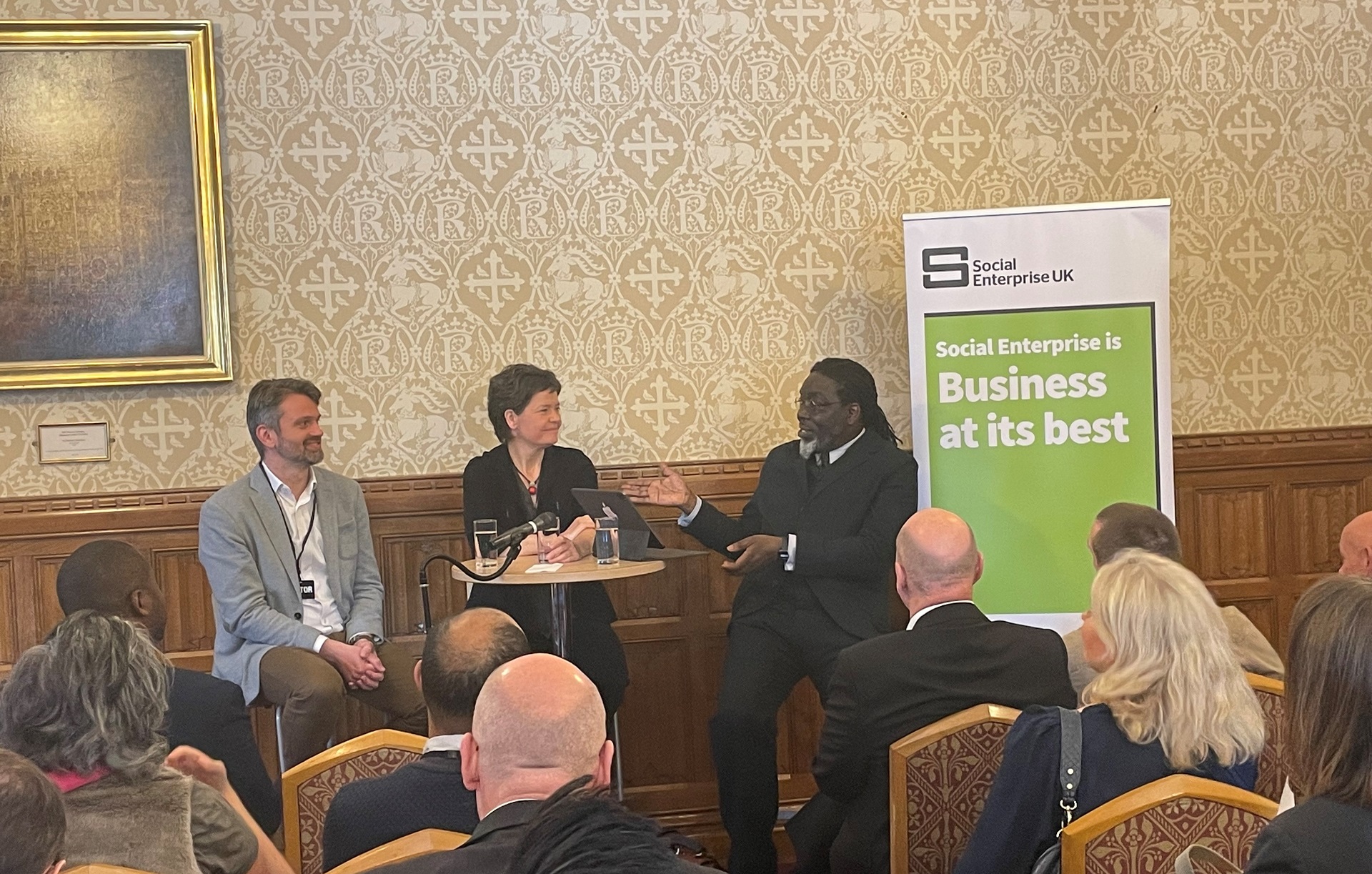
02 Sep

Continue reading

5 min

News and views

North Northants awarded Social Enterprise Place status

North Northamptonshire has been officially named a Social Enterprise Place by Social Enterprise UK - marking it as a national hub for businesses tackling social and environmental issues through enterprise. This status – awarded to just 35 places across the UK - brings national recognition to the area’s thriving network of social enterprises – organisations that reinvest profits to benefit local people and the planet. Social enterprises are businesses that reinvest their profits to tackle social or environmental issues. In North Northamptonshire, they include community cafés, ethical retailers, arts organisations, employment services and transport schemes – all delivering local impact while supporting the economy. Alison Holland, Chair of North Northamptonshire Social Enterprise Network (NNSE) and founder of social enterprise Brightwayz, co-ordinated the bid to become a Social Enterprise Place. “This is a major step forward for North Northamptonshire,” said Alison. “Being recognised as a Social Enterprise Place gives our local businesses a stronger voice and a platform to grow their impact. “Social enterprises are amazing at addressing social and environmental issues in nimble, creative, ethical, effective ways. We know there is strength in numbers and that by being better connected to other Social Enterprise Places we will be able to learn a lot - and share a lot too. This award is not just about local social enterprises but also about those partners around us such as North Northamptonshire Council who collaborate with and support us”. Peter Holbrook, Chief Executive of Social Enterprise UK, said: “Congratulations to North Northants on being named a Social Enterprise Place. Social enterprises make a huge contribution to the county - from providing community energy and affordable housing to running leisure centres, creative projects, workspaces, credit unions and social care. “Of course, this isn’t possible without the strong resilient network of purpose-led businesses in the area, and North Northants’ social enterprises are already playing an incredibly important role in supporting communities, providing critical services to the public, improving the environment, and helping to grow the local economy. “We hope that getting Social Enterprise Place status will help act as a lightning rod to galvanise the social enterprise community, supercharge the sector's growth and deliver the economic transformation needed for the communities of North Northants so that they can realise their full potential.” Cllr Jan O’Hara, Executive Member for Planning and Economic Growth at North Northamptonshire Council, highlighted the importance of social enterprises in the local economy: “It’s great to see how our local social enterprises are coming together and thriving. Congratulations for achieving this status and we are proud to be supporting this. The newly published North Northants Economic Strategy recognises the importance of local social enterprises for the future growth of the county alongside all the community benefits and added social value these businesses bring.” The NNSE network connects, supports and promotes social enterprises in the county. The group currently has more than 40 social enterprises and welcomes new members from across the area. Its aim is to ensure these organisations have the financial, practical and collaborative support they need to grow and deliver real social and environmental benefit. NNSE is also one of six Aspire NN partner organisations. Aspire NN, funded by North Northamptonshire for three years, supports the voluntary, community and social enterprise (VCSE) sector across North Northamptonshire. Membership of the NNSE network is free to local social enterprises. See www.nnse.org.uk for more information.

27 Aug

Continue reading

3 min

Case studies

Tap Social Movement – Cheers! The beer company working to save taxpayers £18bn 

A big hole in the government’s coffers can be plugged by backing small businesses which reduce the gigantic cost of reoffending, saving us all money. Trying to rebuild your life after leaving prison is tough. A stable life needs income, but 74% of ex-offenders are unemployed six months after being released and if you’re not earning a wage, how are you supposed to keep a roof over your head?  A Ministry of Justice (MOJ) report found that financial problems and unemployment are a major factor in people reoffending and 59% of unemployed ex-offenders will reoffend within one year of release from prison.  A government focused on growth needs more people working and contributing taxes; what it doesn’t need is a £18bn hole - the cost of reoffending - in the budget.  One growing business has a simple answer to this: get people ready and qualified for work before they leave and employ prison leavers where they can. Tap Social Movement is proving this model works.  How a beer company reduces reoffending  Appropriately, the idea of Tap Social Movement was first discussed over a few beers; the difference is they still thought it was a good idea in the morning. Tap’s three co-founders all had experience of working in the criminal justice system. Tess Taylor had been working to clear criminal records at Canada’s National Pardon Centre, Tess’s sister Amy was formerly a Policy Advisor at the MOJ, and fellow co-founder Paul Humpherson worked as a criminal barrister.   In 2016, Tess Taylor was visiting different breweries while working for an early pioneer of the independent craft beer movement that has changed the name on beer pumps nationwide. She thought the welcoming, non-judgmental culture of the scene might be the right environment for people to re-enter society. Meanwhile, Amy Taylor had connected with Mark Edwards, Governor at Spring Hill prison, through her work at the MOJ. She’d successfully pitched the idea of getting prisoners on-day release ready for life outside prison by offering them employment while they served the final part of their sentence.    After convincing a brewing expert to join them, pooling their savings, finding a cheap business unit, and buying secondhand equipment, Tap Social Movement was up and running. They took their first employee from Spring Hill Prison six weeks after opening and have never looked back. In nine years, the business has grown to four venues: three tap rooms across Oxford and Banbury along with Proof Social Bakehouse, a bakery and cafe established in their first brewery premises. Plans are also well underway for the launch of an ambitious new venue in early 2026.  Around a third of their staff are ex-offenders and over the years they have employed 60 people with experience of prison.   "From day one Tap Social treated me like family. Nobody asked what I’d done, and nobody judged me. All they wanted from me was that I did my best. And my best is what I did. They brought me out of my shell, showed me I had skills I didn’t know I had, and treated me as a human - like I wasn’t just a number to be locked behind a door or another body counted at roll call," said Terry, who worked at Proof Social Bakehouse after leaving prison.  In stark contrast to the grim statistics at the top of this article, none of their employees reoffended within one year of release, and just 6% reoffended after one year. The conclusion is simple: having a reason to get up every day and earn money means it is less likely someone will reoffend. Some of Tap’s employees move onto other work, but 89% of them are still in employment one year after prison.    The next stage of growth  This year will see further growth for the business. A recent fundraise on crowdfunding platform CrowdCube saw Tap Social raise more than £600,000, part of which will help fund a planned fifth venue, but also to promote that their beers are now available in 220 stores of a well-known national retailer. “It's the first time we've had a listing of this size, so we’re really excited, but we need to make sure the rate of sale is good and strong. We need a proper marketing and PR budget to ensure the beer shifts on the shelves and that people are picking it up,” Tess Taylor said.   Small businesses like Tap Social Movement are the backbone of the British economy, with 99% of all UK businesses being SMEs. The growth of the social enterprise will mean more employment opportunities for ex-offenders, reducing the cost of reoffending, and helping save taxpayers money. For a government intent on breaking down barriers to opportunity and one focused on good jobs and productivity, Tap Social Movement provides a blueprint for achieving the change the Labour Party successfully campaigned on.  tapsocialmovement.com

19 Aug

Continue reading

4 min

Member updates

King Charles III grants video production company Chocolate Films with a Royal Warrant in recognition of its work

Social Enterprise, Chocolate Films has been awarded a Royal Warrant by King Charles III for Video Production Services. Chocolate Films is currently the only video production company of its kind to hold a Royal Warrant. The warrant is in recognition of over a decade of service to the Royal Household and Royal Collection Trust. Video production company and social enterprise Chocolate Films, is proud to announce that it has been granted a Royal Warrant of Appointment by His Majesty King Charles III. This highly prestigious endorsement recognises Chocolate Films for its service to the Royal Household and Royal Collection Trust. Since its first commission in 2013, Chocolate Films has produced a diverse range of content for the Royal Household and Royal Collection Trust, working from its London and Glasgow offices. The Royal Warrant is granted to companies that have supplied goods or services to the Royal Household for at least five years and continue to uphold the highest standards of sustainability, quality and reliability. This appointment is not only a significant achievement for Chocolate Films as a creative agency, but also as a social enterprise. The company reinvests its profits into community filmmaking programmes across the UK, working with young people, underrepresented voices, and those with limited access to the creative industries. “This is a landmark moment for us. As a small business and a social enterprise we are beyond proud to be honoured in this way.” said Mark Currie, Director and Co-Founder of Chocolate Films. “It’s a testament to the creativity and commitment of our team, and to our unique approach to film production — combining storytelling, craftsmanship and a strong social mission.” Chocolate Films joins a distinguished group of Royal Warrant holders, including heritage British brands such as Fortnum & Mason, Barbour, and Twinings. It also shares the honour with luxury chocolate companies such as Prestat and Bendicks — a sweet alignment for a company named ‘Chocolate Films’. As a new member of the Royal Warrant Holders Association, Chocolate Films also looks forward to actively supporting the association’s charitable initiatives and promoting excellence and community service across its industry. About Chocolate Films Chocolate Films was founded in 2001 by creative partners Rachel Wang and Mark Currie, Chocolate Films was built on a belief that access to media careers should not be limited to the few. Its mission is to transform lives through film. Starting as a two-person team, the company has grown to a full-time staff of 22. It now delivers a wide range of content including documentaries, campaign films, animations and branded content across sectors such as heritage, education, and charity. Chocolate Films has two bases: the London HQ at the purpose-built Nine Elms Studio, and the Scottish office in Central Glasgow. As a social enterprise, Chocolate Films goes beyond production. Every year, it runs filmmaking workshops with over 3,000 young people from disadvantaged or underrepresented backgrounds, opening doors to creative careers and helping shape the next generation of storytellers. In 2025 Chocolate Films relaunches its flagship project 1000Londoners, creating a portrait of a city through a collection of 1000 short documentaries about the people that live and work in the city. It is also a certified Living Wage Employer, committed to equality, inclusion, and environmental sustainability. Chocolate Films operates a net zero model, using electric vehicles, low-carbon equipment, and sustainable energy sources. It maintains a no air travel policy unless absolutely necessary, and works with local crews for international projects. chocolatefilms.com

25 Jul

Continue reading

3 min

Member updates

Ground-breaking Kitty’s Launderette plans expansion with new community crowdfunder

The north Liverpool-based cooperative social enterprise is continuing its laundry adventure, delivering more positive social impact with new sustainable growth plans. Kitty’s Launderette plans to grow the scale and impact of its work across the Liverpool city region. It plans to purchase an electric delivery van and charge point, as well as install a solar panel array on the roof. This will enable them to reach more customers and increase the long term environmental sustainability of the community business. To do so, they have launched a fundraising campaign on Crowdfunder UK, with a plan to raise £20,000 by 30th July. The launderette, based in Anfield/Everton offers good quality, affordable and environmental laundry services, as well as an accessible social space. Alongside becoming a thriving community hub, its work tackles social isolation and hygiene poverty with a programme that includes film nights, knitting groups, social history projects and subsidised laundry services for people struggling with the cost-of-living crisis. Supporters can choose from a range of rewards made by local artists and craftspeople, including recycled textile tote bags, natural soaps, postcards and enamel pin badges. There are also opportunities to hire the launderette for an event, or name a solar panel on its roof. Kitty’s Launderette was established in 2019 by a group of local residents to support their communityand invests everything it makes back into local jobs paying the Real Living Wage, quality services andfree social and educational events. It has survived the pandemic within their first year, and growninto a thriving community hub. In 2023 Kitty’s won the Community-Based Social Enterprise Awardfrom Social Enterprise UK, at the national sector body awards, which recognise impact andinnovation in purpose-led business. An independent Social Impact Report conducted in 2024, found that for every £1 spent or investedinto Kitty’s Launderette, they turn this into £43 of Social Value for their community. Grace Harrison, Organisational Development Lead at Kitty’s, says: “Kitty's Launderette has only gotthis far through the amazing support of people near and far who have believed in us and our vision.“ When Kitty’s Launderette launched its first crowdfunder back in 2018, it received massive interest and support – from Anfield to Canada, and was featured on the BBC, The Independent, The Guardian and Elle Magazine. Its 366 backers on the platform Kickstarter, included eight people who chose to name washing machines after loved ones. The plaques, proudly named after Granny Trixie, Dominic Magurie and Phyllis, can still be seen on the machines in Kitty’s today. Grace says “We were bowled over by the excitement and trust people put in us to deliver on our commitment to building a community launderette! We are so proud to say we achieved our dream with the support of our community. We really wanted to invite everyone to be part of this next stage of our development and so when people see our amazing new lecky van driving around town they can know they played a role in making that happen!“ It is the launderette’s experience of community need, shaped over the last six years, that has driven this new investment in environmentally-sustainable growth. Anthony Scott, Community Lead at Kitty’s said: “We have been working towards plans for a delivery service for some time. We established a temporary delivery service during the Covid-19 pandemic to support residents who were shielding at home in partnership with another local social enterprise, Peloton, using their cargo bikes. Recently, we have been running a commercial delivery service pilot with a local cab driver. We Know there is lots of interest in us establishing a permanent service with lots of capacity for responding to the changing needs of our community." Kitty’s has been committed to being an environmentally conscious business from the start. All of its machines are electric, powered by 100% renewable electricity. The plans for an electric van, powered by solar panels, enables Kitty’s to continue to grow, while minimising the impact on the environment and reducing localised emissions. In 2023, Kitty’s won the Community-Based Social Enterprise Award at the Social Enterprise UK Awards, receiving national recognition for the role it plays in its community. The awards recognise impact and innovation in purpose-led business. The campaign features a beautiful animated film from local artists Laura Spark and Jack Whiteley. To find out more about the campaign and take part, head to https://www.crowdfunder.co.uk/p/kittys-laundry-deliveries. https://vimeo.com/1094783968?fl=pl&fe=sh kittyslaundrette.org.uk

22 Jul

Continue reading

3 min

Case studies

LEYF – Affordable childcare: the bedrock for economic growth

If we want workers to be productive and boost the economy, someone is going to have to look after the kids. London Early Years Foundation is helping to make childcare affordable for everyone. You wouldn’t think the late, great Whitney Houston and PM Keir Starmer have much in common. But just as Whitney believed children are the future and that we need to teach them well, Keir Starmer wrote an election-winning manifesto that promised ‘A new Britain … where our children are equipped with the skills to thrive in the future’. His government has had a relentless focus on growth since gaining power, but growth requires productivity and if the workers are going to be productive, someone is going to have to look after the kids. And for that to happen, childcare needs to be affordable for everyone. Providing access to high quality, affordable early years education and care is the purpose of London Early Years Foundation (LEYF), which looks after 4,000 children across 43 nurseries in 13 London boroughs. Only 14% of nurseries nationally are rated ‘outstanding’ by children's services regulator Ofsted but 46% of LEYF’s nurseries are rated as such. One mother, whose child attends LEYF New Cross Nursery & Pre-School, describes it as “Excellent. Staff are well trained, clearly love their job and are very caring. Children are entertained with many activities promoting language, musical awareness, physical agility etc. We're glad our child attends New Cross and wouldn't hesitate to recommend it." Three quarters of LEYF’s nurseries are situated in areas identified as having high levels of deprivation, but all children are welcome, irrespective of social background or ability. Equal access to childcare is made possible by LEYF’s unique cross-subsidiary model, with profits from nurseries in wealthier areas helping to subsidise places for children in less affluent communities. Financially, better performing nurseries in Crystal Palace, Camberwell and Maida Value subsidise nursery places in poorer neighbourhoods. “Since our son started attending LEYF Nursery Barking Riverside, we've seen remarkable growth in him. He has become more confident, independent, and sociable. What we appreciate most is the strong support and communication we receive from the staff. It truly feels like a partnership, with everyone working together to ensure the best development for our son,” commented another parent. Growing up together The organisation started in 1903 as Westminster Health Society during a time of poverty and shockingly high mortality when founders embarked on an ambitious plan to promote child welfare and family health at the heart of a community in need. More than a century later, that focus on making a positive social impact has blossomed into all areas of the business. Many of LEYF’s senior staff started out as apprentices in the organisation, helped by a Career Pathways programme which supports growth into leadership. Of the 1,000 staff, 120 are apprentices, an approach which reduces recruitment costs, strengthens retention, and supports social mobility. Bobbi Jo describes how, when she first started as a LEYF apprentice, she just wanted to find a job she enjoyed where she could keep learning. “I did and I’ve never stopped learning. LEYF supported me through my degree and gave me the confidence to keep progressing. I always hoped I’d become a manager by the time I was 30… but I made it at 25! It’s been such a journey.” An Early Years Degree graduate, Bobbi Jo in now a Nursery Manager at LEYF’s Bessborough Nursery and Pre-School. All staff (including the chefs and cleaners) can access tailored training, covering subjects such as child development, sustainability, SEND, and nutrition – ensuring children benefit from confident, knowledgeable educators. LEYF also offers a bespoke Early Years degree with the University of Wolverhampton. Keir Starmer's manifesto focused on growth that promised ‘A new Britain … where our children are equipped with the skills to thrive in the future’. He would no doubt be happy to know that LEYF’s work has led to business growth, with revenue increasing by 11% and 75 jobs being created last year. LEYF has grown steadily and (importantly for a social business) sustainably over the past decade, expanding from 23 social enterprise nurseries in 2014 to 43 nurseries by 2025. This contrasts with the picture generally, with research by UCL finding that the number of nurseries in England declined between 2018 and 2024. They found a 19% decline in the not-for-profit group.  If LEYF’s trajectory continues, it will help to meet the increasing demand for quality childcare. A 2024 report by the London Assembly found a shortage of available childcare and staff shortages, noting the knock-on effect this can have on women, who statistically are more likely to have to choose between career progression and childcare costs. Instead of being surrendered to shareholders, as a social enterprise, LEYF’s profits are reinvested to provide more childcare services to more communities. A growing business that nurtures the development of children and staff, making for healthier, happier communities. That’s the kind of growth both the Prime Minister and the electorate can get behind. leyf.org.uk

21 Jul

Continue reading

4 min

News and views

The Interconnectivity of Impact

For impact to work, it can’t exist in a silo. Most profit-focused businesses are beholden to their shareholders and owners to generate as much revenue as they can, with no real obligation to give back. That is not the focus of social enterprise. Our business model centres purpose, and the best way to purposely serve your community is to work with the community. Cooperation is the name of the game. A strong role model of purpose-led community activity can be found in Ashford, named a Social Enterprise Place thanks to its collaborative ecosystem. “Collaboration throughout the social enterprise sector in Kent is really important,” said Rebecca Smith, Chief Executive Officer of Social Enterprise Kent (SEK). “We find through networking and bringing people together at conferences, events and training sessions, it creates a touchpoint to spark ideas and raise issues. It’s about bringing people together as a team and not working in silos is what makes the voluntary, community and social enterprise sector stronger.” Our member SEK have nurtured this impact community as they have done for the past 40 years. To find out more, we visited them at their new, volunteer-run SE Kitchen, now their second social supermarket in the county after Ramsgate. Ashford MP Sojan Joseph visiting the SE Kitchen They transformed this former art supply shop into a real community space, providing affordable and healthy grocery options from food charity FareShare as well as other suppliers working closely with local farmers (it is the garden of England after all). Of course, this work wouldn’t be possible without vital partnerships. In fact, they work with more than 100 partners, consistently delivering at least £1 millon a year in funding, allowing them to support great projects like the Social Impact Gateway or Thanet Social Enterprise Boost. From working with East Kent Health Care Partnership to highlight health inequalities to partnering with corporate organisations such as Amey for their Elevate programme creating apprenticeship opportunities for care leavers, they demonstrate how these conversations across organisations form a lynchpin of positive influence. After a delicious lunch provided by Lily’s Social Kitchen, we visited more of the local social enterprises which make up the rich network of organisations in our Places programme. These were some of the businesses championing the movement: Chatting with the volunteers at The Beehive Ashford The Beehive Ashford - a shop which not only sells second-hand clothes, but also provides skills workshops, a volunteer-run café, and hosts several clubs including knitting and a book club. It also offers women referred by local services a place to access free clothing. Made in Ashford - a vibrant and popular gift shop which started its life as a pop-up ten years ago. It houses the handmade craftworks of more than 70 artists from across Kent in-store and online. The Coachworks - a trendy, repurposed multi-use space by the train station hosting street food, live music and entertainment events, and workspaces. Going back to the central theme of collaboration, it shows there’s a concerted effort for social entrepreneurs in the area to pool their resources, doing much more for the community, local economy and environment than they could on their own. A spirit of camaraderie which helps deliver a better, holistic service. As a Social Enterprise Place, Ashford proves its status as a hot spot for social impact activity thanks to this ethos. Browsing the crafts at Made in Ashford Rebecca added: “It’s been fantastic having Social Enterprise UK down here to see our work. The theme has really been about collaboration across the board with other social enterprises and charities, the wider business community and our public sector partners. It makes our programmes better, allowing our entrepreneurs to be given the right tools and funding to solve the specific problems they are facing in their local community.” As our flagship data shows, there are more than 131,000 social enterprise businesses in the UK, all working towards benefitting people and planet in their own ways. Imagine the possibilities of replicating the collaborative efforts of the impact community we’ve seen here in Ashford across the whole country? This is why we do what we do, and we’re proud to see it going from strength to strength.

11 Jun

Continue reading

3 min

UK Social Enterprise Awards 2025

The categories

The categories for the UK Social Enterprise Awards have been created to reflect the diversity within the social enterprise community. More information, including detailed category criteria, can be found on the application portal. Please not that for most of these awards social enterprises need to have been trading for at least two years with the exception of the One to Watch Award. APPLICATIONS FOR THE UK SOCIAL ENTERPRISE AWARDS ARE NOW CLOSED UK Social Enterprise of the Year Sponsored by Keegan & Pennykid The overall award for a social enterprise that has a clear vision, excellence in impact, and that has demonstrated and promoted social enterprise beyond the sector. Apply now One to Watch Award Sponsored by PwC The One to Watch Award is for a start-up social enterprise. Key to winning this award is an ability to clearly articulate their future vision and how they are going to achieve it. Apply now Prove It: Social Impact Award Sponsored by Linklaters For a social enterprise that can truly demonstrate and communicate their impact with their stakeholders. Apply now ‘Buy Social’ Market Builder Award Sponsored by Corps Security For a social enterprise, public sector body or private sector organisation that has demonstrably made efforts within its own organisation and remit to create more opportunities to buy from social enterprises. Apply now Social Investment Deal of the Year Sponsored by Good Finance For an organisation that has been part of a great investment deal in the last 12 months that has helped the social enterprise to grow or the movement as a whole to develop and flourish. Apply now Public Services Social Enterprise of the Year Sponsored by GLL For a social enterprise for whom the majority of their income comes from the public sector and which delivers public services (for central or local government, NHS, criminal justice or other statutory body). Apply now Consumer Facing Social Enterprise of the Year For a social enterprise that delivers a retail product or service to the general public. Apply now Education, Training & Jobs Social Enterprise of the Year For a social enterprise in the education, training or employment sectors that can demonstrate excellence in vision and strategic direction, and clearly evidence their social, environmental and community impact. Apply now Environmental Social Enterprise of the Year Sponsored by Landmarc For a social enterprise in the green and environmental sector with a clear evidenced environmental impact. Apply now Social Enterprise Building Diversity, Inclusion, Equity & Justice Award Social justice is fundamental to the social enterprise movement. This category is open to all social enterprises who are addressing issues around diversity, inclusion and equity. Apply now Social Enterprise Women’s Champion of the Year For a woman working in the senior leadership team of a social enterprise who represents excellence in her field of work. Apply now International Impact Award For a social enterprise working internationally, and which are having a big impact in their field. This award is open to UK-based organisations only with existing international operations. Apply now Community-Based Social Enterprise of the Year Sponsored by the Esmée Fairbairn Foundation This award is for a social enterprise that trades for the benefit of their community, making a real local impact. Apply now Social Enterprise Innovation of the Year A new award is recognising a social enterprise that has brought something truly innovative to market in the past year. Apply now Tech for Good: Technology Social Enterprise of the Year Sponsored by Mitie For a social enterprise that uses technology to achieve social impact. Apply now

21 May

Continue reading

3 min

Health and social care case studies

Navigo

North East Lincolnshire is pioneering a radical model of mental healthcare that is improving outcomes and cutting waiting times. The key: empowering patients and treating them holistically. The data tells its own story: 94% of emergency mental health referrals seen within four hours compared with just 50% across England. 81% of patients in settled accommodation compared to 24% nationally. Older patients at risk of harming themselves or others are restrained over 50% fewer times than the English average. 80% of staff say they would be happy for a friend or relative to be treated by Navigo compared to the 64% average for mental health providers nationally.* Clearly, Navigo - the social enterprise that delivers mental health services for the NHS in North East Lincolnshire - is making breakthroughs that elude many other providers. What are they doing differently? Jobs, homes, human connection That question is answered succinctly by Simon Beeton - Navigo’s Chief Executive. While conventional mental health services seek to “diagnose, treat, and discharge”, Navigo takes a holistic approach, not only helping people address their mental health condition but also working with them to find “somewhere to live, somewhere to work, and someone to love (or, at least, really get on with!)”. It’s an approach rooted in three transformational observations that fundamentally challenges how healthcare is currently delivered by the NHS. People are complex wholes - treating any medical condition, let alone a mental health one, without understanding the wider context of factors affecting patients’ lives will always be limited in its impact. There are very often social and economic drivers behind poor mental health which simply cannot be ignored when trying to help a person recover: debt, poor housing, unemployment, poverty. Mental health care should be as much about helping people regain a sense of agency and control in their lives as treating the condition. Approaches that reinforce passivity or helplessness can exacerbate as much as ameliorate mental ill-health. For Navigo, that means adopting holistic, empowering treatment frameworks but it also means going much further than conventional mental health services in supporting people. Nowhere is that more apparent than in Tukes. Named after William Tuke - the pioneering mental health campaigner and innovator - the initiative uses Navigo’s resources to help patients secure employment, develop skills and, maybe most importantly, form the human connection that comes from having a job. This is why Navigo - unlike any other NHS mental health service you may have come across - owns a garden centre, a cafe and a cleaning service to provide a job, income and training for their patients. It’s also why Navigo operates as a social landlord, as well as working closely with other social landlords, to provide the affordable, decent accommodation that so many with mental health conditions struggle to find and retain. Lighting a beacon for Barbara That principle of giving people agency and self-efficacy by addressing the wider conditions of their life runs so deep in Navigo that it has shaped its whole corporate structure. Navigo is effectively run as a co-operative that not only gives employees a major say in the organisation but also gives the same rights to patients who can get deeply involved in the running and shaping of the service. Indeed, you are just as likely to hear the people helped by Navigo being referred to, and referring to themselves, as ‘members’ than as ‘patients’. It’s also why Navigo is often described by its people as a ‘community’ or even a ‘family’ rather than a healthcare service or organisation. It’s a model that helps create that crucial space for human connection but is also credited with generating a culture of openness to innovation that drives so much of what Navigo does. Patients inevitably know best what needs to change to improve their experience and hasten their recovery. They also have little tolerance for the usual organisational obstacles placed in the way of necessary improvements. Thus Navigo is always looking to do things the best way they can and, if necessary, cut through the institutional noise that stops that happening. Barbara is a perfect illustration of this principle. Deeply unhappy with the fact that her husband who had severe dementia was being placed in a care home many miles away due to lack of appropriate accommodation, Barbara needed, and demanded, change. Always proactive when the wider system generates a problem, Navigo decided to act. Three new centres were set up providing forty places for older people with dementia and/or mental health conditions all located within North East Lincolnshire. One of the facilities was named Barbara’s Beacon to honour the key role Barbara played in making the change happen. And, of course, the same holistic and empowering approach that runs through all of Navigo’s work underpins the care provided at Barbara’s Beacon and the other new centres. So, Navigo is proving that compassionate, holistic, empowering care for patients need not be sacrificed in the pursuit of a more responsive, efficient service. In fact, the stats quoted at the start of this article show precisely the opposite: that the key to delivering a more responsive, efficient service is precisely that compassionate, holistic, empowering approach. But, after all, those are just stats and abstract principles. Far better to hear how Navigo’s ethos changes lives in practice by listening to Jemma. Jemma came to Navigo as a profoundly shy and fearful person with borderline personality disorder. But over time she changed: increasingly helping other Navigo members deal with their challenges, she ultimately set up and ran a support group for people who self harm. Her story provides an eloquent insight into the “big family” that is Navigo and the way it transforms lives. You can find plenty of other testimonies from staff and members alongside Jemma’s on the same YouTube channel. *Data sourced from What Makes Us Navigo. By Adam Lent This case study forms part of a series we are producing together with the healthcare consultancy Baxendale and think tank King’s Fund, to demonstrate the innovation shown by social enterprises delivering health and social care.

19 May

Continue reading

5 min

Knowledge Centre Blogs

Navigating the language of social investing: the role of power and ambiguity

Academic research shows how power dynamics between social investors and social enterprises can shift in the face of major economic and social shocks, such as COVID. Dr Julia Morley from the London School of Economics explains the key findings of her recent paper Talking Across Purposes. Social investing has become a transformative force, directing private capital towards social enterprises to achieve financial returns and social good. In the UK alone, the sector saw investments totalling £830 million in 2021, highlighting its significant growth and impact. However, the diverse backgrounds of stakeholders, including investors, social enterprises, and policymakers, often lead to communication challenges, particularly regarding the terminology used within the sector. Language and misunderstandings: The ambiguous nature of key terms is at the core of many misunderstandings in social investing. For instance, the definition of "social impact" can vary widely among stakeholders. For some, it might mean quantifiable outcomes like employment rates, while for others, it refers to more nebulous benefits, such as improvements in well-being. While initially beneficial in allowing varied parties to find common ground, this ambiguity can also lead to significant challenges as projects develop. Can ambiguity be useful? Ambiguity does have its advantages. It enables a broad range of stakeholders to engage with the idea of social impact without being bogged down by rigid definitions. This can foster collaboration across different sectors and viewpoints, facilitating initial agreements and partnerships that might not otherwise be possible. The downside: Over time, however, the benefits of this ambiguity diminish. Different interpretations of the same terms can lead to misunderstandings and misalignments between investors and social enterprises. These miscommunications can create friction and inefficiencies, hindering the sector's overall effectiveness. Push for precision: In response to these challenges, there has been a move towards standardisation and clarity in the language used in social investing. Investors, often holding greater power in these discussions, have led the push for defining terms and setting standards. This has included the creation of glossaries and training programs aimed at aligning the sector's language with investor expectations. Shifting power dynamics: The COVID-19 pandemic shifted power dynamics within the social investment sector. The crisis underscored the importance of knowledge of the operational realities of delivering services to beneficiaries and shifted the balance of authority over knowledge to social enterprises. During this period of instability and change, their local knowledge of beneficiaries’ needs and frontline operational issues gave their views more weight relative to the traditional financial expertise that investors had previously leveraged. This shift in the balance of power was short-lived, however. As the status quo returned, so did the perceived relevance and value of investors’ financial expertise in social investing. Conclusion: The experiences during the pandemic have provided valuable insights into the importance of language in social investing and how significant disruptions can shift the authority of knowledge, alter power dynamics, and shape how the meanings of terms – and hence practices within the sector - evolve. As the sector continues to grow, both investors and social enterprises must remain aware of these dynamics to foster an inclusive and effective social investing environment. Key takeaways: While initially helpful, the ambiguity in social investing terminology can lead to challenges as misunderstandings become apparent. Standardisation efforts are crucial but do not reflect all stakeholders’ interests equally. Significant destabilising events, like the pandemic, can reshape power structures, offering lessons on how to manage and negotiate terms in social investing more equitably. The full paper which this piece summarises can be found here.  This article is part of SEUK’s Social Enterprise Knowledge Centre University Network – to find out more please contact research@socialenterprise.org.uk

08 May

Continue reading

3 min

Member updates

London Early Years Foundation awarded King’s Award for Enterprise in Sustainable Development

The London Early Years Foundation (LEYF) has been honoured with a King’s Award for Enterprise in Sustainable Development, recognising its groundbreaking approach to Early Years Education and Care through the lens of social enterprise and sustainability. LEYF is one of only 197 organisations nationally to be recognised with the prestigious King’s Award for Enterprise. Announced on Tuesday 6th May, the accolade celebrates LEYF’s long-standing commitment to delivering high-quality, affordable Early Years Education and Care that prioritises access, inclusion, community and environmental impact. At the core of LEYF’s approach is the belief that education for young children can be a powerful force for building a more equitable, inclusive, and environmentally responsible society. Sustainability is fully embedded into every aspect of nursery life – from social enterprise business, our seasonal menus and using green energy across the sites, to designing a pedagogy that gives children a voice and nurtures their love for nature and their role as future changemakers. LEYF teachers are actively empowered to become sustainability informed and lead sustainability initiatives, making every team member a champion for long-term impact. This whole-system approach is driven by the London Institute of Early Years, LEYF’s dedicated research and training hub, and its: Action for Sustainability in Education, Community of Practice a vibrant network focused on embedding the three pillars of sustainability – economic, social, and environmental sustainability into daily practice. As pioneers in the sector, LEYF created the UK’s first Early Years Sustainability Strategy, aligned with the UN’s Sustainable Development Goals. It was also the first childcare organisation to achieve ISO 14001 certification and ongoing carbon footprint measurement and reduction through Planet Mark. With sustainability threaded through its governance, leadership, operations, and pedagogy, LEYF is actively working towards achieving net-zero by 2030. Its sector-first Level 4 Qualification in Sustainability in Early Years has already empowered 68 professionals, with many more set to follow. Founded in 1903, LEYF is the UK’s largest charitable social enterprise in Early Years education, employing over 1,000 staff and running a network of 43 nurseries across 13 London boroughs. Serving more than 4,000 children each year, LEYF combines business excellence with a powerful social purpose – reinvesting profits to support children from disadvantaged backgrounds and embedding sustainability into every aspect of its work. Dr June O’Sullivan OBE, CEO of LEYF, said: "We are thrilled to receive the King’s Award for Enterprise in Sustainable Development. This is a powerful endorsement of our belief that Early Years Education and Care must be a force for social justice and environmental good. At LEYF, sustainability runs through everything we do – from how we run our nurseries, to how we teach and support our children, families and staff. From evidence-based pedagogy to sustainable practice, and from apprenticeships to leadership pathways, everything we do is about creating real, lasting impact. We hope this recognition inspires others across the sector to embed sustainable thinking from the ground up.” Nick Corlett, Sustainability Manager at London Early Years Foundation (LEYF) says:  "At LEYF, sustainability isn’t an afterthought – it’s at the heart of everything we do and shapes our pedagogy and practice, fuels our values, and guides our daily decisions. Powered by the London Institute of Early Years, LEYF’s pioneering research and training hub, and strengthened through our Action for Sustainability in Education community of practice, we embed the three pillars of sustainability: economic, social, and environmental into everyday activity across all of our nurseries. "We are therefore honoured to receive the King’s Award and proud that our deep-rooted commitment to sustainability has been recognised at this level. This achievement is a testament to the dedication, energy, and teamwork of everyone across LEYF. We hope it sparks a wider ambition to reimagine Early Years Education and Care, where sustainability is a force for social good, builds community resilience, and a fairer future for every child." The King’s Awards for Enterprise, previously known as The Queen’s Awards for Enterprise, were renamed in 2023 to reflect His Majesty the King’s desire to continue the legacy of HM Queen Elizabeth II by recognising outstanding UK businesses. Now in its 59th year, the Award remains the most prestigious business accolade in the country, with successful organisations able to use the esteemed King’s Awards Emblem for the next five years. About LEYF The London Early Years Foundation (LEYF) is the UK’s largest charitable social enterprise for Early Years Education and Care (EYEC) operating 43 nurseries across 13 London boroughs. For over 120 years, LEYF has successfully combined business excellence with social purpose to deliver high-quality, affordable early education to over 4,000 children each year with a focus on children from disadvantaged backgrounds. 75% of LEYF nurseries are situated in areas identified as having high levels of deprivation. 46% of LEYF nurseries are rated Outstanding by Ofsted, far exceeding the national average of 14%. The LEYF Pedagogy focuses on a placing the child at the centre of all business and pedagogical decisions so it can drive a consistent pedagogical approach, lead an ambitious curriculum underpinned by harmonious relationships and community engagement which together enhance the cultural capital of the children, families and staff and build resilient, curious and confident global citizens. LEYF’s business model is built on strategic oversight, operational efficiency, researched -based practice and strong purpose-led leadership. By blending business rigour with social ambition, LEYF offers a consistent, scalable model for delivering excellence in Early Years – one that is financially sound, socially responsible, and always child-focused. leyf.org.uk Photo Credit - LEYF Marsham Street Nursery and Pre-School - Francoise Facella

08 May

Continue reading

4 min

Social Enterprise Knowledge Centre

Social enterprise publications

Articles and publications covering evidence on social enterprise in the UK and globally. If you’d like your publication to feature, please contact jess.lomax@socialenterprise.org.uk Social enterprise growth by design: using design to incubate and accelerate social enterprises - 2024 Authors/publication: Kwon, H., Choi, Y. and Hazenberg, R. Social Enterprise Journal Aims to understand the impact of design on social enterprise ecosystems and on improving outcomes for social entrepreneurs. The Purpose Dividend - 2023 Authors/publication: Demos Explores how shifting towards a purpose-led economy with better business at its centre would boost GDP, generate more capital investment, and increase wages for the lowest paid in society. Understanding the Contribution of Social Enterprise to the Social Care Sector: An Exploratory Study - 2023 Authors/publication: Dr Kelly Hall, Dr Philip Kinghorn, Dr Chloe Alexander, Kelly Hayward, Dr Janelle Kerlin, Meng Ye Explores the role of social enterprises in the social care sector, and how they compare to for-profit and not-for-profit providers. Do Social Enterprises Fulfil their Social Promise? Quality of Social Care CICs and Other Legal Forms - 2023 Authors/publication: Janelle Kerlin, Meng Ye, Kelly Hall Examines why social care social enterprises consistently outperform for-profit social care providers on all social care quality measures. Public service mutuals: Transforming how services are delivered through social enterprise and democratic governance - 2022 Authors/publication: Vickers, I., Lyon, F., Sepulveda Ramirez, L. and Brennan, G Demonstrates the effectiveness of the mutual model and how it has been adapted in diverse contexts to deliver public and community services. Financing Social Enterprise in the UK: Responding to New Challenges in Competitive Markets Authors/publication: Mswaka, W., Aluko, O., Hussein, S., Armindo dos Santos de Sousa, T. and Cai, H Scrutinises the operations of social entrepreneurs in resource-constrained environments, highlighting how opportunity spotting and innovation in financing strategies are central to effectively financing social enterprise. The Ecosystem of UK Social Entrepreneurship: A Meta-Analysis of Contemporary Studies Authors/publication: Gareth R. T. White, Robert Allen, Anthony Samuel, Dan Taylor, Robert Thomas, Paul Jones Examines social enterprises as both an alternative and addition to traditional enterprise ecosystems, and identifies constraints on the development and success of social enterprise ecosystems in areas of economic deprivation. Gender Empowerment in Social Enterprises in the UK Authors/publication: Maria Granados, Lilian Miles, Anastasia Alexeeva A gender empowerment guide for use by social enterprises, to empower the women they employ. Social Enterprise Places: A Place-Based Initiative Facilitating Syntactic, Semantic, and Pragmatic Constructions of Legitimacy - 2021 Authors/publication: Anthony Samuel , Gareth R.T. White, Kenneth Peattie, Robert Thomas, Aston University Examines how the Social Enterprise Place programme has legitimised social enterprises by enabling the identification of common social goals and the mobilisation of resources towards their resolution. Social Enterprise in the UK: Models and Trajectories - 2021 Authors/publication: Mike Aiken, Roger Spear, Fergus Lyon, Simon Teasdale, Richard Hazenberg, Mike Bull, Anna Kopec Massey Examines the landscape of social enterprises operating in the UK, including their models, fields of operation, and trajectories. Social Enterprise and Social Entrepreneurship: Developing the Evidence Base Using the UK Small Business Survey - 2020 Authors/publication: Catherine Robinson This review considers the developments amongst social enterprises in the UK. Using the Small Business Survey, it compares those small firms in the UK that declare themselves to be social enterprises with traditional for-profit firms.  The Contribution of the Social Enterprise Sector to the UK Economy - 2019 Authors/publication: Kah, S. European Journal of Business and Management Presents the development, scale, and scope of social enterprises, and examines their social, economic, and environmental contributions to the UK. Social Enterprises and their Ecosystems in Europe - 2019 Authors/publication: Stumbitz, B., Vickers, I. and Lyon, F Explores the growth of the social enterprise sector, and how public policy has supported the growth of social enterprise ecosystems in Europe. The Emergence of Social Innovation within the Social Economy: The Case of Social Enterprises in England -2019 Authors/publication: Irurita, M Examines how social entrepreneurs develop innovative ideas to solve important societal problems. The Evaluation of CSR and Social Value Practices Among UK Commercial and Social Enterprises - 2018 Authors/publication: Paul Agu Igwe, Afam Icha-Ituma, Nnamdi O. Madichie Evaluates the scope of CSR initiatives among corporations and social enterprises, finding that social enterprises embed social value initiatives during the enterprise creation stage. Progressive Business Models: Creating Sustainable and Pro-Social Enterprise - 2018 Authors/publication: O'Higgins, Eleanor and Zsolnai, László, eds An analysis of progressive businesses operating across the world. The Age of the Social Entrepreneur - 2017 Authors/publication: Mhairi Tordoff, Demos Argues that although it is early days, social enterprises are a dynamic and ambitious section of our economy that contribute billions to the economy and employs millions of people. Social Enterprises, Social Inclusion, and Positive Social Change - 2017 Authors/publication: Ute Stephan, Aston University Demonstrates how social enterprise can be a force for social inclusion and social change. The Place of Social Enterprise in UK Contemporary Policy - 2016 Authors/publication: Ian Buchanan Examines the role of the third sector in addressing perceived failures in state welfare provision. Social Enterprise as Hybrid Organisations: A Review and Research Agenda - 2014 Author/publication: Bob Doherty Assesses the influence of the dual mission (financial sustainability and social purpose) on social enterprise management. Measuring social impact in social enterprise: the state of thought and practice in the UK - 2013 Author/publication: Jim Clifford Kate Markey and Natasha Malpani Explores the common threads between impact measurement tools and approaches, and how measurement varies to meet differing commissioning areas for social enterprises working in public service markets.

06 May

Continue reading

4 min

Health and social care case studies

FCMS

A pioneering social enterprise in northern England offers a vision of what the NHS could be like if it took prevention seriously Why would a healthcare provider fund a cafe in a primary school? Or support a confidence-building youth club? And why on earth would the same organisation provide cash to help its employees repair their car, fix a leak, even set up their own tattoo business. From the perspective of conventional healthcare, this is all very puzzling. Until that is you understand the ethos animating FCMS - a social enterprise operating across northern England. The idea is simple: keeping and making people happy and healthy not simply delivering healthcare. In practice, that does mean providing some demanding healthcare services: urgent treatment centres, emergency dental care, the 111 helpline, diagnostic services, and many others.  But what makes FCMS different is its determination to set this work in a much wider context of health inequalities and the social conditions that lead to either good or bad health and well-being. Put simply, FCMS doesn’t think it’s enough to just patch people up who come through their doors - they also aim to stop people coming through their doors in the first place. And that means intervening elsewhere. Tea and cake The school cafe is a case in point. Based in Flakefleet Primary School in Fleetwood and set-up with funding from FCMS, the Strive cafe serves a number of purposes. It creates a very pleasant place for human connection in an area facing deep poverty and isolation. It acts as a welcoming hub where people can come to seek help from local public services and the voluntary sector. It gives pupils and their families a relaxing space to speak to school staff about challenges they may be facing. And, of course, it also serves excellent but affordable coffee, tea and cake. Is Strive a health intervention? In the conventional healthcare world, it most certainly is not. Getting a ‘business case’ to fund Strive approved within an NHS Trust would be a challenge to say the least. But from the point of view of FCMS, Strive is very much an investment in health. It is a direct way of providing the things that create good health and well-being: human connection, living in a friendly and supportive place, having easy access to local services and sources of help. And when such an intervention occurs in a place like Flakefleet, it is a direct response to the inequalities that damage health and well-being. The same can be said of FCMS’s other activities such as backing The Boat House Youth - a voluntary organisation designed to develop young people’s confidence, funding free breakfasts and holiday activities for school children, helping adults develop basic maths skills, and supporting Flakefest - a summer festival for the Flakefleet community. These and many other similar investments now total over £1 million into communities, largely, but not exclusively, across the Blackpool and Fylde coast. Oompf! Importantly, this spirit of using resource to address the underlying and holistic causes of good and bad health also informs FCMS’s own services. In recent years, the organisation has focused heavily on making sure healthcare can get to some of the most marginalised communities. Taking a highly flexible approach to how, when and where their services are delivered, FCMS has made it a goal through its Complex Lives programme to take healthcare to homeless people, asylum seekers and those removed from GP registration. But this holistic approach doesn’t stop at patients and service users. It is also committed to the health and well-being of its own team. An approach that includes a fund called Staff Wishes which offers hard cash to make the lives of team members a little bit better, or sometimes a lot better. That might mean helping repair a broken down car or troublesome plumbing but, in one case, it meant helping a staff member follow their dream of setting up their own business by funding the purchase of tattoo equipment. Not many organisations would pay to lose a valued member of staff but it simply displays FCMS’s commitment to placing health and well-being ahead of everything else. If the NHS is to become truly focused on prevention of ill-health rather than just its treatment, as the Government claims to want, then it has much to learn from an organisation like FCMS: working closely with the voluntary and wider public sector; developing highly flexible services designed around the reality of people’s lives; investing in community-based solutions to local challenges. These are all important but perhaps there is one lesson that overrides them all: doing whatever it takes to keep everyone as happy and healthy as possible. Staying true to such a principle means thinking and working well outside the boundaries of conventional acute healthcare. It also means always being ready to ask tough questions of one’s own organisation about whether it is using its resource in the most effective way to address the things that make people ill and unhappy. Such self-reflection, if done honestly, would certainly upend many of the practices across an NHS that seems unable to break out of its acute focus, overcome its aversion to frontline innovation, and respond adequately to a pressurised and unhappy workforce. A good place to start that learning is by looking at FCMS’s core values. The language, simplicity and the values themselves say something about the fundamentally different culture nurtured at the social enterprise: being awesome, having fun, remaining humble, having the courage to challenge norms, being go-getting, and my personal favourite, displaying natural, infectious “oompf”! These are values that speak to a culture that esteems creativity, collaboration and sheer damn impact above everything else. It’s an ethos of oompf we desperately need to spread rapidly across the NHS and whole public sector. By Adam Lent This case study forms part of a series we are producing together with the healthcare consultancy Baxendale and think tank King’s Fund, to demonstrate the innovation shown by social enterprises delivering health and social care.

06 May

Continue reading

5 min

Member updates

CDS delivers successful free dental pop-up clinic for Luton’s under-10s

Community Dental Services CIC (CDS) has partnered with Luton Borough Council to deliver a free pop-up dental clinic, at the Park Town Family Hub, for almost 100 local children under 10. The pop-up session combined oral health advice, information on healthy eating and a ‘lift the lip’ assessment by the dental team. Any children found to require further care were signposted to a general dental practitioner or offered appointments with CDS. Luton has above the national average number of children experiencing tooth decay and the initiative was designed to focus on helpful prevention advice for families around key oral health messages and awareness of healthy eating, combined with a dental assessment. Where appropriate an application of fluoride varnish was also offered – an important preventative treatment for many children. The timing, during the Easter holidays, ensured a busy day, and free toothbrushes and toothpaste were handed out for all the children to take home. Helen Paisley, CDS CEO, who also attended and carried out some of the assessments, said: “A pop-up clinic like this is a fantastic initiative and we were delighted to be involved and get out of our clinics and into the community. We know that many children, especially the ‘Covid Generation’ have struggled to access and see a dentist regularly. A pop-up clinic means we can share oral health information, explain and show toothbrushing techniques in a fun and engaging way and provide a simple ‘lift the lip’ assessment to see if any treatment is needed. It is also a really valuable way for children to become acclimatised to seeing the dentist as we know an increasing lack of acclimatisation is contributing to children being more dentally anxious when they do come to our clinics needing care.” About CDS Community Dental Services CIC (CDS) is a 100% employee-owned social enterprise providing community dental services to the NHS and oral health improvement programmes throughout Bedfordshire, Derbyshire, Essex, Leicestershire, Lincolnshire, Norfolk & Waveney, Nottinghamshire and Oxfordshire.  - Together we will enable our communities to enjoy a better quality of life - communitydentalservices.co.uk

28 Apr

Continue reading

2 min

Member updates

How to protect your social enterprise from cyber attacks

Introducing an exclusive offer for Social Enterprise UK members from cyber insurance specialist Coalition and the team at Keegan & Pennykid Imagine opening your laptop one morning to check the accounts of your social enterprise, only to see a number of transfers have been made to a supplier you don't recognise. You try to open your email to check the notifications you're always sent when you make payments but you're locked out. What's going on?  According to insurer Coalition, the average claim from not-for-profits resulting from cyber breaches (when someone gains unauthorised access to your data) is £86,500. That covers the cost of investigating the breach, removing criminals from your systems, and restoring data and functionality. It doesn’t include legal fees, business disruption, or the potential reputational hit.  When you’ve bought off-the-shelf security software, it’s easy to assume your data is safe. But how many of us take the time to ensure that software is properly configured to suit our organisation's needs?  A big part of cyber security is simply knowing what to look for. For instance, many social enterprises rely on email to communicate with supporters, clients, and staff. But are those emails encrypted? Is two-factor authentication enabled for logins?  If hackers gain access to your inbox, they may also get hold of customer details, intellectual property, and other sensitive information. In the worst cases, this can create serious legal and reputational risks.  More broadly, who’s actually responsible for cyber security in your organisation? Are their responsibilities clearly defined? Have you allocated any budget to this area?  If you’ve got concerns about your cyber security, we’re here to help.  Taking control of cyber risk  Social Enterprise UK (SEUK) members can now access Coalition Control, a cyber security risk management platform, for free, thanks to our long-standing supporter member, Keegan & Pennykid.  Keegan & Pennykid are independent, family-owned insurance brokers with a UK-wide reputation for ethical, expert advice to individuals, businesses, social enterprises, and charities.  This is just one of the many benefits of SEUK membership. By joining, you're not only part of a business network committed to social justice and sustainability – you can benefit from offers like this from supporter members. Your membership also supports research that helps demonstrate the value of social enterprise to government, which has led to favorable policy. Members also gain access to exclusive events and resources. Learn more about SEUK membership.  Here’s how the cyber security risk platform works. Coalition Control scans your organisation’s entire digital footprint - including your domains, IP addresses, apps, and services - and flags potential risks like data leaks and phishing vulnerabilities. It then highlights data leaks and phishing risks.  The platform provides a clear view of your most pressing cyber threats and helps you take action before they turn into problems. It gives you a prioritised list of vulnerabilities, so you can focus on the ones most likely to cause damage.  This means you can build your cyber resilience in a practical, step-by-step way—making your organisation more secure and less vulnerable to attack. In fact, Coalition has found that users of its platform experience 64% fewer claims than those who don’t have access.  To help you explore this further, we’re running exclusive SEUK member webinars to demo the platform and answer any questions. Here are the details To register, sign into our Members' Area and click on RSVP. If you're a member but have not yet registered to our online community please get in touch with us at membership@socialenterprise.org.uk  1. Taking Control of Cyber Risk – 22 May, 12pm  Cyber-attacks against non-profit organisations are increasing at an alarming 63% year on year. During the first of our free webinars on cyber security presented alongside our colleagues at Coalition, we will provide practical advice on what your organisation can do to better protect itself.   2. Cyber resilience and Coalition Control – 5 June, 12pm   As mentioned above, Coalition Control provides a clear view of your most pressing cyber threats and helps you take action before they turn into problems. In this webinar we’ll show you how the Coalition Control platform works, demonstrating how straightforward and easy it is to use. We’ll also be considering what you can do to make your organisation more cyber resilient.   3. Cyber insurance – 12 June, 12pm  The focus for this session will be the vital role that cyber insurance plays within the cyber risk management process and how better protecting your organisation may not be as daunting as perhaps you might think. Remember, these webinars are exclusive to members. Join the world’s largest social enterprise network. 

24 Apr

Continue reading

4 min

Case studies for VCSEs

WYK Digital

WYK Digital (WYK) is a social enterprise set up to ensure that ‘what you know’ outweighs ‘who you know’ in the digital sector. Founded in 2020, it’s on a mission to lower the barriers to entry into digital marketing and technology jobs for young people from underrepresented backgrounds. It does this by running free full-time courses running from 8-14 weeks, focused on specific jobs within the digital careers space. These offer not just technical training using tailor-made, hands-on syllabuses but also help participants develop the soft skills needed in a work environment, such as how to communicate effectively and collaborate with peers. Programmes are set up to meet the criteria of exactly what employers are looking for ensuring that when trainees apply for a job, they are fully prepared. Something that really sets WYK apart and which Rob Jackson, their Founder, describes as its USP, is that after a month of deep dive work on a given digital discipline, participants spend two weeks running live campaigns for a real business. WYK works with 200 small businesses for whom trainees run digital marketing projects using real money. As Rob puts it: “There’s that whole thing of you can't get the job without the experience and you can't get the experience without the job - we give them that real world experience as part of the programme and so they've worked in a professional services environment, with a real client and real budget, and the challenges that come with that.” Around 69% of trainees report going into either full-time work, self-employment or further training after completing programmes. WYK has supported a remarkable 1,000 young people in just four years. In 2024, it helped 400 people gain vital skills and is aiming to support a further 600 in 2025. How does WYK work with government departments? WYKs courses are funded by the Department of Education’s (DFE) Skills Boot Camps, for which WYK won a competitive tendering process. The business is on the DFE’s dynamic purchasing system (DPS) – a platform allowing organisations to respond to callouts for contracts that became available through the department. DPS’s are a great way for VCSEs to engage with government procurement as being on one can cut down procurement times. Sometimes if you’re not on a framework you cannot bid as they effectively are a pre-qualification process. WYK responded to deliver services on the Skills Bootcamp, putting in three bids across three different areas, namely performance marketing (including training on paid online ads), digital bespoke programmatic marketing and ad-tec, and data analytics programmes to upskill young people to become data analysts. The contract is a two-year one with the first half delivered in 2024 and the second half in 2025. What were the main benefits to the DFE of working with WYK? As a social enterprise whose articles of association commit it to lower barriers to entry for underrepresented young people, WYK can showcase extensive impact supporting people launch sustainable and meaningful careers. Just under three-quarters of trainees are from minority ethnic backgrounds and over half come from the three lower indices of multiple deprivation deciles. As Rob puts it: “We can show that not only are we getting people into work, we're actually helping people who would really struggle with the barriers that they're facing to get into meaningful employment.” With the purpose of the contract being to support more people into work, another benefit that WYK brings to the delivery of the contract is its “incredibly strong ties to the industry” with its biggest partners being the largest advertising companies in the world, including Omnicom and GroupM. Out of the big six advertising businesses, it works with half of them. It has a deep and wide relationship with Omnicom, with the business having hired 150 of WYK’s trainees over the last four years. Partnering with WYK not only benefits the young people on programmes but also businesses looking for the best talent. WYK has essentially “de-risked” the recruitment process for them as they’ve supported businesses “access upskilled talent they can have confidence in.”  The quality, strength and impact of the social enterprise’s programmes can be summed up by Omnicom telling them that “the best entry level candidates they have coming into the business are from WYK”. How does this benefit the DFE? In short, as well as creating jobs for people traditionally shut out from the tech industry, WYK’s close and trusted relationships with businesses enables a pipeline of motivated, talented young people who themselves are transforming the dynamics of the digital sector. As Rob puts it: “We get the outcomes, we have the ties to business and we can also really point to our impact when it comes to the types of people that we’re supporting.” Top tips for VCSEs looking to work with central government departments A top tip from Rob for other VCSEs looking to work with government is to “lean into the support that’s out there” from organisations which exist to help social enterprises and charities access government money. WYK have been “massively helped through resources from organisations like Social Enterprise UK, by Hatch who carried out an impact accelerator for us and by the School for Social Entrepreneurs.” Based on a conversation with Rob Jackson Founder of WYK Digital wykdigital.com

11 Apr

Continue reading

4 min

Case studies for commissioners

WYK Digital

WYK Digital (WYK) is a social enterprise set up to ensure that ‘what you know’ outweighs ‘who you know’ in the digital sector. Founded in 2020, it’s on a mission to lower the barriers to entry into digital marketing and technology jobs for young people from underrepresented backgrounds. It does this by running free full-time courses running from 8-14 weeks, focused on specific jobs within the digital careers space. These offer not just technical training using tailor-made, hands-on syllabuses but also help participants develop the soft skills needed in a work environment, such as how to communicate effectively and collaborate with peers. Programmes are set up to meet the criteria of exactly what employers are looking for ensuring that when trainees apply for a job, they are fully prepared. Something that really sets WYK apart and which Rob Jackson, their Founder, describes as its USP, is that after a month of deep dive work on a given digital discipline, participants spend two weeks running live campaigns for a real business. WYK works with 200 small businesses for whom trainees run digital marketing projects using real money. As Rob puts it: “There’s that whole thing of you can't get the job without the experience and you can't get the experience without the job - we give them that real world experience as part of the programme and so they've worked in a professional services environment, with a real client and real budget, and the challenges that come with that.” Around 69% of trainees report going into either full-time work, self-employment or further training after completing programmes. WYK has supported a remarkable 1,000 young people in just four years. In 2024, it helped 400 people gain vital skills and is aiming to support a further 600 in 2025. How does WYK work with government departments? WYKs courses are funded by the Department of Education’s (DFE) Skills Boot Camps, for which WYK won a competitive tendering process. The business is on the DFE’s dynamic purchasing system (DPS) – a platform allowing organisations to respond to callouts for contracts that became available through the department. DPS’s are a great way for VCSEs to engage with government procurement as being on one can cut down procurement times. Sometimes if you’re not on a framework you cannot bid as they effectively are a pre-qualification process. WYK responded to deliver services on the Skills Bootcamp, putting in three bids across three different areas, namely performance marketing (including training on paid online ads), digital bespoke programmatic marketing and ad-tec, and data analytics programmes to upskill young people to become data analysts. The contract is a two-year one with the first half delivered in 2024 and the second half in 2025. What were the main benefits to the DFE of working with WYK? As a social enterprise whose articles of association commit it to lower barriers to entry for underrepresented young people, WYK can showcase extensive impact supporting people launch sustainable and meaningful careers. Just under three-quarters of trainees are from minority ethnic backgrounds and over half come from the three lower indices of multiple deprivation deciles. As Rob puts it: “We can show that not only are we getting people into work, we're actually helping people who would really struggle with the barriers that they're facing to get into meaningful employment.” With the purpose of the contract being to support more people into work, another benefit that WYK brings to the delivery of the contract is its “incredibly strong ties to the industry” with its biggest partners being the largest advertising companies in the world, including Omnicom and GroupM. Out of the big six advertising businesses, it works with half of them. It has a deep and wide relationship with Omnicom, with the business having hired 150 of WYK’s trainees over the last four years. Partnering with WYK not only benefits the young people on programmes but also businesses looking for the best talent. WYK has essentially “de-risked” the recruitment process for them as they’ve supported businesses “access upskilled talent they can have confidence in.”  The quality, strength and impact of the social enterprise’s programmes can be summed up by Omnicom telling them that “the best entry level candidates they have coming into the business are from WYK”. How does this benefit the DFE? In short, as well as creating jobs for people traditionally shut out from the tech industry, WYK’s close and trusted relationships with businesses enables a pipeline of motivated, talented young people who themselves are transforming the dynamics of the digital sector. As Rob puts it: “We get the outcomes, we have the ties to business and we can also really point to our impact when it comes to the types of people that we’re supporting.” What were the main challenges in the contracting process A better understanding of the challenges faced by social enterprises that are dealing with vulnerable groups Reflecting on the key challenges WYK have experienced delivering the Skills Bootcamp contract, Rob believes that there can be a “bit of a clash between our intended social mission and the contractual standpoint of the government”. The Skills Bootcamp makes organisations contractually commit to securing interviews for 100% of course participants, but an organisation like WYK, which deals with young people often facing multiple, serious barriers, cannot guarantee this with trainees being at very different starting points at the beginning of a course. “At the start of any programme when we do a start point assessment, probably around 20% of participants would be really confident in getting jobs, around 60% are not ready on day one but we’re confident they will be after ten weeks with us, and then there’s 20% who are often facing significant barriers. When we get to the 10 weeks there’s usually a segment of those trainees who are not ready for work and who need a deeper intervention. We don’t put them forward for jobs because it wouldn’t do them any good, and we’d be setting them up to fail. We also need to maintain a healthy referral relationship with our employment partners – it doesn’t look good on us if we’re putting forward young people who are not ready for work.” Once WYK reports back on its impact at monthly meetings with contract managers there is an understanding of the reality of the challenges it faces, where there can be an issue is the lack of flexibility in the bid stage, with Rob stating that there:  “needs to be an understanding that not all outcomes are going to be successful because of the very nature of helping vulnerable people. This could be reflected in what they (commissioners) look for in contracts”. Payment on outcomes Another challenge identified by Rob is again linked to how social enterprises balance impact with financial sustainability and how this can clash with the contractual process, this time in regard to payment. WYK are paid a cost per learner, which has been agreed contractually with the government. They are given 40% of the contract value upon successful enrolment, which is referred to as Milestone One. Milestone Two is the completion of the course with an agreed number of hours taught and the successful trainee obtaining an interview (30%). The final 30% is paid on a successful job offer. Whilst this is needed to ensure performance and WYK are “hugely invested in securing positive outcomes for our trainees” it does mean that “the risk is on us”. Being a small social enterprise dealing with people who may need additional support, they “know we’re going to get the 40%, we usually score about 85% of our Milestone Two funding but there’s often money left on the table for the Milestone Three.”  This means that WYK has to hire recruitment specialists to try and maximise their funding from this final part of contract delivery. Rob believes that “there should be some leeway on social enterprises to help support them achieve those targets”. WYKs competitors in the for private profit space can often use their size and position to effectively skew the system to take money out of the contract without meeting targets. The business has seen how other larger organisations often build programmes around the initial 40% of Milestone One, delivering a low-quality course but with the attitude that they “will take anybody and if people get an interview and a job then that’s a bonus for them.” Meanwhile WYK goes to great lengths to ensure that they are putting the right young people on their programmes who would benefit most from them. Alternatively, some private profit businesses are also “only putting people on courses who are so smart already that they’re definitely going to get jobs”, closing down opportunities for others who need extra support. Another challenge can be the initial work getting onto a DPS, with WYK having had to hire bid writers to help them get onto the portal. Based on a conversation with Rob Jackson Founder of WYK Digital wykdigital.com

11 Apr

Continue reading

6 min

Health and social care case studies

The Jean Bishop Centre – CHCP

How one clinic in Hull cut emergency admissions for frail people by 50% Health nerd quiz question! What common conditionincreases an individual’s likelihood of attending a GP surgery by over 50%, undergoing emergency care by 216% and adds almost £6 billion to the NHS bill each year? Diabetes? Heart failure? Cancer? It’s actually something that is barely recognised as a medical condition: frailty. So, when a frontline innovation manages to cut emergency admissions for the most severelyfrail people by 50%, it’s worth paying attention. This outcome was achieved by the Jean Bishop Centre - a unique initiative of theCity Health Care Partnership (CHCP), a social enterprise working in Hull, and led by two remarkable physicians: Anna Folwell and Daniel Harman. Anna and Dan will tell you that the key to their success is flipping the usual model of care on its head. The CHCP and its workforce are committed to the idea that it should be the individual who shapes the support they receive rather than the public sector body. As such, their assessment of a person’s needs begins with a very detailed conversation about their experiences, their hopes, their needs. Armed with that understanding, the clinicians and others working at the Centre can work out exactly what is needed to maintain the health and well-being of someone with frailty and their care-givers and provide it in as effective and flexible a way as possible. And that regularly involves bringing in wider community and voluntary sector support from organisations, often located in the Centre themselves, enabling immediate connection to the people looking for help. Pete’s story* Pete’s story is a case in point. A care home resident in his seventies, Pete’s health had worsened significantly in recent weeks. Severely frail with advanced dementia and multiple conditions, he was eating far less, wandering more and at growing risk of falling and hurting himself. The residential home felt it could no longer offer appropriate care. Under normal circumstances, a situation that would often result in an emergency hospital admission followed by a lengthy stay, draining hospital resources and often leading to a further deterioration in the individual’s overall health and well-being. Luckily, Pete was referred to the Jean Bishop Centre. The staff there first undertook a very detailed medical review which resulted in Pete being placed on a more humane and effective regimen. Some of the medications he had accumulated in recent years and which were now doing more harm than good were removed while other underlying conditions that had gone undetected were treated for the first time. Most importantly though, the Centre spoke with Pete and his wife, Joan, in detail about what they really wanted - and the key thing was for Pete to stay in a care home where he felt supported and connected to others. So, working with the Alzheimer's Society in Hull and their own knowledge of the local residential care network, the Centre was able to find a new care home place for Pete while also offering greater support to his wife. The result: a healthier and happier Pete, a relieved Joan and a long hospital stay avoided. Doing with, not doing to Pete’s story exemplifies a spreading approach that seeks to ‘do with’ people rather than ‘do to’ them. Most fundamentally that means doing with the person or family in need of support or care as well as working closely with organisations and people outside the public sector institution, particularly those in the voluntary and community sector. But it also involves senior leaders ‘doing with’ rather than ‘doing to’ frontline professionals by trusting them to make the right decisions both in the radical redesign of a service and in its day-to-day delivery. This is often overlooked when frontline innovations are analysed but ask the City Health Care Partnership what enabled them to develop and deliver such an effective approach at the Jean Bishop Centre and they are clear. As an independent social enterprise, they have been able to break away from the hierarchy and bureaucracy of the mainstream public sector and free up their clinicians and other employees to think for themselves, take risks and focus on impact and outcomes rather than targets and processes imposed from above. A mindset summarised in a phrase one hears a lot at CHCP: “say yes before you say no”. And it’s an approach that has had an impact across the whole of Hull. When it first opened its doors, the Centre set itself the goal of reaching as many of the 3,000 people with severe frailty in Hull as it could. Within two years, it had worked with 90% of that population. That led not only to the 50% reduction in emergency admissions for the most severely frail in that group but also a 10-25% reduction in GP visits for the rest of the group. Work with a wider cohort with less severe frailty has led to  an overall reduction in A&E admissions for people over 80 by 13.6% and for residents in care homes by 18% and reduction in medicine costs of £100 per person per year. The human impact Of course, reduced admissions and innovative ideas are only ultimately tools to achieve the one thing that matters: meaningful improvement in the health and well-being of individuals and their loved ones. An independent evaluation found that the Centre significantly improved the overall wellbeing of older people living with frailty at 2-4 weeks and at 10-14 weeks after the intervention. In contrast, the evaluation control group experienced a decline in well-being over the same time-frame. And you won’t find a clearer example of what a ‘do with’ approach can mean in human terms than taking five minutes to watch this film about Ray. What he needed to massively improve his life was far less complex than Pete - an electric wheelchair and a ramp - but the simple fact that the Jean Bishop Centre really listened to his needs, treated him with respect and then did everything in its power, as quickly as possible, to respond is impactful beyond any quantitative measure. Get ready to shed a tear or two! *Names have been changed in Pete’s story. By Adam Lent This case study forms part of a series we are producing together with the healthcare consultancy Baxendale and think tank King’s Fund, to demonstrate the innovation shown by social enterprises delivering health and social care.

07 Apr

Continue reading

5 min

News and views

Cabinet Office minister gives update on the Government’s plans for future consultation on public procurement laws 

Georgia Gould MP tells attendees at the Social Value Leaders’s Summit that she wants to give social value “more teeth, more strength, more clarity”. The Summit took place on 26 March 2025. Georgia Gould MP, the Cabinet Office minister responsible for public sector reform, has said the government intends to consult on further reforms to public procurement processes, as announced to Parliament in February.  Speaking at the Social Value Leaders’ Summit, Gould said she wanted to give social value ‘more teeth, more strength, more clarity’ and was keen to explore how to really capture the social value of social enterprises.   “If I’m back here in a year’s time, I want to see a real change in the way government and the public sector buys that is thinking about how we support, incubate and maximise spend with SMEs and social enterprises,” Gould said.   To build on progress thus far, the Government will consult on a range of measures to potentially take forward public procurement processes and drive economic growth, support small businesses, and better support innovation.   Declaring herself “a big believer in social enterprises” Gould was addressing a crowd of nearly 200 social entrepreneurs, commissioners and corporate social value leads gathered for the tenth Social Value Leaders’ Summit at the headquarters of professional services firm PwC in central London.   Gould shared that the potential for procurement as described in the government’s recent National Procurement Policy Statement had captured the imagination of her colleagues in the Cabinet Office. The statement sees public procurement as a key lever to achieving Government aims by sourcing goods and services that deliver value for money and social value.   The challenge that remained was to make sure that the people procuring goods and services really prized social value. “Too often procurement teams are isolated from policy objectives,” she said. “There is a culture change needed across the system and there’s a lot we’re doing to push this forward”.  Smaller contracts, more notice, efficient auditing  The minister was preceded by Gareth Rhys-Williams, Chair of National Highways, who lamented the various instruments available to measure social value and called for a joined-up approach to “avoid a chaos of measures and metrics”. This was important, he said, as a third of all tax money goes on public spending.   To try and create social value, Rhys-Williams explained that National Highways have worked on breaking project work up in order to offer contracts that are manageable for VCSEs to service. He also revealed that the organisation will set targets for VCSE expenditure for the first time from April next year.   The mismatch between what commissioners want and what VCSEs can provide was also touched upon by Karolina Medwecka-Piasecka, East Birmingham Programme Development Manager at Birmingham City Council, who called for better forward planning of significant projects so that VCSEs have time to plan and possibly collaborate. “If you know a big contract is coming it might take three years to build a consortium, so the notice of that contract needs to be very advanced,” she said.   The role of VCSE organisations in delivering a mission-led procurement system had earlier been debated by representatives from Kings College London, facilities management provider MITIE, social enterprise Groundwork and law firm Stone King.   Graham Duxbury, CEO of Groundwork pointed out that, although social value is now part of the procurement lexicon, it’s not always followed through into contract management, with the result that it was too easy for social value to slip down the agenda. Another view on this was offered by Sara Rial, Social Outcomes Lead at business consultancy Jacobs, who told the audience in the last session of the day that she had seen clients she was advising “make big commitments and deliver absolutely zero” in terms of social value.   Fellow panelist Chris Luck, CEO of employment charity Shaw Trust offered some context on the environment in which VCSEs were trying to win contracts, explaining that for most small VCSEs, there were only one or two people working on bids and that for many organisations, the cost of bidding is prohibitive.   Overall, the summit offered a wealth of thinking on the delivery of social value which a more developed procurement system has the power to unlock. We’re grateful to our partners Anthony Collins, Jacobs and PwC for supporting us to host an event which showcased a range of opinions and ideas to further advance a more impactful procurement environment. It feels like we’re at a real turning point for social value, and this is a key theme of our new position paper, which we’d like to share with you. It sets out that this moment is the start not the end of a journey towards mission-driven procurement and will help guide this work going forward.   Over the coming weeks we will also be working on a document bringing out the key learnings from the day.   View some pictures from the Social Value Leaders’ Summit 

27 Mar

Continue reading

4 min

Health and social care case studies

The Butterfly Project – Spectrum

How do you encourage some of the most traumatised and disempowered people in the country to access healthcare? The Butterfly Project shows the way How can my team connect and work with the most marginalised people and communities in society? It’s a question that is asked repeatedly within the public sector.  And as we become increasingly aware of how inequality damages health and drives up pressure on public services, it is a question asked with ever greater urgency.  There is perhaps no more marginalised and ignored group than female prisoners. The vast majority have suffered layer upon layer of disempowerment. Many come from poor and excluded communities. Over half have experienced further disempowerment and trauma in the form of domestic violence, sexual violence, and abuse as a child. Then, of course, there is imprisonment itself which is very deliberately a form of marginalisation and disempowerment which has a disproportionately negative impact on women.  The proportion of female prisoners self-harming is seven times higher than male prisoners, while alcoholism and drug use is twice as high. In short, trauma, exclusion and distrust of authority are part of the everyday lives of female prisoners. This is not a group that is likely to engage positively with the state in any of its forms no matter how benign.  So, when a frontline innovation manages not only to engage but generate measurable positive outcomes with female prisoners, it is probably worth the rest of the public sector paying attention.   Releasing the Butterfly  That initiative is The Butterfly Project run by a social enterprise called Spectrum. The Butterfly Project set itself a simple but challenging goal: to increase the cervical screening rate to 90% for the 500 prisoners held at HMP Styal in Cheshire. This was ambitious. The screening rate at the prison was only 64% when the initiative began in 2020. The rate for the English population is not much higher at 69%. So, this would mean encouraging one of the most excluded groups in the country to massively exceed standard screening rates.   The Butterfly Project secured its goal. 92% of women at HMP Styal underwent cervical screening between 2020 and 2022. An achievement that has proved sustainable with a 91% rate by 2024.  So, how did The Butterfly Project do this? There are four key principles to their work. Principles that have wide applicability beyond engagement with prisoners.  1. Go where the people are  It may not sound radical but one major innovation was conducting cervical screenings at the prison itself. Most medical procedures occur outside the prison walls requiring prisoners to be escorted, often in handcuffs and prison vehicles, to a hospital or clinic accompanied by a prison officer. A process that reinforces stigma and inevitably adds considerably to the anxiety of any medical procedure. Conducting screenings in the prison eliminates that barrier.  This goes to the heart of an assumption underpinning much of public sector activity, namely that people should come to us. Vast swathes of the public sector’s work is conducted in buildings and places that suit the public sector rather than the people and communities they are serving. This inevitably creates an immediate barrier for engagement requiring people to invest time and money and to overcome mental and physical health barriers to interact with the public sector. It is telling, for example, that the Community Led Support initiative that has had such a positive impact on social care invests a great amount of time and energy into finding the right venue for their service.  Indeed, the principle has been taken a step further at another prison, HMP Low Newton, where a colposcopy unit has been set up so that any abnormalities identified during screening can be followed-up on site.  2. Let trusted people with relevant lived experience do the engagement  Peer mentors are at the heart of The Butterfly Project. These are prisoners who play a vital role not just in spreading the message about cervical health but also in discussing directly with those who may be anxious or doubtful about undergoing screening.   The mentors bring two vital aspects to the engagement. Firstly, they are far more likely to be a trusted source of advice and connection than a public service professional particularly when the population in question will have all been in conflict with the state and may have suffered mistreatment and discrimination at the hands of the public sector. Secondly, they bring an inherent and profound understanding of the lives of their fellow prisoners because they lead that life themselves.  There is clearly a lesson here for the public sector as a whole. Many public sector organisations assume that public sector staff or elected representatives are the best people to lead engagement. In fact, this assumption should be turned on its head in the case of marginalised groups by understanding that the public servant may well be the worst person to lead engagement. Instead, find those from the community who have the trust and shared experience of the community to act as connectors and conduits.   3. Take time to listen and understand  The role of The Butterfly Project’s peer mentors is not to meet targets or to push people into screening but to listen to their fellow prisoners and understand their fears and hopes. That can take a long time, particularly when working with people dealing with profound trauma. But it is time well spent for it enables trust to be built and allows mentors to develop a deep appreciation of the barriers preventing the women at HMP Styal accessing healthcare.  It’s an approach that extends to the Project’s medical personnel as well, who will often take considerable time to explain the screening procedure alongside the mentors and help address any concerns.  This is not an easy message for much of the public sector to hear. Time is a very scarce resource in a world shaped by constrained finances, rising demand and an obsession with top-down targets. The emphasis too often is on processing people as quickly as possible rather than taking time to listen and understand. But if any public sector body is serious about engaging with excluded individuals and groups, then ways must be found to carve out the time to build the necessary connection and trust.  4. Keep it friendly and welcoming throughout  Finally, and perhaps most obviously, The Butterfly Project places a premium on friendliness and providing care in a welcoming environment. Those who undergo screening often comment on the kindness of the doctors and nurses in the unit at HMP Styal. The necessity of this is obvious, particularly when engaging with people who may have suffered mistreatment and trauma. It is not only the most human approach but clearly it is the best way to ensure ongoing engagement and trust.    What The Butterfly Project teaches us is that with the right practices, enough time and a considerable dose of humility, it is possible to transform engagement with even with the most excluded people and communities. As health inequalities rise and demand pressures keep growing, this is a lesson the public sector needs to learn as quickly as possible.  By Adam Lent This case study forms part of a series we are producing together with the healthcare consultancy Baxendale and think tank King’s Fund, to demonstrate the innovation shown by social enterprises delivering health and social care.

24 Mar

Continue reading

5 min

News and views

The pandemic slowed the world to a crawl – but social enterprise sped up

On the fifth anniversary of the first lockdown, academic research shows that social enterprises not only survived during the pandemic - they thrived. Professor Richard Hazenberg and Dr Claire Paterson-Young from the University of Northampton explain.  At the five-year anniversary of Boris Johnson’s lockdown announcement in March 2020, there remain many questions as to the impact of the pandemic on the country’s economy and society.  One area that we still know relatively little about is the impact that the pandemic had on social enterprises and their ability to serve their communities.   Social Enterprise UK research in 2021 found that social enterprises proved resilient, retaining staff and having lower closure rates than other forms of business. But our team at the University of Northampton’s Institute for Social Innovation and Impact (ISII) has now found that social enterprises performed even better than previously thought.  With our new research, we found that not only were social enterprises resilient, but they also grew their turnover and increased staff numbers. Despite the challenges of operating during a pandemic, they also increased the number of people they were helping.   We looked at the financial performance and social impact of 1,507 social enterprises both before and during the height of the pandemic, covering the years 2019-2022.  It used data from the Social Enterprise Support Fund (SESF), delivered by Big Issue Invest and partner organisations, through funding secured from the National Lottery Community Fund.   Misson makes for resilience   Our analysis revealed that in the three years between 2019 and 2022, social enterprises in the sample increased their turnover by 28% and their profits by 89%. As social enterprises, those profits were largely reinvested into their social missions, supporting the groups and communities hit hardest by the pandemic. Not only did the financial statements make for good reading, but staffing levels and the number of beneficiaries supported both rose by 11%.   Moreover, these figures did not come at the expense of trading income. Whilst there was an increase in grant funding, overall proportions of trading income barely changed (-0.7%), illustrating that increases in turnover was balanced between both income streams (grant funding accounted for just over one-third of turnover increases).   How did the sector achieve this during a time of such immense challenge? It should perhaps not come as a surprise, as previous studies during earlier crises (such as the 2008 financial crash), have shown that the nonprofit sector tends to be resilient.   As part of our research, we held interviews with 17 social entrepreneurs and 16 stakeholders from the wider social enterprise ecosystem. These revealed that, for social enterprises, their inherent hybrid focus on both financial and social missions aided their reactions to the pandemic.   Indeed, it was their social focus, commitment to their communities, and ethical approach, which alongside their ability to problem solve and reshape their offers, allowed them to continue to deliver support. Community support offered by social enterprises was significant in reducing isolation, including the delivery of support to enable people to access technology, expansion of counselling for children, and online educational provisions.  It was therefore the multi-mission focus that lies at the heart of social enterprise approaches that supported this resilience.  Lessons to learn from   What does this mean for the social enterprise sector and those seeking to support it? Our sample is not illustrative of the social enterprise sector as it did not contain many micro social enterprises. The data also only runs through to 2022, so doesn’t determine how the organisations developed through the remainder of the pandemic and beyond.   However, the data does show that focusing on both financial sustainability and benefiting communities can prove an asset for organisations, at least when reacting to crises. Supporting more businesses to improve the integration of social mission at strategic levels and critically assess their community operations can support not only their resilience and sustainability but deliver wider economic and social benefit.    Perhaps most importantly, the data shows that social enterprise proved resilient and focused on delivering for their communities, despite the many challenges faced. As the UK faces ongoing challenges in public services delivery, spending cuts, and social tensions, support to allow social enterprises to expand further is vital, not least as a protection measure against the next big crisis.  The full, open access paper with the complete findings of the research, can be found here.  This article is part of SEUK’s Social Enterprise Knowledge Centre University Network – to find out more please contact research@socialenterprise.org.uk

24 Mar

Continue reading

4 min

Knowledge Centre Blogs

The pandemic slowed the world to a crawl – but social enterprise sped up

On the fifth anniversary of the first lockdown, academic research shows that social enterprises not only survived during the pandemic - they thrived. Professor Richard Hazenberg and Dr Claire Paterson-Young from the University of Northampton explain.  At the five-year anniversary of Boris Johnson’s lockdown announcement in March 2020, there remain many questions as to the impact of the pandemic on the country’s economy and society.  One area that we still know relatively little about is the impact that the pandemic had on social enterprises and their ability to serve their communities.   Social Enterprise UK research in 2021 found that social enterprises proved resilient, retaining staff and having lower closure rates than other forms of business. But our team at the University of Northampton’s Institute for Social Innovation and Impact (ISII) has now found that social enterprises performed even better than previously thought.  With our new research, we found that not only were social enterprises resilient, but they also grew their turnover and increased staff numbers. Despite the challenges of operating during a pandemic, they also increased the number of people they were helping.   We looked at the financial performance and social impact of 1,507 social enterprises both before and during the height of the pandemic, covering the years 2019-2022.  It used data from the Social Enterprise Support Fund (SESF), delivered by Big Issue Invest and partner organisations, through funding secured from the National Lottery Community Fund.   Misson makes for resilience   Our analysis revealed that in the three years between 2019 and 2022, social enterprises in the sample increased their turnover by 28% and their profits by 89%. As social enterprises, those profits were largely reinvested into their social missions, supporting the groups and communities hit hardest by the pandemic. Not only did the financial statements make for good reading, but staffing levels and the number of beneficiaries supported both rose by 11%.   Moreover, these figures did not come at the expense of trading income. Whilst there was an increase in grant funding, overall proportions of trading income barely changed (-0.7%), illustrating that increases in turnover was balanced between both income streams (grant funding accounted for just over one-third of turnover increases).   How did the sector achieve this during a time of such immense challenge? It should perhaps not come as a surprise, as previous studies during earlier crises (such as the 2008 financial crash), have shown that the nonprofit sector tends to be resilient.   As part of our research, we held interviews with 17 social entrepreneurs and 16 stakeholders from the wider social enterprise ecosystem. These revealed that, for social enterprises, their inherent hybrid focus on both financial and social missions aided their reactions to the pandemic.   Indeed, it was their social focus, commitment to their communities, and ethical approach, which alongside their ability to problem solve and reshape their offers, allowed them to continue to deliver support. Community support offered by social enterprises was significant in reducing isolation, including the delivery of support to enable people to access technology, expansion of counselling for children, and online educational provisions.  It was therefore the multi-mission focus that lies at the heart of social enterprise approaches that supported this resilience.  Lessons to learn from   What does this mean for the social enterprise sector and those seeking to support it? Our sample is not illustrative of the social enterprise sector as it did not contain many micro social enterprises. The data also only runs through to 2022, so doesn’t determine how the organisations developed through the remainder of the pandemic and beyond.   However, the data does show that focusing on both financial sustainability and benefiting communities can prove an asset for organisations, at least when reacting to crises. Supporting more businesses to improve the integration of social mission at strategic levels and critically assess their community operations can support not only their resilience and sustainability but deliver wider economic and social benefit.    Perhaps most importantly, the data shows that social enterprise proved resilient and focused on delivering for their communities, despite the many challenges faced. As the UK faces ongoing challenges in public services delivery, spending cuts, and social tensions, support to allow social enterprises to expand further is vital, not least as a protection measure against the next big crisis.  The full, open access paper with the complete findings of the research, can be found here.  This article is part of SEUK’s Social Enterprise Knowledge Centre University Network – to find out more please contact research@socialenterprise.org.uk

23 Mar

Continue reading

4 min

News and views

Why cross-party MPs are working together for a better kind of business 

Social enterprises present a great opportunity to improve life in the UK. Now a group of MPs will collaborate to help realise their potential. Patrick Hurley, MP for Southport, explains why he wanted to chair the group.  In my constituency of Southport and the wider area there are many social enterprises, cooperatives and community businesses delivering vital public services, community cohesion, innovating products and services and generating employment and inclusion. Businesses like these are powerful as they offer real value for people and planet and many do so at scale. They offer a fast-track solution to improving life in the UK for millions. Yet they still represent just 5% of UK businesses.  There have been numerous false dawns for social enterprises over the past twenty years. So much so, that any new attempt to create a buzz around the concept is likely to be greeted with a raised eyebrow and a knowing smile. Much more pragmatic, then, to accept that the path to a social economy is a gradual one, a path that accepts the reality of a mix of business structures, a path that is not paved with gold, but which is covered with a thicket of brambles needing to be cleared.  Late last year, as a relatively new MP, I was elected to be the new Chair of the All-Party Parliamentary Group (APPG) for our sector - a group we chose to call the Social, Cooperative and Community Economy APPG - and have since been working to develop a programme of work and an approach to growing the capacity and potential of the sector in the current economic and political landscape. Working closely with others in both the Commons and the Lords over the last couple of months on our plans, we’re now keen to make tracks on our agreed priorities for the year.  The business and governmental context that the social economy sector works in has changed fundamentally over the past couple of decades; indeed, it has changed fundamentally more than once. The availability of finance on a patient basis, the ability to trade while fulfilling community interest requirements, the need to step into the gap left by retreating public services - all these factors and more have evolved, and impacted the way social economy organisations go about their business. The time is therefore right to see if the regulatory systems, the legislative environment, and the funding landscape are what the sector needs for the next 10-15 years.  The UK is home to a robust ecosystem of support networks that encourage innovation within the social enterprise sector. From accelerators to mentorship programmes and collaborative hubs, these resources help early-stage social entrepreneurs navigate the complexities of scaling their impact while staying true to their core values. By fostering a collaborative environment, the UK has become a hotbed for social innovation, leading the way for other nations to follow suit. But there is always more we can do, and the APPG committee is determined to help grow the sector in a way that hasn’t been possible in recent years.   As we look ahead, it is clear that the future of business in the UK should increasingly be shaped by social enterprises. As the government makes decisions on public service delivery and as local government begins to rebuild after a prolonged period of austerity, it’s an opportune time for the sector to step up once again to help shape the future of the UK’s business landscape and tilt it in a more social direction. 

18 Mar

Continue reading

3 min

Member updates

20 years, 7 social enterprises, £4 million turnover, 1 huge legacy. 

After 20 years, at the end of March 2025, Richard Beard will be handing over the reins as Chief Executive of JERICHO, a leading Birmingham charity and family of seven sustainable social enterprises.  JERICHO is an award-winning charity that provides supported work opportunities for people facing extreme challenges in getting a job. The organisation primarily supports marginalised young people and survivors of modern slavery. What is truly different about the JERICHO model is the combination of vital support and activities which are offered alongside supported work placements. The person-centred JERICHO approach helps reduce isolation, support recovery, promote inclusion and ultimately supports people to become more employable and transform their lives.  JERICHO’s people are the key to success, and Richard learnt from the ground up. After a career in engineering, he joined the JERICHO staff team in October 2004 to lead a project training people with lived experience of substance misuse, homelessness or offending in construction skills. In 2005, he was appointed Deputy CEO and then taking on the role of Chief Executive in 2006.  His aspiration was to scale and grow the charity, further develop the social impact and to increase the proportion of income that came from trading rather than grants.  In Richard’s first year, JERICHO trading income was less than 10% of £420,000 annual income. As Richard steps away from JERICHO, group income is above £4 million with 80% trading income…. So, mission accomplished!  Incoming Chief Executive, Katie Webb, says, “The work to create a fairer society doesn’t stop. There is still so much to do to help level the playing field and providing supported work placements for people who need them most must continue so we can help change lives and improve life chances. My aspiration for my term leading JERICHO is to build on Richard’s amazing legacy, continue innovating and to keep trying to build a fairer society.”  “We are already developing new employability-focused projects and programmes that will help us support more people with barriers to entering the workforce. Going forwards, as well as focusing on training and supporting people to progress to roles in foundational sectors, we would love to create new supported work opportunities that equip and upskill people for the ‘jobs of tomorrow’ as well enable routes into mainstream work in key areas where we are already seeing labour shortages such as health and social care, childcare and manufacturing.”  Richard’s contribution to the West Midlands regional social economy is not to be underestimated. In the November Social Economy Awards 2025, supported by West Midlands Combined Authority,  he was shortlisted for Overall Contribution to the Social Economy (Individual) category.  Under Richard’s stewardship, JERICHO employment outcomes currently range from 84% to 100% annually for people progressing into employment, education or other positive outcomes, and has generated £2million of added social value in 2023/24.   Richard Beard says, “I’m truly delighted to be handing the Chief Executive baton onto an incredibly talented and capable successor who I’m confident will lead JERICHO to the next level.”  “What am I proud of, aside from all those people who have been involved with JERICHO over the last 20 years, is that JERICHO is now known as leaders in the fields of supported employment and modern slavery.”   Colin Marsh, Chair of Trustees, says, “Huge thanks to Richard for his many years of excellent service to JERICHO. I am looking forward to working with Katie Webb in the months ahead.”  jericho.org.uk

07 Mar

Continue reading

3 min

News and views

Get to know the Social, Cooperative and Community  Economy All-Party Parliamentary Group

What is it, who’s in it and what will they do? Everything you need to know is here. What is the APPG? The Social, Cooperative and Community Economy All-Party Parliamentary Group (APPG) has been created to increase understanding and support of diverse, mission-led business models (social enterprises, co-ops, mutuals, employee-owned and community business etc). As the name suggests, it will work to address issues important to building a more inclusive economy and try to influence legislative change so that diverse mission-led businesses can reach their potential. APPGs are informal cross-party groups that have no official status within Parliament. They are run by and for Members of the Commons and Lords, though many choose to involve individuals and organisations from outside Parliament in their administration and activities.  Social Enterprise UK provides the Secretariat for the APPG. We assist the chair and officers of the group with APPG administration including meetings and AGMs, develop and deliver work plans, and manage communications for members and stakeholders. Who’s in it? Chair of the group is Patrick Hurley, the first Labour MP for Southport. Patrick previously worked as a councillor for Liverpool City Council for 12 years and ran the city’s Social Enterprise Network. Vice-Chair Baroness Thornton, one of the founders of Social Enterprise UK, is a long-standing social enterprise and cooperative expert who worked in the Department of Health and Social Care when Gordon Brown was PM and now sits in the House of Lords. The group also has two officers - Josh Babarinde, Liberal Democrat MP for Eastbourne, who formerly ran the social enterprise Cracked It, and Conservative The Lord Balfe, a former Political Secretary of the Woolwich Arsenal Co-operative Society who served in the European Parliament. A growing number of parliamentarians have joined and expressed interest in the group and wish to be kept informed of its progress. You can find a full list here. What will they do? In addition to arranging visits for APPG members to meet social enterprises, coops and community businesses, the group will run two inquiries over the coming months. The first will look at how Labour’s manifesto commitment to grow diverse business models, such as social enterprises and coops, is being delivered, exploring past and planned government activity and the wider context for growth in terms of capitalisation, routes to market and ecosystem support. A second inquiry will explore public services provision and the role for social, cooperative and community business within it. The APPG will also host a Parliamentary reception in June, as part of work to raise awareness in Westminster of the work and contributions of social, cooperative and community business. If you’d like more information, please email appg@socialenterprise.org.uk

07 Mar

Continue reading

2 min

Case studies for commissioners

RIFT Social Enterprise

RIFT Social Enterprise is a Community Interest Company (CIC) that delivers self-employment services across the UK, with its main focus being on a 12-month one-to-one support for people interested in working for themselves. Its vision is to be the leading provider of self-employment support for marginalised people, and its mission is to empower participants to achieve sustainable self-employment and raise awareness that this is a viable option for many. The business has been trading for seven years, delivering a series of courses and webinars beyond its main support programme as well as accredited workbooks. From a team of two, it’s grown to 15 staff members, and in the last year alone supported more than a thousand people on their journey to self-employment. Working to support those in the criminal justice system For the first four years of RIFT Social Enterprise’s existence, the government department it’s worked with most has been His Majesty’s Prison and Probation Service (HMPPS). It has delivered services via the dynamic purchasing system (DPS) for the prison service and through CFO3 (Co-funding Organisation Round 3), which supported people with convictions to overcome barriers to education and employment. This funding ended in July 2024, but the social enterprise has been onboarded by the majority of prime providers delivering the programme's next iteration, CFOE. Two years ago, RIFT Social Enterprise diversified its services and started delivering for the Department for Work and Pensions’ (DWP) Restart Scheme. This works with people who have been long-term unemployed, giving them specialist tools and support to get back into the job market. The scheme is primarily contracted out to a series of prime organisations, such as Maximus and Ingeus, and RIFT Social Enterprise currently delivers for 20 different Restart providers all across the country. What are the benefits to government of working with Voluntary, Community and Social Enterprise Organisations (VCSEs)? RIFT Social Enterprise’s chief executive Andy Gullick emphasises the additional value that comes through partnering with organisations dedicated to creating a positive social or environmental impact: “Social enterprises have social value at their core. The work that we do is founded in doing it for the right reasons, and profits have to be reinvested back into the business for the greater good of the work we’re doing. It’s a self-fulfilling prophecy that’s only going to lead to long term benefits for the participants, the local community, and that government contract as a whole.” What challenges have you faced in the contracting process?   Process, transparency and the role of relationships One of the big challenges RIFT Social Enterprise has found when applying for contracts is the time it takes to get onto portals such as the DPS for the prison service. Organisations wishing to deliver government contracts submit eligibility to deliver a service onto a DPS, with the relevant department going to those who have made it onto these procurement platforms to decide who to contract with. Whilst these are set up to simplify the contracting process, getting on the DPS “took hours and hours for a relatively new social enterprise at the time”. For smaller VCSEs, the amount of detail required can prove to be a challenge: “When you don’t have a big team or the experience of bidding for government contracts, it’s quite difficult in terms of bid writing , having to have two years’ worth of audited accounts, or if not providing management accounts and references. Having to go through 90 different questions as part of the due diligence process is really time consuming!” Once on a procurement portal, Andy highlights that many organisations “expect to sit back and wait for call-off opportunities to be published which they can bid for” but in reality it’s often “more about the relationships that you had or forge with particular prison governors of prison leadership teams, rather than it being an equal process”. This focus on forging relationships with commissioning bodies can lead to criticisms about the transparency of the process, and service deliverers sometimes approaching commissioners with ideas on what kind of services to commission. Compared to work with HMPPS, the Restart work through DWP was easier - but there were common challenges around the onboarding process, primarily around working with primes (organisations applying directly apply to DWP to deliver the bulk of the contract). In the example of Restart, a prime organisation would deliver a certain percentage of the contract and subcontract a supply chain to deliver another percentage, then both subcontract RIFT Social Enterprise on a spot purchase arrangement to provide specialist self-employment provision. Each layer required separate due diligence processes. Working with so many primes meant RIFT Social Enterprise had to fill out the same information multiple times and often in different ways; Andy said: “I wish that there was one standard proforma that was used for all VCSE providers that captured all of the information that all the primes need for due diligence.” Capturing broader impact Andy raised concerns that contracting processes don’t capture well the broader impact created by VCSEs, which are set up to tackle social and environmental challenges. He stressed how “stories of change” and the impact of RIFT Social Enterprise’s programmes on individual participants are key to its work, but often beyond the specifications of many contracts. With Restart, prime organisations draw down funding every time RIFT Social Enterprise can evidence that someone is self-employed as a result of the organisation’s work, but what is not counted are the “many softer outcomes for that individual such as an increase in confidence, better relationships with family and the wider community”. “There’s a real dichotomy between us being a not for profit, doing things for the right reasons, but working on a contract, where in a way, they encourage us to screen people out that aren’t going to get to the point of trading because they won’t be able to draw down any funding for that person – it’s a constant battle.” One possible solution to making it easier for VCSEs to apply for government contracts suggested by Andy is to influence primes to work with more VCSE suppliers: “With any new government procurement opportunities, the prime should be mandated so that a percentage of delivery has to fall within VCSE organisations. We add so much in terms of social value and impact but, at the moment, it’s a nice to have.” Based on a conversation with Andy Gullick, Chief Executive at RIFT Social Enterprise riftse.co.uk

24 Feb

Continue reading

5 min

Case studies for VCSEs

RIFT Social Enterprise

RIFT Social Enterprise is a Community Interest Company (CIC) that delivers self-employment services across the UK, with its main focus being on a 12-month one-to-one support for people interested in working for themselves. Its vision is to be the leading provider of self-employment support for marginalised people, and its mission is to empower participants to achieve sustainable self-employment and raise awareness that this is a viable option for many. The business has been trading for seven years, delivering a series of courses and webinars beyond its main support programme as well as accredited workbooks. From a team of two, it’s grown to 15 staff members, and in the last year alone supported more than a thousand people on their journey to self-employment. Working to support those in the criminal justice system For the first four years of RIFT Social Enterprise’s existence, the government department it’s worked with most has been His Majesty’s Prison and Probation Service (HMPPS). It has delivered services via the dynamic purchasing system (DPS) for the prison service and through CFO3 (Co-funding Organisation Round 3), which supported people with convictions to overcome barriers to education and employment. This funding ended in July 2024, but the social enterprise has been onboarded by the majority of prime providers delivering the programme's next iteration, CFOE. Two years ago, RIFT Social Enterprise diversified its services and started delivering for the Department for Work and Pensions’ (DWP) Restart Scheme. This works with people who have been long-term unemployed, giving them specialist tools and support to get back into the job market. The scheme is primarily contracted out to a series of prime organisations, such as Maximus and Ingeus, and RIFT Social Enterprise currently delivers for 20 different Restart providers all across the country. What are the benefits to government of working with Voluntary, Community and Social Enterprise Organisations (VCSEs)? RIFT Social Enterprise’s chief executive Andy Gullick emphasises the additional value that comes through partnering with organisations dedicated to creating a positive social or environmental impact: “Social enterprises have social value at their core. The work that we do is founded in doing it for the right reasons, and profits have to be reinvested back into the business for the greater good of the work we’re doing. It’s a self-fulfilling prophecy that’s only going to lead to long term benefits for the participants, the local community, and that government contract as a whole.” What tips do you have for other VCSEs looking to work with government? Andy recommends trying to secure contracts with key performance targets, rather than spot purchase arrangements, as this offers a much more stable source of revenue: “When we secured our first contract on the CFO3 provision across the prison service, the fact that we knew we were guaranteed that revenue every month for two years gave us the financial stability to be able to build and look to the future. Yes, we had some tough targets to meet and to evidence, but we knew exactly where we were. At the moment a lot of our contracts are on spot purchase arrangements, so we don’t know from one month to the next how many referrals we’re going to get in and how many successful outcomes we’re going to be able to draw down funding for. See if you can persuade the contracting body or prime to put you on a fixed-term contract with a guaranteed minimum revenue stream every month. It certainly was the building block for us to be able to continue with our growth.” Another top tip is to “network, network, network – get your name out there, go to as many events as you can, get your pitch deck in order and get it done professionally”. One big piece of advice given to Andy when it comes to promoting your business to a contracting organisation is to make sure you focus on the specific issues you can address and how you can work with them to deliver the solutions needed, rather than on broadly talking about what you do: “When talking about promoting your business to primes and to government organisations, start off with the problem you’re going to solve as opposed to what a lot of people do which is saying who we are, what we do, how great we are then at the end talking about the problem. Turn it on its head, go to the prime and tell them - this is a problem I’ve identified that you could potentially face with this contract and this is how we can support you to resolve it.” Based on a conversation with Andy Gullick, Chief Executive at RIFT Social Enterprise riftse.co.uk

24 Feb

Continue reading

4 min

Member updates

£125,000 prize fund for the sixth William Sutton Prize as Clarion marks 125th anniversary

Clarion Housing Group, the UK’s largest housing association, announces the launch of the sixth William Sutton Prize, with the prize pot increased to mark the organisation’s 125th anniversary. A fund of £125,000 will be awarded to ideas and innovations that transform the lives of social housing residents. Named after the Victorian philanthropist whose legacy created Clarion Housing Group, The William Sutton Prize seeks innovative and bold solutions that will tackle some of society’s most urgent challenges. The £125,000 fund will be split between the winners of two categories focusing on sustainability and connected communities. Clarion Housing Group draws on its long heritage that goes back to 1900 when entrepreneur William Sutton left his fortune to create some of the first social housing in London. Along with contemporaries such as Joseph Rowntree and George Peabody, Sutton’s original bequest transformed the lives of so many Victorian workers in towns and cities. 125 years later, Clarion’s William Sutton Prize aims to honour that legacy by turning groundbreaking ideas into real-world solutions that make lasting improvements to the built environment and local communities. Clare Miller, Chief Executive of Clarion Housing Group, said: “Through The William Sutton Prize we are proud to collaborate with those who are pioneering new innovations and cutting-edge thinking. Kickstarting our 125th year anniversary celebrations, this year’s prize is our most ambitious to date and we are delighted to be able to increase the value of the funding thanks to the support of our partners. “We’re focusing our efforts on tackling two major societal issues – preserving and restoring nature, and the need for truly connected communities – and I can’t wait to see what innovative ideas are put forward.”  Several eminent judges have been chosen from the architectural, construction, design and academic sectors including Peter Murray OBE, Co-Founder of New London Architecture, Tara Gbolade, Co-Founding Director of Gbolade Design Studio, Matt Harvey-Agyemang, Co-Founder of The POoR Collective, and Greg Fitzgerald, Chief Executive of Vistry Group. The £125,000 prize fund, financed jointly by Clarion and corporate partners, will be awarded to the winners of two categories. The William Sutton Prize for Sustainability will be awarded to organisations or individuals bringing forward ideas that actively contribute to the restoration and preservation of our natural world. Applications are invited to tackle any issues in this space, with a particular interest in climate resilient design, retrofitting and renewable energy, resource efficiency, biodiversity and recovering nature, and wellbeing and placemaking.   New for 2025, The William Sutton Prize for Connected Communities aims to foster innovative solutions that enhance community ties, promote inclusion, and strengthen the social fabric of Clarion neighbourhoods. Developed in partnership with the Helen Hamlyn Centre for Design at the Royal College of Art (RCA), this new category will recognise impact-led ideas that improve social housing residents’ physical, emotional and social wellbeing, promoting a healthy and welcoming environment for all. In addition to funding, the winners will also receive a tailored package of business support and the chance to collaborate with Clarion and their partners and sector-leading experts to turn their boldest and brightest ideas into reality. Peter Murray OBE said: “It is an honour and privilege to be asked to judge The William Sutton Prize in Clarion’s 125th anniversary year. We need the best brains with the most ambition to match the transformative impact of Clarion’s founder, and I’m really looking forward to receiving the submissions and meeting the people behind them.” Past William Sutton Prize winners include well-known architecture practices including Bell Phillips Architects, Mole Architects and Jas Bhalla Works, alongside social enterprises and charities such as the Hackney School of Food and Pride of Place Living.   Tim Bell, Director of Bell Phillips Architects, said:  “Winning The William Sutton Prize has enabled Bell Phillips to expand our focus on reducing embodied carbon in all the buildings we design. The Prize has provided us with dedicated research and development time for our in-house carbon calculation tool and to implement the findings of that into live projects across a range of building types – it truly has been invaluable.” Applications close at midday on 8 April. To find out more about The William Sutton Prize or to apply, visit www.clarionhg.com/william-sutton-prize

23 Jan

Continue reading

3 min

Case studies for VCSEs

Groundwork UK

Groundwork is a federation of 15 charitable organisations operating across the UK. It runs programmes and activities to help people improve their prospects, working with communities facing multiple challenges, in places that lack social infrastructure and economic opportunities. It combines environmental and social impact, building the green economy while supporting communities to connect with nature and adapt to the climate crisis. From creating green jobs to supporting people with energy bills and retrofitting homes, it works to build a fairer and greener future in which people, places and nature can thrive. Working with government departments Groundwork UK (the national body of the federation) distributes grant funding for the UK Government, acting as an intermediary to make sure public money is invested in communities at a grassroots level. This involves bidding for contracts with central government departments and acting as an outsourced intermediary provider of grant management services. It’s worked with the Ministry of Housing, Communities and Local Government to get groups  such as parish councils involved in local planning, and with the Home Office to support charities tackling extremism. It’s also been contracted by the Department for Culture, Media and Sport to run the Voluntary Community and Social Enterprise (VCSE) Energy Efficiency Scheme - a £25m programme, largely distributed through grants. So far it has funded 1,100 organisations to carry out energy assessments to help them improve the efficiency of their buildings. The benefits of working with a VCSE organisation Groundwork UK’s position of having national grant management capability but also being able to leverage connections through its federation members allows it to promote grant programmes at a local level, supporting organisations to navigate through complexity and access funding they may not have been aware of. Chief executive Graham Duxbury states that government outsourcing this kind of work aims to ensure grants are accessible to smaller, local organisations that are often volunteer-run. He said: “Having knowledge of that sector and that space is hugely important in terms of designing the service. You’ve got to be aware of capacity restraints and limitations, you’ve got to understand how volunteer-led organisations work and how to communicate with them as well as what to expect in terms of their capability to manage due diligence processes.” This close knowledge of the VCSE sector has allowed Groundwork UK to develop a good understanding of what’s proportional when it comes to distributing money, which means it can give the contracting body a clearer idea of what money can deliver when directed to organisations of various sizes and capacities. The second major benefit of working with Groundwork is that it’s “really good at bringing together partnerships”, as it knows where the “deep pockets of expertise are in the sector”. Graham points out that the energy efficiency programme would not have been possible without the support of specialist organisations such as the Centre for Sustainable Energy, the Energy Saving Trust and Locality. Thirdly, working with a VCSE provider helps create broader impact, with “cross fertilisation being what you get from the sector”. Combining the social and the environmental is at the heart of Groundwork’s ethos, and the funding it distributes  can create other opportunities for VCSE organisations. As Graham phrases it: “A grant programme may allow them to do one thing, but we may be able to communicate to them other opportunities and provide them with added value; so when we’re managing grants focused on a social issue we can signpost local grantees to other forms of funding and provide advice that might encourage them to think about their environmental impact too.” What tips would you have for other VCSE organisations looking to work with government? A key tip Graham has for VCSE organisations is to “be visible to the departments to whom you think you’re relevant”, with an important part of this being to get on a government procurement framework. These are pre-procurement portals through which organisations enter their credentials and effectively write a bid to showcase what they provide and their ability to deliver. Groundwork is on a government framework on grant management services. Many departments use frameworks - with some, like the Department for Work and Pensions, referring to them as dynamic purchasing systems (or DPS). Often, if you are not on a framework, you cannot bid; they are effectively a pre-qualification process, so prospective VCSE suppliers should “find out if there are relevant frameworks for the kind of service that you look to offer”. The second main tip for VCSEs wanting to work with central government departments is to not forget that you can negotiate around certain terms of a contract. Groundwork has successfully had things amended in the terms and conditions of contracts, such as questions around payment. As Graham puts it: “Big businesses do this all the time, and we forget that, so we should have confidence that we can negotiate too and get a deal that’s right for us. Some things will never change but some things can and do.” Finally, Graham emphasises the importance in building a human relationship with the contracting department: “Remember that when dealing with government you are dealing with people. All good contracts are built on relationships so once you start to get to know the people on the other side of the fence and understand the pressure they’re under, such as managing public money and the finance and risk committees they need to report to, you get a better understanding on why things are done the way they are and what can and can’t be pushed back on. Never forget that any government contract is just a bunch of individuals trying to get something done.” Based on a conversation with Graham Duxbury, chief executive at Groundwork UK groundwork.org.uk

13 Dec

Continue reading

4 min

News and views

Winners of the UK Social Enterprise Awards 2024

The winners of the UK Social Enterprise Awards were announced at a gala reception at the Roundhouse in London on 4 December. Find out more about our winners, who showcase the strength, diversity and innovation of the social enterprise community. UK Social Enterprise of the Year Sponsored by Keegan & Pennykid The overall award for a social enterprise that has a clear vision, excellence in impact, and that has demonstrated and promoted social enterprise beyond the sector. The Workspace Group Workspace is a ‘profit for purpose’ social enterprise, founded in Draperstown a small village in Mid Ulster, in 1985, by 170 members from the local community. The organisation emerged as a direct response to local decline, deprivation, and rising unemployment. The initial business model aimed to generate rental income from business units, which was then used to fund the provision of free business advice to support local entrepreneurs to start businesses and create jobs in the area. Workspace has grown significantly since 1985 and, in addition to providing incubator units, has diversified its operations to include several commercial businesses. These generate surpluses, which are gifted back to the parent company, Workspace Draperstown Ltd, to enable it to carry out its social mission. @TheWorkspaceGro HIGHLY COMMENDED: Isle of Gigha Heritage Trust One to Watch Sponsored by PwC The One to Watch Award is for a start-up social enterprise. Key to winning this award is an ability to clearly articulate their future vision and how they are going to achieve it. Half the Story Half the Story is a social enterprise biscuit business started in 2023. Its biscuits taste great – but as it says on each packet: ‘It’s not about the biscuit…it’s about the people who bake them’. Half the Story creates life changing employment for people with major barriers to work including homelessness. Wrapped in ecofriendly packaging its biscuits can already be found in retail outlets, on boardroom tables, at conference centres and hotels. These are biscuits that taste good and do good! @halfthestoryuk Prove It: Social Impact Award Sponsored by Linklaters For a social enterprise that can truly demonstrate and communicate their impact with their stakeholders. Breadwinners Breadwinners is a not-for-profit social enterprise that provides artisan organic bread and pastries while supporting refugees through employment and work experience programmes. By operating market stalls and a wholesale model, it gives refugees jobs and creates a community of customers, socially responsible partners, and producers that promotes the integration of newly arrived individuals into the UK. All while offering the best sourdoughs, natural levains, and organic pastries! @wearebreadwinners HIGHLY COMMENDED: The Skill Mill ‘Buy Social’ Market Builder Award Sponsored by Clear Voice For a social enterprise, public sector body or private sector organisation that has demonstrably made efforts within its own organisation and remit to create more opportunities to buy from social enterprises. Co-op Co-op is one of the world’s largest consumer co-operatives, owned its by millions of members. It’s the UK’s fifth biggest food retailer with more than 2,500 local convenience stores, the UK’s number one funeral services provider, a major general insurer and a growing legal services business. Alongside clear financial and operational objectives the Co-op is a recognised leader for its social goals and community led programmes. It exists to meet members’ needs and stand up for the things they believe in. @coopuk HIGHLY COMMENDED: McLaughlin & Harvey Social Investment Deal of the Year Sponsored by Better Society Capital For an organisation that has been part of a great investment deal in the last 12 months that has helped the social enterprise to grow or the movement as a whole to develop and flourish. British Land/Impact Hub London Impact Hub London secured a transformative deal with British Land who provided £3.5m of CAPEX and managed the Cat-A/B fit-out for a 10,650 sqft affordable workspace in Regent’s Place. Repayment for CatB and peppercorn rent with a profit share arrangement enabled what would otherwise have been unaffordable. Not only did this secure a world-class space for inclusive innovation in Camden, with free memberships for underserved residents, but built aligned interests and a true collaboration to enable community and global impact. @impacthublondon @britishlandplc HIGHLY COMMENDED: Impact Finance Consulting/ARK Resettlement Services Public Services Social Enterprise of the Year Sponsored by GLL For a social enterprise for whom the majority of their income comes from the public sector and which delivers public services (for central or local government, NHS, criminal justice or other statutory body). Simon Community Scotland Simon Community Scotland has focused on responding to the causes and consequences of homelessness. It is a community of staff, volunteers and people who are homeless that combine to reach, respond and resolve the challenges and circumstances people find themselves in. Its ambition is that everyone has a safe place to live and the support they need. In any given year, Simon Community Scotland supports over 7000 people with 300 staff, 140 volunteers and over 70 partners across Scotland working with people living on the street, temporary accommodation and in their own homes. @simoncommscot Consumer Facing Social Enterprise of the Year Sponsored by The Company Shop Group For a social enterprise that delivers a retail product or service to the general public. Tap Social Movement Oxford-based Tap Social Movement is an independent social enterprise, craft brewery, and hospitality organisation that provides training and employment opportunities for prisoners and prison leavers. It believes that everyone benefits when no one is excluded from the job market, and to date has created more than 85,000 of paid, meaningful employment for leavers. It runs four Oxfordshire community venues, including Proof Social Bakehouse, named by The Telegraph Food as one of the 13 best bakeries in Britain. @tapsocialmovement Education, Training & Jobs Social Enterprise of the Year Sponsored by BDO For a social enterprise in the education, training or employment sectors that can demonstrate excellence in vision and strategic direction, and clearly evidence their social, environmental and community impact. Change Please CIC Change Please is an innovative social enterprise revolutionising the approach to tackling homelessness through its holistic programs. By training individuals experiencing homelessness as baristas and providing them with essential support services, Change Please creates pathways to stable employment and housing. Its “Driving for Change” initiative repurposes buses to deliver comprehensive health, social and employment services across London. Partnering with organisations like Colgate and HSBC, Change Please supports thousands annually and champions social change through impactful scalable solutions. @changeplease HIGHLY COMMENDED: Cockpit Environmental Social Enterprise of the Year Sponsored by Landmarc For a social enterprise in the green and environmental sector with a clear evidenced environmental impact. Finance Earth Finance Earth is an employee-owned social enterprise with a mission to scale up funding into nature conservation, climate, and communities. Current investment to tackle the twin crises of climate change and biodiversity loss falls billions of pounds short of what is required. Finance Earth works with leading environmental charities, governments, and businesses to secure investment in projects that deliver real social and environmental impact. This year, it facilitated the UK’s biggest ever transfer of energy assets into community ownership. @finance.earth HIGHLY COMMENDED: Ethstat Ethical CIC Social Enterprise Building Diversity, Inclusion, Equity & Justice Award Sponsored by Nestlé Social justice is fundamental to the social enterprise movement. This category is open to all social enterprises who are addressing issues around diversity, inclusion and equity. City Health Care Partnership CIC Providing the highest quality health and care services, City Health Care Partnership CIC’s vision is to lead and inspire through excellence, compassion and expertise in all that it does. CHCP helps to keep people healthy, happy and out of hospital in Hull, the East Riding of Yorkshire and Merseyside. It generates social value through reinvestment in colleagues, communities and services, with a social return on investment of £55 for every £1 spent. @chcphull Social Enterprise Women’s Champion of the Year Sponsored by Bunzl For a woman working in the senior leadership team of a social enterprise who represents excellence in her field of work. Maggie Gordon-Walker – Mothers Uncovered (Livestock charity)  Maggie directs Mothers Uncovered but she’s never not on the job. She’s constantly generating ideas to reach out to mothers, and ways they can make money in these times of austerity. Social obstacles to a woman succeeding in the business and voluntary sector are well known – hence the importance of Maggie’s focus on the lived experience of mothers, especially their mental health. The context in which she is working is tough but Maggie remains undaunted, vibrant and vital. @mothers_uncovered HIGHLY COMMENDED: Paula Jennings – Stepping Stones International Impact Award Sponsored by Zurich Insurance Group For a social enterprise working internationally, and which are having a big impact in their field. This award is open to UK-based organisations only with existing international operations. IDEMS International CIC IDEMS builds open technology and digital public goods for social impact, delivering services in partnership with local organisations to build equity in the place of exclusion. An international team working globally, it has developed not only cultural competences to identify analytic methods from new perspectives, but also a collaborative approach to delivery that can be as transformative as what is actually delivered. This approach, and the values on which it is based, are codified in its organisational principles. HIGHLY COMMENDED: Stand4Socks Community-Based Social Enterprise of the Year Sponsored by the Esmée Fairbairn Foundation This award is for a social enterprise that trades for the benefit of their community, making a real local impact. Peninsula Dental Social Enterprise CIC PDSE is committed to improving oral health in the Southwest through the provision of treatment, education and engagement with communities. Its unique model brings together dental education, high quality patient care and community outreach to deliver demonstrable social impact. The clinics were established to tackle oral health inequalities in underserved areas and to address the lack of availability of dental care, treating patients who may not otherwise have access to a dentist. Social Enterprise Innovation of the Year Sponsored by Barclays Business Banking A new award is recognising a social enterprise that has brought something truly innovative to market in the past year. Change Please CIC Change Please is an innovative social enterprise revolutionising the approach to tackling homelessness through its holistic programs. By training individuals experiencing homelessness as baristas and providing them with essential support services, Change Please creates pathways to stable employment and housing. Its “Driving for Change” initiative repurposes buses to deliver comprehensive health, social and employment services across London. Partnering with organisations like Colgate and HSBC, Change Please supports thousands annually and champions social change through impactful scalable solutions. @changeplease Tech for Good: Technology Social Enterprise of the Year Sponsored by Mitie For a social enterprise that uses technology to achieve social impact. Hope 4 The Community CIC Hope For The Community CIC is a Coventry based social enterprise empowering people living with long term conditions and carers to take control of their health and wellbeing. Its Hope Programme courses enhance participants’ knowledge, skills, and confidence, enabling them to actively participate in their care, leading to improved quality of life and reduced healthcare burden. Organisations across the public, voluntary and private sectors license a range of evidence based peer-led self-management programmes delivered in-person and online across the UK. @hope4tc HIGHLY COMMENDED: WYK Digital Awards Sponsors

04 Dec

Continue reading

8 min

Member updates

Leyton’s Score Centre officially opened by Waltham Forest Council

Multi-sport facility to transform social sports provision with basketball, netball, futsal, volleyball, pickleball, badminton and more to boost community health and wellbeing Leyton's Score Centre was officially opened on Thursday 28 November in a ribbon cutting ceremony celebrated with the local community. On a tour of the facilities, Waltham Forest CEO Linzi Roberts Egan, Council Leader Grace Williams, Cllr Ahsan Khan Deputy Leader and Cabinet Member for Housing and Regeneration, Cllr Kizzy Gardiner Cabinet Member for Children and Young People and GLL CEO Peter Bundey were joined by James Lidgate, Managing Director for Taylor Wimpey London and VIP athlete Ex-Saracens Rugy Player Sonia 'Sonic' Green at the borough's most significant leisure opening in years.  The Score Centre's large capacity means it will have a 'transformative effect' on social sports in the borough - allowing many more clubs and teams to have fun, socialise, get active or compete in tournaments. Located next to Leyton Orient Football Club at 2, Coronation Square E10 5UN,  Waltham Forest Council's investment in the Score Centre provides a brand new sports facility, with courts that the local community can book up to 7 days in advance. Containing five basketball / netball / volleyball / handball  / futsal courts (which can be reconfigured as 20 badminton courts or in multiple permutations to provide for exhibition and tournament events for different sports), The Score Centre is one of the largest new sports halls in the country and will operate at a player capacity of 100, a spectator capacity of 500 and will create additional local employment and sporting opportunity. There are also two studios for Pilates, Yoga, Zumba and more - plus two community rooms available for hire, alongside associated offices.  Better - the trading name of not-for-profit charitable social enterprise GLL - is managing the facility - alongside 7 other borough centres, in partnership with Waltham Forest Council.  Speaking at Thursday's event, GLL's CEO Peter Bundey said:  "As a charitable social enterprise and staff-owned co-op, our mission is to enhance community health and wellbeing through making facilities and programmes accessible for all.  "This aligns strongly with Waltham Forest Council's public health agenda and its wish to see residents improve their health and reduce health inequalities across generations and cultures. "Waltham Forest has a deserved reputation for producing household name athletes who have honed their winning talents in the borough's great public leisure facilities. "So we are delighted to have added the fantastic new Score Centre to our portfolio of centres we manage and operate across London and can't wait to see which future sports stars call it 'home'." Cllr Ahsan Khan, Deputy Leader and Cabinet Member for Housing and Regeneration said: "It’s been an absolute pleasure to be here today and celebrate the opening of The New Score Centre with our partners and the local community. ‘’It’s a facility that defines a clear example of what top quality sports centres look like, one that allows us to serve our residents by giving them the opportunity to access good fitness facilities, breaking down health inequalities in the borough. ‘’The energy and excitement here today reminds us just how important spaces like this are, not just for physical fitness but also for fostering connections, building confidence and strengthening our community. ‘’I have no doubt that it will inspire many of us to lead healthier, and more active lives.’’ Sports governing bodies that are partnering in the initiative include England Handball, London Pulse (Netball), London Galaxy (Futsal) Essex Netball, Leyton Orient Trust, Metro Blind (Disability Football). The Score Centre is part of Taylor Wimpey's Coronation Square Development - a vibrant public space and new destination for Leyton Town Centre and a hub for creativity, leisure, sports and culture. Laurent Plopeanu, Project Director for Taylor Wimpey London, said: "We are delighted that the new Score Centre is open to the public and being used by a wide range of local residents. "We have worked collaboratively with the London Borough of Waltham Forest to deliver this state-of-the-art new facility for Leyton. Featuring fitness studios, community rooms, offices, and an incredible five basketball courts that can also accommodate 20 badminton courts, this space is truly versatile."Our aim is for the new Score Centre to act as a hub for the community that allows people to meet, get active and take part in a wide range of sports that they may otherwise not have been able to." Dignitaries also visited the 120 capacity Nappy Gang nursery co-located at the site and toured the facilities to speak to staff and meet the little ones - who helped cut the ribbon on their new facility. The Score Centre boasts an Active Reality zone.  A gym and cafe concession will be added to the facility from early 2025 - completing the destination offer.  https://www.better.org.uk/leisure-centre/london/waltham-forest/score-leisure-centre

04 Dec

Continue reading

4 min

Member updates

LNER proud to partner with life changing social enterprise bakery

To mark Social Enterprise Day (Thursday 21 November) LNER announced a new partnership which will bring life-changing biscuits to the London King’s Cross First Class Lounge. The special snacks have been handcrafted by talented bakers at Half the Story, a social enterprise formed by two charities working together to provide employment and help tackle homelessness. Grace Enterprises and Green Pastures set up Half the Story to offer meaningful job opportunities to people who have experienced barriers to work, such as homelessness and addiction. By providing a Real Living Wage, stable hours and mentoring support, employees can take control of their future and start to move forward in their lives. Thanks to the new relationship with LNER, eight new part-time roles have been created to produce the tasty provisions for the King’s Cross First Class Lounge. Speaking about the impact of Half the Story, Baker Anthony said: “Half the Story has changed my life. I’d experienced homelessness and addiction problems and found holding down a job difficult. But Half the Story has not only given me a job, they’ve provided real and useful support which has enabled me to break away from addiction and live independently. They’ve set me free, and I can’t thank them enough.” Richard Judge, Head of Customer Experience at LNER, said: “We’re thrilled to be able to offer Half the Story biscuits to our customers. Not only are they delicious, but every bite also makes a real difference to someone's life. We're really excited to be working with Half the Story, helping to offer positive employment opportunities." About Half the Story Half the Story is a joint venture between two charities: Grace Enterprises and Green Pastures. Working together they have started Half the Story to multiply their impact and make an even greater difference in the lives of those people they’re called to help. Half the Story is a social enterprise employing people facing major barriers to work, including homelessness. The whole team is paid the Real Living Wage, and everyone is offered holistic support and mentoring. About LNER  LNER is on a mission to transform rail travel. Our new modern Azuma fleet of trains continue more than a hundred years of LNER tradition - setting new, higher standards in comfort, reliability and customer experience. LNER calls at more than 50 stations along almost a thousand miles on the East Coast route, including major towns and cities between London, the East Midlands, Yorkshire, the North East of England and Scotland.   

22 Nov

Continue reading

2 min

Member updates

Making a home for social enterprise to Livv and Flourish

Makerspaces in Liverpool that bring creativity to communities and provide hubs for budding artisans and entrepreneurs to flourish in business has become the first beneficiary of a brand new social investment fund ringfenced for the Liverpool City Region. Livv Housing Group, a social-impact focussed housing association based in Knowsley, has launched Livv and Flourish, a significant social investment fund with £4.25 million of support in the form of blended finance available for social enterprise and charities across the Liverpool City Region over the next three years. The fund’s first social investment of £175,000 is set to ‘make’ a meaningful difference to a purpose-driven social enterprise that works across the region. Make, a Community Interest Company set up in 2012, unites and enriches communities through creativity, art and culture at its makerspaces that create places for makers and artisans to turn their passions into prosperity. Making social impact that matters Make CIC applied to the Livv and Flourish fund to support the development of their new premises in Birkenhead, helping to ensure the overall sustainability of the organisation and enabling its network of makers hubs to increase social impact. The social investment from Livv includes a blend of finance, a loan of £150,000 and a grant of £25k, funding that’s helping to make a difference to Make’s residents in turn, creating opportunities to support their livelihoods. That’s residents like Agnieszka, Paul and Cathy’s creative and entrepreneurial endeavours, real life stories, with chapters marking opportunity, collaboration and growth, working out of Make’s Huyton Village location. Budding entrepreneur Agnieszka Holubik opened Once Upon a Plant in May this year, the perfect place for her business to be located in to be part of her local community - and a home for opportunity and ambition to grow with her plant merchant and lifestyle brand business start-up. Sweet entrepreneur Paul Doyle had the idea for his business in the pandemic, starting out in his spare room at home. His vegan-friendly personalised gummy and jelly sweet pouch business has grown from spare room start-up to market scale-up with his venture The Tuck Shop UK. Animator and illustrator Cath Garvey saw the perfect ‘blank canvas’ for her creative business at Make - at the same time as being a place to enjoy working alongside other artisans, being inspired by them and enjoying a true collaboration culture. Liam Kelly, Make CIC’s CEO, said: "This investment from Livv will help to support Make CIC with its work across the Liverpool City Region. Social lending, like Livv and Flourish, is a critical part of making impact work happen in communities. Traditional finance options are often not available to organisations like Make CIC, despite the significant societal impact they generate. So thank you to all those in Livv who have put together this fund to ensure that Make, and organisations like ours, can continue to grow the impact our communities desperately deserve." Tony Cahill, Executive Director at Livv Housing Group, said: “Make’s hubs are places that nurture life-changing social impact, spaces where opportunity meets ambition and true collaboration. They’re spaces for ideas to incubate, for business start-ups to literally start up, to grow and to flourish into established business enterprises that support livelihoods. It’s in recognition of this genuine spirit of social impact that the first investment from our new fund has been made to Make.” Livv Housing Group’s social investment heritage Livv Housing Group’s new Livv and Flourish fund is offering a blend of grant and unsecured loan finance of up to £200,000 per application, with tailored support offered to recipients throughout the process from its team. It is ringfenced social investment for Knowsley and the Liverpool City Region, with the fund open for three years. Socially-driven organisations keen on receiving investment through Livv and Flourish can visit www.livvinvestment.com to find out more and express an interest. Livv and Flourish is part-funded by Access – The Foundation for Social Investment, which works to make sure that charities and social enterprises can access the finance they need to sustain or grow their impact. Access provides patient and flexible investment through blended finance and boosts the resilience of charities and social enterprises through enterprise development. It is supported by funds from the Dormant Assets Scheme, which redirects money from forgotten accounts to good causes, and is distributed via Access. Seb Elsworth, Chief Executive of Access – The Foundation for Social Investment, said: “The Dormant Assets Scheme puts forgotten money to better use, rather than letting it gather dust in inactive accounts. It’s fantastic to see how the scheme is making a real difference in the Liverpool City Region – creating jobs and boosting the local economy by helping social enterprises like Make CIC and the entrepreneurs they support. By combining grants with loans into a blended package, social investors like Livv can offer the kind of small scale, patient and flexible finance that charities and social enterprises need.” Livv and Flourish is the latest in Livv’s social investment fund portfolio, with over £5.2 million of support in loans and grants generating £222 million of wellbeing value in the last eight years. Organisations who received funding previously have used the finance to support thousands of people into employment. Hundreds of jobs were created or sustained, and over 50 new apprenticeships were introduced. Over 29,000 people were supported with training and developed new skills, while 28,000 more were supported with their physical and mental health. About Livv Housing Group Livv Housing Group is a housing business and more. We provide around 13,000 homes across Liverpool City Region and the North West, plus apprenticeships, training, health and local projects to build flourishing communities. We’re positive, respectful partners who take the lead, do what we say and help others to unlock their potential. About Make CIC Make CIC is a social enterprise, founded in 2012 by Kirsten Little and Liam Kelly. It supports its residents to turn their passion into prosperity by providing studio space for people who might otherwise be working at home, composed of artists, makers, creatives and small businesses. It runs a programme of workshops, public classes and courses, exhibitions and support, across sites in Birkenhead, Liverpool’s North Docks and Knowsley’s Huyton Village, which are collectively home to over 147 residents.

22 Nov

Continue reading

5 min

News and views

How social enterprise can support mission-driven procurement across UK Government

As our new government maps out its “mission-based” approach, the Cabinet Office is looking at how public procurement could support this – and as part of our work to build markets for social enterprise, we’re seizing this opportunity to show political leaders the added value unlocked when we work in partnership. Procurement is one of the government’s most powerful economic tools, with public sector bodies spending over £400bn to deliver vital public services and critical infrastructure in the last year alone. Unfortunately, the current system is failing to achieve its full potential, as evidenced by our Social Value 2032 research. With a more effective strategy, these funds could help shape markets to improve business behaviours and social outcomes. We hope this new government consultation is the start of a journey to making public sector procurement more collaborative and innovative, so that it delivers greater value – and we know social enterprise can help accelerate progress here. Our business model naturally aligns to a mission-driven approach, putting people and planet before profit. However, system change is needed to really unleash the procurement power of social enterprise suppliers. Having given insight and advice directly to government as part of the consultation, we also wanted to publicly share the highlights of our response, as we continue to push for more engagement and understanding. A key point is making legislation work better. Our research found £56bn in added value has been lost since the Social Value Act came in, so this must be strengthened alongside updates to the National Procurement Policy Statement. It’s promising that guidance on the upcoming Procurement Act expresses a specific intention to benefit social enterprises, and we’ll share our sector insight with policymakers to ensure they understand our needs and expectations. Going further, commissioners must recognise the intrinsic value of organisations in their supply chain. Rather than narrow measurement processes that relegate social value to a tick-box exercise, commissioners should consider how suppliers in their supply chain might advance wider strategic goals. Ultimately, commissioners need the responsibility and guidance to play the role of market stewards; procurement spending should be recognised as investment, with commissioners obliged to consider how such funds can be used to deliver more for the communities they serve. This should also mean actively limiting opportunities for profit in certain areas. When vulnerable individuals are dependent on specific services like social care, there should be no opportunity to make profit at the expense of investing and providing the highest quality service. The government’s new plans to prevent profiteering in children's homes are a very welcome step in the right direction – but there are concerns about whether profit-driven businesses would make voluntary changes, and questions about how mandatory legislation would work in practice. Where possible, commissioners should look to reserve more contracts for suppliers that have adopted business models where surplus funds are used to invest in services, rather than enriching shareholders. Overall, more transparency is needed across the procurement system. Commissioners need to understand what colleagues across the public sector are doing and pursue best practice in line with their own goals. Similarly, they need to understand how suppliers are using their funds, so they can get an accurate sense of the costs needed to deliver vital services. Procurement can enhance public wellbeing and deliver shared prosperity – but it must be approached in a way that prioritises collaboration and transparency, with greater appreciation of what different organisations may bring to the table. This will allow commissioners to better embed suppliers whose practices, values and interests are aligned with the people and places they serve. Ultimately, this will not only improve services and outcomes but cultivate a more inclusive and dynamic economy. If you want to share your experiences of public sector procurement, and/or get involved with our Social Value 2032 work, contact policy@socialenterprise.uk.

18 Nov

Continue reading

3 min

Member updates

Cockpit’s celebrated winter open studios returns this November with over 175 artist-makers to discover

Over two weekends this November, Winter Open Studios returns to Cockpit for a festive celebration ofcreativity and making (21–24 November and 29 November–1 December). At this unique shopping event, you’ll discover the work of leading craftspeople and up-and-coming makers, all created in their studios at Cockpit in Bloomsbury and Deptford, with price points to suit every budget. Cockpit, an award-winning social enterprise and the last remaining specialist craft studios in London, has launched the careers of some of the biggest names in contemporary craft. Their studios are currently home to over 175 talented artist-makers working in more than 20 craft disciplines, from fine jewellery to ceramics to woodworking, fashion and textiles, antiques restoration and more. Open Studios is a unique opportunity to go behind the scenes and have face-to-face conversations with makers to learn the stories behind each original piece and discover how these remarkable objects are made. This is your chance to shop direct from exceptional craftspeople and invest in unique pieces, with all of your holiday gifting supporting makers and independent businesses. Discover an extraordinary world of creativity, made at Cockpit. Highlights for winter include: Discover exceptional objects and ‘Open Studios exclusive’ work from the UK’s leading makers and be the first to meet the stars of the future Enjoy a truly unique shopping experience and purchase one-of-a-kind gifts directly from leadingartist-makers and Cockpit alumni (view our Gifting Press Release for details) Uncover a hidden cultural gem where up-and-coming makers work alongside established leadersin their field Explore Cockpit’s stylish new development in Deptford, which includes a brand-new café, publicart installation and London’s only Craft Garden Tickets start from £5, with discounts are available for advance bookings, concessions and local residents. All ticket sales support Cockpit’s work as a registered charity. Cockpit Bloomsbury – 21–24 November 2024 Opening Hours: Thursday 21 November, 12-8 pm – VIP & Press Preview (Drinks reception from 5 pm) Friday 22 November–Sunday 24 November, 12-6 pm – General admission Cockpit Deptford – 29 November–1 December Opening Hours: Friday 29 November, 12-4 pm – VIP & Press Preview Friday 29 November, 4-8 pm – General admission Saturday 30 November–Sunday 1 December, 12-6 pm – General admission Tickets: Open Access Pass (multiple entries including VIP Preview) – limited quantities available:o Bloomsbury pass (4 days): £30o Deptford pass (3 days): £25o Bloomsbury & Deptford pass (all days): £35 General admission: £10 advance (£12 on the door) Concessions (Seniors 65+, students, unwaged, disabled (carer ticket is free)): £8 advance (£10on the door) Children (16 and under): FREE Local Residents – Camden (Bloomsbury) and Lewisham (Deptford) (on the door only): Half pricewith proof of address (£6) Friday late in Deptford: £5 advance (£6 on the door) About Cockpit Cockpit is a centre of excellence in contemporary craft and one of the top 100 UK social enterprises on the NatWest Pioneers Post SE100 Index for over a decade. For more than 30 years, Cockpit has nurtured and supported craftspeople at the fragile, early stages of their careers. The UK’s only incubator for craft businesses, Cockpit is home to a community of over 170 independent creative businesses – metalsmiths, jewellers, weavers, woodturners and ceramicists – at two London locations. Thanks to funded studio space and in-house business coaching, Cockpit makers thrive, with many going on to become international leaders in their fields. Bridging the gap between talent and opportunity, Cockpit’s education and careers programmes open pathways into creative employment for young Londoners from all backgrounds. Cockpit received the Prove It: Social Impact Award at the 2023 UK Social Enterprise Awards. cockpitstudios.org @cockpitstudios

24 Oct

Continue reading

3 min

Member updates

Fair Tax Foundation launches £450,000 community share offer to grow Fair Tax Mark accreditations fivefold

Social enterprise The Fair Tax Foundation has launched a community share offer on social investment platform Ethex looking to raise £450,000 to expand its operations and bring five times as many businesses into its progressive movement. Across the globe, 35% of multinational profits (£1trn) are artificially shifted to tax havens each year, robbing the public purse of funding for vital public services such as transport and healthcare. The UK suffers from a corporate tax shortfall of £12.5bn each year because of this multinational profit-shifting. Some 10 years ago the Fair Tax Foundation saw there was another way to do business. Since then, it has enjoyed a decade of steady income growth and seven consecutive years of surplus. With the Fair Tax Mark, the gold standard responsible tax accreditation, the Fair Tax Foundation is central to a movement of progressive businesses that are proud to pay their taxes and celebrate the enormous contribution this makes to public services. Some 250 distinct trading businesses are Fair Tax Mark accredited, including FTSE-listed companies such as SSE and Marshalls, and household names such as Lush, the Coop and Timpson. Collectively, Fair Tax businesses employ over 275,000 people and contribute more than £1.7bn in corporation tax annually. Co-operatives and social enterprises were early pioneers of the Fair Tax Mark, with Midcounties, Scotmid, Energy4All, Suma and the Co-op being amongst the first businesses to become certified. These have since followed by other well-known co-operatives and social enterprises such as Arup, Jerba Campervans and Lendology In order to increase its impact on creating a fairer society, the Fair Tax Foundation will use the new investment to: - Create a new sales and business development team, broaden its product offering, expand its back-office and recruit and train new technical staff - Increase its income from c.£500,000 to c.£2mn per year - Quintuple its corporate engagement in the UK and overseas, leading to hundreds more Fair Tax Mark accredited companies Fair Tax Foundation Chief Executive Paul Monaghan said: “This share offer is a rare opportunity to buy community shares in, and become a member of, the Fair Tax Foundation – with subscribers becoming shareholders in the Society alongside existing members. We believe the more businesses that stand up for responsible tax conduct, the more likely legislators are to create better laws, and the more likely regulators are to implement those laws robustly. Since our inception a decade ago, much has been achieved in reversing the global race to the bottom on corporation tax. But there is still so much more that needs to be achieved, both in the UK and across the globe. By supporting us to scale up our business, investors will help expand our influence, bolster public coffers and help steer the economy in a more enlightened direction at this critical moment in history.” Ethex CEO Lisa Ashford said: “We are very excited to offer our community of investors the opportunity to support this share offer. We see it as a great chance to use your money to help create a more just and equitable world where corporations pay their fair share of tax and everyone in society can reap the benefits." The offer opens on 2nd September for a period of three months - targeting an initial annual return of 6%, and UK base rate plus 1% thereafter. There is a minimum investment threshold of £200, and a maximum of £60,000 for individuals and £100,000 for organisations. As with all investments of this nature, capital is at risk and returns are not guaranteed. Investors can participate in the offer via the Ethex investing platform at https://www.ethex.org.uk/invest/fairtax Notes to editors: Fair Tax Foundation was established as a not-for-profit social enterprise in 2014, and is registered with the UK’s Financial Conduct Authority as a Community Benefit Society. It’s rules incorporate a statutory “asset lock” to ensure that any retained surpluses are used solely for the promotion of good corporate tax conduct. Ethex aims to help everyday people make ethical investments that fund extraordinary organisations.” It is a not-for-profit with a mission to ‘make money do good’, and has spent the past ten years creating a vibrant marketplace for positive investment. Community shares are withdrawable shares that cannot be sold, traded or transferred between members, unlike shares in a typical company. Members are entitled to one vote, regardless of how many shares they hold. Members can be paid interest on their shares, and can withdraw their shareholding (along with any interest accrued) by selling shares back to the Society, subject to the board’s approval. Any money invested is fully at risk and is not protected by the Financial Services Compensation Scheme.

15 Oct

Continue reading

4 min

Member updates

“License to Sew” – The Sewing Rooms providing free training to bridge skilled workforce gap

The Sewing Rooms, an award-winning social enterprise based in Skelmersdale, West Lancashire, is addressing the critical shortage of skilled sewing technicians in the region. Securing funding from the UK Government, The Sewing Rooms is providing free skills training, leading to a recognised industry qualification. This initiative aims to empower local individuals with the expertise needed to pursue rewarding careers in the sewing and manufacturing industry. Paula Gamester MBE, Chief Executive of The Sewing Rooms, highlighted the pressing need for skilled sewing machinists: "Recognising the shortage in our community, we collaborated with Redwood TTM, a prominent local manufacturing company facing challenges in recruiting skilled sewing machinists. When we were approached, we were delighted to accept the initial challenge and to explore the further potential for other local businesses and the wider community.” The program encompasses a comprehensive curriculum to meet the specific demands of local manufacturing businesses. The training includes tutor-led sessions, self-directed online modules, and practice sessions tailored to Redwood's and industry quality standards and is available free to West Lancashire residents. Find out more about the amazing impact of the programme in this clip from BBC North West: https://vimeo.com/933004357/42dc5cd656?share=copy Rachel Idle – Group HR Manager for Redwood Group of Companies, explains the driver behind the initiative: “Redwood TTM relies on its skilled Industrial Sewing Machinists and post Brexit, it had become increasingly difficult to recruit in that area. I was aware of the great work that UK Fashion and Textile Association (UKFT) do in looking to raise the profile of careers with the textiles industry and I reached out to Celia Thornley, their Skills and Training Manager. When Celia informed me of her collaboration with The Sewing Rooms to produce a formal industrial sewing qualification, it became apparent that we had a really exciting opportunity on our hands.”  Celia Thornley, Senior Skills, and Training Manager at UKFT, said: “This is great news for sewn product manufacturing businesses across the West Lancashire region. These businesses need serious backing when it comes to recruitment, tackling skills shortages and building a talent pipeline for future growth. This project will provide this much needed support, and it is inspiring and encouraging to see acknowledgement of these issues at the highest level within the local authority”. The program encompasses a comprehensive curriculum to meet the specific demands of local manufacturing businesses. The training includes tutor-led sessions, self-directed online modules, and practice sessions tailored to Redwood's and industry quality standards and is available free to West Lancashire residents. The UKFT “Licence to Sew” training course features contributions from industry insiders such as BBC’s The Great British Sewing Bee’s Patrick Grant. "We are thrilled to contribute to the growth of our local industry by training individuals who will become valuable assets to businesses like Redwood TTM. The 'Licence to Sew' qualification is a testament to our commitment to address workforce challenges and enhance the skill set of our community," Paula Gamester added. “We have over a dozen License to Sew graduates so far, some have gone on to work with Redwood TTM whereas others have found work elsewhere in the Sewing industry.” The Sewing Rooms invites interested individuals based in West Lancashire to take advantage of this unique opportunity for personal and professional development. For more information on how to enrol in the program, please contact paula@the-sewing-rooms.co.uk

02 Oct

Continue reading

3 min

UK Social Enterprise Awards 2024

UK Social Enterprise of the Year

Sponsored by Keegan & Pennykid. This award recognises the leading social enterprise in the country. It is presented to a business that has a clear vision, excellence in impact, and that has demonstrated and promoted social enterprise beyond the sector. Find out who has made the shortlist below: Bath Spa University Bath Spa University is a dynamic and creative institution located in a World Heritage City. With a strong focus on professional creativity, the University offers a diverse range of courses to 14,000 students. As one of Bath's largest employers, it drives regeneration, business innovation, and community engagement. The University incubates creative microbusinesses, collaborates with the third sector and actively grows the social economy in the South West. @bathspauni Change Please CIC Change Please is an innovative social enterprise revolutionising the approach to tackling homelessness through its holistic programs. By training individuals experiencing homelessness as baristas and providing them with essential support services, Change Please creates pathways to stable employment and housing. Its "Driving for Change" initiative repurposes buses to deliver comprehensive health, social and employment services across London. Partnering with organisations like Colgate and HSBC, Change Please supports thousands annually and champions social change through impactful scalable solutions. @changeplease Community Impact Initiative The Community Impact Initiative (Cii) is an award-winning not-for-profit organisation that strives toachieve positive socio-economic change in disadvantaged communities through its innovative propertyregeneration cycle. It purchases long-term empty homes in communities affected by the housing crisis, where residents face high levels of poverty, unemployment, and social isolation. With each housing renovation, community members are supported to learn new skills, improve their wellbeing, achieve qualifications, and find a path to employment, or a future to look forward to. Once completed, properties are either sold, with all profits reinvested into the social enterprises's community activities, or used in partnership with local authorities to house vulnerable people. @theciiuk Community Shop Community Shop, the UK’s first social supermarket, delivers measurable social and environmental impact by offering deeply discounted food and life-changing development initiatives. By providing high-quality fresh and affordable food, and equipping members with the skills they need for the future, this unique social enterprise helps build stronger individuals and more confident communities. Its sustainable partnerships with businesses ensure that surplus stock is effectively redistributed, tackling food waste and creating a lasting positive impact for communities. @communityshops Isle of Gigha Heritage Trust Isle of Gigha Heritage Trust (IGHT) celebrates 22 years of community ownership of the island of Gigha, which was purchased by the community in March 2002. It has not always been easy, managing a considerable asset with a population of about 110 people but by working collectively and bringing in expertise and support from a range of stakeholders they continue to shine as an example of community wealth building. IGHT demonstrates collective leadership and sustainable development throughout and across their broad range of activities. Their business model and inter-company accounts, including Gigha Trading, Gigha Renewable Energy Limited, Gigha Green Power Ltd and Isle of Gigha Heritage Trust, as parent company, operate to support the community now and for the long term future. London Early Years Foundation The London Early Years Foundation (LEYF) is now one of the UK’s largest children’s charitable social enterprises, operating 40 nurseries for over 4,100 children, with a specific focus on supporting disadvantaged children in the most deprived areas. Under the leadership of June O’Sullivan OBE, LEYF nurseries provide high-quality education and care to children because of its unique pedagogy for social justice, which ensures all children will exceed, whilst also going above and beyond to support families and communities. @leyfonline Turning Point Turning Point is one of the UK’s leading health and social care providers. From detox treatment to supported living, its services help people tackle substance use and mental health issues, and those with learning disabilities lead independent lives. @turningpoint_uk Waste to Wonder Worldwide Waste to Wonder Worldwide is challenging people’s perception of waste. It does this by clearing unwanted furniture and equipment from its customers’ workplaces and redistributing it to schools and hospitals in the UK and abroad. This innovative programme, called School in a Box, has helped over 1,400 schools in 40 countries and provided vital supplies to people following natural and humanitarian disasters. It’s also driving generational change in disadvantaged communities by helping to address keyenvironmental and social challenges. @_wastetowonder_ The Workspace Group Workspace is a ‘profit for purpose’ social enterprise founded in 1985 in Draperstown, a small village in Mid Ulster, by 170 members from the local community. The organisation emerged as a direct response to local decline, deprivation, and rising unemployment. The initial business model aimed to generate rental income from business units, which was then used to fund the provision of free business advice to support local entrepreneurs to start businesses and create jobs in the area. Workspace has grown significantly since 1985, and in addition to providing incubator units, it has diversified its operations to include several commercial businesses. These generate surpluses, which are gifted back to the parent company, Workspace Draperstown Ltd, to enable it to carry out its social mission. @TheWorkspaceGro

27 Sep

Continue reading

4 min

UK Social Enterprise Awards 2024

Social Enterprise Women’s Champion

Sponsored by Bunzl. 58% of social enterprises have leadership teams that are at least half female. This award recognises a woman working in the senior leadership team of a social enterprise who represents excellence in her field of work. Find out who has made the shortlist below: Elysha Paige - Bloody Good Employers Elysha is Director of Bloody Good Employers who are revolutionising the way that people think about menstrual and gender equity at work. As a mentor and volunteer she has supported numerous women and marginalised people with their careers and access to resources to support survivors of gender-based violence. She lives with Adenomyosis - a menstrual health condition that causes severe pain and heavy bleeding which further fuels her ambition to create a more inclusive society for women and people who menstruate. @bloodygoodperiod Viviene Bish-Bedeau – Construction and Engineering Opportunities (CEO)      Viviene Bish-Bedeau, Founder and Director of Construction and Engineering Opportunities (CEO), is a trailblazer in empowering disadvantaged youth and promoting diversity in the construction and engineering sectors. With a commitment to breaking down barriers, she provides mentorship, training, and support to individuals from all backgrounds. Her leadership and innovative programs exemplify her dedication to social change and creating opportunities for personal and professional growth. @ceo_cic Dee Murray - Menopause Experts Group   Dee Murray, CEO and Founder of Menopause Experts Group, is renowned for her groundbreaking work in menopause education and support. Her initiatives have empowered women globally, offering comprehensive training programs that reduce stigma and promote workplace equality. With a background in psychotherapy, Dee combines her expertise to advocate for mental and physical health during menopause. Her leadership and vision have made significant impacts, inspiring women and fostering diversity in over 20 countries. Nicola Pollock – MorphFit Gentle Movement Project Nicola has been central to the planning and delivery of MorphFit Gentle Movement's projects from launch at the height of the pandemic. Nicola supported the development of sessions which centre around light to moderate chair-based, and where appropriate, standing exercises and lifestyle interventions. With a passion for working with people, Nicola has worked tirelessly to create sessions and adapt movements to ensure that programmes are accessible for all in need. @morphfitgentlemovement Maggie Gordon-Walker – Mothers Uncovered (Livestock charity)  Maggie directs Mothers Uncovered, constantly generating ideas to reach out to mothers, and ways they can make money in these times of austerity. Social obstacles to a woman succeeding in the business and voluntary sector are well known – hence the importance of Maggie’s focus on the lived experience of mothers, especially their mental health. The context in which she is working is tough but Maggie remains undaunted, vibrant and vital. @mothers_uncovered Hayley Hulme - Starts With You Hayley is an exceptional leader renowned for her dedication, resilience, and innovation. She inspires andmotivates others, ensuring a collaborative and inclusive work environment that empowers individuals toreach their full potential. Her innovative strategies have significantly influenced organisations andindustries. Committed to social responsibility, Hayley actively engages in sustainability, diversity, andinclusion initiatives. Her mentorship has uplifted numerous women, making a lasting impact on theircareers. @startswithyoubolton Paula Jennings – Stepping Stones Paula joined Stepping Stones NI in 1998 when it was a small pilot project. She was determined from day one that people with learning disabilities should have the equal opportunity to gain skills, qualifications and employment. Paula’s vision was always very clear – people with disabilities and barriers to learning and employment can thrive if given the right support. Over the last 26 years, Paula has built a robust and successful organisation that now includes six social enterprises and four core services. Jasmine Cannon-Ikurusi, The Sapphire Wellbeing and Employability Academy     Sapphire is a dedicated social enterprise focused on empowering marginalised and ethnic minority communities. Jasmine, CEO of Sapphire aged 30, has transformed countless lives through her dedication to empowering marginalised communities. Despite overcoming racism, dyslexia, autism, and dyspraxia, her unwavering commitment has fostered inclusion, economic growth, and mental wellbeing, making her a true champion for women and social justice. @scommunitygroup Sarah Jordan - Y.O.U Underwear         Y.O.U Underwear is a multi-award-winning ethical business who make stylish, organic cotton underwear for men, women and girls. Sarah, a multi award-winning social entrepreneur, moved from the world of charity digital and tech to underwear in 2016. With previous experience including more than 25 years in senior leadership roles across the not-for-profit, commercial and publishing sectors, Sarah’s passion lies in empowering women and girls. A regular public speaker at universities and business start ups, Sarah is also Trustee of The Beam Foundation and is on a mission to inspire the next generation of social entrepreneurs. @youunderwearuk

27 Sep

Continue reading

4 min

UK Social Enterprise Awards 2024

Prove It: Social Impact

Sponsored by Linklaters. An ability to effectively measure and communicate impact is vital for social enterprises, being used to evidence the difference they are making and also to attract additional funding and support. This award recognises a social enterprise that can truly demonstrate and communicate their impact with their stakeholders. Read on to find out who has made the shortlist: Breadwinners Breadwinners is a not-for-profit social enterprise that provides artisan organic bread and pastries while supporting refugees through employment and work experience programmes. By operating market stalls and a wholesale model, it gives refugees jobs and creates a community of customers, socially responsible partners, and producers that promotes the integration of newly arrived individuals into the UK. All while offering the best sourdoughs, natural levains, and organic pastries! @wearebreadwinners Goldfinger Goldfinger designs and crafts timeless furniture and homeware from locally-sourced and reclaimed materials. It is an award-winning social enterprise working for the good of people and planet. Goldfinger’s craftsmanship is a central feature of the latest restaurant at the Tate Modern, Thomas Heatherwick’s new offices in King’s Cross and both Inhabit Hotels in West London. Goldfinger's artisans also design and craft bespoke furniture for private residents, often in collaboration with celebrated interior designers and architects. @goldfinger.design Hey Girls CIC Hey Girls exemplifies the principles of a leading social enterprise by addressing a critical social issue, promoting environmental sustainability, fostering community engagement, and committing to the professional development and equality of its team. It is a social enterprise with an innovative model, substantial impact on social equity and education, impressive business growth, and dedication to its team’s growth and inclusivity. @heygirlsuk Moneyline Moneyline, is a community development finance institution, with over two decades of community lending expertise. It offers small cash loans to the lowest 20% income households in the UK, those most excluded from mainstream financial services. Moneyline's mission is to offer essential and appropriate financial services to low-income households, reducing barriers to credit access; whilst acting as a line of defence against loan sharks. Moneyline is a Community Benefit Society, a member of Responsible Finance and a Living Wage employer. @moneyline_uk Peninsula Dental Social Enterprise CIC PDSE is committed to improving oral health in the Southwest through the provision of treatment, education and engagement with communities. Its unique model brings together dental education, high-quality patient care and community outreach to deliver demonstrable social impact. Its clinics were established to tackle oral health inequalities in underserved areas and to address the lack of availability of dental care, treating patients who may not otherwise have access to a dentist. The Skill Mill The Skill Mill is a social enterprise providing real jobs for young people exiting the youth justice system supporting their transformation and rehabilitation through the delivery of environmental improvement services in the local community. The young people receive on-the-job training and qualifications and support to develop the skills and knowledge necessary to enter the wider labour market. Partnerships with corporate organisations and local and central government ensure that the work carried out is meaningful and rewarding. @theskillmill Ravine Market Garden (The Advantage Foundation) Ravine Market Garden, a social enterprise by The Advantage Foundation Ltd, is dedicated to empowering young people facing mental health challenges through meaningful work, skills development, and nature-based activities. Located in South Belfast, Ravine has established itself as a transformative presence, creating a safe, supportive environment where young individuals can engage in horticulture, conservation, and environmental stewardship. The enterprise operates on social enterprise principles, reinvesting 100% of its profits to ensure continuous growth and support for its mission. By intertwining social and environmental goals, Ravine aims to build confidence, resilience, and employability in its participants, while promoting community engagement and social value. @theravineproject

27 Sep

Continue reading

3 min

UK Social Enterprise Awards 2024

International Impact

Sponsored by Zurich Insurance Group. Social enterprises are part of a global movement, making the vision behind the Sustainable Development Goals a reality. This award is for a social enterprise working internationally, and which is having a big impact in their field. This award is open to UK-based organisations only with existing international operations. auticon UK First established in Germany in 2008, auticon now operates in 15 countries across three continents making it the largest majority-autistic business in the world. Leading by example, it continues to address the inequalities in employment for neurodivergent adults, highlighting the benefits of hiring neurodivergent talent and helping other organisations to follow suit. auticon is challenging outdated assumptions on who can and can’t contribute to a workplace. @auticon_uk Finance Earth Finance Earth is an employee-owned social enterprise with a mission to scale up funding into natureconservation, climate, and communities. Current investment to tackle the twin crises of climate changeand biodiversity loss falls billions of pounds short of what is required. Finance Earth works with leadingenvironmental charities, governments, and businesses to secure investment in projects that deliver realsocial and environmental impact. This year, Finance Earth facilitated the UK’s biggest ever transfer ofenergy assets into community ownership. @finance.earth IDEMS International CIC IDEMS builds open technology and digital public goods for social impact, delivering services in partnership with local organisations to build equity in the place of exclusion. An international team working globally, it has developed not only cultural competences to identify analytic methods from new perspectives, but also a collaborative approach to delivery that can be as transformative as what is actually delivered. This approach, and the values on which it is based, are codified in its organisational principles. Stand4Socks 16 hours. That's the average amount of time spent wearing socks every day, yet socks are typically dull, poorly made, and standardized. Despite existing since ancient Egyptian times, there's been very littleinnovation…until now. Stand4 Socks is the direct-to-consumer challenger brand in the sock market. Thebusiness has spent years developing socks that have enhanced comfort and durability without sacrificing style or ethics. For every pair of socks sold, means a donated pair to someone in need. @stand4socks Tea People Tea People is a speciality tea focused social enterprise. Its vision is to eliminate poverty in tea growingregions of the world. It procures, curates and sells a wide range of high quality whole-leaf tea and herbalinfusions many of which have won the prestigious Great Taste Awards. Tea People tea is sold to consumers and businesses in eco-friendly packaging and is available in loose leaf form and in pyramid teabags which are 100% plastic free. @teapeopleltd The Burnt Chef Project CIC The Burnt Chef Project is a global not-for-profit dedicated to improving mental health within the hospitality industry. It provides comprehensive education, accessible therapy services, and pioneering research to support hospitality professionals. Initiatives include stigma-busting merchandise, free e-learning programs, a podcast, workshops, and free therapy across multiple continents. The Burnt Chef Project collaborates with international organisations using creative campaigns to raise awareness, promote a healthier, more supportive working environment and advocate for sustainability, diversity, and inclusion. @theburntchefproject

27 Sep

Continue reading

3 min

UK Social Enterprise Awards 2024

Consumer Facing Social Enterprise of the Year

Sponsored by The Company Shop Group. Social enterprises are selling quality products on our high streets and online, selling gifts which give back. This award recognises a social enterprise that delivers a retail product or service to the general public. Find out which pioneering consumer facing social enterprises have made our shortlist below: Nemi Teas NEMI Teas is a London-based specialist tea company that offers Organic tea blends as loose tea and in plastic-free, compostable teabags. The company is a strong believer in creating positive change through business and provides employment to refugees to help them better integrate in the UK. It provides training and employment to refugees which allows them to gain local work experience, boost their English skills, regain confidence and work on the hospitality skills required to enter the UK job market. @nemiteas Stand4Socks 16 hours. That's the average amount of time spent wearing socks every day, yet socks are typically dull, poorly made, and standardized. Despite existing since ancient Egyptian times, there's been very littleinnovation…until now. Stand4 Socks is the direct-to-consumer challenger brand in the sock market. Thebusiness has spent years developing socks that have enhanced comfort and durability without sacrificing style or ethics. Every pair of socks sold, means a donated pair to someone in need. @stand4socks Tap Social Movement Oxford-based Tap Social Movement is an independent social enterprise, craft brewery, and hospitality organisation that provides training and employment opportunities for prisoners and prison leavers. It believes that everyone benefits when no one is excluded from the job market, and to date has created more than 85,000 of paid, meaningful employment for leavers. It runs four Oxfordshire community venues, including Proof Social Bakehouse, named by The Telegraph Food as one of the 13 best bakeries in Britain. @tapsocialmovement Tea People Tea People is a speciality tea focused social enterprise. Its vision is to eliminate poverty in tea growingregions of the world. It procures, curates and sells a wide range of high quality whole-leaf tea and herbalinfusions many of which have won the prestigious Great Taste Awards. Tea People tea is sold to consumers and businesses in eco-friendly packaging and is available in loose leaf form and in pyramid teabags which are 100% plastic free. @teapeopleltd The Dusty Knuckle Bakery The Dusty Knuckle is a prestigious bakery and café in London. It uses its busy, seven day operation to train young people facing barriers to becoming independent adults. This centres largely on young offenders, care leavers and those in insecure accommodation. Through the training they take steps towards fulfilment, employment and independent living. @thedustyknuckle Zaytoun CIC Zaytoun CIC is a social enterprise inspired by a love of Palestinian culture, communities and cuisine and a passion for sharing it with people in the UK. For twenty years the company has supported Palestinian producers through fairly trading their produce – 100% of profits being reinvested into delivering this mission. Palestinian farmers have been cultivating their lands for thousands of years and continue to do so despite the challenges of farming under occupation in the West Bank. @zaytoun_cic

27 Sep

Continue reading

3 min

UK Social Enterprise Awards 2024

One to Watch

Sponsored by PwC. Increasingly more and more people are setting up social enterprises, using their entrepreneurial ideas for the benefit of people and planet. The One to Watch Award is for a start-up social enterprise and key to winning this award is an ability to clearly articulate their future vision and how they are going to achieve it. Read on to find out who has made the shortlist: Amplify Goods Amplify Goods sells suds and scents with solidarity. It embraces intersectionality with a diverse, women-owned social enterprise and stepping-stone employer for those facing barriers to work, dedicated to transforming the B2B hygiene sector through sustainability and social equity. It designs and sells premium, planet-aware hand and body care products that drive circularity and minimise waste, harsh chemicals and carbon emissions. Reinvesting at least 51% of profits into mental health and wellbeing initiatives, Amplify Goods puts people and the planet first. Arts Care Arts Care is a limited company and a charity. It is a Northern Ireland wide regional arts, health and well being organisation established in 1991 as an initiative of the then Department of Health. It delivers a wide range of innovative, impactful and participatory arts projects, arts events, performances and exhibitions primarily (but not exclusively) within health, social and community care services (e.g. hospitals, residential homes and day care centres) throughout Northern Ireland. Art Care's mission is to help people transform their lives and well-being through participation in creative activities. @artscareni Construction and Engineering Opportunities Construction and Engineering Opportunities (CEO) is a community interest company founded in 2022. CEO empowers disadvantaged communities by providing essential skills and opportunities in the construction and engineering sectors. Through innovative programs, practical training, and mentorship, it promotes diversity and inclusion while fostering personal and professional development. With a strong commitment to social impact and sustainable growth, CEO is dedicated to creating a skilled, inclusive workforce for the future. @ceo_cic Courtyard Pantry Enterprise The Courtyard Pantry Enterprise's objective is to reduce the effects of poverty in Glasgow, using food as a vehicle for change. Its not-for-profit Pantry Hub tackles the root causes of poverty in the community through the provision of affordable food and by widening access to cost-of-living support services to its members. It also seeks to address economic inactivity in the local community, through its for-profit social enterprises, by providing employment, training and volunteering opportunities to those that face barriers to the job market. @courtyardpantryglasgow Down to Zero Ltd Down to Zero is a not-for-profit Community Benefit Society established to support community-led environmental activities that help tackle climate change and champion a low carbon green economy. In a nature and climate emergency this is more important than ever for current and future generations. Its business activities include - capturing carbon on land through activities including tree planting, agroforestry development, growing fruit and vegetables, and working with local people and volunteers; developing a low cost vegetable subscription services (Llysh Bocs); developing and selling sustainable charcoal and biochar (which is a carbon capturing peat free super fertiliser); and providing mentoring, education and training opportunities for local people young and old. Esports Youth Club CIC Esports Youth Club (EYC) is a pioneering social enterprise, empowering marginalised young people through gaming and esports. With hubs in Lambeth and Lewisham, EYC offers engaging activities that develop social skills, teamwork, and career opportunities in the gaming industry. EYC's innovative approach prepares young people for a changing future of work and enhances inclusion, addressing gaps in access left by mainstream education and created by systemic inequities. It creates pathways to high-demand skills and helps break cycles of poverty. @esportsyouthclub Half the Story Half the Story is a social enterprise biscuit business started in 2023. Its biscuits taste great - but as it says on each packet: ‘It’s not about the biscuit…it's about the people who bake them’. Half the Story creates life changing employment for people with major barriers to work including homelessness. Wrapped in ecofriendly packaging its biscuits can already be found in retail outlets, on boardroom tables, at conference centres and hotels. These are biscuits that taste good and do good! @halfthestoryuk KERB+ KERB+ is a not-for-profit social enterprise launched in 2023, cooking up positive social impact through street food. Born from over a decade of positive change from KERB, supporting small businesses in the hospitality industry and individuals facing barriers to entry. It supports people into work and people at work. It is all about driving positive change by providing vital support and a slice of opportunity for those who need it the most. @kerbfood

27 Sep

Continue reading

4 min

News and views

Taking our message to party conferences

We're deep into party conference season and working hard to push our message up the political agenda, so here are a few of our highlights so far...Since Keir Starmer has already set out the five missions he hopes will define his premiership, we’re urging our new mission-led government to work with mission-led businesses. Alongside our partners in the Future Economy Alliance, we’ve put together a paper making the case for how our movement can help deliver the changes needed, from making Britain a clean energy superpower to building public services fit for the future and breaking down barriers to opportunity.  We’ve already handed this to Chancellor Rachel Reeves, Business Secretary Johnny Reynolds, Chief Secretary to the Treasury Darren Jones, Business Minister Gareth Thomas and Parliamentary Under-Secretary for Housing, Communities and Local Government Alex Norris at conference this week - but we’re just getting started, and will be taking our message to many more political decision-makers. We also ran events including an insightful roundtable alongside Labour Business discussing the need for recognition, finance and government support to grow social enterprise. Our business breakfast at Baltic Creative CIC brought people who've started and supported social enterprises together to explore how the new government can unleash our sector's full potential. We convened a lively panel with Future Economy Alliance partners, chaired by our patron Baroness Glenys Thornton, and attended lots of other events with encouraging conversations about supporting our mission-led movement. With the Liberal Democrats now a renewed force in national politics, we also attended their conference in Brighton this month. We met with several MPs - including former Social Enterprise UK member Josh Babarinde, who is now the party's justice spokesperson and a strong advocate for our sector in parliament. Alliance partners will be attending Conservative Party Conference this weekend, and we'll also have a presence at the Co-operative Party's annual gathering with an exhibition stall and sponsoring drinks at a networking reception. Conference season is all about getting our asks to those with the power to help our sector grow, and showing how we can help them solve problems. You are key to this, so if you’ve spoken to your local MP, engaged with government departments, have suggestions to share or would like to support our continued work raising the profile of our sector with political stakeholders, please contact the team on policy@socialenterprise.org.uk. CLICK HERE TO READ OUR PAPER

26 Sep

Continue reading

2 min

Member updates

ChangeKitchen CIC is Crowdfunding for Change in our City

ChangeKitchen CIC is a social enterprise based in Balsall Heath that is passionate about food justice in our city, and has launched a September crowdfunding campaign to create positive change in the local community. Their Crowdfunding UK campaign focuses on increasing the health and wellbeing of people and families in the local community, reducing food poverty, and enabling job creation for those experiencing worklessness. Match funding from both Aviva and Access – The Foundation for Social Investment, means that for the first £150 of each donation ChangeKitchen CIC can claim match funding of x5 until 29th September 2024. Meaning £25 becomes £125, and £150 becomes a huge £750! Why is this needed? Communities are still struggling with the cost of living and food poverty, especially among families. Balsall Heath is a deeply rooted, multi-cultural neighbourhood that is also one of the most deprived in the country. ChangeKitchen CIC are proudly located in the heart of the Balsall Heath community. In the last year, ChangeKitchen CIC has seen the need for free community meals rise from 200 per week to currently over 500 per week. With this Crowdfunding campaign they are being ambitious and aiming to raise £50,000 to ensure the nutritional health and wellbeing of individuals and families during this continued cost of living crisis. What ChangeKitchenCIC will do ChangeKitchen CIC can provide a free community meal for £1 – so every £1 donated can make a real difference to a real human who is experiencing real hunger right now. ChangeKitchen CIC are using this crowdfunding campaign to raise awareness of Birmingham food insecurity, help change the financial ability of families to feed themselves nutritiously, and create added social impact: Produce and distribute more free community meals to people experiencing food poverty. Provide healthy eating training within the local Balsall Heath community supporting meal planning and promoting good household budgeting. Create and seek out more work experience and employment opportunities (for those who are struggling to find work in catering and hospitality). ChangeKitchen CIC will do this by developing their ready meal offer and creating more sales, therefore creating more income, meaning more profits will be re-invested into the ChangeKitchen CIC social enterprise aims. In the first week, over £25,000 has been raised and is already making a real difference. Local people have been donating already and businesses can book catered events through the Cooking Up Change for Birmingham Crowdfunder UK campaign page. Birgit Kehrer, founder of ChangeKitchen CIC, says, “On behalf of the whole ChangeKitchen CIC team, we are so incredibly grateful for the support and kindness of our network and the community. It’s a firm belief within our social enterprise that no one should be going hungry in this day and age. Many parents give up their own meals to ensure their children have something to eat. There is a taboo, a real sense of shame, around people not being able to afford a basic human need such as nutritious food. We, at ChangeKitchen CIC, are committed to changing that, so we’re #CookingUpChange and asking people and businesses to get behind our crowdfunding campaign and donate to make a difference this September.” The crowdfunding campaign runs until 29th September 2024. Read the ChangeKitchen UK crowdfunding journey here: https://www.crowdfunder.co.uk/p/changekitchen About ChangeKitchen CIC A social enterprise based in Balsall Heath providing catering and hospitality services with profits invested in reducing food poverty, reducing food injustice, reducing food waste, and improving skills, life opportunities and healthy eating by providing volunteering, training and community meals for vulnerable people in the local community. www.changekitchen.co.uk/ _ _ _ About Crowdfunder UK At Crowdfunder, we're on a mission to spread positivity across the globe. United for good, our team is dedicated to turning innovative community ideas into meaningful realities, going beyond the confines of traditional fundraising. We're a unique force in crowdfunding, driven by a desire to think creatively and address societal challenges through community-driven change and engagement. www.crowdfunder.co.uk/ _ _ _ About Cooking Up Change for Birmingham We're Crowdfunding to ensure the wellbeing of our communities during this cost of living crisis. This new initiative allows us to use our experience as a social enterprise event caterer to share our delicious and nutritious recipes with everyone! www.crowdfunder.co.uk/p/changekitchen/

06 Sep

Continue reading

3 min

UK Social Enterprise Awards 2024

Our sponsors

While the Awards are hosted by Social Enterprise UK, such a special event would not be possible without the generosity of our sponsors, so we're very grateful for their foresight and wisdom in supporting our pioneering sector. Our sponsors know what we know: that social enterprise is the future, it’s the best of Britain, and the best of business. These important allies at organisations of all sectors and sizes work as social intrapreneurs, championing our way of working and helping to grow our brilliant movement. Read more below about our sponsorship family – and please get in touch if you’d like to join our supporter network, building partnerships and demonstrating commitment to social enterprise. Barclays Business Banking Barclays Eagle Labs help social ventures to start, grow and scale through our suite of support for the UK Tech Ecosystem. We offer a range of services including our online Eagle Labs Academy, access to mentors, growth programmes, corporate connectivity and networking for social entrepreneurs at all stages of growth. We are proud to partner with London Social Ventures to deliver support via a network of 11 universities alongside other partners such as Impact Hub, Sustainable Ventures and x+why dedicated to supporting social impact businesses across our UK-wide physical sites. We have an international diverse supplier portal within Barclays, intended to help smaller SMEs to access our procurement opportunities as part of our ‘buy social’ mission, plus specialist internal teams dedicated to supporting VCSEs and the impact investment market. barclays.co.uk | @BarclaysUK BDO LLP BDO’s “Investing for Impact” agenda underpins our ambitions to help our teams, the business world and wider society succeed. Part of this approach is ensuring we understand our supply chain, embedding social and responsible purchasing with our existing and potential suppliers. In our last financial year, BDO worked with 14 social enterprises and spent over £315,000 – and we have an ambitious target to do even more this year, in part through our commitment to Social Enterprise UK’s Buy Social Corporate Challenge. We’ve also invested £8m in developing our workforce of 8,000 people and have set up initiatives to ensure that our recruitment, retention and pipeline are reflective of the society in which we operate. This includes the launch of our newest staff network, Bridge, which is centred around social mobility. Our commitment to developing talent wherever it starts is why we are proud to be supporting the Education, Training & Jobs Social Enterprise category at this year’s awards – whilst also celebrating the success of Social Enterprise UK on its journey. bdo.co.uk | @BDOaccountant Better Society Capital At Better Society Capital, we are proud to support Social Enterprise UK, as sponsor of the Social Investment Deal of the Year Award. It is so important to recognise the entrepreneurs and organisations striving to make a real positive impact on society, and the role that capital can play in supporting this goal. In light of current economic, social and environmental challenges, we will need to use every tool available to help support our communities – including social investment. This event celebrates the inspirational work of people who look to make a difference through business, and this is central to the mission of Good Finance: a collaborative project co-funded by Better Society Capital and Access - The Foundation for Social Investment. Good Finance exists to help charities & social enterprises navigate the world of social investment through their website, programmes and events, all of which aim to build knowledge of social investment and connect social enterprises and charities to the right investors. bettersocietycapital.com | @BetterSocCap Bunzl Cleaning & Hygiene Supplies At Bunzl Cleaning & Hygiene Supplies, we recognise the need to embrace social enterprises within our supply chain and enable the valuable work of those businesses – protecting vulnerable people, supporting climate action, and creating resilient communities. Since joining the Social Enterprise UK community, we have sought to collaborate with social enterprises in working towards our vision: to create a cleaner, safer, and more sustainable world. We are delighted to support the UK Social Enterprise Awards for the second year in 2024, and would like to congratulate all of tonight's winners as well as those who made this year's shortlist; we look forward to seeing what these purpose-led businesses will do next. bunzlchs.com | @BunzlCleaning Clear Voice As a social enterprise, social impact is at the heart of our mission. The profits generated from our interpreting, translation and accessibility services allow us to fund and train refugees to become interpreters via our InPower Project (nominated for Social Enterprise Innovation of the Year tonight). In 2023/24, we also donated £3.2m to our parent charity Migrant Help and generated an additional £3.3m in social value. Our clients - from private businesses to public and third-sector organisations - make this possible. We are proud to sponsor the Buy Social Market Builder Award, which recognises organisations that prioritise spending with purpose. clearvoice.org.uk | @ClearVoiceUK The Clink Events The menu this evening has been produced in The Clink Kitchens at HMP Downview by serving prisoners training with The Clink Events. Service staff, made up of graduates of The Clink’s training schemes and young disadvantaged people, are given intensive training and support in order to achieve a Level 1 NVQ in Hospitality. This education and work-based experience equips them with self-confidence along with the skills and ability to serve guests efficiently and professionally. Clink Events takes a modern approach to event catering, creating delicious food made from fresh, local ingredients. Where possible, Clink Events uses ingredients grown in the Clink Gardens at HMP Send, ensuring food is seasonal and full of flavour. Clink Events are proud to have partnered with Carbon Neutral Britain to measure and offset their carbon footprint, and are now certified as a carbon neutral business. theclinkcharity.org | @TheClinkCharity Company Shop Group A decade ago, we at Company Shop Group founded our not-for-profit social enterprise Community Shop, a unique social supermarket that aimed to address the root causes of food insecurity in the UK’s most deprived communities. Our interconnected yet distinctly separate business model has allowed us to provide sustainable long-term support for over 73,000 families, whilst our for-profit Company Shop ‘surplus supermarkets’ help the industry tackle the important issue of food waste with redistribution. We’re proud to support the Consumer-Facing category at the UK Social Enterprise Awards this year, as passionate ambassadors for social enterprises and the great work they deliver. companyshopgroup.co.uk | @Company_Shop The Connectives The Connectives are a team of experienced consultants with a track record at board, executive and senior leadership levels in commercial and social enterprises. We partner with you to develop better ways of working, so that you can create sustainable commercial success while fostering positive social and environmental outcomes. We’re delighted to sponsor the UK Social Enterprise Awards: an event that highlights and celebrates the incredible work of innovative social entrepreneurs across the country. Now more than ever, it’s crucial that we support the people and organisations who are committed to protecting our planet and building a better future for our communities. theconnectives.com | @TheConnectives Esmée Fairbairn Foundation Esmée Fairbairn Foundation is one of the UK’s largest independent funders. We aim to improve our natural world, secure a fairer future, and strengthen the bonds in communities in the UK. We do this by contributing all that we can to unlock change by people and organisations with brilliant ideas who share our goals. We believe communities can thrive when the local economy works better for the people who live there, and where they are at the heart of change. So, we’re thrilled to sponsor the Community-based Social Enterprise Award, which recognises remarkable social enterprises playing a vital role in their communities. esmeefairbairn.org.uk | @EsméeFairbairn GLL GLL is the UK's largest staff-owned charitable social enterprise delivering leisure, health and cultural services in partnership with 70 local councils, public agencies and sporting organisations. We're one of only three UK leisure businesses to be endorsed by Which? magazine as a recommended provider. Sponsoring the One to Watch Award emphasises the potential of social enterprises - from exciting start-ups to established national brands like ours - to change lives. To succeed at scale and last the course, social enterprises must not only follow sound customer-centred business principles, but also never lose sight of the reason we exist, and the ethical values that set us apart from the private sector. gll.org | @GLL_UK Keegan & Pennykid Keegan & Pennykid is an independent, second generation, family-owned insurance brokers with a UK-wide reputation as ethical and expert advisors to the third sector.  With over 55 years of experience under our belts we are proud to be known as dedicated specialists to the third sector, providing each of our clients with a highly personalised service.  Keegan & Pennykid is proud to sponsor the UK Social Enterprise Awards and recognise the invaluable work that organisations do in addressing and helping to alleviate social and environmental issues within the UK and wider world. keegan-pennykid.com | @KeeganPennykid Landmarc Landmarc works in partnership with the Defence Infrastructure Organisation (DIO) to manage the Ministry of Defence’s 190,000 hectare UK Defence Training Estate. Managing such a remote and rural estate makes Landmarc an important rural employer, a significant environmental manager and a maintainer of community relationships, in addition to our core role of support services to DIO. Delivering social value is therefore important to us, and we are delighted to join Social Enterprise UK to celebrate all those who deliver exceptional services to business and to society, by sponsoring the Environmental Social Enterprise of the Year Award. Good luck to all the finalists. landmarcsolutions.com | @LandmarcNews Linklaters As part of our commitment to buying social, and a member of the Buy Social Corporate Challenge, Linklaters is delighted to sponsor the Prove It: Social Impact category at the UK Social Enterprise Awards 2024. Our sponsorship reflects our dedication to social causes that foster positive impacts for the communities we operate in. This dedication is demonstrated through our global volunteering efforts, pro-bono work, mentoring of young people, and support for diverse and innovative social businesses. We wish all the finalists the best of luck, and look forward to celebrating their remarkable achievements at the awards ceremony. linklaters.com | @LinklatersLLP Mitie Mitie is dedicated to delivering social value: fostering a responsible supply chain, aligned with the UK Social Value Model and UN Sustainable Development Goals, is central to how we drive positive social change. Diversity is embedded in our supply chain, and our focus on equal opportunities ensures we actively work to identify and engage suppliers through Social Enterprise UK and others, such as MSDUK. We’ve spent £7.5m+ supporting purpose-led organisations since 2021, and £4.3m+ with VCSEs since joining Social Enterprise UK’s Buy Social Corporate Challenge in 2022. We are proud to support the UK Social Enterprise Awards and wish all nominees and guests an enjoyable evening. mitie.com | @Mitie Nestlé UK&I Supporting social enterprise is a key foundation of our Nestle Community regeneration approach. We are proud to be members of the Buy Social Corporate Challenge, which we joined a few years ago in partnership with Sodexo, and excited about the opportunities to work with more social enterprises in the coming years. This is in line with our Procurement Supplier Diversity programme, as social enterprises also help us to actively work with more diverse suppliers – something that is close to our hearts. As such we are delighted to sponsor the Building Equality, Diversity & Inclusion Award and would like to congratulate all of tonight's winners and those shortlisted. nestle.com | @NestleUKI NFU Mutual At NFU Mutual, we make a conscious effort to do business the right way. In 2021, we became a proud partner on Social Enterprise UK’s Buy Social Corporate Challenge; we are committed to supporting social enterprises and directing our spend on products and services towards businesses that create change. Last year, we worked with 39 different social enterprises and not-for-profit organisations, supporting causes from developing entrepreneurial skills in young people to empowering refugees with training and employment opportunities. We are delighted to be part of the UK Social Enterprise Awards 2024 and help celebrate the achievements of different social enterprises. Congratulations to all the winners, and those shortlisted. nfumutual.co.uk | @NFUM PwC At PwC, we support social entrepreneurs to create sustainable, resilient businesses. Sharing the skills of our people with social entrepreneurs goes to the heart of our purpose to build trust in society and solve important problems. Our successful PwC Social Entrepreneurs Club helps our membership of 400+ to develop skills, connect with other leaders, overcome challenges and maximise impact. As one of the founding members of Social Enterprise UK’s Buy Social Corporate Challenge back in 2016, we are proud to now have over 50 social enterprises in our supply chain and spend around £1.5m a year with them. We are delighted to support the UK Social Enterprise Awards 2024, and would like to congratulate all of tonight's winners and those who made this year's shortlist. pwc.co.uk | @PwC_UK Zurich Insurance Zurich is committed to supporting a fairer, more open and sustainable society, and aims to generate positive social impact within the communities that we operate around the world. As a founding member of the Buy Social Corporate Challenge, and Buy Social Europe, Zurich is proud to sponsor the International Impact Award in recognition of the important role that social enterprises play in generating positive social impact here in the UK and beyond. zurich.co.uk | @ZurichInsUK

04 Sep

Continue reading

10 min

News and views

Shortlist announced for the UK Social Enterprise Awards 2024

The shortlist has been announced for the UK Social Enterprise Awards – the country’s biggest celebration of social enterprises, which recognises the best in the sector across 15 categories. The ceremony, organised by Social Enterprise UK, will take place at the iconic Roundhouse in London on the evening of 4 December. Commenting on this year’s shortlist, Peter Holbrook Chief Executive of Social Enterprise UK said: “Our Awards are the ultimate showcase of social enterprise impact and excellence – so those who made the shortlist represent the future of business, and a beacon of hope in turbulent times. “‌​‌‌‌​‌‌‍‌​‌‌‌​‌​‍‌​‌‌‌​‌​Despite economic challenges, these trailblazers are not only making profit but using it for the good of people and planet. ‌​‌‌‌​‌‌‍‌​‌‌‌​‌​‍‌​‌‌‌​Businesses big and small have a vital role to play in solving the problems we face as a society, and the social enterprises celebrated at our Awards give us all inspiration and motivation to do business better.” ‌ To get your tickets to the Awards click here. The Shortlist UK Social Enterprise of the Year Sponsored by Keegan & Pennykid The overall award for a social enterprise that has a clear vision, excellence in impact, and that has demonstrated and promoted social enterprise beyond the sector. Bath Spa University Change Please Community Impact Initiative Community Shop Isle of Gigha Heritage Trust London Early Years Foundation Turning Point Waste to Wonder Worldwide The Workspace Group One to Watch Award Sponsored by PwC The One to Watch Award is for a start-up social enterprise. Key to winning this award is an ability to clearly articulate their future vision and how they are going to achieve it. Amplify Goods Arts Care Construction and Engineering Opportunities (CEO) Courtyard Pantry Enterprise Down to Zero Ltd Esports Youth Club C.I.C Half the Story KERB+ Prove It: Social Impact Award Sponsored by Linklaters For a social enterprise that can truly demonstrate and communicate their impact with their stakeholders. Breadwinners Goldfinger Hey Girls CIC Moneyline Peninsula Dental Social Enterprise CIC The Skill Mill Limited Ravine Market Garden (The Advantage Foundation) 'Buy Social' Market Builder Award Sponsored by Clear Voice For a social enterprise, public sector body or private sector organisation that has demonstrably made efforts within its own organisation and remit to create more opportunities to buy from social enterprises. Amey Co-op McLaughlin & Harvey National Highways Nationwide Building Society Nestle UK&I School for Social Entrepreneurs Social Investment Deal of the Year Sponsored by Better Society Capital For an organisation that has been part of a great investment deal in the last 12 months that has helped the social enterprise to grow or the movement as a whole to develop and flourish. Barking & Dagenham Giving/The Boathouse Barking CIC Big Issue Invest/Lightning Reach Great Western Credit Union/Fair4All Finance Impact Finance Consulting/ARK Resettlement Services British Land/Impact Hub London Ltd Arts & Culture Impact Fund/Music Venue Properties Public Services Social Enterprise of the Year Sponsored by GLL For a social enterprise for whom the majority of their income comes from the public sector and which delivers public services (for central or local government, NHS, criminal justice or other statutory body). CDS CIC Family Fund Business Services Mastercall Healthcare SH24 CIC Simon Community Scotland Social Interest Group Turning Point Consumer Facing Social Enterprise of the Year Sponsored by The Company Shop Group For a social enterprise that delivers a retail product or service to the general public. Nemi Teas Ltd   Stand4 Socks Tap Social Movement Tea People Ltd   The Dusty Knuckle Bakery Zaytoun CIC Education, Training & Jobs Social Enterprise of the Year Sponsored by BDO For a social enterprise in the education, training or employment sectors that can demonstrate excellence in vision and strategic direction, and clearly evidence their social, environmental and community impact. Change Please Cockpit Money A+E The Dusty Knuckle Bakery WYK Digital Environmental Social Enterprise of the Year Sponsored by Landmarc For a social enterprise in the green and environmental sector with a clear evidenced environmental impact. Eco Drama Ethstat Ethical CIC Finance Earth Gloucestershire House Clearances CIC Green Machine Computers Ltd REMO (CCORRN - Cambridgeshire Community Reuse and Recycling Network Ltd) The Compliance People Social Enterprise Building Diversity, Inclusion, Equity & Justice Award Sponsored by Nestlé Social justice is fundamental to the social enterprise movement. This category is open to all social enterprises who are addressing issues around diversity, inclusion and equity. Built By Us City Health Care Partnership CIC Community Renewal Trust Rom Romeha Founders and Coders Grange Pavilion Youth Forum Money A+E Nuneaton Signs Women in Banking and Finance Ltd Social Enterprise Women’s Champion of the Year Sponsored by Bunzl For a woman working in the senior leadership team of a social enterprise who represents excellence in her field of work. Elysha Paige - Bloody Good Employers            Viviene Bish-Bedeau - Construction and Engineering Opportunities (CEO)      Dee Murray - Menopause Experts Group        Nicola Pollock - MorphFit Gentle Movement Project Maggie Gordon-Walker - Mothers Uncovered (Livestock charity)             Hayley Hulme - Starts With You               Paula Jennings - Stepping Stones Jasmine Cannon-Ikurusi - The Sapphire Wellbeing and Employability Academy   Sarah Jordan - Y.O.U Underwear Ltd    International Impact Award Sponsored by Zurich Insurance Group For a social enterprise working internationally, and which are having a big impact in their field. This award is open to UK-based organisations only with existing international operations. auticon UK Finance Earth IDEMS International CIC Stand4 Socks Tea People Ltd The Burnt Chef Project CIC Community-Based Social Enterprise of the Year Sponsored by the Esmée Fairbairn Foundation This award is for a social enterprise that trades for the benefit of their community, making a real local impact. Breadwinners CAIS Social Enterprises and St Giles Cymru Esports Youth Club C.I.C Homebaked Bakery Peninsula Dental Social Enterprise CIC Social Enterprise Kent Trivallis Social Enterprise Innovation of the Year Sponsored by Barclays Business Banking A new award is recognising a social enterprise that has brought something truly innovative to market in the past year. Big Issue Group Change Please Clear Voice Even Qualia Law CIC RAW St Helena Hospice Tech for Good: Technology Social Enterprise of the Year Sponsored by Mitie For a social enterprise that uses technology to achieve social impact. auticon UK Beam Green Machine Computers Ltd Hope 4 The Community CIC Pocket Power Showcase the Street WYK Digital We are pleased to be working with Cwmpas, Social Enterprise Northern Ireland and Social Enterprise Scotland to deliver the Awards. ​A‌‌‌wards Sponsors ​‌‌‍‌​‌‌‌​‌​‍‌​‌‌‌​‌​

03 Sep

Continue reading

5 min

Member updates

Gail Porter and Fair for You launch new campaign to help six million Brits in furniture and appliance poverty

TV presenter and former model Gail Porter, who fought back from crippling bankruptcy and homelessness, speaks out on behalf of the 6 million Brits [1] living without an essential item like a washing machine or table to eat from. Gail Porter, Patron of the Fair Credit Charity which set up ethical lender and social enterprise, Fair for You says: “Six million people are living without household essentials right now, and many of those won’t have access to charity support or local council grants - nor do many want to use them. A helping hand from an ethical, not for profit lender like Fair for You can help them make their house a home. The alternative is living in deep deprivation, which I have experienced, or being burned by high-cost credit, or the exploitative tactics of illegal lenders.” New data released today [2] shows that around 9 million adults in Britain now have less than £250 in savings - making the upfront purchase of an essential appliance impossible (Fair4All Finance). The campaign aims to get more Brits to spread the cost of essential purchases with ethical lenders like Fair for You, who will only lend what people can afford, and provide customers with control over repayments.  Gail Porter is also calling out banks for turning their backs on customers - even those who can afford to repay - because they don’t want to go to the trouble of making small loans. [3] She also feels that more retailers should be looking at their credit partners and considering whether they are offering options that are fair to hard-pressed consumers, saying: “The cost-of-living crisis has hit people hard, and I know that many people would be in serious hot water if they had to find a way to buy a new washing machine, fridge or other key appliance. I remember the horror of not being able to get a new washer when my young daughter was going to school - it wasn’t just the practical side of ensuring she wasn’t wearing dirty clothes, it was also the stress and the guilt I experienced, which put a huge pressure on my already dented self-esteem and mental health. “After what I went through, I know how hopeless things can feel when bills are piling up, but also how much of a boost it can give you - practically and mentally - when you find a helping hand. Fair for You and its retail partners are ensuring that there is a decent option out there for Brits who have nowhere to turn if they need to buy a new appliance or furniture - and we really want more companies to follow in their footsteps. We need to direct people away from illegal lenders who want to profit from misery.” Gail, a household TV and celebrity name in the 1990s, developed alopecia in 2005. The loss of her hair led to all her work drying up and coinciding with other personal issues, she went through the trauma of financial collapse and mental health issues. She has always been open about her well-documented difficulties during this period, and has become patron of the Fair Credit Charity to direct people to fair financial options. The Fair Credit Charity set up the ethical lender and social enterprise Fair for You in 2015.  Fair for You enables people who aren’t being well served by banks and other mainstream lenders to buy household items including beds, washing machines, fridges and furniture with fair and flexible repayments. A range of leading retailers partner with Fair for You including Hotpoint, Argos and Iceland. Simon Dukes, chief executive of Fair for You, says: “The latest data from Fair4All Finance shows that 20.3m people are in financially vulnerable circumstances.(4) Around half of them are not able to save each month. This means there are millions of people with no financial safety net, who may feel they have no option in a moment of financial stress but to turn to high cost credit or illegal lenders. “We’re proud of the support we do provide, and we are supporting more and more customers all the time. Gail Porter is destigmatising the issue of financial exclusion by being so honest talking about her experiences of appliance poverty and just how distressing and hopeless it can feel without the right support.” Ian Moverley, Communication Director, Hotpoint says:"We don't believe anyone should worry about being able to put their kids in clean clothes or keep their food fresh. That's why we've been a proud partner of Fair for You since it first launched. Providing an affordable way for people to buy our household appliances means we can help alleviate the financial burden so many families are under. We're delighted that Gail is encouraging more brands to join us in offering similar ethical solutions that will make such a huge difference to so many lives." Claire Donovan, head of policy, research and campaigns at the End Furniture Poverty charity comments:“Our research highlights that there are at least six million people in the UK in furniture poverty, meaning they lack access to at least one vital household item, including appliances - and that at least one million are in what we call ‘deep furniture poverty’, meaning that there are three or more vital items they don’t have. The routes out of furniture poverty are becoming increasingly harder to navigate, so we welcome all sources of support.” References https://endfurniturepoverty.org/research-campaigns/understanding-furniture-poverty/ Fair4All Finance latest segmentation of people in financially vulnerable circumstances reveals that of the 20.3 million in financially vulnerable circumstances, 44% of these (8.93m adults) have no savings at all or less than £250 in savings. According to a Fair4All Finance report, only one major bank in Great Britain offers loans under £1,000. https://fair4allfinance.org.uk/nearly-half-of-uk-adults-now-living-in-financially-vulnerable-circumstances Photo credit: Getty Images/Fair for You About Fair for You  Founded in 2015, Fair for You is an ethical lender and social enterprise, with a mission of helping financially-excluded families to buy essential household items, avoid hardship, and build their financial resilience.  A registered community interest company (CIC) and owned by the Fair Credit Charity, Fair for You is backed by leading social investors. With more than 20m Britons struggling to access mainstream credit, and more than 10m having less than £100 in savings, there are families for whom an unexpected bill, or a fridge or washing machine breaking, spells disaster. Rather than go without fresh food or clean clothes, or having to go to the sort of predatory, for-profit, high-cost lenders which don’t have their welfare in mind, Fair for You is here to support them.  Fair for You has a 4.8 out of 5 rating on Trustpilot, as well as a string of industry award wins. Since 2015, it has lent to more than 100,000 customers, and regular independent impact reports demonstrate far-reaching social benefits including better physical and mental health; improved education and wellbeing of children; and making it easier for adults to seek work or remain in employment.  Fair for You runs affordability checks on all customers and uses open banking technology to enable it to lend better and collect better from those who may get rejected for loans elsewhere, due to poor credit ratings or thin credit files. Our growing range of retail partners - including Iceland, Argos, Dunelm, Whirlpool and Chemist Direct - are helping customers who may not have had access to their products without credit from Fair for You. The best-selling items through Fair for You include freezers, washing machines and children’s beds, with the average loan standing at £350. Fair for You is backed by Social Investment Scotland, Barrow Cadbury Trust, Esmée Fairbairn Foundation, The Tudor Trust, Joseph Rowntree Foundation, Carnegie Trust, FSE, The Robertson Trust, Ignite and Fair4All Finance.

28 Aug

Continue reading

6 min

News and views

Driving inclusive growth in public procurement

Mark Cook is a partner at Social Value 2032 programme partner Anthony Collins law firm, who has 30 years’ experience of procurement with well-being at its heart. As UK Parliament reconvenes this week, change is afoot with our new Government. There is a clear determination to build the economy - drawing together themes of enabling good employment, addressing poverty and homelessness, tackling climate change, embracing new technology, reforming public services, empowering local communities and improving lives. Within that, mission-led and social business has a huge role to play. Businesses that have the advancement of good in society over profit as their main driver can make the telling difference in re-imagining and delivering better public services, especially if these are procured through an intentionally values-based public procurement process. So, how might all that fit within an approach to commissioning, procuring and managing public services? Inclusive growth in public procurement requires thought, not just action. Three things need to be joined up: There is a section headed ‘Procurement’ at the end of the document ‘Labour’s Plan to Make Work Pay’, which says: “Before any service is contracted out, public bodies must carry out a quick and proportionate public interest test, to understand whether that work could not be more effectively done in-house.” It would be good to align this public interest test with an embedded approach to social value or public value, such as that embraced by HM Treasury’s Green Book. Before contracting authorities can begin any procurement of services, they are legally required under the Social Value Act to consider “how what is proposed to be procured might improve the economic, social and environmental well-being of the relevant area – and how, in conducting the process of procurement, it might act with a view to securing that improvement”. This is primarily a public law duty on public bodies to thinkabout well-being, in the three dimensions listed, before they procure – not ask suppliers what they can do by way of added value. The new Procurement Act (coming into force at the end of October 2024) sets out the objectives that a contracting authority must have regard to – including delivering value for money, maximising public benefit, sharing information about procurement policies and decisions, and being seen to act with integrity.  There is also the requirement to consider the barriers that small and medium-sized enterprises may face to participation, and whether such barriers can be removed or reduced. More duties to think, but this time during the entire procurement and contracting process. Government guidance published last month says: “In order to achieve value for money, contracting authorities should have a comprehensive understanding of their requirements and link them to their policy priorities (which may include wider economic, social and environmental considerations where they are relevant, proportionate and non-discriminatory)”. With all these requirements to think, there is the opportunity to consider not only how communities are best served but how everyone is included in the transformation of public services. That must mean including those who would otherwise be left out – and harnessing the power of social enterprises, whose purpose is to do just that. This blog is the first of a series that will explore the opportunities presented by these areas, considering the latest guidance from government and the possibilities to reshape public expenditure. Find out more about the Social Value 2032 programme here.

27 Aug

Continue reading

3 min

Member updates

Play inspired by social enterprise doctors is turned into a film

A play inspired by group of doctors working for City Health Care Partnership’s Macmillan service about what it’s like to live with (and beyond) cancer has now been turned into a film called KPOW! (Know the Power Of Words), to show everyone who has contact with cancer patients how powerful their words can be. Dr Kate Thomas, one of the doctors who commissioned the original play, explained how it came about. “It started with a conversation between Dr Hannah Coysh and Allyson Kent, who is living with cancer. They met at 5K Your Way, a Parkrun initiative for people impacted by a cancer diagnosis. “Allyson talked about her diagnosis and experience and what she’d learned. Hannah thought, ‘That sounds like a play!’ and the idea was born.” With funding from CHCP, Hannah, Kate and Dr Marie Cohen commissioned playwright Libby Pearson to write a play to be performed at a Macmillan conference in June 2023. It was extremely well received and Allyson felt that it needed to go further and be seen by more people, so the next step to was to make a film. The film was funded by Humber and North Yorkshire Cancer Alliance and Macmillan Cancer Support and premiered at Hull Truck Theatre on Monday 8 July. Everyone involved in the project is eager to share the message of KPOW! with as many people as possible, including doctors, nurses, paramedics, social workers, care workers and admin teams to spread its impact and influence and change the experience of people living with cancer for the better. You can watch the film on YouTube here About City Health Care Partnership CIC City Health Care Partnership CIC is an independent ‘for better profit’ and co-owned Community Interest Company responsible for providing local health and care services. Registered in England No: 06273905 We provide over 50 diverse services in community settings, including Palliative Care, District Nursing, TB Clinics, Sexual Health, Dentistry, Public Health, GP Practices, Urgent Treatment Centres, Community Rehabilitation, Eating Disorders, Domiciliary Care and Psychological Wellbeing to name but a few and employ around 2,000 people All profits from all our growing ventures are reinvested into services, colleagues and the communities in which we work. Our recent Social Return on Investment audit showed a return of £55.85 for every £1 spent on community funded activities. For more information on the services offered by CHCP CIC please see www.chcpcic.org.uk. Follow us on X www.twitter.com/CHCPHull. Find us on Facebook at www.facebook.com.

16 Jul

Continue reading

2 min

Member updates

People with learning disabilities celebrate triumph at world’s largest garden festival

A group of gardeners with learning disabilities are celebrating after showing off their pioneering garden to tens of thousands of people at the world’s largest flower show. The gardeners from Furzey Gardens in Minstead brought their garden ‘Reflective waters of inclusivity’ to RHS Hampton Court Flower show last week after receiving huge support from the public. After issuing a call for support in March, the gardening team received over £10,000 through donations and a raffle, with the Royal Horticultural Society contributing £1,000. The funds allowed the team to construct their garden and travel from Hampshire to RHS Hampton Court Garden Festival each day in the week before the show to build the garden. Many of the gardeners have spent a lifetime struggling against discrimination and lacking in the opportunities that many other people enjoy. The garden allowed them to demonstrate the horticultural skills they have built over many years working at Furzey Gardens, a social enterprise run by local charity Minstead Trust. The gardens have been supporting people with learning disabilities for nearly 40 years, where they maintain the gardens and raise plants for sale in the nursery. The funds raised have assisted with significant materials, transport and support staff costs required to undertake this ambitious garden build. Plant growing and buying costs was also supported by these donations. The show garden aimed to help change perceptions in society towards people with learning disabilities. Many still feel socially left out and face stigma and discrimination in their everyday lives (Scior & Werner, 2015). Gardening can play a role in giving people purpose in their life and a chance to show what they can achieve. The garden was inspired by a small waterfall area next to Furzey’s popular lake area and features plants for which the woodland garden is renowned for such as an acer Palmatum hosta’s and salvia’s. Local artist Shaun Stevens created an artist’s impression of the garden, which is named ‘Reflective waters of inclusivity’. Special personal touches from the Minstead Trust community were added, including pebbles made from reclaimed clay dug out from beneath a fallen oak tree on Minstead Trusts’ grounds. These pebbles were not just decorative; they carried the initials of the people supported by Minstead Trust, as well as staff and volunteers. Additionally, bringing character to the garden were two fairy doors, some felt butterflies and frogs made by people with learning disabilities. Supported gardener Simon said ‘I told people about the plants. I love a garden, I think the garden is pretty.’ Supported gardener Rhianne said ‘I enjoyed telling everyone about the garden and the plants from Furzey. Seeing what people think of it and telling people what we do and what we like doing. I think that the garden is beautiful.’ John Davies, Minstead Trust senior instructor, said: ‘This was a really exciting challenge the guys took on, a chance for them to show what they can do if given opportunities that are usually not available to them. ‘Many of them have been through really hard times in their lives and they have loved standing at the show and feeling really proud of what they have achieved. I hope people will continue to support us so that we can change some minds around what people with learning disabilities can do if given a chance.’ Find out more about the garden at minsteadtrust.org.uk/hampton About Furzey Gardens Furzey Gardens is an informal woodland garden near Lyndhurst, which is open to the public. It is a social enterprise of Minstead Trust, providing training and work experience in aninspirational setting where people with learning disabilities can learn new skills in horticulture and hospitality. About Minstead Trust Minstead Trust, established in 1986, is a charitable organisation whose aims are to support people with learning disabilities to achieve greater independence, lead fulfilled lives and live as full citizens in society.Minstead Trust currently supports over 320 people in in Hampshire , Portsmouth and Dorset. We offer people the opportunity to develop skills for work, skills for life and improve their health and wellbeing. Work-based skills: training in practical skills in a range of work settings, including the expectations of a workplace such as time management, health and safety and customer service. Health and well-being: physical and creative activities to promote health and leisure skills. Life skills: practical training in the skills of everyday living, both in the home and out in the community. Training and support is provided through day opportunities, support for people living in their own tenancies or our residential care home, respite short breaks and community pay-as-you-go groups.

15 Jul

Continue reading

4 min

Member updates

Celia Hodson honoured with OBE for services to promoting period dignity

Celia Hodson, the visionary founder of Hey Girls CIC and the PickupMyPeriod App, has been awarded an Order of the British Empire (OBE) for her remarkable contributions to promoting period dignity and raising awareness of free period products in Scotland. This prestigious honour was announced as part of the King’s Birthday Honours List in June 2024, recognising Celia’s tireless dedication to social enterprise and charitable initiatives. Celia Hodson has been a pioneering force in the movement for period dignity. Hey Girls CIC, established under her leadership, has become a beacon for tackling period poverty and promoting menstrual health education. The organisation’s innovative “buy one, donate one” model has ensured that for every product sold, another is donated to someone in need, positively impacting countless lives across the UK. Additionally, Hodson’s brainchild, the My Period App, has revolutionised access to free period products. The app helps users locate nearby sources of free menstrual products, thus removing barriers for those who struggle to afford these essential items. Celia’s achievements extend beyond her entrepreneurial ventures. She was named the National Great British Entrepreneur of the Year and has received numerous leadership awards for her relentless commitment to social justice and community well-being. Her work has not only addressed an often-overlooked issue but has also inspired a broader conversation about period dignity and gender equality in the workplace. Upon receiving news of her OBE, Celia Hodson expressed her heartfelt gratitude: "I am deeply honoured and humbled to receive this recognition. This award is a testament to the incredible support and collaboration from my team at Hey Girls, our Community Partners and our customers, and the users and advocates of the My Period app. Together, we are making strides toward a world where period poverty is a thing of the past, and menstrual health is a fundamental right for all." The OBE is a fitting acknowledgment of Celia’s unwavering dedication and innovative approach to promoting period dignity and raising awareness of free period products. Her work continues to pave the way for future generations, ensuring that period products are accessible to everyone, and sparking vital conversations about menstrual equity. For media inquiries, please contact: Harriet Brooks, Marketing Manager harriet@heygirls.co.uk About Hey Girls CIC Hey Girls CIC is a Scottish social enterprise dedicated to eliminating period poverty in the UK. Through their unique “buy one, donate one” model, Hey Girls provided 40 million sustainable period products and menstrual health education to those in need. About My Period App My Period is Charity with a groundbreaking app designed to help users locate free period products in their vicinity. The PickupMyPeriod app aims to ensure that everyone has access to essential menstrual products across the UK, regardless of their financial situation.

21 Jun

Continue reading

2 min

Member updates

Double national dental awards scoop for Smile Together Dental CIC

Smile Together is thrilled to have won Practice of the Year in the prestigious national Probe Dental Awards 2024 and see Natalie Peary crowned Dental Therapist of the Year. The winners and finalists were announced in a live-streamed presentation at midday on Thursday 23 May in a broadcast hosted by BBC weather presenter and meteorologist Sarah Keith-Lucas. Head of Marketing and Communications at Smile Together, Tracy Wilson, who compiled and submitted the awards entries, said: “We’d gathered around a screen in a dental surgery at Truro Health Park to hear the outcome of the awards, with cake at the ready whether we were successful or not. When Sarah announced that we’d won Practice of the Year we were all somewhat stunned as this is such a coveted national award to win. Then when she announced Natalie as Therapist of the Year, the excitement in that room was wonderful – never has chocolate cake tasted so good!   We’re so proud of the whole Smile Together team for the difference they make every day to our patients and across our communities. This awards recognition is so justly deserved”. Smile Together is an employee-owned dental social enterprise and certified B Corporation with a mission of tackling oral health inequality for healthier happier communities. Its dedicated Outreach Team (which was also shortlisted in the awards) frequently takes a mobile dental unit into the heart of local communities to make even more of a difference to those who need us most. As Outreach Dental Therapist, Natalie makes a difference within the traditional surgery environment, providing treatment to paediatric patients and special care adults who have been referred into the service, and out in the community. Enthusiastic and passionate about prevention, education and reaching out to those patients who need care most, she is central to creating and developing outreach projects to improve dental access for vulnerable groups, families and individuals, helping Smile Together build partnerships to enhance patient care and pathways. Tracy continues: “The genuine pride in Natalie being crowned Therapist of the Year has been so lovely to see. She has such an inherent ability and desire to make people smile so not only do our patients love visiting her but everyone at Smile Together enjoys working with and alongside Natalie. She’s always so willing to go that extra mile, from supporting our clinical recruitment endeavours to featuring in promotional films and media interviews. We can’t think of anyone more deserving of this award”.  As winners of The Probe Dental Awards 2024, Natalie and three other colleagues will now join judges and sponsors at The Ivy in London on Friday 5th July 2024 to celebrate our victory in style and be presented with trophies and certificates in person from The Probe team. Smile Together is no stranger to The Probe Dental Awards, having been shortlisted in three categories in 2022 for Practice of the Year, Young Dentist of the Year and Dental Nurse of the Year, with Sarah Andrews highly commended in a strong and competitive field. Katie Rowe was crowned Dental Nurse of the Year in 2021 and their Smiles at Sea project won the 2019 Award for ‘Best Outreach or Charity Initiative’.  About Smile Together Dental CIC One of the South West’s largest NHS referral and emergency dental care providers also delivering NHS care and competitively priced private dentistry. A certified B Corporation and award-winning Employee-Owned Community Interest Company reinvesting profits back into patient facilities, our community and environment – over £7m to date! Our oral health campaign sees us engaging with children and adults in areas of high decay across Cornish communities and we visit harboursides with our Smiles at Sea mobile unit, bringing dental treatment to coastal communities. Our teams frequently reach further into their communities, partnering with local charities and doing what they can to tackle oral health inequality and improve oral health outcomes. Our investment into accessible patient facilities is transforming dentistry provision in the county for patients who need us most. We’re a committed and friendly values-based team that puts our people, our patients, our community and increasingly our planet first. smiletogether.co.uk

23 May

Continue reading

3 min

Member updates

Learning disability social enterprise Nickel Support crowned Britain’s best ‘Heart of Gold’ small business at The Small Awards

Nickel Support, a Community Interest Company from Sutton, which works with adults with learning disabilities and/or autism, was celebrated as best ‘Heart of Gold’ business at this year’s Small Awards for their work within their community with their trainees, and for the social impact they are having beyond their community, through their retail project Interestingly Different. Interestingly Different is a gift and homeware shop and online retailer selling products from 33 social enterprises all of whom support adults with learning disabilities or people facing other life challenges. Nickel Support won the award which recognises the small businesses that contribute a bit extra to their local community. Working with other small businesses, local charities, schools, local councils or their local residents they have achieved great things. Owners Nick Walsh and Elena Nicola, who founded Nickel Support in 2012, were awarded at a sparkling celebration event in central London, hosted by presenter, writer, actor and comedian, Sue Perkins. Nick and Elena set up Nickel Support after they had become disillusioned by the learning disability sector as a whole. They felt that people with learning disabilities were being short changed by some of the more traditional services and that they deserved more. They set up Nickel Support with the goal of helping people with learning disabilities to lead purposeful and fulfilled lives. They focus on three  main areas: relationships, health and employment throughout all of the sessions and enterprises which they run. Since 2012 the company has gone from strength to strength and now works with over 120 trainees across two hubs - one in Cheam and one in Carshalton. In January 2023 they set up a retail branch of Nickel Support called Interestingly Different, with the goal of providing a platform for the trainees to sell the products made in the enterprise sessions, including upcycled furniture, a popular range of jams and chutneys and jesmonite homeware pieces. The other main goal was to provide training and paid employment opportunities through the Interestingly Different shop. Not satisfied with just supporting the Nickel Support trainees, Nick and Elena took it one step further, and decided to use Interestingly Different to support other social enterprises working with marginalised groups, which in turn offers shoppers a place where they can shop in a conscious and purposeful way. Interestingly Different now has five trainees in paid employment and are hoping to increase that number in the near future. Elena Nicola said, “We are absolutely delighted and honoured to have received this award. We are so grateful to have been recognised for the hard work that we are doing both within the learning disability world, but also further afield in our work with other social enterprises. We hope to continue to break down the barriers for our trainees and to see real and meaningful change in the perception of what people with learning disabilities are able to achieve.” In its eighth year, The Small Awards is a nationwide search for the smallest and greatest firms in the UK, across all sectors. It is organised annually by Small Business Britain, which champions, inspires and accelerates the nation’s 5.5 million small firms. Ninety small businesses were shortlisted across 11 Small Award categories, from ‘digital stars’, to ‘high street heroes’ and mission-driven businesses with a ‘heart of gold’. Nickel Support won the award alongside 10 other winning small firms from across the UK. “Congratulations to Nickel Support, who impressed our team and judges with their story of drive and innovation, and dedication to their community,” said Michelle Ovens CBE, Founder of Small Business Britain and the Small Awards. “We are delighted to have celebrated with them at such a beautiful event that shines a much-needed light on so many extraordinary entrepreneurs, like Nick and Elena, and their fabulous businesses.”  Minister for Small Business Kevin Hollinrake MP, who attended The Small Awards and presented the Small Business of the Year Award said: “The Small Awards are a reminder of the innovation and tenacity that makes the UK’s small businesses the best in the world. I congratulate this year’s winners on their well-deserved awards and wish them every success for the future.”  The Small Awards are judged by a panel of leading enterprise experts. Guests at the event were treated to a dazzling display of entertainment by Europe’s largest gay male choir, the London Gay Men’s Chorus, along with fine food and drink by independent caterers. To find out more about the winners visit https://thesmallawards.uk/index.aspx#theAwards. About Nickel Support and Interestingly Different Nickel Support is a pioneering, award winning, not-for-profit community interest company set up in 2012, which works with over 120 adults with learning disabilities and/or autism. Nickel Support is based in Sutton and now works across their two branches in Carshalton and Cheam. Nickel Support was a finalist in the 2022 National SME Business Awards as well as in the 2022 Social Enterprise Awards; and was shortlisted for the 2023 Small Awards. Nickel Support was one of Natwest’s Pioneers Post Top 100 Social Enterprises in 2023. Interestingly Different is part of their parent organisation Nickel Support. Interestingly Different sources and sells a wide range of products from over 33 other UK based social enterprises, all of whom are working with adults with disabilities or facing life challenges. Interestingly Different is open Monday - Saturday from 10am to 5pm, and their website, not only sells their full product range, but also offers a fantastic insight to the work that they do. They also work with corporate clients providing monthly subscriptions of office supplies such as tea and coffee, alongside making gift hampers for staff and clients .  Each and every purchase helps towards the greater goal of an inclusive society where adults with disabilities are able to meet their potential and live a purposeful and fulfilled life. Interestingly Different was one of the Small Biz Saturday’s top 100 small businesses in the UK in 2023, and has since also been named as one of Theo Paphitis’s Small Business Sunday Winners.

22 May

Continue reading

4 min

News and views

Showcasing the social enterprise sector at The Workplace Event

Earlier this month, the Social Enterprise UK team was at The Workplace Event 2024 at Birmingham NEC and together with our partners Waste to Wonder Worldwide and Nineteen Group we were proud to launch the first ever Social Enterprise Village at an event of this scale. With 25 leading social enterprises exhibiting and over 5000 delegates attending across the three days, there were plenty of opportunities for the social enterprises to showcase their products and services and the social and environmental impact they have. From recycling services to tea, and from tackling period poverty to air quality, the event showcased the strength and diversity of the sector. In addition to giving the social enterprises a platform, it was great to see the number of organisations looking, often for the first time, to work more with our sector. More and more businesses are engaging with social enterprises to support their social value and environmental, social and governance (ESG) objectives, highlighting the value of collaboration as the business community works towards creating a fairer and more sustainable society. We would like to thank all the social enterprises who participated in the event, as well as our partners, Waste to Wonder and Nineteen Group. We will continue to work together to drive the growth of the social enterprise movement and we look forward to the return of the Social Enterprise Village at The Workplace Event 2025.To find out more about the event, watch the video below produced by social enterprise, Inside Job Productions: https://vimeo.com/946139860 This is what some of our members who were exhibiting had to say about the event: Planet First Energy CIC "Planet First Energy CIC had an exceptional experience at the Workplace Event hosted at the NEC Birmingham within the innovative Social Enterprise village, facilitated by Social Enterprise UK and Waste to Wonder. Our Managing Director, Steve Silverwood, delivered an insightful session spotlighting our social enterprise's mission, services, and our commitment to tackling fuel poverty, drawing significant interest from attendees. Furthermore, we had the privilege to network with key personnel from Social Enterprise UK and forge valuable connections with fellow social enterprises, gaining insights into their impactful initiatives and exploring collaborative opportunities. The event served as a great platform to showcase our endeavours, exchange ideas, and strengthen our collective efforts towards creating positive social change. We look forward to attending next year." Nuneaton Signs "We were very impressed by the Social Enterprise Village at the Workplace Show, it was great to network with other Social Enterprises and discover how they interact with the FM and workplace market. The chance to meet some of the Corporate Challenge partners was welcomed, we hope to continue our business development in this sector with them and look forward to following up. The pre event promotion was exceptionally good with the organised approach to Social Media posts being particularly valuable, we had a significant amount of interest, with many existing customers getting in touch." Belu "We enjoyed attending, especially meeting and chatting to our fellow social enterprises at the Workplace Event. It’s a relatively small world and great to meet likeminded folks who are using business as a mean for good! Social Enterprise UK is a fantastic organisation and are helping build a community with a rapidly growing influence in the UK economy"

20 May

Continue reading

3 min

News and views

Bringing together social enterprises and other mission-led organisations to campaign for economic reform

On 2 May we joined hundreds of people from across our mission-led movement for a Future Economy Alliance battle planning session, preparing to push our sector up the policy agenda for the general election and beyond. Chaired by Alex Birtles, founder of our Alliance partner and supporter member In Good Company, the event brought campaigners together to discuss the role of mission-led organisations in the economy and how we can make our way of working the national norm. The need to change ‘business as usual’ The opening speaker was our Chair, Lord Victor Adebowale, who set out why social enterprises and other mission-led organisations are so vitally needed. Speaking from the House of Lords, he noted that life expectancy falls as you go further away from Westminster, with inequalities in everything from education to care and a growing sense of unease across the country.   Summing up the need for the Future Economy Alliance, the people’s peer said: "Everywhere from our trains to our water, you can see it’s possible to run a frankly shocking service while providing vital resources and still make a profit. Most people in this country now feel things aren’t right, we’re being ripped off. There’s a fundamental problem with the system that shapes our lives, our economic infrastructure – so we have to challenge it and change it. We have one economy, we all work for it, and it has to work for all of us too." Emphasising the importance of action before a general election, he added: "If we keep doing what we’ve always done, we’ll get what we’ve always got, and that sense of it not being right will grow. Never before has the choice been so stark about the future that you want to vote for. The public have to get behind us and the politicians have to listen to us. Something different has to happen.” The new Business Plan for Britain The economy is broken and we know that our movement of mission-led organisations can offer solutions to fix it. Our director Dan Gregory set out the key themes of the Alliance’s ‘Business Plan for Britain’, which focuses on five key areas where policy intervention could unlock the full potential of our mission-led movement. Dan represented Social Enterprise UK but was joined by partners across the Alliance, which includes models from co-operatives and employee-ownership to community business and social investment- and what was evident from the conversation was the vital importance of collaboration so we can be stronger together. James Wright, Policy and Development Lead at Co-operatives UK, stated how  important it is for co-ops to be part of a wider movement and highlighted the need to raise awareness of the mission-led sector beyond our individual business models. Oliver Smith, Deputy Chief Executive of the Employee Ownership Association, echoed this by talking about how we have more impact in numbers - emphasising the shared belief that “business and society are better when people have a meaningful stake and say in their work”. Helen Curr, CEO of healthcare social enterprise Here, stressed how it joined the campaign inspired by Nye Bevan’s original vision for the NHS based on a “redistribution of wealth and a re-balancing of society” and the desire to “raise a collective voice of doing things differently”. The final member of the panel was Ian McGrady, Managing Director of North West based social enterprise Edsential, which provides services for schools and joined the Alliance to “give us a larger voice”. Ian said that our sector has been “hiding in the shadows” but we can use the evidence of our collective impact to show that “this sector can be trusted with delivery”. Oliver echoed the importance of gathering and sharing good data on the benefits of our way of working, citing many examples: "We tend to be more productive, we benefit local economies, we do community work and volunteering, we have better supported employees and more diverse workforce – so the more of us that work together, the more we can achieve." The action you can take to fix our economy Through the discussion, the challenge was set out: to make our movement not a part of the economy but the heart of it. The Future Economy Alliance is nothing without the many hundreds of thousands of organisations we represent, and we need your help to make sure our leaders understand the scale and power of our sector. Your voices and stories are vital to showcase the value of mission-led organisations and push our way of working up the political agenda for the election and beyond. To help you do this, we’re going to be providing you with resources throughout this long campaign, starting with our campaign toolkit. This contains a template letter to invite your MP to your organisation, template press releases, social media copy and infographics to raise the profile of the work that you do and our wider mission-led movement. CLICK HERE TO ACCESS THE CAMPAIGN TOOLKIT You can watch the full recording of the webinar below:

07 May

Continue reading

4 min

Member updates

Dental nursing on a mobile dental unit supporting people who are homeless

By Anita Woods, Dental Nurse Community Dental Services CIC (CDS) is an employee-owned social enterprise and a referral only dental service, providing special and paediatric dental care and oral health improvement across much of the East of England and the East Midlands. CDS brings dental care to people who cannot easily be treated in general dental practice; its patients typically have learning disabilities, mental health issues or severe anxiety.  CDS has been piloting a treatment programme for people with Severe Multiple Disadvantage (SMD) and/or homelessness. The pilot is a partnership between CDS and the East Midlands Primary Care Team, working on behalf of five Integrated Care Boards in the Midlands. The CDS Mobile Dental Clinic has been visiting locations in Nottinghamshire, Derbyshire, Leicestershire and Lincolnshire that offer established services for people who are homeless. Patients are supported to attend appointments in an environment they are familiar with for check-ups and follow-up treatment. Here, we catch up with Anita Woods, a Dental Nurse of 46 years, who works for CDS in Leicestershire and is involved with the pilot. “I began working in a dental practice when I was 16. I attended college part time to do my dental nurse qualification, which I completed aged 19, passing the NEBDN examination and became a Registered Dental Nurse. I started work in the Maxillofacial unit at the Leicester Royal infirmary and then in 2002, I began working for the community dental services in Leicester and since joining CDS have undertaken my inhalation sedation training. I always wanted to work in a health setting and was drawn to the community dental service as it was an area of dentistry I had not worked in before and I felt that working with its patient group would be very rewarding. I also knew it would offer me the variety of working in different areas of dentistry and the opportunity to improve my skills. I enjoy working with my team members in CDS Leicestershire. We have so many lovely, highly skilled, hardworking employees, who I enjoy learning from every day. The care we give to our patients makes me proud and I like the excellent training that CDS prioritises, as well as the many extended support services they offer employees. Because we provide such a wide variety of services, every day can be different. From assisting the clinicians in the surgery to visiting schools as part of the epidemiology survey team and working on the mobile unit out and about in the community. I was excited when I received an email about this project and that the mobile unit was going to be doing some sessions in Leicester city and Leicestershire supporting people who are homeless. It was a service that I had not worked in before and was very interested, so I put my name forward to nurse on the mobile unit. Once successful, we all had a thorough induction on the mobile unit to make sure we were familiar with the clinic environment. People experiencing homelessness face many barriers to accessing oral health care and experience higher levels of dental carries and periodontal disease than the general population. Poor oral health is linked to a decreased quality of life among these patients, and people who are homeless can often feel ashamed and embarrassed to attend a dental practice full of people, fearing that they will be judged as well as facing difficulty finding and registering with a dentist without a fixed address. I wanted to be a part of CDS’s pilot, designed specifically around the needs of this patient group, with the mobile dental clinic attending places they are already familiar with and trust. We have not used a mobile clinic to treat people who are homeless in Leicestershire before, and I think it is a very worthwhile and much needed service that enables people, who have  difficulty in accessing mainstream dental surgeries for a variety of reasons, the opportunity to receive the dental care they need to progress with their lives. The dental nurse on the mobile unit plays a vital role. The nurse and dentist work as a team to deliver treatment to people who have no other way of accessing a dentist. The unit is very well equipped, and we are able to provide most dental treatments. The biggest difference between working in clinic and on the mobile unit, is that we are working in a much smaller confined space! The dental nurse and dentist must be able to multitask as there are just the two of us on the session, so, as the nurse, I do all the admin and decontamination of instruments as well as assisting chairside and even mopping the floor at the end of the day! We are welcoming to all patients that attend the sessions. We are kind and caring and put them at ease. We offer a translation service if they need it. We also give them the opportunity to ask questions about the treatment that we are providing. At the end of the appointment, we ensure that clear after care instructions are given and we provide them with emergency out of hours contact numbers and oral health advice. I find it extremely rewarding, especially as the patients are so appreciative of the dental treatment they are receiving. Some of the challenges I face whilst working on the homeless dental unit are language and literacy barriers and extreme behaviour. We are required to obtain a full medical history and because English is not the first language for a lot of patients that we see, we use LanguageLine on most of our sessions. The overall process can be time consuming, meaning we can then run late. Many of the patients we see are not able to read or write and they are usually unaccompanied. We overcome this by asking them the questions and filling out the medical history form for them. Very occasionally patients could be intoxicated due to alcohol or drug use and their behaviour can be erratic and even aggressive. However, the skills I have developed through my many years of dental nursing with a variety of people in different settings – including good communication skills; calmness in pressured situations; kindness and empathy; adaptability; positive attitude and a good sense of humour (!) come into play, and the patient care we provide remains excellent and no different from our clinic setting. I very much enjoy working with the Leicestershire mobile unit team. It is a small team that consists of the driver, Anna the dentist, Tracy who is also a dental nurse and me. We all bring a wide range of experience to the service. Although we have only been working together for a short time, we work and communicate well as a team to provide positive outcomes for all the patients that attend. I have been proud to be part of the mobile unit team working on this project as we are providing a much-needed, vital and worthwhile service here in Leicestershire and I hope it will continue a long time into the future.” So far, the mobile clinic has seen over 145 patients at twice weekly sessions which are also an opportunity to signpost to other services, such as smoking cessation and drug and alcohol support. The mobile clinic is equipped to provide a full range of dental treatment. Feedback from patients has been overwhelmingly positive: “I think this service is invaluable to me. I have not been to a dentist for several years. My teeth are a state from years of drug abuse and being beaten up while living rough on the streets. The dentist was very kind and put me at ease while looking at my teeth and guided me through the process/appointments. This is the beginning of the new me. Thank you so much.”  “I cannot thank the dentist enough for the support they have shown me. The dentist was non-judgemental towards me, as I was living in a tent in Derbyshire for over two years. To be honest, my teeth were the last thing on my mind, but looking back, my teeth are one of the first things other people see. I know that I would have never gone to a dentist surgery as I am far too embarrassed.” The one-year pilot is set to continue until June 2024.

26 Apr

Continue reading

6 min

News and views

Business with Purpose: How social enterprises build a more resilient economy

We hosted an event with centre-right think-tank Onward this week to explore how social enterprises and other mission-led businesses can strengthen not only our economy but wider society, as part of our Future Economy Alliance campaigning to push our way of working up the policy agenda. Our Alliance chair Arvinda Gohil OBE joined a lively panel discussion including the Minister for Enterprise, Markets and Small Businesses, Kevin Hollinrake MP; Conservative Party candidate for South Norfolk, Poppy Simister-Thomas; CEO of NatWest Social and Community Capital, Victoria Papworth; and Executive Chairman of the social enterprise Community Shop, Gary Stott. The event was chaired by Adam Hawksbee, Deputy Director at Onward. Panellists discussed the power of mission-led organisations to address pressing challenges and the barriers keeping the sector from realising its potential, with a number of common themes emerging from the debate. You can read key insights below or watch a recording of the whole session here: Social enterprises are businesses Social enterprises form a key part of the business landscape, with Minister Kevin Hollinrake pointing out that there are more than 100,000 of them in the UK making a significant contribution to GDP. He stressed that “business and social enterprise are indivisible”, and the support available for traditional businesses should be relevant for those set up for a social or environmental purpose. Arvinda Gohil cited the huge impact of mission-led businesses, which now represent around 5% of UK businesses, creating 4 million jobs and re-investing more than £1bn of profits into communities. With 22% of social enterprises working in the most deprived areas in the UK, they are creating opportunities and reducing inequalities in the areas which need them most. Social enterprises are at the heart of local communities The discussion highlighted how social enterprises, co-ops and community businesses are vital to growing local economies - often running community assets and creating jobs or other vital opportunities for residents. Poppy Simister-Thomas talked about how social enterprises can “defy some of the economic constraints that big business has”, focusing on their strong community links and how many run local institutions like shops and pubs at a time when many businesses are shutting. She was also critical of the ESG efforts of some big corporates, which can appear as just a “nice to have” whereas social enterprises bring a “clarity of purpose” to their operations. This emphasis on community was brought to life by Gary Stott explaining how his social supermarket is reducing food poverty, bringing people together and supporting them to transform their lives.  A business set up to “build strong individuals and confident communities”, its shops sell discounted products for those receiving welfare support and run community kitchens with food at low prices, as well as delivering personal development programmes to help people find work. All their 12 stores are in areas of high deprivation and 53% of members move on within a year, as their model is fundamentally about supporting people to thrive independently. Access to finance is key Whilst Community Shop has built financial resilience funded by its members, the panel pointed out the importance of access to funding. Victoria Papworth talked about how NatWest Social and Community Capital exists to give funding to mission-led organisations who have been rejected by mainstream finance, highlighting the importance for funders to build relationships with the enterprises they are looking to support. She also hinted at the power dynamics inherent in the investor/investee relationship, stating that “social enterprises need to be ceded power and agency by funders” and acknowledging how “challenging and worrying” questions around debt and loans can be for social enterprises. The Minister agreed that access to finance was “the number one issue” for small businesses, mentioning the Government support that exists in this area and pointing out the importance of alternative finance providers such as community development finance institutions. This was picked up on in the Q&A session, with discussions around how we transform banking through ideas like a Community Investment Act and regional banking systems. Issues around procurement The barriers social enterprises still face when applying for public sector contracts was another key theme. Poppy stated that “procurement processes are often slow and difficult for small businesses to engage with, resulting in the domination of big players like Serco and Capita”. She outlined an issue raised by our Social Value 2032 Roadmap, whereby scoring penalises bidders with core purpose delivery against those adding it for bid purposes, and spoke of social enterprises being used in supply chains as ‘bid candy’.The Minister highlighted features of the 2023 Procurement Act designed to make it easier for small and mid-size enterprises, such as streamlining processes around things like indemnity insurance so that organisations only have to put this in place if successful in winning a product.

18 Apr

Continue reading

4 min

Member updates

Find out how the Washing Machine Project will help transform thousands of lives with 10,000 manual washing machines

Global collaboration will help unlock millions of hours for women and girls to improve quality of life, saving time for learning and income-generating activities. 15 April 2024 The Washing Machine Project, a grassroots organization that provides off-grid manual washing machines to people in low-income and displaced communities, announced today it is collaborating with the Whirlpool Foundation to deliver 10,000 manual washing machines to communities and households across the world over the next five years. The work is expected to impact an estimated 150,000 people and address a significant barrier to their advancement and quality of life. Recognized by The Washing Machine Project and the Whirlpool Foundation as the ‘Global Washing Divide,’ this collaboration will focus on the estimated 60% of the world’s population–or 5 billion people–that rely on washingclothes by hand. This new collaboration with Whirlpool Foundation will expand the reach of the innovative Divya manual washing machine and alleviate the burden of hand washing clothes for communities across India, Latin America, Mexico and Africa. The new partnership will enable The Washing Machine Project team to install over 10,000 Divya manual machines in 6 countries, impacting 150,000 people. In its first five years, the collaboration will help unlock approximately 17 million hours for women and girls to improve quality of life and halve overall water usage, bringing efficient and sustainable washing solutions where they are needed most. According to the World Health Organization, 70% of households worldwide depend on women and girls for water collection and laundry, which is amplified by the estimate that up to 20 hours each week are spent hand washing clothes in underserved communities globally. The collaboration will help save time and create opportunities for learning, income-generating activities and more time with family. “We are honoured to partner with the Whirlpool Foundation, whose legacy as a pioneer in home appliance innovation is only superseded by their passion to foster community development and improve life at home for people around the world," said Navjot Sawhney, founder and CEO of The Washing Machine Project. “This collaboration is a testament to what can be achieved when compassion meets technology. Together we are set to revolutionize laundry practices globally, paving the way for a more equitable and prosperous future for hundreds of thousands of people.” Divya Washing Machine Impact At the initiative's core is the Divya Washing Machine, the world's first flat-packable manual washing machine that allows users to wash their clothes without electricity or a connected water source. Its simple design reduces the prolonged physical effort usually required to hand wash clothes, replacing it instead with a simple manual machine that can be used frequently and safely, saving the user up to 76% of the time compared to hand washing clothes. As a portable unit built with commercial-grade components and stainless-steel construction, the machine is easier to fix remotely and has the potential to be recycled at the end of its life. Divya, the machine's namesake, is named after Navjot Sawhney's former neighbour, whom he became close friends with during a work assignment in India engineering cook stoves. He was struck by how much time Divya would spend doing back-breaking chores, including hand-washing clothes for hours each week. At that time, he promised to return to Divya with a manual washing machine and help makeher life a little easier. In March 2024, in a joint trip with the Whirlpool Foundation, he did just that. “We greatly admire the mission and work of The Washing Machine Project and see an opportunity to help impact more lives collectively than either of us could individually," said Pam Klyn, Whirlpool Corporation executive vice president, corporate relations and sustainability. "Driven by shared passion and purpose, Whirlpool Corporation employees are lending their time and talents to help make this long-term vision a reality, recognizing that this initiative goes beyond washing clothes. It is about reclaiming time and improving lives for these individuals who will now spend much less time doing laundry, which opens the door to new opportunities.” In the first five years of its collaboration with Whirlpool Foundation, distribution is planned for underserved populations in rural and urban areas in India, Mexico, Brazil, the Republic of Congo, Kenya, and Uganda. Implementation will be tailored to meet the partnering regions' specific cultural, economic, and environmental conditions, ensuring the solution is effective and relevant in local contexts. Since The Washing Machine Project was founded in 2019, the organization has conducted ethnographic research in 13 countries and interviewed more than 3,000 families in India, Uganda, Jamaica, Nepal and the Philippines to gain insight into their clothes-washing tendencies. In addition to completing successful pilot studies, The Washing Machine Project has distributed Divya washing machines to families and communities in India, Iraq, Lebanon, the United States, Mexico, and Uganda. In 2024 The Washing Machine Project plans to scale across numerous countries, partnering with organizations like the Whirlpool Corporation and international development and humanitarian organizations such as the United Nations High Commissioner for Refugees (UNHCR), Save The Children, Oxfam, Care International, and Plan International. About The Washing Machine Project Founded by Nav Sawney, The Washing Machine Project is a grassroots social enterprise based in the U.K. aiming to alleviate the burden of hand washing clothes and empower women by providing remote, low-income and displaced communities with an accessible, off-grid washing solution. The Divya Washing Machine - a manual, off-the-grid washer-dryer helps save up to 50% of water and 75% of the time compared to hand washing clothes. About Whirlpool Foundation Since 1952, the Whirlpool Foundation has been making real, positive differences in local communities where Whirlpool Corporation families live and work. Whirlpool Foundation shares our vision that communities and displaced people everywhere should have access to sustainable washing solutions; improving lives by reducing the physical impact and reclaiming the amount of time it takes to simply wash clothes. thewashingmachineproject.org

15 Apr

Continue reading

4 min

Member updates

Excitement and hopeful anticipation for adults with learning disabilities at Interestingly Different

The award-winning service for adults with disabilities, Nickel Support, and their unique retail project, Interestingly Different, have started a brand new, revolutionary and bespoke retail training programme in order to address the shocking situation around employment opportunities and support for adults with learning disabilities and Autism.  Meet Charlie. Charlie is an amazing young woman with not only a smile for everyone she meets, but she also has a huge amount of potential, with a strong drive to work and have a purpose. However, Charlie also has a learning disability - which means that her ambition and goals are often met by hurdles and challenges. When Charlie started attending Nickel Support 9 years ago she struggled with confidence in communicating, and lacked support to achieve her potential. Throughout her time at Nickel Support, Charlie has grown in confidence and in her self belief, and has proven just how much adults with learning disabilities can achieve when they are given the chance to shine. She is now one of the trainees who is in paid employment at Interestingly Different, which forms the retail branch of Nickel Support.  Interestingly Different re-launched in 2023 opening their beautiful shop in Carshalton and introducing their online shop. They are a gift and homeware store with a difference - selling an incredible selection of high quality gifts, homewares, gift boxes and corporate gifting options from more than 30 social enterprises. However, Interestingly Different’s core goal is to provide training and employment opportunities for their trainees, all of whom have faced the same hurdles and barriers as Charlie, and to enable them to lead a purposeful and fulfilled life.  Since the re-launch, the team realised more needed to be done to provide training and employment opportunities - especially as government initiatives such as the Access to Work scheme, have lengthy, climbing waiting lists. Hence they set about creating an adaptable training programme to ensure that trainees gain necessary skills for employment. The programme was created in-house, and incorporates a variety of visual, written and audio materials in order to break down the barriers seen in mainstream training. It is delivered on a one-to-one basis, by trained Support Workers who not only understand learning disabilities, but who get to know each trainee, meaning they can tailor the training to their individual needs.  The training course has been set up with a true sense of urgency, as the employment situation for adults with learning disabilities and autism is shocking. The Secretary of State for Work and Pensions recently comissioned The Buckland Review, in order to identify the barriers to autistic people securing and fulfilling employment. Published in February 2024, the report found that  “despite their wish to work, the latest official statistics show that only around 3 in 10 working age autistic disabled people are in employment.” And worse yet, we know from other sources that only 5.1% of adults with all types of learning disabilities in England are in paid work.  The Buckland Review found what Nick Walsh and Elena Nicola, co-founders of Nickel Support have long known - there is a wide range of potential barriers to work for autistic people [the same applies to people with any learning disability]. Even after finding work, maintaining long-term employment remains a challenge. Many do not receive the necessary support or adjustments to enable them to fulfil their role in the face of inaccessible sensory and social environments.  The current reality is sad and shocking, but Nickel Support and Interestingly Different are proud to see a positive impact even in the early stages of this project. When asked how she feels about the new training programme, Charlie commented, “The training I’ve already had has given me the self belief and confidence to work. I used to find it hard talking to customers, but now I feel confident to do that.  I am excited to start the new training programme because I think it is going to help me and the other trainees to learn new valuable skills”. There are currently five Interestingly Different trainees in paid employment, a number they intend to increase as they roll out the training programme.  Seeing Interestingly Different trainees embark upon their training is truly a wonderful thing - you can really sense that this is a place where they are valued, and are being equipped with vital skills for the workplace. Elena Nicola, says, “Seeing the trainees being given the opportunity to expand their knowledge, gain skills and move on to potential employment is so exciting, especially when all the evidence, and our first hand experience, shows that this is not something that is currently happening regularly in society. Sadly our story should not be news, but currently what we are doing really isn’t the norm. We eagerly look forward to the day when it is, and will not stop working to achieve that.”  Interestingly Different sources and sells a wide range of products from over 33 other UK based social enterprises, all of whom are working with adults with disabilities or facing life challenges.  Interestingly Different is open Monday - Saturday from 10am to 5pm, and their  website, https://interestinglydifferent.co.uk/ not only sells their full product range, but also offers a fantastic insight to the work that they do. They also work with corporate clients providing monthly subscriptions of office supplies such as tea and coffee, alongside making gift hampers for staff and clients. Each and every purchase helps towards the greater goal of an inclusive society where adults with disabilities are able to meet their potential and live a purposeful and fulfilled life. Interestingly Different was one of the Small Biz Saturday’s top 100 small businesses in the UK in 2023, and has since also been named as one of Theo Paphitis’s Small Business Sunday Winners. 

28 Mar

Continue reading

4 min

Member updates

Charitable social enterprise GLL to operate Newham Leisure Centres from 1 April

The UK’s leading leisure and cultural charitable staff-owned trust, which runs services under the Better brand, is due to start an exciting new 10 year partnership with Newham Council that promises to increase physical activity levels and improve the customer experience for residents in one of London’s fastest growing boroughs.  Newham Council is committed to improving the health and wellbeing of residents, as outlined in the local authority’s ‘Building a Fairer Newham’ objectives, to make the borough healthier and to support people to age well. This is particularly in relation to improving life expectancy; increasing satisfaction with services and reducing loneliness and isolation. Maximising the use of our leisure assets and green spaces provides a huge opportunity to impact on the wider determinants of health.  Not-for-profit GLL will use its wealth of experience and socially purposed business model to enhance the leisure service – investing in grassroots sports, facilities and accessible activities to improve life in the borough - for existing and new customers. Councillor Neil Wilson, Cabinet Member for Health and Adult Social Care said: “Our new partner GLL shares our ambition to achieve sustainable results in addressing health inequities through increasing activity levels and improving the overall well-being of our residents. “This change will benefit all of us. It aligns with our corporate priorities; 50 Steps to a Healthier Newham (2024-2027), the Well Newham approach and more generally, our values of putting people at the heart of everything we do. “I look forward to seeing what the future brings but there is no doubt, the health and wellbeing of all residents will, as always, be a central focus.” Peter Bundey, CEO of GLL said: "We are very much looking forward to bringing Newham's customers and colleagues back into the GLL family and sharing the benefits of our socially purposed business model through this return to a long-term partnership with Newham Council - a dynamic and forward-thinking borough. "In addition to helping local residents get more active and offering staff great training and development, we will be extending opportunities to talented local athletes through our annual GLL Sport Foundation Awards - now in their 16th year." “We look forward to working with the staff of activeNewham who have operated these community facilities for the last 10 years.” Beyond the centres, the contract will also support residents to be active in community settings, including green spaces, as part of the Active Communities programme – as well as supporting the 50 Steps to a Healthier Newham strategy. Leisure service users will initially notice 'GLL' and ‘Better’ branding appearing in centres and an enhancement to the look and feel going forward to enhance the customer experience. Bookings will be available seven days in advance on the Better_uk app.  Further details of the transfer are being communicated with customers and staff in the forthcoming days. For more information, visit: activeNewham : Leisure Transfer www.better.org.uk  https://www.gllsportfoundation.org

18 Mar

Continue reading

2 min

News and views

Introducing the Home of Social Enterprise – our new building with the School for Social Entrepreneurs

It has been a longstanding ambition of ours to own a building and are delighted to announce that this has now become a reality! Through a pioneering partnership with our friends from the School for Social Entrepreneurs (SSE) we have purchased 13-15 Dock Street in the London Borough of Tower Hamlets. Located around the corner from Tower Bridge, the former East End dock warehouse has been transformed into a hub of social enterprise activity. As well as giving us a permanent home, increasing our sustainability and resilience, in future we hope it will be a space to bring the wider social business world together and provide new collaborative opportunities for the sector. Buying the property was itself a model of sector collaboration as we and SSE set up a new limited liability company, the Home of Social Enterprise, to carry out the purchase. Our chief executive, Peter Holbrook CBE, said: “This important achievement has been a real collective effort that we feel reflects the very spirit of our sector: working towards systemic positive change and doing business in a way that doesn’t just benefit ourselves but also the community, the social enterprise movement and environment around us.  “After many years of effort, I’m delighted that we now have a long-term home and an asset that I believe will help strengthen and secure our organisation’s future. This massive undertaking would not have been possible without CAF Bank, CHK Foundation, Postcode Innovation Trust and City Bridge Foundation, as well as the work of many social enterprise supporters.”  Alistair Wilson, chief executive for SSE, added: “We’re thrilled to elevate our longstanding partnership with Social Enterprise UK as we join forces in our new shared space! It’s more than just a building; it’s a beacon for collaboration, a home for social entrepreneurship and a symbol of our commitment to long-term sustainability. “We would like to thank David Adair, Head of Community Affairs at PwC, and his colleagues for their instrumental support throughout this transition. We’re so grateful for their expertise in facilitating our move – and of course, for providing our previous accommodation at the Old Fire Station on Tooley Street, which was exceptional.” We look forward to welcoming you to our new home!

11 Mar

Continue reading

2 min

News and views

Fixing our economy with a new Business Plan for Britain

As part of our work in the Future Economy Alliance, today we brought together cross-party politicians and cross-sector business leaders in Parliament to discuss our new Business Plan for Britain, which sets out how the government can work in partnership with mission-led organisations to address huge social and environmental challenges. This newly published report sets out the national policy changes that can empower mission-led business to create a stronger, fairer, greener economy. From reforming the way we do business to putting power in the hands of local communities, and transforming public services to creating a people-powered green transition, the Plan presents a host of policy recommendations that can fix our broken economy. Read the report here An estimated four million of us work in social enterprise and other mission-led organisations; we’re living proof that business can be a force for good, and we need those in power to unleash our full potential. In an election year, we’re calling on our next government to recognise the importance of working for a purpose beyond profit and make our mission-led approach the national norm. Our chief executive Peter Holbrook CBE said: “Social Enterprise UK research provides a hefty evidence base for the impact of business with a purpose beyond profit – and in the face of so many complex challenges, we need this mission-led approach more than ever. The next government must seize the opportunity to unlock the potential for better business and fix our economy with bold reform that will deliver for generations to come.” It was heartening to see influential people taking an interest in our sector at the House of Lords event today – including cross-party MPs, national journalists and economic think-tanks – but publishing this report is just the start. We’re determined to make this a priority for the General Election and beyond. This month we’re also crowdfunding to create a stunt that will cut through the political noise with our bold message of change and hope. To build an economy that really works for our society, we need support from across that society. Will you help us? Support the campaign Please get involved with our campaign – donate if you can, use the toolkit to share it, and join the mailing list to find out about events or actions in future.

06 Mar

Continue reading

2 min

News and views

Let’s fix our economy – join our crowdfunder campaign

As a social enterprise, mission is the heart of everything we do - and as part of the Future Economy Alliance we’re campaigning to make this way of working the national norm. Inequalities are rising, divisions are deepening, and the climate crisis is growing. Trains are cancelled, rivers are polluted, people are having to choose between heating and eating – while the companies behind these vital services record huge profits. Our local councils are going bankrupt, our high streets are empty, and our NHS is on its knees. Nothing works anymore. At the heart of this is a broken system. ‘Business as usual’ isn’t working – so let’s change it. Let’s unleash the power of business to benefit people and planet. Let’s build a stronger, fairer, greener economy where all of society profits. Let’s fix our future. We’ve joined the Future Economy Alliance to highlight the importance of working for a purpose beyond profit, and make this mission-led approach the national norm. An estimated four million of us work in social enterprises and other mission-led organisations across the UK, and we’re living proof that business can be a force for good; we just need those in power to unleash our potential. Ahead of the General Election, we’re ready to guide our next government in the bold reforms needed to fix our economy – and with your support, we can put these issues at the top of the political agenda. We’re crowdfunding to create a unique campaign stunt that will really grab our leaders’ attention. It could be anything from billboards all over the UK to skywriting above Parliament or taking over Westminster; we’re planning the best possible tactics to bring our campaign to life, and anything you can donate will help make our message heard in the corridors of power. Will you help us? Please support our campaign We're gearing up for an exciting campaign stunt to grab the attention of our leaders and cut through the political noise with a bold message of change and hope: that we can build a new economy where all of society profits. We’re working with a creative agency to really bring our campaign to life, and anything you can donate will help make our message heard in the corridors of power. To build an economy that really works for our society, we need support from across that society. Every donation is a step towards a stronger, fairer, greener future for all of us. Join the Future Economy Alliance, join the movement, and let’s fix our future.

05 Mar

Continue reading

2 min

Member updates

Mobile clinics bring dental care to people who are homeless

Leading community dental provider, CDS CIC has been piloting a treatment programme for people with Severe Multiple Disadvantage (SMD) and/or homelessness. The pilot is a partnership between CDS and the East Midlands Primary Care Team, working on behalf of five Integrated Care Boards in the Midlands. The CDS Mobile Dental Clinic has been visiting locations in Nottinghamshire, Derbyshire, Leicestershire and Lincolnshire that offer established services for people who are homeless. Patients are supported to attend appointments in an environment they are familiar with for check-ups and follow-up treatment. People experiencing SMD and homelessness face many barriers to accessing oral health care and experience higher levels of dental carries and periodontal disease than the general population. Poor oral health is linked to a decreased quality of life among these patients, compounding issues such as poor diet and substance misuse to alleviate pain. 36% of people who are homeless have accessed A&E services due to oral health related pain*. People who are homeless can often feel ashamed and embarrassed to attend a dental practice full of people, fearing that they will be judged as well as facing difficulty finding and registering with a dentist without a fixed address. The pilot been specifically designed around the needs of this patient group, with the mobile dental clinic attending places they are already familiar with and trust. Nicola Milner, Chief Operating Officer for CDS in the Midlands, said: ‘We know people who are homeless have multiple problems with their oral health. They find it incredibly difficult to access the care they need experiencing pain, frequently visiting A&E or even resorting to taking out teeth themselves. We worked closely with people who support this group of patients, and we are becoming known and trusted. It is fantastic that we can provide a positive experience for patients who may not have had good experiences accessing dental care before and to relieve their pain and embarrassment associated with their teeth.’ So far, the mobile clinic has seen 145 patients at twice weekly sessions which are also an opportunity to signpost to other services, such as smoking cessation and drug and alcohol support. The mobile clinic is equipped to provide a full range of dental treatment. Feedback from patients has been overwhelmingly positive: “I think this service is invaluable to me. I have not been to a dentist for several years. My teeth are a state from years of drug abuse and being beaten up while living rough on the streets. The dentist was very kind and put me at ease while looking at my teeth and guided me through the process/appointments. This is the beginning of the new me. Thank you so much.”  “I cannot thank the dentist enough for the support they have shown me. The dentist was non-judgemental towards me, as I was living in a tent in Derbyshire for over 2 years. To be honest, my teeth were the last thing on my mind, but looking back, my teeth are one of the first things other people see. I know that I would have never gone to a dentist surgery as I am far too embarrassed.” The pilot began in June and is set to continue for 12 months. ENDS Notes to editor: *Reference: Healthy Mouths. A peer-led health audit on the oral health of People experiencing homelessness. Groundswell 2017 available at www.groundswell.org.uk

01 Feb

Continue reading

3 min

Member updates

GLL Sport Foundation Awards 2024 – Applications close 20 February

The UK’s largest independent athlete support programme – the GLL Sport Foundation Awards – closes its application window on 20 February. Talented athletes from 65 areas across the UK are invited to apply for a range of support awards which include financial help, access to sport facilities, physiotherapy, lifestyle mentoring and mental health aid. Now in its 15th year of operation, the GLL Sport Foundation has so far contributed over £14m and distributed 26,000 awards to support young talented athletes on their sporting journey. The innovative scheme is provided by charitable social enterprise GLL and a number of partner sponsors and expects to award £1.2m worth of help in 2024 for successful applicants. Already a popular and essential support programme for athletes, the Foundation is expecting heightened athlete interest as training costs, equipment purchases, strength & conditioning costs and travel costs continue to rise.   All successful applicants will be given access to the 250 sport and leisure facilities across the UK operated by GLL under its “Better” trading brand. Applications opened on 20 December 2023 and are available until 20 February 2024. The award application announcement for 2024 was made at the York Stadium Leisure Complex which comprises the LNER Community Stadium and York Leisure Centre.  Both of the co-located venues are run by GLL and now add their world class facilities to those that can be used by GSF athletes in training – including Queen Elizabeth Olympic Park’s Copper Box Arena, Lee Valley Regional Park Authority’s White Water Centre, Ice Centre and VeloPark; and Manchester’s Aquatics Centre and National Cycling Centre. The LNER Community Stadium will be hosting matches for the Rugby World Cup 2025 as well as resident teams York City FC and York Knights RLFC. Over the past 16 years, GLL Sport Foundation supported athletes have excelled in major competitions and have gained 76 Olympic and Paralympic medals and 77 Commonwealth Games medals. Previous holders of GSF awards include Darryl Neita (athletics), Anna Hursey (table tennis), Charlotte Worthington (BMX), Alex Yee (triathlon), boxers Anthony Joshua, Aiden and Michaela Walsh, divers Tom Daley, Matty Lee and Andrea Spendolini-Sirieix, swimmers Tully Kearney, Susie Rodgers, Tom Dean and Ellie Simmons. It has always however been a core mission of the programme to support young emerging talent on their sporting journey, with the majority of athletes aged under the age of 21 and the largest cohort under 18 years old. Across the programme, 87% of athletes receive no other funding or athlete support, which underlines the importance of the scheme to both athletes and GLL’s social values. Commenting on the closing of the application window for the GSF Awards 2024, Peter Bundey, GLL Sport Foundation Chair, said: “There’s still time for talented athletes across the country to apply for our awards and take advantage of a unique opportunity to reach their sporting potential. “Previous athletes tell us the awards provide a lifeline to individuals who want to compete at the highest level as well as helping local communities discover the opportunities and enrichment that comes through sport.” Applications are open until 20th February 2024 via the website portal – www.gllsportfoundation.org GSF supported para tennis player Lily Mills, 23, from Islington said: “I’m really excited about the new round of GSF Awards - for all young athletes out there like me, these awards can make a huge difference to us staying in training and competing at the highest level.”

01 Feb

Continue reading

3 min

Member updates

Free business support for Plymouth based social enterprises

Iridescent Ideas CIC are leading a partnership of fantastic local organisations and experts to deliver the Social Enterprise Advice and Support (SEAS) Programme. Commissioned by Plymouth City Council, and funded by the UK government through the UK Shared Prosperity Fund, the programme is providing FREE business support and advice for Plymouth-based individuals, social enterprises and co-operatives. Support available includes access to expert, specialist one-to-one advice, workshops covering digital skills, creative technology, funding and finance, social investment,  marketing, business planning and a range of other related topics, as well as access to a suite of online courses.  Gareth Hart, Director of Iridescent Ideas CIC said: “Iridescent Ideas is delighted to lead the SEAS Programme. Our partnership includes world leading social enterprises and experts providing support on all aspects of starting, running and developing a social enterprise or co-op. “We want to see social enterprise and co-operative ways of running businesses become the norm in Plymouth. We know that many people have brilliant ideas but they need a bit of support to help start up a social enterprise or co-op and also, many existing social enterprises and co-ops want to develop new services and products. “The SEAS programme responds to that by providing free, easy to access business support and advice.” The partnership and specialisms are listed below: Cosmic – digital skills, leadership Dirk Rohwedder (Enterprise with Purpose) – coaching, leadership, financial management Diversity Business Incubator (DBI) – development, specialist support Black and Minority Ethnic social entrepreneurs Iridescent Ideas – legal structures, governance, social enterprise start-up Jon Rolls (BCause) – social investment, investment readiness Paul Read (Drift) – business planning, growth, young people Plymouth Social Enterprise Network (PSEN) – networking and event promotion. POP – networking and start-up funding advice. Real Ideas – creative/digital tech social entrepreneurs, marketing, access to facilities.  Interested? Email seas@iridescentideas.com, visit the Iridescent Ideas website to find out more or REGISTER HERE!

19 Jan

Continue reading

2 min

News and views

Stand with Professor Yunus

On New Year’s Day, the social enterprise community woke up to the news that Nobel Laureate, Professor Muhammad Yunus was to be sentenced to six months in jail on charges of violating labour laws in his home country of Bangladesh. He is currently on bail pending an appeal. Professor Yunus is one of the true pioneers of the social enterprise movement crediting with lifting millions out of poverty through the innovative use of micro-finance, something which earned him the title of ‘banker to the poor’. The harassment and now sentencing of Professor Yunus has been condemned by fellow Nobel Laureates, global leaders and concerned citizens from around the world as being politically motivated. Amnesty International stated that the Bangladeshi Governments’ actions are “emblematic of the beleaguered state of human rights in Bangladesh, where the authorities have eroded freedoms and bulldozed critics into submission.” Not only is Professor Yunus an inspiration to social entrepreneurs around the world he is also a real friend of Social Enterprise UK, having spoken with and met some of our members at a reception in Parliament and also taken part in our online Social Enterprise Futures conference in 2021. Our Chief Executive, Peter Holbrook believes that not only is the persecution of Professor Yunus politically motivated but also point towards the real dangers faced by those who dare challenge the status quo, telling Pioneers Post that “if you really get close to achieving your mission [of] positively changing the world in a structural and systemic way, then existing sources of power will come after you.” Show your support and solidarity We’re encouraging our members to show that they stand in solidarity with Professor Yunus through sharing a picture of them holding a sign stating ‘I Stand with Yunus’ and then posting this on social media using #IStandWithYunus. Whilst work proceeds behind the scenes to fight for the overturning of this unjust sentence, showing that Professor Yunus is supported and appreciated by the movement he did so much to inspire will keep his case on the radar and hopefully help keep his spirits up. His team at the Yunus Centre are encouraging everyone to get involved and are in direct contact with him passing on messages of support. Please do show your support by taking this simple online campaign action.   You can also still add your name to this open letter signed by 188 global leaders created when the Bangladeshi Government’s harassment of Professor Yunus became apparent. Signatories include over 100 Nobel laureates, Barack Obama, and former UN Secretary-General Ban Ki-moon. To add you name email protectmdyunus@gmail.com.

15 Jan

Continue reading

2 min

News and views

Announcing our UK Social Enterprise Awards 2023 winners

Last night we celebrated the winners of our UK Social Enterprise Awards at the iconic Roundhouse in London. The Roundhouse has witnessed music history and on 30 November 2023 that same stage was graced by the brightest lights in the social enterprise sector. Across 15 categories, the Awards shone a spotlight on the  innovation and impact of the UK’s diverse social enterprise community, as well as those organisations that support social enterprises develop and grow. The winner of the overall UK Social Enterprise of the Year award was the Isle of Skye Ferry CIC – a social enterprise that owns and operates the last manually operated turntable ferry in existence, running from Glenelg on the Scottish mainland to the Isle of Skye. It connects rural communities, provides training opportunities and creates living wage jobs,  as well as helping to grow the surrounding economy by sourcing goods and services from local businesses. From employing people who are homeless  to nurturing artisan makers and supporting carers to running community laundrettes, all our award winners really showcased the dynamism inherent within the social enterprise movement. View the full list of winners here The Awards ceremony was hosted by comedian, author and TV star Shaparak Khorsandi. Guests also enjoyed performances from a host of social enterprises that use music to empower young people and marginalised communities. Commenting on the Awards, our Chief Executive Peter Holbrook, said: “The last year has been a difficult one for businesses across the UK, and it has been no different for social enterprises. The Awards were a real evening of hope and inspiration and brought home the sheer ingenuity, adaptability and determination of the social enterprise community, which has continued to deliver for the people and communities they work with and support. “The winners include businesses breaking down barriers for groups marginalised in the workforce, organisations at the heart of local economies, and those finding innovative ways to tackle the climate crisis. The ever-growing movement of social enterprise truly represents business at its best. Congratulations to all of our winners.” As well as celebrating the successes of the social enterprise movement, the Awards also used a social enterprise supply chain. Trophies from The Workshop Aberfeldy will not only reward the winners but also support young and disadvantaged people to gain employment, skills and confidence. A fantastic three-course meal was provided by the Clink, a business working in prisons. Social enterprises also provided the refreshments, photography, printing services and event management. The Awards were delivered in partnership with Cwmpas, Social Enterprise Northern Ireland and Social Enterprise Scotland. The Awards were sponsored by:

01 Dec

Continue reading

2 min

Member updates

How Starts with you embeds social impact into everything it does

We are delighted to launch our Social Impact Report for 2022-23 to coincide with Global Social Enterprise Day. Our video report provides a snapshot of our people, partners, and numbers, showcasing how we embed social impact in everything we do, building a kinder, fairer way to do business. Fundamentally Starts with you (SWY) is a Property Service company, with 85% of our income from commercial contracts in property clearance, caretaking, handypersons, and building safety inspection services. But those services are not “an end in themselves” they are the means to support what drives us, our Social Purpose “to create opportunity and empower people to make positive change”. Through commercial trading, we have been able to build a business that champions good employment, fair pay, and responsible business practice, supporting nearly 50 employees, over half in entry-level roles. We are a Real Living Wage and Living Hours employer, and a member of the GM Good Employment Charter. We build good practice into our business model to ensure that our people and customers have access to opportunities and are empowered to make positive change. We create opportunities for people to get into or return to work through our employability support services which have helped 77customers in to work in 2022-23, and direct employment, with 34% of the team recruited from being out of work. We work hard to invest in our team and to provide opportunities for personal growth and progression within the business. As well as building impact into our working practices we invest 100% of our profits in our social purpose, either in gift aid to charity, re-invested in the business, or to support services in the community including money, digital, employment, and energy advice. In 2022-23 the team supported over 1500 customers and delivered financial gains of £633,000, contributing to a total since 2017 of over £2 million saved for local people. We are passionate about growing our business so we can create more opportunities, empower more people, and make even more positive change! If you would like to learn more about SWY, what we can deliver, work for us, or how we make a difference you can contact us on any of our website pages.   startswithyou.org.uk

17 Nov

Continue reading

2 min

News and views

Winners of the Social Enterprise Awards Scotland 2023 revealed

The annual Social Enterprise Awards Scotland saw nine social enterprises and social entrepreneurs from across the country presented as the best of the best at an Awards Reception at the Scottish Parliament on Thursday 26th October. The Awards recognise the unique economic and social contribution made by the sector across Scotland. The top prize, Social Enterprise of the Year 2023, was awarded to the Isle of Skye Ferry, a social enterprise from the Scottish islands. The Isle of Skye Ferry Community Interest Company owns and operates the last manually operated turntable ferry in existence, from Glenelg on the mainland to Kylerhea on the Isle of Skye, across an ancient drover’s route from the Hebrides. All profits are reinvested into preserving the historic vessel, ensuring the sustainability of the ferry service, and supporting other local community groups and events. Chris Martin, CEO, Social Enterprise Scotland said: “From tackling the climate emergency to reducing homelessness, social enterprises are taking on some of the biggest challenges we face, using trade to change lives and protect the planet.” “The quality, variety, and mix of social enterprises who applied for this year’s Awards were of a high standard making it a very difficult judging process.  Thank you to all the previous winners and sponsors who methodically looked at every application.  We were delighted by the volume of applications which were almost back to pre-pandemic levels, showing that social enterprises are weathering the storms of Covid and a Cost-of-Living Crisis to deliver impact in their local communities.”  The winners were: Social Enterprise of the Year Award  Supported by Gold Sponsor Keegan and Pennykid This award is for a social enterprise that has demonstrated a clear vision, excellence in impact, customer service, and management, plus that little something extra in terms of creativity and innovation. Isle of Skye Ferry Community Interest Company  A social enterprise which owns and operates the last manually operated turntable ferry in existence, from Glenelg on the mainland to Kylerhea on the Isle of Skye, across an ancient drover’s route from the Hebrides. All profits are reinvested into preserving the historic vessel, ensuring the sustainability of the ferry service, and supporting other local community groups and events. One to Watch Award   Supported by Bold Studio Àban  A social enterprise which provides innovative and adventurous learning experiences in schools and communities in Inverness. They help get the community out on positive adventures right on their doorstep meaning every penny raised goes to support their local charitable work. Environmental Social Enterprise Award  Supported by Circular Communities Scotland The Social Enterprise Environmental Award is for a social enterprise that is making strides towards creating a better world for people and the planet with their social and environmental sustainability credentials and has demonstrated a clear, evidenced environmental impact. Merry-go-round A one stop shop and the first choice for families in Glasgow shopping second-hand. In 2022-2023 they rehomed 19 tonnes of goods, supporting 16,502 families to make sustainable choices. The shop is also a thriving and nurturing community hub for families to meet, learn, exchange ideas, and be supported. Last year 3,400 people attended 560 events. They run wellbeing and support events as well as discussion groups, a sling library (promoting rental over new), nappucino’s (communicating benefits of reusable nappies), and more. They are partnered with 175 agencies in Glasgow to provide an average of 100 free packs of essential items per month to those facing hardships. Building Diversity, Inclusion, Equity, & Justice Award Supported by Social Investment Scotland  This new award recognises that social justice is fundamental to the social enterprise movement. This category considers those social enterprises that are addressing issues around diversity, inclusion, and equity. Resilience Learning Partnership An Education and Training provider with a dual purpose, they support the health, social care, education, housing & criminal justice sectors in Trauma Informed Practice. They inform learning and development through their work, ensuring that lived experience is considered in service design and public policy decision making areas in an authentic and meaningful way. As a lived experience led organisation, they influence positive changes across Scotland enabling services to better engage and support people with lived experience. Health and Social Care Award Supported by Gold sponsor The ALLIANCE: The Health and Social Care Alliance Scotland This award recognises organisations that deliver excellent support to their users and customers around a health and social care mission, including physical and mental health as well as wellbeing. Macaulay College CIC  Located on Macaulay Farm just outside Stornoway on the Isle of Lewis. Macaulay College provides people with additional social and educational requirements with a programme of activities that encourages them to have meaningful and fulfilling working and social lives. Macaulay College helps people to reach their potential by supporting them at the earliest possible stage.  The students mostly come through Social Work/Education department referrals.  Education strategies are developed with students to achieve their full potential and reach person specific targets that aim to enrich their working and social life. They support people with a range of additional support needs including Autism, Down’s syndrome, and mental health issues. Tech for Good  Supported by  Breeze Digital (a Community Enterprise Group social enterprise) This new award recognises a social enterprise that is using technology to achieve its social impact. This could be through developing a new product or service or enhancing their service delivery. Red Chair Highland Ltd  A social enterprise which focuses on digital inclusion services across the Highlands. They aim to improve Digital Inclusion, and overall wellbeing and reduce isolation for vulnerable individuals including older adults, those on benefits, those recently released from prison, those suffering from substance misuse, refugees, and those experiencing homelessness. By distributing devices and offering support, they hope to improve people’s online access and strengthen their abilities. Their work is proudly underpinned by a sustainable ethos, contributing to the circular economy by utilising refurbished devices. Market Builder Award Supported by Social Enterprise Academy This Award is for a social enterprise, public sector body, or private sector organisation that has demonstrably made efforts to create opportunities for social enterprises to grow their revenues and impact by tapping into supply chains and larger networks purchasing power. Circular Communities Scotland Reuse Consortium  The Consortium offers local authorities, housing associations, and other public sector organisations easy access to a range of quality assured reuse furniture and white goods from local social enterprises, removing the need to go through a tendering process. Reuse Consortium members are circular charities and social enterprises that save quality furniture from landfill and create a more circular economy in Scotland. They provide social and environmental benefits through their work and make a difference in their local communities. By buying from the Reuse Consortium, customers support a fairer, more circular, and sustainable Scotland. The Consortium’s vision is for reuse to be at the heart of procurement decisions across Scotland. Social Enterprise Champion This Award celebrates an individual working in a social enterprise who goes above and beyond to make a difference, support the mission of the organisation and deliver impact. Lisa Gemmell, Community and Relationship Mentor, Be-inn Unity CIC Lisa joined Be-inn Unity as an employee in June 2022 to grow a new initiative with a new partner, Labert High School, as a Community and Relationship Mentor. Lisa works with several groups of children and young people from the most deprived and challenging backgrounds. Lisa has embodied the values of the organisation of curiosity, authenticity, respect, and empathy, meeting young people she works with consistently with these values, at their developmental stages and offering complete safety in a relationship. Lisa quickly identified that the young people need more than just one relationship in the school community and quickly established other meaningful connections in their community, building a wider network that also offered the young people a deeper sense of purpose, connection, and belonging. Lisa has now created a space within the school for young people and staff to connect called The Bothy. A social space for teachers and pupils to learn about and support their mental health. Social Enterprise Volunteer Champion Supported by Volunteer Scotland This new Award celebrates an individual volunteering in a social enterprise who goes above and beyond to make a difference, support the mission of the organisation and deliver impact. Janie Conlon, Tartan Volunteer, Grassmarket Community Project Janie is an incredible young woman who works so hard at Grassmarket Community Project (GCP), becoming an inspiration to their staff, members, and volunteers, through her drive and commitment to build what is now their successful, profit-making Tartan Social Enterprise. Working with their Members and other volunteers, many of whom are vulnerable adults who have no previous experience of sewing, she teaches, encourages, and supports them to craft the range of quality items that are now in demand through their shop, online, Visit Scotland and Edinburgh Castle. If it were not for Janie being so committed to the project, the Grassmarket Community Project would not have been able to open the Tartan Shop and Workshop which, after 10 months is now a profitable social enterprise. More information can be found at www.socialenterprise.scot/awards Isle of Skye Ferry CIC, Àban, Circular Communities Scotland Resuse Consortium, Merry-go-round and Resilience Learning Partnership, and Red Chair Highland Ltd  have now been added to the shortlist for their respective categories at the UK Social Enterprise Awards which will take place in London on the evening of 30 November.

27 Oct

Continue reading

7 min

Member updates

Allia joins partnership to launch new Hackney impact project helping local businesses

Project provides free business support to Hackney business owners with coaching, events & cost saving advice Allia is leading a new 18-month project, Hackney Impact, a dynamic partnership committed to fostering growth and prosperity within Hackney’s vibrant business community. Working with Hackney Co-operative Developments, East End Trades Guild, Social Founders and Better Futures, the programme is funded by the UK Government through the Shared Prosperity Fund, Hackney Council and Hackney Business Network. The group of organisations and experts are uniting to provide a range of free business support to entrepreneurs in the Hackney borough, from early-stage start-ups to more established local businesses and charities. In addition to business support, the project aims to engage and embed collaboration and build community within the Hackney borough. The project kicked off today on Monday 23 October at a business breakfast networking event in Hackney for people to learn more about the project, meet the partner organisations and find out what support is on offer. A diverse group of founders, entrepreneurs and business owners from across a wide range of industries – such as café owners, artists, architects and massage therapists – gathered to learn about the project and how it aims to help the local business community.  Paul Wight, Allia’s Programme Manager for Hackney Impact said: “It was poignant to hear that many business owners are still feeling the impact of the Covid pandemic and were open about other challenges, such as the cost crisis and energy bills, that they are facing. The morning highlighted that there is a huge appetite for this type of support, and we are keen to provide that helping hand to help them on their journey.”Over the duration of the Hackney Impact project, over 220 businesses will receive: 1-1 coaching from Allia’s expert business coaches who provide personalised guidance, helping the business owners navigate challenges, set goals, and achieve their aims. Tailored business support courses that teach essential business knowledge and skills to succeed in today's competitive markets. Affordable workspace and local events where founders can come together to network, learn and collaborate. Free Energy Audit assessments and Net Zero business advice to help a business reduce their costs and lower their carbon footprint. Net Zero Grant Opportunity to make a business premises more energy efficient (applicants must meet eligibility criteria). Mentorship opportunities where experts will give bespoke insights and industry know-how to steer a business towards success. Allia has been active in the business community in Hackney for over six years, providing a range of support to help entrepreneurs and small local businesses get their ideas off the ground, and help them thrive and grow. It ran online Business Resilience programmes over the Covid pandemic to help those local businesses that had lost their customer bases and revenue streams by supporting them to pivot and diversify, so that they could survive. More recently it has been working with Hackney Council on its Green Business Programme to help local businesses adapt their ways of working to a more environmentally focused operation. Andrew Brisbin, Director of Ventures at Allia, said: “We’re excited to be part of an incredible group of partners who are building solutions for local entrepreneurs across every stage of their business journey. It’s amazing to bring together such a diverse set of skills, backgrounds, and passions to help strengthen the community we love." Cllr Guy Nicholson, Deputy Mayor and Cabinet Member for Delivery, Inclusive Economy and Regeneration said: “The Council has proven that when it is provided with funding and is empowered to design and deliver local business support programmes, it delivers positive social, environmental and financial outcomes for the businesses themselves and the wider community. The focus for this 18-month programme, which is expected to run to 31st March 2025, is on helping businesses transition to Net Zero, enhancing their social impact, and strengthening Hackney’s local ecosystem of business support.” Douglas Racionzer from Hackney Co-operative Developments said: “Hackney Cooperative Developments is delighted to collaborate in bringing to maturity our inclusive local economy.  This ecosystem has the potential to catalyse our common thoughts. Join us and let's flourish together.” Henrietta Cyrille from East End Trades Guild added: "I am no longer alone. The East End Trades Guild unites small businesses like mine, fostering a thriving ecosystem of self-starters who inspire and uplift each other towards prosperity. It is a place where generosity fuels knowledge and growth, where we connect, find support, and celebrate the essence and spirit of our endeavours. Hackney Impact steps up this support to a grander scale with its innovative ecosystem bringing real transformation for Hackney's micro-enterprise community." Caroline Diehl MBE at Social Founders said: “We are excited to support Hackney-based founders to grow both their impact and their financial sustainability - that challenging ‘double bottom line’, and to connect them with the wider ecosystem across this dynamic, innovative and vibrant borough. We want to support founders at all stages of their founder journey, and celebrate their achievements, stories and courage.” Jane Mossman at Better Futures said: “Better Futures is really excited to be working with Hackney's local businesses to identify ways to reduce their energy bills, reduce their carbon footprints and build resilience so they can thrive and be a force for good." 

25 Oct

Continue reading

4 min

News and views

The Winners of the Social Business Wales Awards have been announced

On 18 October the Senedd played host to the annual Social Business Wales Awards this year, recognising the invaluable work of six Welsh social enterprises. Social businesses in Wales account for 2.6% of the total businesses in Wales, employing over 65,000 workers, with an annual turnover for the sector calculated ats £4.8bn. The Social Business Wales Award winners were: Câr-y-Môr: Social Enterprise of the Year Sponsored by Dŵr Cymru Welsh Water Câr-y-Môr is committed to starting the first commercial seaweed and shellfish farm in Wales, to motivate and inspire others to duplicate. With a commitment to making a positive impact on the Welsh coastline and the local community, Câr-y-Môr impressed our judges with their innovative approach to running a business that puts their people and community at their core. https://www.carymor.wales/ The Bike Lock: One to Watch Sponsored by Dŵr Cymru Welsh Water Cardiff’s first secure cycle storage facility. An independent bike storage and coworking space, serving locally roasted coffee in the heart of Cardiff. With a mission to build a space that encourages people to be more active and engage with their community, The Bike Lock impressed the judges with their passion and drive to support active travel in and around Cardiff, enabling a healthier and happier community. https://www.thebikelock.co.uk/ Outside Lives: Building Diversity, Inclusion, Equity, & Justice Sponsored by The Co-op With nature as their guide, Outside Lives are committed to connecting both people and communities, creating a more supportive, adaptable, resilient and resourceful environment for every living thing. https://www.outsidelivesltd.org Eleanor Shaw, People Speak Up: Social Enterprise Women’s Champion Eleanor is the Founder and Artistic and Business director of People Speak Up (PSU). Having spent many years as a leader in further education settings Eleanor felt the call to really make an even bigger impact. After making the brave move to leave her leadership role in FE she took time out and travelled to find healing and purpose. Eleanor found that through storytelling. https://peoplespeakup.co.uk/ With Music in Mind: Community-based Social Enterprise  Sponsored by Legal and General With Music In Mind is a not-for-profit Community Interest Company based in South Wales offering a regular service for older people in the community. The judges were impressed by the care and dedication With Music in Mind show towards the people that need their service, and their plans to extend their services to a wider area, ensuring more people suffering with isolation have the support they need and deserve. https://www.withmusicinmind.co.uk/ Creating Enterprise: Social Enterprise Innovation of the Year Sponsored by University of Wales Trinity St David Creating Enterprise, part of Cartrefi Conwy, is an award-winning building and maintenance contractor based in North Wales. The judges were impressed by their plans to build energy efficient, carbon zero homes, certified by Beattie Passive, whilst also employing the people supported by Cartrefi Conwy in the construction of these innovative homes. https://www.creatingenterprise.org.uk/en/home/ Social Business Wales, which is funded by the Welsh Government, provides intensive one-to-one support to social businesses and social entrepreneurs across Wales that are seeking  to expand or create jobs. Social Business Wales is delivered in partnership by Cwmpas, Unltd, WCVA, Development Bank of Wales, and Social Firms Wales. The programme is funded by the Welsh Government, and it is part of the Business Wales service Glenn Bowen, Director of Enterprise at Cwmpas, speaking on behalf of the Social Business Wales partners said: “Social enterprises embedded within their communities provide much needed support, services and jobs. “We have brilliant examples of businesses doing their bit to reduce the impact of climate change and reaching out to new members of the community through their equity, diversity and inclusion work. Congratulations to all our wonderful winners.” All the winners from the Social Business Wales Awards have automatically been added to the shortlist for their respective categories for the UK Social Enterprise Awards which will take place at the Roundhouse in London on 30 November. The headline sponsor for the Social Business Wales Awards 2023 is Dŵr Cymru Welsh Water. Categories were also sponsored by Legal and General, University of Wales Trinity Saint David, and The Co-Op

18 Oct

Continue reading

3 min

News

Oldham is awarded Social Enterprise Place status

Oldham has secured its status as a ‘Social Enterprise Place’ cementing its commitment to purpose-led business in the local economy. The Social Enterprise Places scheme, set up by Social Enterprise UK (SEUK), involves areas of the country where social enterprises and key regional stakeholders have come together to form thriving areas of social enterprise activity. Oldham is now the 35th Social Enterprise Place in the UK. The bid to become a Social Enterprise Place was coordinated by Oldham-based award-winning social enterprise Upturn together with Oldham Council. Anwar Ali OBE, Oldham’s Social Enterprise Business Ambassador and Co-founder of Upturn, said: “Oldham has a thriving, innovative and passionate social enterprise community. We want to do more to help them scale while also working with the wider business community to think about how they can use their business to do more good. “Social enterprises have a crucial part to play in the town to help address challenges around inequality and building an economy that benefits everyone. “We know businesses with a social purpose can contribute to an inclusive economy. They are providing jobs for local people through inclusive employment practices and becoming living wage employers, and they are providing essential services to their local communities. “Securing Oldham’s status as a Social Enterprise Place provides an opportunity to build on the town’s culture of entrepreneurism and strong voluntary, community, and faith sector to create a more social economy.” Councillor Arooj Shah, Leader of Oldham Council, said: “Oldham has a distinguished history as a cooperative place where people work together to improve the lives of everyone. So it’s unsurprising but it’s a hugely proud moment to receive this formal recognition as a Social Enterprise UK place! “This demonstrates that we are somewhere that social enterprises – organisations that demonstrably better our communities – can establish themselves, grow and thrive. “Being a Social Enterprise UK place also acknowledges the vision and plans we have in place to grow in a way that is inclusive and takes everyone in the borough with us. “We are one of only three places in Greater Manchester to be recognised as a SEUK place so far and it is very exciting to be leading the way in formalising our network of social enterprises, raising the profile of these organisations, and supporting them to succeed.” SEUK Chief Executive Peter Holbrook said: “Congratulations to Oldham on being named a Social Enterprise Place! Social enterprises make a huge contribution to the town from providing community energy and affordable housing to running leisure centres, creative projects, workspaces, credit unions and social care. “Addressing growing inequalities, the cost-of-living crisis, housing and work insecurity - the role of social enterprises has never been more important, and Oldham’s social enterprises are already playing an incredibly important role in supporting communities, providing critical services to the public, improving the environment, and helping to grow the local economy. “We hope that getting Social Enterprise Place status will help act as a lightning rod to galvanise the social enterprise community, supercharge the sectors growth and deliver the economic transformation needed for the communities of Oldham so that they can realise their full potential.” Accredited Social Enterprise Places have to set out a three-year plan for the future of social enterprise in their area. These plans must contain a series of specific aims and ambitions to support and sustain the structure and function of the Social Enterprise Place as well as detailed plans and actions to boost each area’s social enterprise community. To find out more about Social Enterprise Places click here. To find out more about Upturn visit upturn.org.uk.

05 Oct

Continue reading

3 min

News and views

Stockport now the latest hotspot for purpose-led business

Stockport has been recognised by an expert judging panel as a Social Enterprise Place, meaning the area is committed to purpose-led business and the local economy is thriving. Stockport is one of the fastest growing northwest economies, placed in the UK top 20 for productivity growth. The status is a further welcome addition to the area’s achievements on top of it being ‘one of the top places to invest in 2022’ and affectionately dubbed ‘the new Berlin’ due it’s blossoming arts & culture scene. Jo McGrath, Chief Executive of Sector3, Stockport’s VCFSE infrastructure support organisation says of the status: ‘We see gaining social enterprise place status as another way for us to get focused on what we want and need to create and get our Social Enterprise community noticed for all the wonderful positive impact it has locally as well as the strong social economy we are part of building. The social enterprise community deserve to be recognised for the outstanding contribution they make to society and the economic progress has been made but there is still a way to go. We’ve taken heed of the recommendations from the last State of the Sector report, calling for greater collaboration within the sector and cross-sector, with more partnership opportunities established such as the Proper Good Business Conference.’ Over the past three years Stockport has invested time and resource into its social enterprise community with the creation of a steering group and commencement of investment and support programme, ‘Proper Good’, (funded by Access, the Foundation for Social Investment and Better Society Capital) - both driven by Sector3 and The Goodness Collective. Stockport sees Social Enterprise as a vital part of the economy, having incorporated it into the borough’s economic plan. Furthermore, Social Enterprises can play an important role in addressing and tackling inequalities. Stockport is the 8th most polarised borough in England and the deprived areas have lower education and life expectancy outcomes than comparators. In recent years more social enterprise and third sector organisations have been created to meet these changing communities and local need. Cllr Frankie Singleton, Liberal Democrat Councillor for Hazel Grove and Cabinet Member for Communities, Culture and Sport says: ‘I’m delighted that Stockport has been named as a registered Social Enterprise Place by Social Enterprise UK. We have so many thriving organisations here in the borough and a real sense of community that is something to be proud of. Social enterprises are good news for everyone: they create positive social change by investing in our communities and third sector organisations. Being officially recognised as a hotspot on a national scale is great news for Stockport, and I look forward to working closely with businesses and the voluntary, community, faith and social enterprise sector to deliver the best outcomes for everyone who lives, works and spends time in the borough.’ The recognition is the result of co-ordinated activity between Stockport’s VCFSE infrastructure support organisation, Sector3, the Stockport Council and social enterprises across the borough via a steering group. Simone Callaghan, director of Social Enterprise The Goodness Collective CIC and leader of Stockport’s Proper Good programme says: ‘Stockport is home to an abundance of enthusiastic people with ideas and passion to support their communities through a different way of doing business that has a positive impact. We have 270 Social Enterprises registered here and counting, working in healthcare and wellness, education and skills development, digital, personal development, financial inclusion, arts and culture sectors and more.’ ‘We’ve got to this stage by supporting each other, working together and challenging the status quo. Those new to the sector in Stockport comment how well-connected, supportive and giving we are as a community.’ Social Enterprise UK’s CEO Peter Holbrook said: “With growing inequalities and the cost-of-living crisis adding to major challenges like housing and work insecurity, social enterprises have never been more important in our society – and Stockport’s social enterprises are already playing a key role in the local economy, not only providing vital services but supporting the community and improving the environment. “We hope that getting Social Enterprise Place status will help act as a lightning rod to galvanise the social enterprise community, supercharge the sectors growth and deliver the economic transformation needed for the communities of Stockport so that they can realise their full potential.” To find out more about Social Enterprise Places click here.

04 Oct

Continue reading

3 min

Case studies

Collaborating to increase impact – how five cleaning social enterprises are working together

Competition lies at the heart of our economic system, purportedly driving businesses to innovate, allowing the best to flourish. Social enterprises on the other hand like to do things differently, and in the Midlands five businesses have taken a new and exciting approach to collaborate in order to win new business and increase their social impact. What’s more they are all working within a sector that is not particularly well known for its ethical practices – the cleaning industry. Argonaut Community Enterprises, Jericho Cleaning, Radiant Cleaners and Upbeat Clean are all social enterprise cleaning companies dedicated to creating job opportunities for marginalised groups. Whilst each have specific social missions (Argonaut trains and employs deaf people, Upbeat works with refugee mums and Jericho and Radiant both support anyone facing major barriers to work) they are all dedicated to using cleaning as a means to help people into secure employment, earn a good wage and increase their confidence. Each business operates in a different area of the Midlands, with a bit of crossover around Birmingham, and for a while they all worked in isolation. This started to change following a meeting between Amie Grice, Business Development at Argonaut, and Nigel Lawrence, Senior Social Enterprise Manager at Jericho, where they realised the similarities in their work and that they were talking to the same people regarding future work opportunities. Following this meeting Argonaut and Jericho decided to collaborate more, attending the same events and even pitching each other’s services – Argonaut in North Birmingham and Jericho in the South. According to Amie,through catching up and chatting at events “we saw the opportunity of working together would expand our coverage and strengthen our businesses. Opening doors that were previously closed to small Social Enterprises.” At the same time Nigel was in contact with Matt Parfitt, founder of Radiant Cleaners and both of them were also helping out Upbeat Clean, the newest of the businesses involved. Working together to find opportunities and increase impact All four organisations met at Jericho’s offices on 6 February 2023 and decided to support each other through finding potential opportunities and sharing learning, information and resources – this could be identifying new work or sharing information on what’s working and what’s not. Sharing learning has been one of the key benefits of collaborating, as Michael Gladwell, Head of Enterprise at Upbeat Clean put it: “It's been so helpful for Upbeat Clean to be part of this group and learn with these really experienced social enterprise cleaning businesses. Everyone has been so open to share what they have learned and developed over the years so that we can all maximise our social impact!” All four businesses agree that operating as a social enterprise has been a key part in fostering their collaborative approach, Nigel Lawrence stating that: “Social enterprises are united by their 'why'. We've got so much in common - we're about seeing problems in society solved. So, sharing ideas and best practice - to have more impact together - makes sense.” Where opportunities arise all four social enterprises are looking to put together joint proposals to allow them to work on bigger contracts, increasing the social value and impact of the services provided. Recently the group have submitted a proposal to a client to deliver cleaning services in a standard, uniform manner across the whole of the Midlands region. Watch this space Argonaut, Jericho, Radiant Cleaners and Upbeat Communities are showing that collaboration can work better than competition and, what’s more, another Midlands based cleaning social enterprise – Rising Stars Property Solutions has recently joined the four original businesses. Not only is working together helping each business to find new opportunities and raise each other’s profiles it has also got the potential to really help those marginalised groups which each social enterprise supports. As Matt Parfitt puts it: “Individually each of our companies is too small for some contracts. We are demonstrating to large companies that we have heard them, we are collaborating and we are offering them what they want and need. We solve a cleaning and social value problem for them – working together creates the social value they want, delivers the excellent cleaning they need and changes the lives of people across the Midlands. So if you need cleaning anywhere in the Midlands get in touch!’ It’s still early days for this new collaboration and all five involved have exciting plans for the future. Watch this space.

29 Sep

Continue reading

3 min

Case studies

auticon – changing the conversation on neurodiversity

Unwritten social rules of corporate office culture and recruitment practices can present real barriers for neurodiverse people, both in finding employment and then thriving at work. Only 29% of autistic adults in the UK have paying jobs, compared with 80% of working-age people without a disability [i], despite research showing the vast majority want to work [ii]. The seemingly successful minority who do find work still face challenges, often struggling to be themselves in the workplace and not receiving the support they need. auticon is a social enterprise on a mission to change this and build a more inclusive world, by addressing inequalities in employment for neurodivergent adults and showcasing the strengths of neurodiversity in society. It was initially founded in Berlin in 2011 by Dirk Müller Remus, a father wanting better employment opportunities for his autistic son. The business model was simple: employing autistic adults as IT consultants, tapping into the STEM skills often associated with neurodiversity to help organisations in need of tech support. Following investment from Germany’s first social investment fund, the business grew to have six German offices, with large clients such as BMW and Allianz. Global expansion followed, with auticon UK opening in 2016. The company operates in 14 countries with two main workstreams: IT consulting (in data science, analytics, engineering, cyber-security and quality assurance) and offering EDI services on neuroinclusion. Creating jobs and changing lives auticon employs adults on the autism spectrum as technology consultants, supported by job coaches and project managers, who are matched with client organisations to suit their individual skills. Its innovation lab, auticon Labs, is where neurodivergent teams-members collaborate with clients and investors to develop technology solutions to the challenges of neurodivergent people in the workplace and in their day-to-day lives. Globally, auticon currently employs more than 450 autistic consultants on full-time contracts with big businesses including PwC, NatWest, Deloitte and Zurich among their many UK clients. 67% of auticon consultants had been unemployed for more than a year, despite 85% having a professional qualification or degree, and the impact of supportive employment has been transformative [iii]. 92% of consultants feel supported at work, 87% say their quality of life has improved since joining the organisation, and 91% believe they’re valued for who they are. auticon consultants Chris Lever said: “Before I joined auticon, I had been unemployed for 15 months, and was being treated for depression for the third time. auticon took me in and I’ve been working consistently for 3.5 years now. That is the power of a social enterprise.” Transforming business culture As well as directly supporting autistic people to build successful IT careers, auticon works with other employers to shift perceptions of neurodiversity in the world of work. auticon’s Neuroinclusion Services help organisations to become confident neuroinclusive employers through consultancy, training and support. 85% of clients report a greater understanding of neurodiversity as a result of working with auticon, and the same percentage say their team feels more confident working with autistic people. Furthermore, the skills and insights of auticon consultants are having a real positive impact on clients’ work; 93% reported that consultants made valuable professional contributions to projects, with increased accuracy and efficiency as well as more innovative approaches cited as benefits of their alternative perspectives. Gareth Crabtree, Head of Data Design Enablement at auticon client PwC UK, said: “Throughout my time working with auticon consultants, they have consistently demonstrated a range of technical skills that have allowed them to produce innovative and high quality work. Having autistic people on my team has led me to having a much better understanding of neurodiversity, helping to make me a more well-rounded leader. The support that auticon’s job coaches provide is highly valued, and it is very clear that the needs of their consultants are very much at the centre of everything that they do.” Shifting perceptions auticon works closely with customers, local communities and other partners to raise awareness across society of the benefits that autistic people can offer employers as well as the barriers they face. So far auticon has delivered more than 235 awareness events and trained 66 organisations. Last year, they also launched a podcast series, featuring leading voices on autism from around the world. auticon places neurodivergent people at the heart of its workforce. All consultants are on the autism spectrum and 78% of the workforce are neurodivergent, making it a majority autistic business. Its success shows how a social enterprise can transform the lives of people facing real barriers in the workplace, not only empowering individuals but changing the way they’re viewed by big businesses and wider society. In 2022, auticon’s incredible impact was formally recognised when it was named UK Social Enterprise of the Year at the UK Social Enterprise Awards, and since then the company has gone from strength to strength. This summer, auticon joined forces with a Norwegian social enterprise called Unicus that runs a similar model, making it the largest autistic-majority company in the world.   You can find out more about auticon's impact in their latest impact report auticon.com/uk [i] ONS statistics on outcomes for disabled people in the UK [ii] See the Autism Employment Gap Report from the National Autistic Society [iii] auticon Impact Report 2022

25 Sep

Continue reading

4 min

News

Shortlist announced for the UK Social Enterprise Awards 2023

The shortlist has been announced for the UK Social Enterprise Awards - the country's biggest celebration of social enterprises, which recognises the best in the sector across 15 categories. The ceremony, organised by Social Enterprise UK (SEUK), will take place at the iconic Roundhouse in London on the evening of 30 November Commenting on this year's shortlist, Peter Holbrook Chief Executive of SEUK said: “Our Awards are the ultimate showcase of the impact and excellence of social enterprises. ‌​‌‌‌​‌‌‍‌​‌‌‌​‌​‍‌​‌‌‌​Those who made the shortlist are a beacon of innovation, optimism and resilience in turbulent times. “‌​‌‌‌​‌‌‍‌​‌‌‌​‌​‍‌​‌‌‌​‌​These are trailblazers and standard-setters for better business, making profit but not putting it before people and planet – and they do all this under the same immense pressures as other businesses, with the long-term impacts of Covid and a national cost of living crisis. ‌​‌‌‌​‌‌‍‌​‌‌‌​‌​‍‌​‌‌‌​Social enterprises celebrated at our Awards are the brightest stars in a brilliant sector, giving us all inspiration and motivation to do business better.” ‌ ​To get you tickets to the Awards click here. Tickets get you a three-course meal, top quality entertainment and a night of networking with the best in the business​ ‌​‍‌The Shortlist UK Social Enterprise of the Year Sponsored by Keegan & Pennykid The overall award for a social enterprise that has a clear vision, excellence in impact, and that has demonstrated and promoted social enterprise beyond the sector. Bath Spa University Beam Câr-y-Môr CDS CIC Change Please CIC Community Shop Fair for You CIC Hey Girls CIC Isle of Skye Ferry CIC Radius Housing  One to Watch Sponsored by PwC The One to Watch Award is for a start-up social enterprise. Key to winning this award is an ability to clearly articulate their future vision and how they are going to achieve it. Àban  Bloody Good Employers Limited ChangeXtra Indirock Ltd Rural Inclusion CIC Standing Tall The Bike Lock The Black Pounds Project CIC Prove It: Social Impact Sponsored by Linklaters For a social enterprise that can truly demonstrate and communicate their impact with their stakeholders. Chime Social Enterprise Cockpit Hey Girls CIC Noise Solution CIC Via Wings Your Own Place CIC Buy Social Market Builder Sponsored by Wates For a social enterprise, public sector body or private sector organisation that has demonstrably made efforts within its own organisation and remit to create more opportunities to buy from social enterprises. Circular Communities Scotland Reuse Consortium Foodbuy UK&I Siemens Plc Sodexo West Midlands Combined Authority Zurich Insurance Group AG Social Investment Deal of the Year Sponsored by Big Society Capital For an organisation that has been part of a great investment deal in the last 12 months that has helped the social enterprise to grow or the movement as a whole to develop and flourish. auticon Cornerstone Place InnovateHer Resonance Public Services Social Enterprise For a social enterprise for whom the majority of their income comes from the public sector and which delivers public services (for central or local government, NHS, criminal justice or other statutory body). Beam Chime Social Enterprise City Health Care Partnership CIC Forward Carers CIC Shaw Trust Smile Together Dental CIC Consumer Facing Social Enterprise Sponsored by eBay for Change For a social enterprise that delivers a retail product or service to the general public. ​Breadwinners Change Please CIC Community Shop Greenwich Leisure Ltd Tap Social Movement Ltd The Long Table Stroud CIC Education, Training and Jobs Sponsored by Fidelity International For a social enterprise in the education, training or employment sectors that can demonstrate excellence in vision and strategic direction, and clearly evidence their social, environmental and community impact. Cockpit Connection Crew CIC Mental Health First Aid England The Entrepreneurial Refugee Network (TERN) Upturn Enterprise Ltd Women's Work Lab Environmental Social Enterprise Sponsored by Landmarc For a social enterprise in the green and environmental sector with a clear evidenced environmental impact. Community Wood Recycling Finance Earth JUST ONE Tree Kitty's Launderette Merry-go-round Urban Growth Learning Gardens Useful Simple Trust Social Enterprise Building Diversity, Inclusion, Equity & Justice Sponsored by Nestle Social justice is fundamental to the social enterprise movement. This category is open to all social enterprises who are addressing issues around diversity, inclusion and equity. Arkbound Foundation Evenbreak Impact Brixton CIC Mental Health First Aid England Nuneaton Signs Ltd Outside Lives Resilience Learning Partnership Social Ark Social Enterprise Women's Champion For a woman working in the senior leadership team of a social enterprise who represents excellence in her field of work. Kerrine Bryan - Butterfly Books Ltd Janet Schofield – Compass Advocacy Network (CAN) Avye Couloute - Girls into Coding Norma Gregory - Nottingham News Centre CIC Eleanor Shaw – People Speak Up Lisa Stepanovic - Social Ark Rachel Mostyn & Camilla Rigby - Women's Work Lab International Impact Sponsored by Zurich Insurance Group For a social enterprise working internationally, and which are having a big impact in their field. This award is open to UK-based organisations only with existing international operations. Finance Earth IDEMS International CIC Jade Autism Stand4 Socks Waste to Wonder Community Based Social Enterprise Sponsored by the Esmée Fairbairn Foundation This award is for a social enterprise that trades for the benefit of their community, making a real local impact. Bath Spa University Galeri Caernarfon Cyf Kitty's Launderette Leigh Building Preservation Trust Peninsula Dental Social Enterprise Smile Together Dental CIC With Music In Mind  Social Enterprise Innovation of the Year Sponsored by AXA A new award is recognising a social enterprise that has brought something truly innovative to market in the past year. Bikeworks CIC BrisDoc Healthcare Services Creating Enterprise Fair for You CIC Here Real Ideas Organisation Tech for Good Sponsored by Mitie For a social enterprise that uses technology to achieve social impact. Care City CIC Green Heart Collective Ltd Hope 4 The Community CIC (H4C) Mobilityways Nimbus Disability Red Chair Highland Ltd We are pleased to be working with Cwmpas, Social Enterprise Northern Ireland and Social Enterprise Scotland to deliver the Awards. ‌​A‌wards Sponsors ​

04 Sep

Continue reading

5 min

Member updates

Charity Bank to host series of free events on navigating change and the role of sustainable finance

Charity Bank, the loans and savings bank for social good, is inviting trustees, directors, CEOs and managers of charities, social enterprises and community organisations to attend a series of free regional events in September and October. Held in collaboration with local and national sector partners, the events will explore the critical role of sustainable finance in driving positive change and fostering thriving communities. The half-day events will be taking place in Liverpool, London, Wolverhampton, and Southampton, with an additional virtual event to ensure that content is accessible to all. Speakers will include national and regional experts including Locality, Community First, Crowe Accountants, Brabners Solicitors, SIB Network, Charity Intelligence, and others. Together they will discuss how sustainable finance can enable charities and social enterprises to unlock their potential, the state of the sector, local challenges, and explore innovative solutions. The events will also offer an opportunity for charities, social enterprises, and community organisations to connect with like-minded individuals, finance experts, and expand their networks. Each event will be hosted from 9:30am – 12:30pm at the following locations: Liverpool (The Bluecoat, L1 3BX): Thursday 28th September London (Museum of Brands, W11 1QT): Tuesday 3rd October Southampton (Ordnance Survey, SO16 OAS): Thursday 5th October Wolverhampton (ASAN, WV2 1EL): Tuesday 10th October Virtual event (Via Zoom): Tuesday 17th October To find out more and register visit charitybank.org/NavigatingChange About Charity Bank Charity Bank is the loans and savings bank for charities, social enterprises and people who want to make the world a better place. It uses its savers’ money to provide much needed loans to UK organisations working to drive positive social change – bringing benefits for people, communities and the environment. Since 2002, Charity Bank has made more than 1,200 loans totalling over £450m to housing, education, social care, community and other social purpose organisations. Charity Bank is owned by social purpose organisations and aims to use its expertise, commitment and flexible approach to lending, to help charities and social enterprises get the support and funding they need. charitybank.org

10 Aug

Continue reading

2 min

News

Nearly £100m a year spent with social enterprises thanks to Buy Social Corporate Challenge

We’ve been running our Buy Social Corporate Challenge since 2016, supporting big companies across business sectors to bring social enterprises into their supply chains. Our latest annual report shows the Challenge had the most successful year ever, as our 30 corporate partners spent £99 million with social enterprise suppliers. In total, more than £350million has been spent with social enterprises in the seven years of the programme. The premise of the Challenge is simple: working with corporates to use their core business spend to create positive social and environmental impact. And that impact speaks for itself; supplying Challenge partners has enabled social enterprises to reinvest nearly £32m in their missions. Around 3,400 social enterprise jobs have been created thanks to contracts won through the Challenge, with 860 social enterprises supplying Challenge partners last year alone. The number of social enterprises involved in the Challenge rose 43 per cent in the last year, showing the rising interest in social procurement.   Peter Holbrook CBE, Chief Executive of Social Enterprise UK, said: “The world of procurement is changing. Companies big and small need to consider how they impact people and planet, and make sure they actively work in a way that benefits communities and helps tackle environmental concerns. With nearly £100 million spent on businesses doing just that in the last year, this evidence shows the global cross-sector appetite for unlocking social value in everyday organisational spend is incredibly strong.” Click here to read the Buy Social Corporate Challenge Year 7 Impact Report The Buy Social Corporate Challenge partners are Amey, AstraZeneca, AXA, Barclays, CBRE, Co-op, Compass/Foodbuy, Deloitte, Equans, John Sisk & Son Ltd, Johnson & Johnson, KPMG, Landmarc Support Services, Lendlease, Linklaters, LV=, Mitie, Motorola Solutions, Nationwide, Nestle, NFU Mutual, PwC, Robertson Group, SAP, Siemens, Sodexo, The Crown Estate, Wates Group, Willmott Dixon, and Zurich Insurance Group. Social Procurement Connect We aren’t currently recruiting partners for the Corporate Challenge, but our Social Procurement Connect service can support organisations of any size and sector to bring social enterprises into their supply chains. Find out more about Social Procurement Connect and get involved here.

09 Aug

Continue reading

2 min

News

Taking the buy social message to the construction industry

This month the Social Enterprise UK (SEUK) team attended Construction News magazine’s CN Meetup event at JW Marriot Grosvenor House in London. The event brought together professionals from across the construction industry to discuss key issues and trends affecting the sector. We were there to show the benefits of working with social enterprise suppliers and how businesses can unlock social value in their everyday spending. Our business relationship executive Francesca Maines spoke at a roundtable about embedding social value and sustainability in procurement processes, supporting the construction sector to engage more with social enterprises. We were also joined by SEUK members including Tarem Services and Britain’s Bravest Manufacturing Company. SEUK has a strong track record of working with big businesses in the construction sector. Our work has helped embed social procurement, where buying organisations actively choose to work with social enterprise suppliers, into their practices. Our flagship Buy Social Corporate Challenge has seen more than £255 million spent by 30 corporate partners with social enterprises, and our new Social Procurement Connect service helps to bring social enterprises into cross-sector supply chains. We were also instrumental in passing the Social Value Act in 2012, which has helped transform the procurement and commissioning landscape – placing an obligation on public bodies to consider how the services they procure might improve the economic, social and environmental well-being of the areas they operate in. The Act is also increasingly changing how the private sector operates, especially for businesses that work on public sector contracts. Commenting on the event and the benefits of working with social enterprises, Francesca said: “Working with social enterprise suppliers allows businesses to use their everyday procurement spend to create positive social and environmental impact. It’s using money that would be spent anyway to transform lives and protect the planet. We have seen construction companies use their procurement function to create jobs for marginalised groups, increase supplier diversity and embed sustainable practices into their work. What’s more, social enterprises deliver on quality while being competitive on price. It was great to meet an engaged audience of construction professionals, have meaningful conversations around social value and spread the word about social enterprise.” Other speakers at the table discussion included Syreeta Bayne from Muse, Heather Bryant from Galliford Try, Robbie Blackhurst from Procure Partnerships Framework and Liz Lee from Advance Social Value To find out more about bringing social enterprises into your supply chains visit our Social Procurement Page.

19 Jul

Continue reading

2 min

News and views

Alston Moor celebrates a decade as a Social Enterprise Place

Ten years ago, the small parish of Alston Moor in Cumbria became the UK’s first ever Social Enterprise Place, formally recognising it as an area where mission-led business is thriving. Since 2013, Social Enterprise UK (SEUK) has been recognising these hotspots of social enterprise activity by awarding them with the Social Enterprise Place badge. There are now more than 30 Social Enterprise Places across the UK, ranging from towns and cities to entire counties and regions, but it all started in Alston Moor.   Social enterprises are at the heart of Alston Moor, operating across the economy – from community owned and run snow ploughs and gritters to craft fairs, a pre-school nursery, a gym, specialist wholefood retailing, and a village shop with a post office. The area's three main tourist attractions, a narrow gauge railway, a motor museum and even the visitor centre for the local Roman Fort are all social enterprises. A social enterprise, Cybermoor, was even instrumental in improving internet connectivity in the town, working to provide residents with computers and internet access. The latest evaluation of social enterprises in Alston Moor showed that they have supported create 50 jobs, worked with 200 volunteers and have a combined turnover of £1.5 million. Following Alston Moor’s example, Cumbria itself was declared a Social Enterprise County in 2018, recognising the contribution of social enterprises to the entire region. To commemorate ten years of Alston Moor gaining Social Enterprise Place status, two special events took place last week, bringing together social enterprises and supporters from across Cumbria and beyond. On Thursday 13 July, a day-long event was held at the Rheged arts centre to celebrate a decade of the community-driven businesses that have put Alston Moor on the social enterprise map. Guests heard from three inspiring social enterprises all of which operate in Alston Moor – Cybermoor, Charge my Street and Cumbria Health on Call. Charge my Street install and operate community electric vehicle charge points to ensure every home in the town is within five minutes from a charging point, making it easier to operate electrical vehicles. Cumbria Health and Call are a social enterprise addressing the difficulty in accessing health services in rural areas with their in and out of hours services helping residents get the primary healthcare they need. These businesses were joined on a panel discussion by Cllr Virginia Taylor from Westmorland and Furness Council, Martin Allman Social Enterprise Manager at Cumberland Council and Clive Hirst from Social Enterprise Solutions who originally came up with the idea of the Social Enterprise Places programme in 2013. The discussion was chaired by Rob Randell the lead on the Cumbria Social Enterprise Partnership and also featured contributions from Peter Holbrook and Liz Minns from SEUK. The next day, guests took part in a Social Enterprise Safari around Alston Moor, which showcased the diversity of the town’s social enterprises. SEUK’s Chief Executive, Peter Holbrook said: “It was great to return to Alston Moor, ten years since it gained Social Enterprise Place status, to see how the town’s social enterprises have grown and developed. “Alston Moor shows how a town can use social enterprise to not only take on the challenges faced by many rural areas, such as isolation and digital connectivity - but also how social enterprises can bring a community together, creating shared spaces and a sense of pride. “Congratulations to Alston Moor, a true social enterprise trailblazer!” To find out more about the Social Enterprise Places programme click here. The events at Alston Moor are part of a series of events which will celebrate the ten year anniversary of the programme with other events being listed here.

19 Jul

Continue reading

3 min

Case studies

Breadwinners – rising to the challenge of supporting refugees

Breadwinners is a social enterprise set up to help refugees gain work experience and employment. The company produces organic artisan bread and pastries to sell at market stalls and wholesale to restaurants, cafés and businesses. Breadwinners was founded in 2015 with the goal of helping people struggling with employment to set up their own businesses, with a specific focus of supporting refugees. After some grant funding to get off the ground, a year later the business was ready to launch. Initially, it provided training, financing and equipment to help people start their own bicycle delivery service selling bread to customers – but in 2017 its business model shifted toward market stalls. From that first stall in East London’s Victoria Park, now there are 14 across London and Brighton, with all the profits supporting young people seeking asylum and those with refugee status. Director, Martin Cosarinsky Campos, explained: “We chose the social enterprise model business model because it allows us to directly address the problem of unemployment faced by refugees. By selling a product - in this case, bread and pastries - we are able to provide employment opportunities and give young refugees their first job in the UK. Traditional charity models are also important and helpful, but they are unable to provide the same level of direct support through employment.” Supporting people at all stages of the asylum process Breadwinners runs three separate programmes designed to help people at various stages in the complex asylum process. The core Breadwinners programme supports those who have been granted refugee status but who are struggling to find work, offering them their first job in the UK as market stall managers earning the Living Wage. Programme participants receive practical training, help with their English and support to gain professional qualifications. When Covid-19 lockdowns meant demand for online shopping rose dramatically, the Proofers programme was created, training refugees to become online sales representatives. Breadwinners no longer has online shops, so people who developed their IT skills and customer service experience on the Proofers programme now help to manage the wholesale business. There’s also the Risers programme of early intervention support for young people aged 16 to 24 who are seeking asylum, providing them with work experience and training as market stall assistants. Business success and award-winning impact So far, Breadwinners has supported 315 refugees and young people seeking asylum, delivering 405 employability training sessions and 2,904 hours of mentoring. 92 per cent of programme participants have progressed into further employment, university or volunteering work. 93 per cent report a significant increase in their wellbeing. Breadwinners is leading the way in developing innovative ways to communicate its impact, winning the Prove It Social Impact Award at the UK Social Enterprise Awards 2022. Martin said: “This award is a great source of motivation for us to continue improving and making a positive impact in the community.” The organisation’s 2022 impact report used a Participatory Action Research methodology, led by graduates from their programmes, ensuring that the voice of participants was central to the impact measurement process. Martin commented: “We are very proud of what young people who have been through our programmes go on to do. We have future doctors studying in university, charity workers supporting young people with housing, IT consultants and many people in hospitality and services which will continue to grow and develop. We are also very proud to have kept doing what we do through all the recent unprecedented challenges, and the fact that we were able to continue finding ways to support young refugees when they needed us the most.” Learn more in this short film from Martin and market stall manager Jamal, who came to the UK as an asylum seeker from Sudan, explaining some of the major challenges refugees face in finding work. You can read Breadwinners impact report here. breadwinners.org.uk

20 Jun

Continue reading

3 min

Member updates

Connection Crew CIC launches new phase of growth

Leading events crew supplier and flagship social enterprise Connection Crew CIC have launched a major advertising campaign. As a London Living Wage Employer, the company aims to help break the minimum wage ceiling, raise awareness, and recruit new crew as it prepares for further expansion following a 132 per cent revenue increase last year.  The campaign is being delivered by global advertising agency TBWA\London, through a digital billboard, and referral marketing campaign that involves Connection Crew’s existing staff identifying potential recruits. The campaign will be seen across dozens of sites throughout London.   The advertising campaign highlights opportunities to work in exciting jobs in crewing at major exhibitions, festivals, concerts, and other events, as well as construction, sport, television and film locations. To drive job applications, Connection Crew team members are being challenged to find ambitious gig economy workers including delivery drivers, baristas, security, bar and catering staff, and students, and present them with a card with links to a job application form.  "We’ve grown significantly in the last two years while maintaining our high standards and providing employment opportunities for those that need it most. Now we need to support another phase of expansion," says Warren Rogers, Connection Crew Director. "Part of the measurement of our success is that we demonstrate that social enterprises can be highly successful as commercial operators, competing against other major companies. Our aim is to continue breaking new ground both as a crewing company, and as a social enterprise."   The success of Connection Crew as a supplier of trained crew for major events such as the Coronation, London Marathon, Ideal Home Show, Clerkenwell Design Week, Glastonbury-BBC and Creamfields, is evidence of how a social enterprise can outcompete traditional business model rivals. It provided crew for more than 3,600 events in 2022. Long standing clients include  BAFTA, Underbelly, Media 10 and Wates Group. The organisation’s premium level service ethos and reliability has enabled it to establish a unique position as a crew provider within the events, television, film and construction industries, where reliable staff are needed for an array of manual handling and technical work.   "Imagine if every event in London and beyond helped to make a positive impact on people within their community, it would make a big difference to society." says Leasa Slater, Connection Crew Resources Manager.  "A huge strength of Connection Crew is the amount of impact we make socially, culturally, and environmentally." In parallel with its commercial success, Connection Crew has recently hit the significant milestone of providing more than 200,000 hours of employment to those that have experienced, or been at risk of, homelessness, or who traditionally face barriers to employment. Currently, 20 per cent of their crew have faced one or more of these barriers.  It’s employment opportunities and a supportive environment helps foster a strong work ethic, willingness to learn and a robust team dynamic. These attributes are reflected in the organisation’s award-winning reputation within the business sectors it operates in, and high repeat business rates.  A major part the organisation’s success, both commercially and socially, is its Academy, that provides a hands-on three-day employment preparation programme. Graduates are guaranteed an interview, and a 12-week mentoring scheme in which Academy graduates are provided with an experienced crew member as mentor, who is a trained volunteer for the role. For 18 years, Connection Crew has worked on some of the biggest and most prestigious events in London and the UK. Their ambition is to expand their reach and grow their impact on a national scale.

06 Jun

Continue reading

3 min

News and views

Social Enterprise UK calling for change on NHS pay deal

Social enterprises form a vital part of the NHS family, delivering health and care services all over the country while reinvesting profits in local communities. Despite this huge contribution, the Government has not provided funding for social enterprise staff in the recently negotiated NHS pay deal – treating many thousands of staff unfairly when they are just as committed and passionate as those working in any other NHS setting. We’ve been calling for change everywhere from Sky News and the Independent to the Health Service Journal and Nursing Standard but we need to make more noise. You can help us tackle this by adding your name to the petition for urgent Government action: https://petition.parliament.uk/petitions/638701 Health Secretary Steve Barclay pledged to implement the NHS pay deal for ‘all staff’ on Agenda for Change contracts, but his Department has not yet found this money for those working in social enterprises under the same contractual terms and conditions. We’ve asked the Secretary of State to meet with us - as well as the NHS Confederation, NHS Providers, the Local Government Association, the Association of Directors of Public Health and the Independent Healthcare Providers Network - so we can find practical solutions before staff, services and patients are put at risk. Peter Holbrook CBE, chief executive of Social Enterprise UK, said: “Social enterprises are a crucial part of the NHS family, delivering over a billion pounds of services and employing many thousands of staff while reinvesting any profits in communities. Health Secretary Steve Barclay recently said that he would implement the NHS pay deal for all staff on Agenda for Change – but he has yet to come up with the money, putting these organisations and their staff in an impossible position. “We still expect the Department to take urgent steps to solve this - as they did previously in 2018 - before staff, services and patients are adversely affected. Just the ten largest social enterprises delivering NHS services employ around 10,000 staff, who will be treated unfairly unless the Government acts now. Some of these employers will seek to pay the 22/23 ‘bonus’ their staff deserve, even if the Government doesn’t fund it – but some simply don’t have the money to do so, meaning this will put services and patients at risk. The Department must deliver on the Health Secretary’s words.”

01 Jun

Continue reading

2 min

News and views

Social enterprise champions developing new Business Plan for Britain

On Wednesday 24 May Social Enterprise UK (SEUK) brought colleagues, partners, peers and collaborators from across the sector together with politicians and policymakers in the House of Lords to discuss how British business can deliver better for our economy and society. With a general election approaching, now is the time to push for progress and make the case for a different way of doing business - one that centres the incredible work being caried out by the tens of thousands of social enterprises, cooperatives, community companies and other purpose-led businesses which are delivering for Britain. Opening the event, SEUK’s chair Lord Victor Adebowale explained: “We are significant, and yet we don’t have the voice that we should have for the major contributions we make to the current economy and all we could do in the future.” He set the scene for the challenges facing the UK economy, as widening inequality and the climate crisis transcend political divisions, making a rallying cry for all parties to address the fundamental structures of how we do business in order to address these burning issues. He issued an invitation and a challenge to raise the profile of the transformative impact of social enterprises and other mission-led businesses, which renowned economist Kate Raworth then argued must be at the heart of political and economic discussions. Changing business structures ‘Doughnut Economics’ author Kate Raworth proposes a radically different way of approaching the economy, moving from a system based on endless growth to one that meets the needs of all people within the means of the living planet. She said: “The aim is to create a safe and just space in which humanity can thrive, and to get there requires a fundamental rewiring of the economy and the way in which businesses themselves are structured.” In conversation with Victor, Kate posed the question of how businesses should be owned and designed in order to serve the needs of people and planet – and, in many ways, the answer to this could be found in the organisations represented in the room. Social enterprises, co-operatives and other purpose-driven business models offer the proof of concept needed for a new economy. Presenting the ongoing crisis of inequality and climate breakdown as an opportunity to show people the possibility of a different future, Kate urged: “Let’s make this visible, seed it and spread it and help people see: this is a not just viable but a crucial way of redesigning our economy in service of the future.” Kate was joined by her Doughnut Economics Action Lab (DEAL) colleague Erinch Sahan, whose work looks at challenging the deep design of business. He outlined how traditional models of ownership, governance and profit distribution place businesses in a straitjacket, with everything reliant on financial returns and maximising shareholder value – while social enterprise offers more diverse structures and innovative ways of working. He concluded that: “Social enterprise is the experimentation ground for those ideas that will hopefully take root in wider business and the future of the world economy.” Join the campaign This event kicks off a new campaign to shape the future of the British economy, bringing together champions of change from across business sectors and political spectrums, to elevate the profile of our growing movement through until the next election and beyond. As we get closer to 2023’s general election, we will ramp up activity to ensure that politicians, policy-makers and other key decision makers hear the voices of organisations that offer real solutions to build a fairer and more equitable country. Join our campaign and help us transform the potential of British business. More information can be found here >> https://www.socialenterprise.org.uk/business-plan-for-britain/ Thank you to all the organisations, MPs and Peers who attended this event and especially to our campaign partners:

26 May

Continue reading

3 min

Member updates

New shop offering employment opportunities to over 100 adults with learning disabilities opens

The award-winning service for adults with disabilities, Nickel Support, has launched their new shop “Interestingly Different”, which sources and sells a wide range of beautiful products all created, designed and/or packaged by adults with learning disabilities or facing life challenges. Interestingly Different, the gift and homewares store with a difference has re-opened after being transformed in a spectacular renovation. The shop in Carshalton, Sutton,  sells an incredible and varied selection of high quality gifts and homewares. The social enterprise has also relaunched its website, giving shoppers the choice of buying in person or online. All of the products being sold are made by social enterprises supporting marginalised groups across the country. However, as well as providing a unique place for shoppers who want to shop more consciously, Interestingly Different’s core goal is to provide training and employment opportunities for their 100 trainees who all have a learning disability and/or autism, and thus enabling them to lead a purposeful and fulfilled life. Just 4.8% of adults with learning disabilities are in paid employment. Nick Walsh and Elena Nicola set out to change this statistic over 10 years ago when they founded Nickel Support after they had become disillusioned by the learning disability sector as a whole. They felt that people with learning disabilities were being short changed by some of the more traditional services, and that they deserved so much more, including more opportunities for paid employment. Amongst their other strands of support, Nickel Support and Interestingly Different have helped address this lack of opportunities by launching various enterprises, including upcycling furniture and the development of a range of hugely popular jams and chutneys. Nick Walsh, Nickel Support’s Operations Director commented: “The enterprises have been fantastic for harnessing the skills and abilities of the trainees. However, as the enterprises grew it became obvious that there was scope for widening the areas in which trainees could gain skills, as well as to provide more opportunities for paid employment. We put our heads together, successfully secured funding, and set about refurbishing and expanding Interestingly Different.” After various months of hard work, the shop was transformed into the beautiful light and airy space it is now. On February 3rd, 2023, Elliot Coburn MP cut the ribbon alongside a group of trainees and declared the shop open for business. The launch of the physical shop was also an opportunity to announce the count-down to the online store, which went live a few weeks later. Interestingly Different now sources and sells a wide range of products from over 15 other UK based social enterprises, all of whom are working with adults with disabilities or facing life challenges. The shop offers a unique opportunity for the trainees to acquire the vast range of skills required for employment in the retail industry such as fulfilment, customer service, and till work to name a few. The shop also works with corporate clients to help with their gifting needs. Seeing Interestingly Different’s trainees working in the shop - be it behind the till and serving customers, or downstairs packaging up online orders - you can really sense that this is a place where they are valued, and are being equipped with vital skills for the workplace. One trainee commented, “The training has given me the self belief and confidence to work”. There are currently five Interestingly Different trainees in paid employment, a number they hope to increase in the near future as the shop gets busier. Interestingly Different is open Monday - Saturday from 10am to 5pm, and their  website, https://interestinglydifferent.co.uk/ is currently offering a 10% discount off your first order when you sign up to their newsletter. They also work with corporate clients in making gift hampers.  Each and every purchase helps towards the greater goal of an inclusive society where adults with disabilities are able to meet their potential and live a purposeful and fulfilled life. Interestingly Different is part of their parent organisation, Nickel Support. Nickel Support is a pioneering, award winning, not-for-profit community interest company set up in 2012, which works with over 100 adults with learning disabilities and/or autism. Nickel Support is based in Sutton and now work with over 100 adults with learning disabilities across their two branches in Carshalton and Cheam. Nickel Support was a finalist in the 2022 National SME Business Awards as well as in the 2022 Social Enterprise Awards; and has recently been shortlisted for the 2023 Small Awards. For further information or quotes regarding Nickel Support, please contact Nick Walsh, nick.walsh@nickel.org.uk , 020 8669 5567. For further information or quotes regarding Interestingly Different, please contact Ashley Walsh, ashley.walsh@nickel.org.uk , 020 8669 5567. For a press-pack of high resolution images please contact Ashley Walsh as per the above details. Interestingly Different has also written articles for a number of publications. If you would be interested in article provision, please contact hello@interestinglydifferent.co.uk. Interestingly Different & Nickel Support, 15 & 16 The Parade, Benyon Road, Carshalton, Surrey, SM5 3RL www.nickel.org.uk www.interestinglydifferent.co.uk

03 May

Continue reading

4 min

Member updates

Join Plunkett and the community business movement for a national event being held in the West Midlands this summer

Date: Thursday 6 July (10.00am – 16.15pm) Location: IET Birmingham, Austin Court After a four-year absence, Plunkett Foundation is running its first face-to-face conference since 2019, bringing members, advisers, and experts together for a one-day networking and knowledge sharing event. Facing the Future Together will take place in July in the heart of Birmingham and promises an exciting, enlightening and inspiring day of key note addresses, expert panels, and interactive workshops, as well as one to one sessions with specialised business advisers. The jam packed schedule will celebrate the growing community business movement and address the priority areas in Plunkett’s five-year strategy, examining how community businesses can: Provide a wider range of services that communities need and value Stimulate the local economy through localised supply chains Boost opportunities for employment, training and volunteering, particularly benefitting those who are most disadvantaged and excluded in today’s society Offset climate change through environmentally-friendly practices Harness digital technologies to enhance business performance Promote diversity and inclusion by creating a safe and welcoming space for all Designed in collaboration with Plunkett Foundation members, the programme includes a mix of sessions to appeal to community businesses of all shapes and sizes; from new groups to well-established and trading businesses, from all corners of the UK, and for all business types. Claire Spendley, Head of Community Business at Plunkett, said: “I’m really excited to be able to bring community businesses together to learn from each other and share experiences, after such a prolonged period of change and challenge, for the first Plunkett conference since 2019. Whilst we understand that the communities we work with are still navigating a challenging operating environment, we know that community businesses up and down the UK are pulling together to make a genuine, positive impact for local people – and we want to share these stories and inspire those involved in community business to see the opportunities they have to make a difference”. Confirmed speakers for the event include representatives from national funders, community sector bodies, partners from the cooperative movement, authors, and campaigners and of course community businesses themselves. Sam Ross, Plunkett Member, Secretary at Farmborough Community Shop and confirmed panellist said: “Plunkett plays an important role in encouraging community businesses to run as thriving, sustainable businesses, to ensure they are competitive, and invest in their people. There is no substitute for coming face-to-face to discuss these issues”  The full details of the event can be accessed via the Plunkett Foundation website, and members are advised to make use of the early bird discounts on tickets, before 30 April 2023. Plunkett is grateful to all the partners, supporters and market place contributors that have made the event possible. If you’re organisation is interested in sponsoring the event please get in touch with Sarah Benn, Memberships & Training Manager -sarah.benn@plunkett.co.uk For more information about the conference or to discuss any of the content on offer please contact the Plunkett Membership team via membership@plunkett.co.uk For media information and images contact Becky Mew, Communications Manager, Plunkett Foundation. Becky.mew@plunkett.co.uk Notes to editors The full conference programme, including confirmed speakers found here https://plunkett.co.uk/facing-the-future-together/ Who is the Plunkett Foundation? Plunkett Foundation is a national charity with a vision for resilient, thriving and inclusive rural communities. To achieve this, we support people in rural areas to set up and run a wide range of businesses which are genuinely owned by local communities, whereby members have equal and democratic control. We represent community businesses in rural and urban areas throughout the UK, from shops and pubs through to woodlands, farms and fisheries. Through our support for community businesses, we have a specific mission to create innovative, impactful and inclusive spaces. We achieve this by helping community businesses to: Provide a wider range of services and amenities that communities value and need Stimulate the local economy through localised supply chains Boost opportunities for employment, training and volunteering Benefit people who are most disadvantaged and excluded in today’s society Offset climate change through delivery of environmentally sustainable initiatives Harness digital technologies to enhance business performance Promote equality, diversity and inclusion by creating safe and welcoming spaces for all. Plunkett represents nearly 750 community businesses throughout the UK. In practical terms, Plunkett raises awareness of the community business model UK-wide and provides business support and training to help these businesses start-up and go on to thrive. As a membership organisation, we also seek to represent the interests of rural community businesses. What is a community business? Any type of business that trades for community benefit and which is democratically owned and controlled by the local community. The growing community business movement: There are nearly 750 community-owned businesses in the UK, including 164 community pubs, 413 community shops, 59, land-based businesses plus an interesting mix of bakeries, bookshops, distillery's, woodlands and farms. The long-term survival rates for community business is very high at 96% (Compared to 44% for SME from the Office of National Statistics)

17 Apr

Continue reading

4 min

News

Helping social enterprises and charities get ready to win public sector contracts

Social Enterprise UK (SEUK) are proud to be a delivery partner on the newly launched VCSE Contract Readiness Programme.  Delivered in partnership with the School for Social Entrepreneurs (SSE) and Voice4Change England, and funded by the Department for Culture, Media and Sport (DCMS) – the VCSE Contract Readiness Programme’s objective is to enable social enterprises and charities to compete alongside other organisations for public sector contracts. The programme is divided into two pathways – one for voluntary, community and social enterprises (VCSEs) and one targeted at public sector commissioners, with an initial focus on commissioners at central government departments. How to get involved - VCSE pathway This programme is a great opportunity for social enterprises and charities wanting to win government contracts to find out more about how to successfully apply for these opportunities.  There are a number of ways for SEUK members to take part in the programme from introductory webinars to more in-depth short and long courses designed to help organisations implement the practical steps to become procurement ready. Our friends at SSE are primarily managing the VCSE pathway and more information can be found on the SSE website. Click here to find out more about the VCSE pathway and eligibility criteria. Organisations can sign up to 'Government Contracts Revealed', the first public webinar in the programme which will introduce social enterprises and charities to public sector procurement. This will be suitable for those with little or no experience of tendering. Click here to sign up The first available public webinar is on 25 April with further dates in June. The Public Services Hub The Public Services Hub is an online platform, developed by SEUK as part of the programme, which hosts resources and opportunities to help advance the role of social enterprises and charities in public sector commissioning.  From government guidance to details on how to find contracts – the Public Services Hub is a great first port of call for social enterprises and charities interested in working with government and the broader public sector.  The Public Services Hub also holds resources for commissioners to help them better understand the benefits of partnering with VCSE service providers. Click here to visit the Public Services Hub  We will be sending out updated information about the programme as more elements of it become live.

04 Apr

Continue reading

2 min

Member updates

Hey Girls celebrates 30 million donations milestone ahead of 5th birthday

A multi-award winning social enterprise aiming to eradicate period poverty is celebrating after donating 30 million products to vulnerable people. The team at Musselburgh-based Hey Girls reached the major milestone this month after just five years of trading. The multi-award-winning social enterprise operates on a “buy one, donate one” model – meaning a box of period products is donated to community partners like foodbanks, homeless shelters and women’s refuges for everyone purchased. Celia Hodson founded the business with her daughters Kate and Bec after the family personally experienced the hardships of period poverty. Speaking after reaching the milestone, she said the business will not slow down while people continue to endure similar experiences. She said: “All of us are absolutely thrilled to reach such a major milestone. “In five years we have helped reshape the attitude towards periods in the UK and played our role in breaking the taboo. “But our work is far from over. The cost of living crisis has seen more people fall into period poverty and they need our help. “We are incredibly thankful to all our valued customers and supporters for helping us reach 30 million donations – but we won’t be celebrating for long. Now is the time for action.” One in 10 people in the UK are affected by period poverty, a situation that has worsened with the economic crisis. Customers typically include businesses looking to improve period dignity in the workplace, as well as local councils, universities and schools. Their purchases are matched with a donation to Hey Girls’ network of more than 250 community partners – a number continuing to grow. Away from selling products, the Hey Girls team also work hard to put pressure on governments and local authorities to bring forward positive change. Celia added: “So much has changed since we first started – and the passing of the Period Products Act in Scotland is proof that a fairer world is possible. “That historic day is one that will stay with us forever, but now is the time for the rest of the country to follow suit and achieve period equality once and for all.” Visit Hey Girls page on the Social Enterprise Directory

28 Mar

Continue reading

2 min

News

The importance of intersectionality – why it matters for social enterprises

To mark this year’s International Women’s Day, we asked some of our members, whose work focuses on achieving gender equality and empowerment, questions regarding their views on intersectionality.  Our social enterprises saw intersectionality as necessary for their services to represent the complex experience of the community they serve. They highlighted the need to listen and learn from diverse experiences, to be inclusive and respectful. What is intersectionality? Intersectionality is a useful framework for understanding the many kinds of discriminations individuals contend with. Its starting premise is that everyone is made up of multiple and layered identities, which includes gender, race, class, ethnicity, nationality, sexuality, religion, socio-economic backgrounds, and migration status. For example, A working-class bisexual woman may encounter discrimination based on her socio-economic status and sexual identity.  As advocates of gender equality, we have a responsibility to consider everything and anything that subject women to prejudice and marginalisation. The truth, however, is that operationalising intersectionality is complex. We tend to focus on identity dimensions we are most comfortable with. However, if our advocacy represents only the experiences of some women, we will fail to achieve equality for all women.  Intersectionality entails we identify the needs and consequently think about what resources we need to tackle the multiple discriminations faced by all women.  Few organisations have access to all the resources they need to operationalise intersectionality, but this is where collaborations with other organisations and individuals, to expand the base of resources, can help.  Here's what some of our members had to say about this important topic. Soul Purpose 360 CIC Interview with Palma Black - Founder & Director Soul Purpose 360 CIC Soul Purpose 360 CIC is a coaching, mentoring, training, and networking social enterprise for Black women in the community development sector. Their aim is to motivate, inspire and imbue confidence in women, to enable them to contribute positively to their communities. How important should intersectionality be to advocates of gender equality? For any individual or organisation advocating for gender equality, intersectionality must form the foundation, if it is to truly include and reflect Black women. Historically, the white-led feminist movement have failed in this regard.  For example, intersectionality is essential for understanding the unique challenges that Black women face, as well as for developing effective strategies for fighting for our rights. This is because Black women experience oppression and discrimination on multiple levels due to multifaceted aspects of our identity and an intersectional approach would recognise the complexity of this. Black women experience gender-based violence, institutionalised racism, and economic inequality, among other forms of oppression. Intersectional feminism allows us to recognise this. How can we be inclusive of everyone and respect all parts of a person's identity?  One of the most important things we can do to ensure inclusivity and respect for all parts of a person's identity is to practice active listening. That means really taking the time to listen to someone and try to understand their experiences and perspectives without judgment. Black women are not a homogenous group. We should also be open to having conversations about differences in gender, race, and other identities, and be willing to learn from and support each other. Additionally, we should strive to create an environment where everyone feels comfortable and accepted, regardless of their identity. What are the challenges that can sometimes be faced when using an intersectional approach? Some challenges that can be presented include feeling overwhelmed by the multitude of intersecting identities and experiences that need to be taken into consideration. Another challenge can be navigating conflicting perspectives in a way that is respectful and inclusive of all identities and experiences. Some may struggle with the idea of recognising the privilege that exists within the various intersecting identities, as it can be a difficult concept to grapple with. Ultimately, it is important to be aware of these challenges to better equip oneself with the tools necessary to use an intersectional approach in a meaningful and productive way. soulpurpose360.co.uk You be You Interview with Bilkis Miah - CEO & Founder of You be You You be You provides lessons, workshops and activities for school and parents, with the aim of breaking down gender-based stereotypes, with the aim to shift the perceptions of schools, families and children, to open possibilities for the next generation.  How important should intersectionality be to advocates of gender equality? We believe intersectionality is important. We’re layered humans with multifaceted aspects of our identity and intersectionality ensures we’re encompassing the whole person. How can we be inclusive of everyone and respect all parts of a person's identity? We can listen actively to people’s stories and learn from these lived experiences. What are the challenges that can sometimes be faced when using an intersectional approach? A challenge includes the complexity of trying to tackle multiple layers of discrimination. To what extent does an intersectional approach inform your organisational strategy? You are welcome to explain your experience. Intersectionality is at the core of our organisational strategy.  We must think about our communities and all the levels of prejudice they may face, in order to fully serve them. youbeyou.co.uk Butterfly Books Interview with Kerrine Bryan - Founder and Author of Butterfly Books Butterfly Books are a Social Enterprise that create children’s educational books. Their books are career-focused, aimed to inspire and educate children of the career options available to them, to reduce gender bias in job roles. Some of their books include ‘My Mummy is a Footballer’ and ‘My Daddy is a Nurse.’ How important should intersectionality be for advocates of gender equality? Intersectionality is very important as achieving equality, inclusion and diversity is complex. However, it can be difficult to address all problems with limited resources. For example, our children’s books focus on gender equality, and we try our best to address intersectionality through our illustrations as best we can. However, we believe that collaboration is an important way to consider intersectionality, through partnerships with organisations that have a focus in other areas. How can we be inclusive of everyone and respect all parts of a person's identity?  Through expanding our knowledge of other people’s cultures and genders. This can be through attending events, or reading literature that you wouldn’t normally. Additionally, understanding the community you serve is key. What are the challenges that can sometimes be faced when using an intersectional approach? One of the challenges is losing the impact you intended to create, by trying to spreadresources across too many areas. To what extent does an intersectional approach inform your organisational strategy? You are welcome to explain your experience. As a Black-owned business we are aware of the challenges faced regarding race. Although this is not the focus of our business, intersectionality affects us as business owners. Therefore, we are conscious of this when writing and illustrating our children’s books, with the aim of ensuring we represent the community we serve. butterflybooks.co.uk By Sabrina Doshi, supported by Dr Lilian Miles - Reader in Sustainability and Social Enterprise, Westminster Business School, University of Westminster

07 Mar

by Sabrina Doshi - Research Officer, Social Enterprise UK

Continue reading

5 min

News

The power of stats and stories: Five reasons why the State of Social Enterprise survey matters 

The State of Social Enterprise (SOSE) survey, which runs every two years, is live! We’re inviting all UK social enterprises to take part. We know social enterprises across coops, community businesses, start-ups and more get surveyed a lot. So, why should you give up your time for it?  1. Drive policy change SOSE data helps drive policy change for social enterprise. For example, it informed public policy which led to the creation of Big Society Capital and Access – the Foundation for Social Investment, contributing to a social impact investment market of over £6.4bn. It supported Social Value legislation and underpinned calls for sector support during COVID. 2. Shape a powerful narrative Did you know that social enterprises generate £60bn GDP and 2 million jobs? That’s SOSE data. And we want to update it this year.  3. Contribute to the UK’s largest dataset for social enterprise Central government comes to us for this data. Social investors, national sector bodies, local and combined authorities – they all access this data to inform policy and practice. SOSE data is central to analysis such as the Adebowale Commission on Social Investment.               4. Build understanding SOSE data is used by researchers and academics to better understand many areas of social enterprise, from rural ecosystems for social enterprise, to improving routes to market, the data is core to research across sectors, regions and impact areas.  5. Data for your social enterprise SOSE provides a benchmark for social enterprises to better understand their own performance and learn from others. For the first time in 2023, SEUK members will receive benchmarked results from their survey data in the pilot run of our Better Business Benchmark tool.  We’ve simplified the survey this year. If you took part in 2021, you won’t be asked all questions as we’ll use data you’ve already provided.   You’ll need info on your financial turnover, profits and staff demographics to hand – as well as an overview of how you generate income. The survey shouldn’t take more than twenty minutes.   If you do one survey this year, please make it this one. How to take part   All SEUK members and social enterprise contacts will be contacted by respected research company BMG research – look out for an email from them. Not heard from BMG yet? Please drop BMG a line to confirm your interest – you can request a telephone call back, or to do the survey online: socialenterprisesurvey@bmgresearch.com Social enterprises which are not SEUK members are also encouraged to take the survey – email socialenterprisesurvey@bmgresearch.com to express your interest in taking part. “Evidence matters – and the state of the sector surveys helps us all to get a better understanding of the pressures facing social enterprises, be that frontline staff, policy makers or funders. It helps to connect the dots and create the evidence base we need to spot trends, challenges and opportunities and provide the support social enterprises need.” - Lydia Levy, Head of Impact and Evaluation - Access -The Foundation for Social Investment. “There has been a lot of progress in supporting social enterprises to access the investment they need to create and sustain impact but we know there is still so much more to do. The SEUK SOSE survey gives us vital data on where barriers still exist in equality of access to finance, where products need to be improved and a better understanding of the current and future demand for capital. Simply put - what is working well and what is not. SOSE is a key tool in helping us to understand how our money can best be put to work.” - Melanie Mills, Head of Social Sector Engagement, Big Society Capital “The State of Social Enterprise (SOSE) is the best and most consistent source of in-depth data on social enterprises. At Social Investment Business, we believe passionately about supporting social enterprises with the right finance and support to build a fairer society. We believe equally passionately in the role of high-quality data and insights to make that support as effective as it can be. We are therefore proud to support SOSE and encourage all social enterprises to take part in the research” - Nick Temple, CEO Social Enterprise Business. SOSE is supported by:

06 Mar

Continue reading

3 min

Member updates

How two social enterprises joined forces to create a complete ethical events package

Two Midlands-based social enterprises have joined forces with a stunning countryside venue to offer a complete ethical events package which is good for the planet. The team at ChangeKitchen CIC craft innovative ethical menus, specialising in vegetarian, vegan and special diet options, while providing work opportunities for people who face social exclusion. That vision is shared by Jubilee Events, who employ those with multiple barriers to work as part of their marquee hire team and also offer event management services. When paired with the exclusive Meynell Langley estate, it results in bespoke, socially-responsible events for both corporate and private customers. The partnership began when Derby University contacted founder and managing director of Jubilee Events, Matt Parfitt to celebrate DE-Carbonise – a three year collaboration between the University of Derby, Derby City and Derbyshire County Council. Matt then approached director and founder of ChangeKitchen, Dr Birgit Kehrer. Here’s how the partnership developed in their own words: "Jubilee Events was approached by a university who wanted to hold a special celebration event to mark the end of some environmental research. The brief was simple: you have a great venue and a fantastic marquee - can you find us an excellent, social, 100% vegan/vegetarian caterer? My first and only thought was ChangeKitchen. And after the first canapes at the tasting event the client was licking their lips (literally!)" - Matt Parfitt, Founder & Managing Director, Jubilee Events. “As working as environmentally sustainably as possible has been part of our founding principles, we loved it when Matt from Jubilee Events got in touch to cater for an event for Derby University and City to celebrate the DE-Carbonise collaboration.We were even more delighted that the event took part at the beautiful Meynell Llangley Hall near Ashbourne, which is run in a climate friendly way, too. It feels there is so much synergy between the 3 organisations, we really hope to be delivering many more events together in this partnership.” – Dr Birgit Kehrer, Director and Founder of ChangeKitchen. Here's how the partnership with Meynell Langley estate works: Both social enterprises are dedicated to breaking down barriers to the labour market. Jubilee Events is one of two social enterprises set up by Matt Parfitt which are both owned by parent charity – Grace Enterprises, the other being award winning cleaning social enterprise Radiant Cleaners. Both Jubilee Events and Radiant Cleaners have a mission to transform lives through supportive employment offering holistic support to the people they employ from mentoring and coaching to regular reviews. In one season of trading, Jubilee Events have ten Living Wage jobs and run 20 events: ChangeKitchen are an award winning green, climate friendly caterer which began trading in 2010. Its focus is also on employment, supporting people furthest from the labour market, but during the COVID pandemic they also branched out to supporting people in need with healthy meals cooked from surplus. So far they have cooked and delivered over 70,000 meals and are in the end phase of a kitchen expansion that will help them at least double their positive social and environmental impact within a year. You can find out more about ChangeKitchen’s work creating opportunities and tackling the ongoing crisis of food insecurity in this short video: jubileeevents.co.uk changekitchen.co.uk

01 Mar

Continue reading

3 min

Public Services Hub

VCSE Contract Readiness Programme

Delivered by the School for Social Entrepreneurs (SSE), Social Enterprise UK (SEUK) and Voice4Change England, and funded by the Department for Culture, Media and Sport (DCMS) – the VCSE Contract Readiness Programme‘s objective is to enable greater participation of charities and social enterprises (otherwise known as Voluntary, Community and Social Enterprise (VCSE) organisations) in public service procurement. The VCSE Pathway The VCSE pathway is the primary part of the programme. It offers charities and social enterprises a range of webinars, short and long courses to help them understand the public procurement process and provide them with support to better compete for public sector contracts. Upcoming courses and webinars can be found on the SSE website CLICK HERE TO FIND OUT MORE ABOUT THE VCSE PATHWAY AND GET INVOLVED The Commissioner Pathway The commissioner pathway offers a range of support for public sector commissioners to help them understand the charity and social enterprise sector and how best to work with them. Social Enterprise UK are leading on the commissioner engagement stream of the programme. This will involve working with government at a strategic and departmental level to make it easier for government to engage with VCSE suppliers. At a strategic level, this work will include: Working with Contracts Finder/Find a Tender on enriching the VCSE data held by government. Driving engagement with government platforms/tenders from a wider range of VCSEs. Building a Champions network of commissioners to help them to drive the agenda forward.  At a departmental level, SEUK will also be: Benchmarking departmental spend with VCSEs by using SEUK’s datasets to help departments. understand how much they’re spending with VCSEs and how they can do more. Engaging staff through a series of “Demystifying the VCSE sector” webinars. Driving new relationships through a series of targeted meet the buyer events working with relevant VCSE suppliers for specific departmental/category level spend. SEUK are working closely with DCMS to drive all of the above activity with the relevant areas of government. If you work for a department and would like to engage with the programme or find our more please email the DCMS public sector commissioning team at public-sector-commissioning-team@dcms.gov.uk

01 Mar

Continue reading

2 min

Member updates

Step by Step for Sustainability: LEYF’s pioneering sustainability journey

London Early Years Foundation (LEYF) Invites Children, Parents and all Early Years Settings to Join Them on their Pioneering Sustainability Journey with the Publication of its Unique Strategy. LEYF has launched its very first Sustainability Strategy which sets out its ‘Green LEYF’ approach to become a sector-leading sustainability organisation, working in partnership with the Early Years and Schools to lead and amplify best practice whilst preparing children to undertake their roles and responsibilities as dutiful global citizens. As LEYF celebrates its 120th anniversary in 2023 plus its Planet Mark Award for employee engagement and its ongoing carbon footprint measurement as an organisation, the social enterprise organisation is naming 2023 as its Year of Sustainability – with a call for all Early Years settings across the UK to put sustainability at its core. Framed within the 17 Sustainable Development Goals (SDGs) agreed by the United Nations (2015) which are underpinned by the three pillars of sustainability: economic prosperity, social equity and environmental integrity, LEYF’s approach to sustainability is based on its duty to do its bit to give our children the education needed to become rounded global citizens of the future. Sustainability is often focused on environmental issues through climate change issues but it is also critical to how we shape businesses, lead with a social purpose and address unfairness and environmental damage that comes through our current market economy. LEYF demonstrates how a social enterprise can operate an effective business model which allows us to subsidise up to 35% of places to children from more disadvantaged communities who benefit enormously from high quality Early Years education. When LEYF first started to define what was meant by sustainability nearly ten years ago, it sought the support of all the staff. LEYF believes that change needs be championed at every level of an organisation if it is to be fully embraced. The result was a very collaborative approach with engagement from the grassroots right through our governance, pedagogy and operations. LEYF continues to build this into a sustainability community of practice and hope people will join the journey. LEYF initially began looking at ‘little wins’ that would have a big effect such as removing single-use plastics where possible, changing all milk deliveries to glass bottles so they could be reused and recycled, banning glitter and placing wormeries and composters in every nursery garden to help reduce food waste. From that promising beginning, an organisation-wide approach was developed that mapped LEYF’s steps to complete the ISO 14001 and achieve the Planet Mark which provided the framework to plan a strategy that included our governance, operations, procurement and practice. To help educate staff, LEYF also developed and introduced the first Level 4 Cache endorsed qualification - Developing Sustainability in the Early Years and supported this with two books: one on social leadership and the other providing ideas for sustainability in a nursery. All this groundwork helped us make decisions through a stronger sustainable lens  and build a strong strategy. Furthermore, sustainability has been embedded into every element of the organisation including the governance, pedagogy and operations along with an understanding that motivates and empowers children, colleagues and parents. June O’Sullivan, CEO of LEYF says: “Sustainability is finally moving to the centre of political and public agenda, especially as we face huge global issues including growing poverty, inequity in education, environmental degradation and much more. Sustainability needs to be led from the top and engage everyone in the organisation. It needs a holistic strategy if it is to work.  Everyone needs to play their part including the children. People think children don’t understand about sustainability, but they do and they are interested. Our job is to prepare them to undertake their roles and responsibilities as global citizens of the future.” The 8 principles below that are underlying LEYF’s approach to sustainability stem from Permaculture–Permaculture which is a way of creating practical sustainable and self-sufficient ways of living – including principles that align with a holistic approach that can be altered to different scales. leyf.org.uk

20 Feb

Continue reading

3 min

Public Services Hub

Resources for Commissioners

Welcome to the Public Services Hub. This page is intended to support public sector professionals to understand why and how to engage with voluntary, community and social enterprises (VCSEs). The VCSE sector’s expertise and commitment to purpose make them natural commercial partners for government and well placed to deliver effective public services. What is the VCSE Sector? Government uses the term voluntary, community and social enterprise (VCSE) sector to refer to the charity and social enterprise sectors. Most people are familiar with the charity sector, and aware of its long history working with and delivering on behalf of government. Many will be less familiar with social enterprises. Social enterprises are businesses which trade for a social or environmental purpose. To be a social enterprise, the organisation should: have a clear social or environmental mission set out in its governing documents and be controlled in the interest of that mission. be independent of state or government control, and earn more than half of its income through trading re-invest or donate at least half of its profits or surpluses towards their mission There are more than 168,000[1] registered charities in England and Wales, contributing £15.6 billion[2] to the economy and employing around 1 million[3] people - 3% of the UK workforce. There are an estimated 131,000 social enterprises in the UK, employing an estimated £1.9 million people.[4] Social Enterprise UK estimate social enterprises contribute £60 billion to the economy.[5] Why work with VCSEs? Working with VCSEs has many benefits for government. In terms of policy alignment, VCSEs are the ideal partner to government in a number of key areas: Levelling Up. Over 75% of VCSEs deliver public services where they are based, with strong links to and knowledge of that locality.[6] Their expertise and connection to local areas ideally place them to create responsive, efficient and trusted public services. Social Value Act. The Public Services (Social Value) Act 2012 aims to improve procurement practice and diversify suppliers to the government, enabling more VCSEs to deliver public services. It requires public service commissioners to consider how they can secure wider social, economic and environmental benefits, known as social value, through the performance of a contract. Government extended the Social Value Act by launching the Social Value Model, placing new requirements on central government from January 2021 onwards to explicitly evaluate social value and thereby further encourage the commissioning of VCSEs. SMEs. Government is committed to supporting small and medium enterprises (SMEs) via government procurement. The majority of VCSEs are also SMEs[7] – so working with them helps support those targets as well. Are they competitive? Government is committed to delivering social value and increasing opportunities for VCSEs in public procurement. Working with VCSE suppliers is a win-win for government, with VCSEs also providing competitive, innovative and high quality services in spite of the common misconception that they will be less competitive. According to SEUK’s research on the £250m spent to date by our corporate supply chain partners, over 80% found VCSEs were competitive on price and over 95% were comparable or better quality than incumbent providers.[8] VCSEs can also bring innovation to government delivery. The government’s Social Enterprise Market Trends Report 2019 found that social enterprises were more likely to have introduced a new or significantly improved service during the past three years.[9] Development of new products and services is the proxy used by government to measure innovation. VCSEs deliver differently, and this can help to bring new solutions to government. What sectors do they operate in? VCSEs operate in a variety of sectors. They are well known to operate in ‘people-services’ sectors such as health and social care, employability, homelessness, disability and domestic violence and sexual abuse support services. However, charities and social enterprises also operate in every other area of the business sector from technology to legal services. Resources for Commissioners VCSE Contract Readiness Programme Delivered by the School for Social Entrepreneurs (SSE), Social Enterprise UK (SEUK) and Voice4Change England, and funded by the Department for Culture, Media and Sport (DCMS) – the VCSE Contract Readiness Programme is designed to work with both VCSEs and public sector commissioners. Social Enterprise UK are leading on the commissioner stream of the programme. This will involve working with central government departments to make it easier for government to engage with VCSE suppliers.  This will include working with central government departments to: Benchmark departmental spend with VCSEs by using SEUK and open-source datasets to help departments understand how much they’re spending with VCSEs and how they can do more Engaging staff through a series of “Demystifying the VCSE sector” webinars Driving new relationships through a series of targeted “meet the buyer” events working with relevant VCSE suppliers for specific departmental/category level spend SEUK are working closely with DCMS to drive all of the above activity with the relevant areas of government. If you work for a department and would like to engage with the programme or find out more please email the DCMS public sector commissioning team on public-sector-commissioning-team@dcms.gov.uk. Commissioning for Social Value The Public Services (Social Value) Act requires people who commission public services to think about how they can also secure wider social, economic and environmental benefits, known as social value, through a contract. The Social Value Model – In 2018 government announced it would go further and explicitly evaluate social value when awarding most major contracts with all departments expected to report on the social impact of their major contracts. The Social Value Model helps government departments implement the changes. It provides a consistent approach to social value for both commissioners and suppliers. More details on how this works can be found in Procurement Policy Notice 06/20 (PPN 06/20) Guides and other online resources The art of the possible in public procurement  - This report published by E3M looks at the Public Contracts Regulations 2015 and the flexibility it provides commissioners. It goes through how commissioners can unlock these flexibilities, highlighting the art of what is possible in public procurement. From procurement to partnership: A practical toolkit for commissioners - This step by step guide from E3M has been created to help commissioners maximise positive social outcomes and public value through the creation of effective public service community partnerships. Local Authority Guide – A guide created by Social Enterprise UK and supported by GLL is for people working in local authorities who are interested in social enterprise: council leaders, senior managers, directors of services, commissioners, heads of procurement, or those with responsibility for economic development. It explains what social enterprise is, how social enterprises can help meet a local authority’s strategic objectives, and gives practical advice on how local authorities can best work with them Government Outcomes Lab outcomes toolkit - for commissioners considering using outcomes based commissioning in their work with VCSE partners. Research The role of Voluntary, Community and Social Enterprise (VCSE) organisations in public procurement (August 2022) – This publication from the Department for Digital, Culture, Media and Sport (DCMS) explores the role which VCSEs can play in public services. It looks at VCSEs current participation in public procurement, the barriers faced by VCSEs in securing public sector contracts and how these can be reduced. UK Public Procurement through VCSEs, 2016-2020 – DCMS research carried out by Tussell to analyse the scale and proportion of UK public sector procurement conducted through VCSEs from 2016 through to 2020. Creating a social value economy (May 2022) – This report sets out a new vision for social value and how it can be used as a tool to shape markets, transform public services and create an environmentally sustainable future. This was published as part of the Social Value 2032 Programme, a programme of work delivered by SEUK in partnership with Jacobs, PwC, Shaw Trust, Siemens and Suez. Social Enterprises Market Tends Report (April 2021) – DCMS coordinates government policy towards social enterprises and commissioned this report. It examines the sector and identifies its scale in the UK, utilising a broad DCMS definition which includes both social enterprises within the voluntary and community sector and also social enterprises operating as mission-led or purposeful businesses with private sector legal forms. Front and Centre report (May 2019) – The report focuses on the extent to which social valuehas been embedded through processes and priorities within government. It particularlylooked at the understanding and awareness of the Act in local government among officers andcouncillors outside of procurement teams and examined the appetite to use the Act. Find suppliers The Social Enterprise Directory – A directory of all social enterprises which are members of Social Enterprise UK. Upcoming Changes to working with VCSEs The Procurement Act will come into force during 2024 and is set to reform the UK’s public procurement regime post-Brexit. Provisions within the Bill will more effectively open up public procurement to VCSEs so that they can compete for and win more public contracts. Further detail on the Bill is available at the Transforming Public Procurement landing page. [1] Charity Commission, as of 17th February 2022 [2] DCMS Sectors Economic Estimates, Summed Monthly GVA (to September 2022) [3] DCMS Sectors Economic Estimates, Employment July 2021-Jun 2022 [4] DCMS BEIS Social Market Trends report, April 2019 [5] The Hidden Revolution - SEUK, 2018 [6] Tussell Trust Research for DCMS, UK Public Procurement through VCSEs 2016-2020, 2021. [7] State of Social Enterprise report 2023 and Charity Commission 2023 [8] Buy Social Corporate Challenge Year 6 Impact Report, SEUK, 2022 [9] DCMS BEIS Social Market Trends report, April 2019

31 Jan

Continue reading

7 min

Public Services Hub

Public sector contracts: resources for charities and social enterprises

On this page you’ll find resources designed to support social enterprises and charities - otherwise known as voluntary community and social enterprises (VCSEs) - compete alongside other organisations for public sector contracts as well as the latest news from the ongoing VCSE Contract Readiness Programme. Upcoming events on the Contract Readiness Programme The Department for Culture, Media and Sport (DCMS) funds the VCSE Contract Readiness programme. DCMS has worked with a consortium led by School for Social Entrepreneurs partnering with Social Enterprise UK and Voice4Change England to design and deliver a programme that will enable VCSEs to compete alongside other organisations for public sector contracts.  Find out more about the programme here Further support from government on applying for contracts VCSEs – A guide to working with government – The VCSE Crown Representative, Claire Dove CBE commissioned this  guide from the Department for Culture, Media and Sport (which holds responsibility for the VCSE sector in government) and Cabinet Office. It sets out  how social enterprises and charities can best work with government. It goes through the best ways for VCSEs to approach working with public sector commissioners from steps such as registering to becoming an approved supplier to how to best engage early with commissioners. It contains top tips for tendering and details what public sector buyers are looking for. Transforming Public Procurement – The Procurement Act is now law and will introduce significant changes to the way public sector organisations buy goods and services. The Act will help open up public procurement to a broader supplier base, including VCSE organisations. This collection on the Government website runs through the key things you need to know about the Act and how it will change the procurement landscape. It includes a link to the official Cabinet Office learning and development offer, which contains a range of support resources for your organisation. Transforming Public Procurement Knowledge Drops - The Knowledge Drops are a key part of the Government’s learning and development offer and are designed to provide a high-level overview of the changes to the procurement regulations. They take the form of short video presentations and there’s specific guidance for VCSE suppliers. You can find out more about how the Procurement Act will help VCSEs in this short video: Small and Medium Business Hub – The majority of social enterprises are small and medium size businesses (SMEs) and the Government has a commitment to support these organisations through procurement. As part of this, it has created the Small and Medium Business Hub to bring together guidance and resources. It contains information on where to look when applying for contracts, information on prompt payment, case studies, and action plans created by individual government departments on how they look to work with SMEs.  Finding Opportunities Contracts Finder – This is government’s single online portal on which contracts valued above £10,000 in central government and above £25,000 in the rest of the non-devolved public sector are listed. It’s free to use to find opportunities. You don’t have to register, but if you do, you can set up an account to have new opportunities that suit your organisation emailed to you regularly. Join Frameworks – Framework Agreements are ‘umbrella’ arrangements allowing multiple suppliers to be listed as potentially being able to work on a specific contract. They are agreed by a lead buyer with one or more suppliers. Once part of a Framework Agreement the lead buyer and other pre-advertised organisations can purchase goods and services from your organisation. More information is in the VCSE guide listed above. Government Dynamic Purchasing System – signing to the Dynamic Purchasing System (DPS) is similar to an electronic Framework Agreement but one which allows new suppliers to join at any time. They however have their own set of requirements. More information can be found in the VCSE guide listed above. Getting contract ready A key part of being able to win public sector contracts is to make sure your organisation is contract ready. Here are a few resources to help apply from support courses and webinars to publications. SSE Programmes The School for Social Entrepreneurs (SSE) run a series of programmes and courses to support social enterprises grow and develop. These include: Social Business Modelling and Scaling – This workshop covers a broad range of integrated topics that are instrumental in creating and expanding a successful social business model. Winning Grants from Trusts and Foundations – This course will equip organisations with the tools needed to secure more funding from trusts and foundations, showing you how to identify valuable funder prospects, develop a more compelling case for support, write more impactful applications and build strong long-term relationships with funders Unlocking Social Investment - Social investment can offer impact-driven organisations valuable investment to help achieve their aims but many don’t know what it is, where to find it or how it works. In this workshop, you will get all the essential information and gain insights from expert speakers to help you take your next steps with social investment and unlock this potentially game-changing funding source. Measuring Social Impact – This three-day course is full of the information you need to measure your impact successfully. Measuring Social Value - An introduction to measuring and valuing the changes your work makes on individuals and the knock-on effects of this on their lives. This is how commissioners are looking for you to demonstrate the value of your work when applying for contracts. Bid Writing Support Lime Green Consulting – Lime Green Consulting are a fundraising and strategy consultancy for UK charities and social enterprises. They offer bid-writing support and review applications. They also run training programmes in partnership with organisations like the School for Social Entrepreneurs. Key things to have in place to apply for a bid When applying for a public sector contract, VCSEs need to ensure that they have a few things in place before applying. These include: insurance policy modern slavery policy cybersecurity certificates Access to funding Access to appropriate funding is vitally important for VCSEs to grow and develop. Here are some places to go to find advice and finance from repayable social investment to grant funding. Find a Grant - Find a grant is a pilot service that allows organisations to both search for government grants and find out if they are eligable for support.  Access - The Foundation for Social Investment - Access’s mission is to make sure that social enterprises and charities can access the finance they need to sustain or grow their impact. As a social investment wholesaler, Access funds a series programmes designed to help social enterprises and charities - from blended finance (grants and loans) to investment readiness programmes.  The National Lottery Community Fund – The National Lottery raises money for good causes, supporting charities, community groups and social enterprises access grant funding. In 2021/22 it awarded over £579 million to these organisations. Current live funds can be found here. Good Finance – The Good Finance website is designed to help social enterprises and charities navigate the world of social investment. It contains resources to help you find out if repayable finance is for you, a fund mapper, case studies and a pre-investment support page for organisations that are not yet investment ready. Funders Online – A database of over 8,000 sources of grant funding. Organisations need to pay a subscription to access the resources. UnLtd – UnLtd is the foundation for social entrepreneurs. They run a series of awards offering funding for smaller social enterprises and also provide social investment (repayable finance) through the Growth Impact Fund. Get your organisation noticed With social value being a mandated part of central government contracts and all public sector bodies having to consider social value in commissioning as well as an increased focus on ESG amongst corporates – organisations from across the public and private sector are looking for VCSEs they can partner with. Here’s some ways on getting your organisation noticed. Social Enterprise Directory – All Social Enterprise UK members are featured on SEUK’s Social Enterprise Directory which is used by organisations looking to find social enterprise suppliers. If you are a social enterprise and not a member of SEUK you can find out more about membership here.

27 Jan

Continue reading

6 min

News

Newcastle gains Social Enterprise Place status

Newcastle is the latest area to gain registered Social Enterprise Place status by Social Enterprise UK, recognising the city as a hotspot of social enterprise activity. Social Enterprise Places are areas of the country where social enterprises and key regional stakeholders such as local government, other businesses and universities have come together to form thriving areas of social enterprise activity. SEUK’s Social Enterprise Places Programme recognises and supports these areas. Newcastle is the 34th registered Social Enterprise Place in the UK and joins Gateshead, Sunderland and Durham as the next city in the North East to gain this status. The city is home to a dynamic social enterprise ecosystem with 323 social enterprises operating across the economy including youth services, arts and culture organisations, community health and wellbeing services, and business support bodies. They come in all sizes from businesses turning over millions to small community focused organisations. Social enterprises are also starting up in Newcastle at a rapid rate with the number of registered Community Interest Companies (CICs) growing by over a half between 2019 and 2022. The bid to become a Social Enterprise Place was co-ordinated by a stakeholder group which consisted of local social enterprises, Newcastle City Council and other organisations who have put together an action plan to create the best environment for these businesses to thrive in the city. Commenting on Newcastle becoming a Social Enterprise Place, Peter Holbrook Chief Executive at Social Enterprise UK said: “Newcastle is home to a vibrant, growing social enterprise community and we congratulate the city on gaining Social Enterprise Place status. We also recognise the incredible efforts of the social enterprises behind the bid to come together and set out a plan to further grow the impact of social enterprises in the city. As the cost of living crisis continues to bite and inequalities become ever more apparent, the role of social enterprise has never been more important. It is vital that these businesses, which are so often on the frontline of supporting communities through the crisis, are supported and invested in. Through becoming a registered Social Enterprise Place this fantastic city has committed to placing social enterprise at the heart of regional economic development.” For more information read this press release on the Newcastle City Council website. Find out more about the Social Enterprise Place programme here.

20 Dec

Continue reading

2 min

News

The State of the Social Care Sector: How did social enterprises respond to Covid-19?

Over the last decade the social care sector in England has seen unprecedented demand coupled with funding cuts and workforce recruitment and retention challenges. The Covid-19 pandemic added more pressure to already stretched social care systems. Recent research at the University of Birmingham has been exploring the contribution of social enterprises to the adult social care sector. As part of this research, we analysed data from the 2019 and 2021 ‘State of Social Enterprise’ survey focusing only on social enterprises delivering social care services (‘care social enterprises’). We looked at any changes in the sector immediately before and after the pandemic. Overall, the survey suggests that the care social enterprise sector responded positively to the challenges of Covid-19. Between 2019 and 2021, most care social enterprises not only survived, but we found generally positive indications of growth and reports of diversification and innovation. Whilst the pandemic created challenges for the sector, including financial difficulties – with 32% of care social enterprises reporting that they drew on their financial reserves and 20% having increased borrowing in response to the pandemic - most (68%) did not pass any financial burden on to their service users. Many care social enterprises surveyed reported that their annual income had increased; with almost twice as many organisations reporting an annual income exceeding £1m in 2021 than had done in 2019, although the actual proportion reporting income exceeding £1m was relatively small (just under 20% in 2019), with medium income of £100,000. More care social enterprises also reported making a profit in 2021 (56%) compared to 2019 (44%). An overwhelming 81% of care social enterprises surveyed reported that they changed their processes and/or ways of thinking in response to the pandemic. As well as adapting in response to Covid-19, care social enterprises were found generally to be dynamic; in 2021, 48% reported that they had expanded into new markets and 62% had developed new products. Many also reported that they had expanded the reach of their services, with over three quarters (78%) operating across more than one local authority area in 2021 (compared with 59% in 2019). Similarly, the number of employees in care social enterprises increased between 2019 and 2021 from a median of five to twelve employees, and more than two-thirds (68%) expected their staff number to growth further. Whilst the number of staff grew, staffing was affected by the pandemic with 42% of care social enterprises reporting furloughing staff, 44% asked staff to take on additional roles, and over half provided or switched to remote working.  The most common objective of care social enterprises was reported as ‘supporting vulnerable people’ and one notable trend over the last two years has been the prioritisation of adult mental health and wellbeing. Whilst this is reflected in the entire social enterprise sector [1], with nearly a third of the sector prioritising adult mental health and wellbeing as a main objective, a more dramatic shift is visible in care social enterprises with adult mental health listed as a priority objective by 27% in 2019, and more than doubling to 59% in 2021.  This is congruent with increasing demand on NHS mental health services post COVID19 [2] and supports the notion of adaptability and resilience in recent years in the care social enterprise sector. Care social enterprises therefore appear to have responded well to the COVID-19 pandemic. They are widely recognised as driving innovation and as having real expertise around their communities. These qualities may make them well placed to fill some of the gaps in statutory care and support, and in turn gain recognition as integral stakeholders in health and care systems [3]. In recent years care social enterprises have therefore proven their ability to adapt and innovate in response to changing demands and challenges.  Furthermore, they have continued to grow and remain profitable in the face of crisis. By Kelly Hall, Kelly Hayward and Phil Kinghorn, University of Birmingham  [1] SEUK (2021) No going back- state of social enterprise survey 2021, https://www.socialenterprise.org.uk/seuk-report/no-going-back-state-of-social-enterprise-survey-2021/ [2] NHS Confederation (2021) Increase in demand for mental health support is being felt across the system, 25 October 2021, https://www.nhsconfed.org/articles/increase-demand-mental-health-support-being-felt-across-system [3] ADASS (2020) The voluntary and community sector in a world shaped by Covid https://www.adass.org.uk/next-steps-for-the-vcs-the-voluntary-and-community-sector-in-a-world-shaped-by-covid

16 Dec

by Kelly Hall, Kelly Hayward and Phil Kinghorn, University of Birmingham

Continue reading

3 min

Member updates

Cockpit Winter Open Studios 2022

November 2022 A must-visit London event for those curious to discover work by the worldʼs most exciting makers, Cockpitʼs Winter Open Studios return this year, revealing the extraordinary work made behind closed doors at Cockpit Bloomsbury from 25 to 27 and Cockpit Deptford from 2 to 4 December. United by their unrivalled skill and imagination, Cockpit makers span every kind of craft practice, from finely made functional homeware to exceptional one-of-a-kind art objects. With prices to suit all budgets and many one-off, new and exclusive pieces launching, there is no better place to buy handmade this Christmas. The Winter Open Studios offer a rare chance to purchase directly from the private workshops of more than 160 of the countryʼs best emerging makers and globally renowned craftspeople working in textiles, glass, weaving, jewellery, ceramics and much more. Works are created sustainably and hyper-locally, on site and by hand. While investing in storied pieces that are designed to last, visitors can experience the visceral nature of physical making up close. They can explore what it means, and how it feels, to make and own things with intrinsic meaning and exceptional quality. A number of makers will show new work at Cockpitʼs Winter Open Studios, including a group of timeless yet contemporary new jewellery designs by Zia Huang, whose imaginative breadth of work spans everything from abstract minimalism to organic geometric forms. Jeweller Hannah Bedford will show Rain, a new collection that has evolved from a series of observations of droplets in nature. Also debuting a new jewellery collection, Ciara Bowles will unveil Kaleidoscope, an exciting group of jewels that juxtapose and harmonise colour combinations using reclaimed gemstones. Shamanic spirit artist and jeweller Chloe Valorso, an MA graduate in Jewellery and Metal at the Royal Academy of Arts, will introduce a new collection of Spirit Amulets and new editions to her much-loved Smiley rings. Exclusively for Open Studios sculptor Lucille Lewin will launch a series of new pieces, including small porcelain works, brass boxes and petri dishes. As part of her ongoing research and development of glaze, ceramicist Tessa Eastman will reveal pieces glazed with metallic surfaces alongside five miniature versions of her popular Baby Cloud Bundle sculptures. Textile artist Ellen Mae Williams will show work created during her recent residency on the Greek island of Skopelos, seen in the UK for the first time at the Winter Open Studios, while weaver Eva Dennis launches new wall hangings crafted from vintage fabrics and recycled yarn as well as earrings and brooches. Those looking for a hands-on experience are invited to join print artist Paige Denham for a Christmas stocking screen printing workshop, alongside a number of other interactive opportunities at Cockpit Bloomsbury ad Cockpit Deptford. Annie Warburton, CEO, said: “As days grow shorter and nights darker, at this time of year we turn towards the light of human connection. Most of the year, a makerʼs studio is private space and rightly so, but Cockpit Open Studios is the moment that we open to welcome guests to connect with our makers and show the extraordinary work being made on site. In the dopamine rush of Black Friday deals, itʼs easy to be seduced into bargain buying. Craft offers something different, more soulful, more enriching, more nourishing. A visit to Cockpit is anything but ʻjust shoppingʼ. Itʼs a moment to take time, have conversations and to linger over choosing a gift made with heart, soul, care and imagination. A gift that will bring lasting pleasure. “ Public admission Cockpit Bloomsbury: 25-27 November, Cockpit Yard, Northington Street, London WC1N 2NP Cockpit Deptford: 2-4 December, 18-22 Creekside, London SE8 3DZ Opening times: Friday 2 ‒ 8pm, Saturday & Sunday 12 ‒ 5pm General admission tickets are £6, concessions are £4 Tickets for Cockpit Bloomsbury Winter Open Studios Tickets for Cockpit Deptford Winter Open Studios About Cockpit Cockpit is home to some of the most exciting makers in the world. Spanning every kind of craft, Cockpitʼs makers are united by their extraordinary skill and imagination. Our Mission A voice for making in all its forms, Cockpit stands for the transformative power of craft to shape a better world. Cockpit gives makers tools to build their businesses so they can focus on what they do best: making. From studio space to business advice, Cockpit is where careers in craft are made. At the heart of the craft community, Cockpit is an ardent champion of social justice. Talent is everywhere, but opportunity is not. Cockpit bridges that gap, opening pathways for new talent to succeed. Our Story Cockpitʼs name comes from our first studio site at Cockpit Yard, Bloomsbury. Originally an eighteenth-century cockfighting arena, the yard was taken over by a cabinet maker in 1745. It has been a site for craft and making ever since. Cockpit as we know it today began in 1986 when Camden Recycling created five starter units in Cockpit Yard for young, unemployed makers. In the early 2000s, Cockpit opened its second location in Deptford and launched its pioneering business support programme. From there, Cockpitʼs reputation grew to become the destination for makers starting up in practice. Highly sought-after, a place at Cockpit is a mark of quality. The organisation has launched the careers of some of the biggest names in contemporary craft. It is a place to discover the stars of the future. A registered charity and award-winning social enterprise, Cockpit is now home to 150 of the worldʼs finest makers. Cockpit is recognised as a UK top 100 social enterprise on the NatWest SE100 index 2021 and is proud to be a London Living Wage employer. Cockpitstudios.org | @cockpit_studios

24 Nov

Continue reading

4 min

Member updates

COP26 becomes COP27 – was there good news? (and Amplify Goods turns one).

On 31st October, 2021, COP26 launched, full of post-pandemic excitement and hope for collective action on the health of our planet. Yet, after 13 days of very little action and legal commitments by our global leaders, we knew we had to take our own action. On Friday 12th November 2021, COP26 ended and Amplify Goods was born.  With COP27 just around the corner, we’ve paused to reflect on the past year.  We’re proud that Amplify Goods has continued to challenge the status quo - growing a circular-enabled, net-positive, women led and mental health focused social enterprise that is part of the Just Transition. With political turmoil around us all, in the UK and globally, we know progress on climate goals has been modest at best.  Amplify Goods remains determined to make practical progress on the transition where so many seem frozen in the headlights. It’s been encouraging to see how many people are changing their behaviours to respond to the energy crisis and the climate emergency.  There seems to have been a shift by consumers too, with more asking big businesses to stand up and be transparent about their impact >> good and bad >> socially and environmentally. Almost every product we currently use needs redesigning for a Net Zero future, and we stay hopeful by celebrating the actions already made. So here’s to amplifying our top 5 bits of good news since COP26 ….and they are all big! BANKING -  Triodos Bank has been joined by 300 others in signing the UN Principles for Responsible Banking, a vital movement now representing nearly half of the world’s banks!  There is more to applaud: a recent commitment by  Lloyds Bank’s to shun fossil fuels and Axa’s recent commitment to invest $500m in ocean nature-based solutions aimed at improving resilience for 250m people in coastal areas around the world. ACT: Join Triodos GREENWASHING - Triumph for the Good Law Project, Friends of the Earth and ClientEarth lawyers as UK admits its net zero strategy is unlawful and has agreed to come up with another one.  Even the Harvard Business Review is warning of the negative impacts! If we’ve turned a greenwashing corner, its good news we will see less stuff like this from HSBC. ACT: Donate to Client Earth LAW - Over 200 organisations endorsed a position paper calling for inclusion of a crime of ‘ecocide’ in the revised EU Directive on protection of the environment through criminal law. Then the EU's environmental affairs (ENVI) committee voted to back the revision to include ‘ecocide’. Boom. We see the ‘Stop Ecocide’ movement as VITAL to turning a corner in the fight; if the definition is agreed, and it’s then legislated as a crime, businesses will really have to change to protect their financial existence! ACT: Join Stop Ecocide CORPORATES BUYING FROM SOCIAL ENTERPRISES - Just weeks after our launch, we found ourselves on a call with Lyreco. Within 3 months we’d met the team and within 9 months we were in their catalogue in front of 70,000 UK businesses - together, we’re working to raise the bar for sustainable buying in UK. We’ve sold millions of doses of soap already, but that’s just the beginning! Lyreco’s support programme is great for SE’s ACT: Apply to join next year’s Lyreco Supplier Support Programme, as they once again offer a helping hand to ambitious microbusinesses and social enterprises with their established supply chain and scale. Get in touch: wise.goodness@lyreco.com. ADAPTATION - As much as adaptation seems like a sad plan b, it's important too - PLAN A [change the system] + PLAN B [adapt], because the most financially vulnerable (primarily in the Global South), are at a huge risk and it’s our emissions in the Global North that have caused it. Two and a half billion people are now covered by adaptation plans with 53 (and counting) long term strategies submitted to the UN Framework Convention on Climate Change. ACT: Get involved in the Climate Justice Alliance So as COP27’s final day looms on Friday 18th November 2022, we’ll turn one, but the big hope is for more people to embrace the Just Transition: So, our call to action - Global leaders: get on with it. And to our fellow Social Entrepreneurs: look after your mental health and whenever you can, make sure your peers know that we’ve got each other’s backs! Ps. Happy Birthday Amplify Goods, celebrate a bit and then crack on; the hour is now. About Amplify Goods Amplify Goods is all about redefining products that work for our collective future. Amplify Goods is a unique B2B hygiene brand balancing function, carbon, plastic and social impact. Offering liquid washes, glass dispensing systems, compostable sponges and accessories via distributors, we partner with you to rinse-return-clean-reuse bulk containers using a circular business model validated by ReLondon. Amplify Goods is a net-positive and women-owned social enterprise, investing profits in the wellbeing of Quiet Changemakers working towards a Just Transition. amplifygoods.org

07 Nov

Continue reading

4 min

Member updates

Charity Bank marks 20 years since its incorporation

October 2022 Charity Bank was officially launched at 11 Downing Street by then Chancellor of the Exchequer, Gordon Brown, on 17 October 2002. Since then, Charity Bank has continued to be owned by and committed to supporting the social sector, making more than 1,100 loans totalling over £400m to housing, education, social care, community, and other social purpose organisations. During the evening, Charity Bank unveiled a new brand video “Where You Bank Matters” showcasing the impact that the bank continues to have on charities and social enterprises. Former Prime Minister, Gordon Brown said “I want to offer my congratulations to the Charity Bank for years of service to the people of the United Kingdom. Thank you for the important work you do and the difference you have made. It was my pleasure and my privilege to launch the social impact bank in Downing Street in 2002. “And since then, through thick and thin, the bank has been instrumental in assisting and helping charities and social enterprises flourish, with loans and savings accounts that deliver real social impact in communities across the country. You deserve our thanks, and you deserve our best wishes.” Alan Hodson, Chair at Charity Bank said “One of the great things about Charity Bank is that while we all have different roles to play, we share common values and a desire to use finance to make a difference. We’re celebrating not only our history and heritage but also the success of a bank for good and our vision for the future. “With the current pressure on people and communities across the UK, it’s more important than ever that we continue to do everything we can to support the charities and social enterprises making a real difference in their communities.” Ed Siegel, CEO at Charity Bank said “We’re delighted to be celebrating, not only 20 years of Charity Bank but two decades of investment in social impact. Charity Bank is not your average bank; we’re a community of people committed to using money to tell a better story. “One thing we know is that where you bank really does matter. We know that the charities we support will be needed more than ever in the years ahead and that’s why it’s so important that Charity Bank continues to grow in order to support our borrowers and the immense impact they are able to have on the communities they serve.” ENDS About Charity Bank Charity Bank is the loans and savings bank for charities, social enterprises and people who want to make the world a better place. It uses its savers’ money to provide much needed loans to UK organisations working to drive positive social change – bringing benefits for people, communities, and the environment. Since 2002, Charity Bank has made more than 1,100 loans totalling over £400m to housing, education, social care, community, and other social purpose organisations. Charity Bank is owned by social purpose organisations and aims to use its expertise, commitment, and flexible approach to lending, to help charities and social enterprises get the support and funding they need. www.CharityBank.org

31 Oct

Continue reading

3 min

Member updates

 Major New Finance On The Way for Social Entrepreneurs, Innovators and Start-Ups

October 2022 Impact investing is on the brink of becoming a mainstream investment channel that will create finance for a new wave of impact entrepreneurs, innovators and start-ups to deliver urgently needed solutions to social and environmental challenges, according to qualitative research released by global legal and advisory practice, Taylor Vinters.  Research based on hour long interviews of a panel of 36 key figures representing impact investors, investee companies, independent experts and public bodies working within the impact sector, reveals impact investing is already entering the mainstream with heavyweight private equity investors, including Apollo, KKR, Bain and TPG entering with funds targeting positive social and environmental impact, and that angel investors and VCs are also seeing impact as an important driver of commercial potential.  The research found that there is a need to let go of the view that impact investing is the preserve of smaller, boutique and specialised investment houses. The study highlighted that impact investors are on the hunt for ‘solution seeking’ investments that support positive, intentional impact from products and services that demonstrably make the world a better place from a social and environmental standpoint.  Findings point to the potential of the impact sector to provide solutions to major social challenges such as housing, homelessness and social care, and that there is an opportunity for government and impact investors to work together in these areas suggesting a combined strategy coming from government, business, public sector and the third sector. An example given is linking sustainable housing to tackling the housing shortage and homelessness, and how impact investors can play a full role in delivering on targets relating to these areas.  Also identified is the potential for the role of impact investing to support government’s Levelling Up Agenda (and any successor), through to the need for government to carefully consider those areas of economic, social, and cultural activity where a fully catalysed impact investment community could play a vital role in successfully addressing social challenges.  The wider belief revealed by the research, is that unlocking this potential requires vision from government. For example, if government sought to link greener housing with attempts to tackle the housing shortage and homelessness, and set ambitious and stretching targets, consideration could be given to how impact investors could play a full role in delivering on those ambitions. In light of adopting such an approach, government could then consider how it would need to act in terms of providing incentives, or seed capital for new innovation.  Impact investing and ESG are not the same, but are complementary The study finds that a major factor for the growth of impact investment in the mainstream of investing, is the need to have a clear recognition of the distinct roles and opportunities of impact investing and Environmental Social and Governance (ESG) reporting.  The key distinction between impact investment and ESG monitoring is considered to be that impact ventures are founded on clearly defined, high levels of intentionality, and that ESG monitoring is rooted in compliance and reporting.   A key observation is that impact ventures can offer quicker, more innovative solutions to major global challenges, such as environmental degradation and renewable energy, compared to ESG compliance and reporting, which is more focused on describing the status quo and also subject to risk from confusing metrics, and to claims of 'green-washing'.  Market innovation required  The second identified necessary factor for impact investing to become grounded in the mainstream of investing, is market innovation. This involves understanding that the impact element of business models has real intrinsic value. Participants in the research identified a growing awareness and realisation that intentionality of impact is an essential indicator of sustainable value. At a time of change in a more uncertain world, impact has become a long-term indicator of worth, and that the impact element of businesses should be considered an asset with financial value.  However, it is also considered that a situation needs to be created that allows stakeholders to determine a more precise spectrum of intentionality and return for investors seeking highly scalable, deployable propositions with market rate returns. ‘Impact first, investment first’ strategy Research participants highlighted the fact that already this has led to what is becoming more commonly known as the ‘impact first, investment first’ model, in which impact and finance is in a lock-step relationship.  Another important element required for successful market innovation is marketisation. That the right rewards have to be created to generate results, how best to price externalities, and to incentivise investment and corporate behaviours. For example, innovations in shareholder agreements and other legal documents that underpin company formation and venture founder benefits. The research identified that networks within the impact investing sector are considered vital to market innovation as they will help educate, and ensure impact assessment and due diligence in investment practice. The networks and organisations named include: VentureESG, Diversity ESG, GINN's Gender Lens Investing Hub, Responsible Investment Network – Universities (RINU), the Impact Investing Institute and Big Society Capital.  Impact ventures can solve the biggest global challenges  There is a view that there are very significant financial return opportunities from highly intentional impact ventures that address major challenges such as global warming, energy supply and inequality within societies. And in addition, momentum can be accelerated in the impact investment sector to significantly drive economic growth by increasing the rate of innovation across all business areas leading to a new phase of businesses creation, new products and services, productivity improvements, increases in GDP, increased employment, as well as generating positive impact.  ‘The results of this report are simple. If we accelerate innovation in the impact investment ecosystem, we will accelerate innovation across the whole of business. It would create extraordinary dividends by enabling growth and urgently needed solutions to the economic, energy, environmental and social challenges,’ comments Taylor Vinters CEO, Matt Meyer. ‘Unlocking the potential of impact investment could not be more timely in terms of the need to address the major challenges we face. There is a real opportunity to make a significantly positive difference through commitment to what is the investment channel of the future.’  Interviews with research panel members were one hour in length, and conducted independently by market strategy consultant and author, Dr John Knell. CLICK HERE TO DOWNLOAD THE REPORT   taylorvinters.com

31 Oct

Continue reading

5 min

Case studies

A spotlight on Black-led social enterprises

Social enterprises are more representative of wider society than traditional businesses with 14% being led by someone from a Black, Asian or other minority ethnic community, compared to just 8% of SMEs.[1] This Black History Month we are spotlighting Black-led social enterprises which are breaking down barriers, creating opportunities and transforming lives. The Blair Project Set up by brothers Nile and Blair Henry when they were just teenagers, The Blair Project is a Manchester based social enterprise on a mission to diversify the STEM workforce and accelerate the transition to net zero through sustainable motorsport. The business aims to provide opportunities to young people so that they can participate in the green tech revolution through building, racing and accelerating innovations in electric go-karts. Combining fun with learning, the Blair Project has helped build confidence and open up new possibilities for the young people it works with. One of the social enterprises’ main programmes is the ProtoEV Challenge which works with young people aged 10-19. The Challenge sees teams work together to convert used petrol go-karts into electric e-karts giving participants knowledge in topics such as physics, IT, design and branding as well as technical skills in areas such as 3D printing, battery technologies and electronic controls. Diversity and inclusion are core to the Project’s work and programmes are specifically set up to target young people who have low awareness of jobs in STEM with a real focus on supporting young Black and Asian youth, women and working-class talent from all backgrounds. So far the business has worked with over 560 young people. 95% of participants who complete the ProtoEV programme have found jobs, apprenticeships or moved into further education. theblairproject.org Generation Success Founded after the London Riots in 2011 by social entrepreneur James Adeleke, Generation Success was created with the aim of countering the “lost generation” narrative which characterised much of the media coverage of the events. The company aims to give people from poorer communities access to the same opportunities open to the wealthy or as James phrases it to: “create a world where your career opportunities are not determined by your birth”. The social enterprise is dedicated to social mobility, running a series of programmes specifically focused on young people from minority and low-income backgrounds. These include mentoring, networking events, training and job opportunities designed to allow businesses to connect with people from diverse backgrounds. Generation Success now has partnerships with 70 employers including big businesses like PwC, SAP and BT and even the BBC. Through working in partnership with businesses, Generation Success has been able to work with organisations to help transform their recruitment practices and open up access to a pool of talent that is overlooked. James’ work has received several accolades, including earning a place on the NatWest SE100 Index, and winning the Entrepreneur of Excellence Award in the National Diversity Awards 2022. Generation Success’s work has been transformative. The social enterprise now has a network of over 10,000 young people, 70% of whom are from disadvantaged and/or ethnic minority backgrounds. It recently launched a programme in partnership with other organisations to increase diversity in the sustainability sector which currently is only made up of an estimated 3.1% of professionals from a ethnic minority background. generation-success.com Rising Star Property Solutions La’Toyah Lewis came up with the idea of setting up a business to give people a second chance when her personal circumstances led to it being difficult for her to find work. Her own lived experience meant she was keenly aware of how poverty and lack of opportunity are  barriers to employment, and it was this that inspired her to set up Rising Star Property Solutions. Rising Stars is a social enterprise property service company dedicated to supporting disadvantaged groups including ex-offenders, people with mental health issues, single parents and those experiencing long-term unemployment. It has now grown to become the third largest property service company in the Midlands, managing a portfolio of over 60,000 properties. Unlike other property service businesses, Rising Stars is “social value and people-led” with a mission to provide work experience, training and employment opportunities to disadvantaged groups. The business primarily works with the social housing sector offering four main services – cleaning, clearance, gardening and construction. All of its money is earned through trading and profit is put back into training, employing and supporting more people. risingstarpropertysolutions.com [1] https://www.socialenterprise.org.uk/seuk-report/no-going-back-state-of-social-enterprise-survey-2021/

19 Oct

Continue reading

3 min

Thought leadership

Make sure social enterprises get access to £738m of dormant assets

As we wrote earlier in the summer, HM Government is running a consultation on how the English portion of reclaimed dormant assets should be spent (dormant assets being a financial product, such as a bank account, which has not been used for many years, and which the provider has been unable to reunite with its owner despite efforts aligned with industry best practice)The last round of dormant assets helped to create Big Society Capital and laid the platform for the social investment market. It created the Access Foundation. It created Fair For All Finance and the Youth Endowment Fund. These are all significant investments and interventions. Dormant assets matter.The consultation lasts until 9th October (this Sunday) and as promised, Social Enterprise UK has put together a template which you can download and send to the consultation – saving you time whilst making sure your voice is heard What do you need to do in five easy steps Download the template response. Insert the name of your social enterprise (Q2), the sector you work in (Q6) and the geography that your social enterprise operates across (Q8). Check that you are happy with the template response and add in any additional points you would like to make. Email dormantassetsconsultation@almaeconomics.com with a copy of the template and cc our Director of External Affairs - andrew.obrien@socialenterprise.org.uk so we can track response rates. If you are super-keen, you can also tweet @DCMS to tell them you have taken part in the consultation and you want dormant assets to help grow the social enterprise sector. Something like: I’ve taken part in the Dormant Assets Consultation 2022 because I want @DCMS to use dormant assets to invest in #socialenterprise through social investment and Community Wealth Funds. Once you have hit send you’ve done your bit to help the sector! What we are calling for We have two simple asks. One is for more money for social investment to address the issues raised by the Adebowale Commission on Social Investment.The Commission found that whilst social investment had helped some social enterprises, it had not fulfilled its potential due to a lack of flexible capital which could be deployed to provide “enterprise-centric” finance. It also found geographical and racial inequalities in the distribution of social investment.The Commission made several recommendations to address these challenges including the creation of a £50m black-led social investment fund to tackle inequalities faced by black-led social enterprises, putting more investment into place-led infrastructure and creating a “Frontiers Fund” to provide capital to give flexible finance into social enterprises.We need dormant assets to resolve these issues, to reform the market and get social enterprises the access to finance they need. Our second ask is to support the development of Community Wealth Funds. These funds would distribute locally administered pots of money which would be used to provide patient funding for social infrastructure – the community spaces and social enterprises that we depend upon and bring us together. This proposal is being championed by the Community Wealth Fund Alliance which includes Social Enterprise UK. We need to invest in our communities and dormant assets can provide some of the resources to do that.Both of these can be funded through dormant assets and they compliment each other. Don't miss your chance to have your say Unfortunately, just reading this email and nodding along won’t be taken into consideration by DCMS.The only way to have your say is to fill in their survey or download our template response and email it in (which will be quicker, I promise!).At a time when social enterprises need help to grow and sustain themselves, you can do your bit to help our sector get access to £738m of dormant assets.Don’t miss your chance to influence the decision By Andrew O'Brien - Director of External Affairs at Social Enterprise UK

03 Oct

by Andrew O'Brien - Director of External Affairs at Social Enterprise UK

Continue reading

3 min

News

Responsible fashion, more than a passing trend

By Tom Cracknell - Co-Founder Origin Africa Problem 1: Historically, in manufacturing, the value-added activity has been prioritised to the Global North. Hence the wealth gap increases. This leaves individuals and communities in places like Kikambala, Kenya, with very little control over their own economic path. Problem 2: The textile industry has a responsibility to clean up its act. Enormous swathes of polyester and energy consuming materials are produced to satisfy an increasingly fickle market of consumption in the global north. All this production takes energy, resources and often denatures water and fertile land (let's not forget recycling clothing takes energy too). Fashion Revolution Kenya worked with the British Council in 2020 to investigate what materials really are the most efficacious and least environmentally damaging to produce apparel. They looked to establish the pros and cons of each fibre and where improvements still needed to be made. The fibres were nettle, flax, pineapple, banana, hemp, water hyacinth, sisal, cotton, silk and fish leather and wool. A lot of these do not produce suitable fabric for garments but it's worth having a look at this paper because the options are exciting! The latest evidence points to the use of cotton but not in its traditional sense of landscape changing vast production that harms environments and livelihoods. However, the Report does highlight, along with other cutting edge non biased research such as the Transformers Foundation's Cotton Myths Debunked, that a sustainable solution is to overcome the issue of water consumption (an oft-quoted criticism of cotton) by ensuring production is catalysed by rain water rather than mass hectares of irrigated land: 'A shift to mainly or solely using rain-fed cotton is a tangible solution when looking to create a more sustainable industry.' When looking to establish our own supply chain from the get-go, it took time. We had to make sure we were making the right choices. This included country of origin, textile of the garment, materials consumed, methods employed, dyes used, pesticide consumption, quality of garments, nature of factory and finally, conditions in which the garment workers worked. Let's come back to that in a moment. So, having done our research, we settled on rain-fed cotton, using an absolute minimum of pesticides along with natural water-based dyes that would not denature water, and we would go to establish the ethics of production ourselves as cottage industries in Kenya have yet been unable to establish the expensive 'Organic' certification, albeit in planning. Environmentally satisfied we were doing everything possible to tackle problem 2, back to Problem 1! We needed to find a way to ensure clothing was being produced in a way that was respectful and even beneficial to those working in the supply chain. This needed to include ensuring basic employment rights such as maternity leave, secure contracts and protection from unlawful loss of employment. It also meant looking at working conditions to make sure that harmful materials were not being used, that working hours were not exploitative and that the factory was at a temperature which was not detrimental to health. Finally we also needed to ensure that workers had the opportunity to progress and develop. According to a 2019 Oxfam Australia report, 9 out of 10 garment workers felt that their income is not sufficient or partially sufficient to meet their needs and, as a result, 87% of workers take loans from the local shop to fill their income expenditure gap. Fashion companies are forcing this to happen and consumers, all too often, don’t pay attention to the detail enough to see the harm caused in the production of their new garments. In the fiscal year 2021-22, Next Plc (the UK’s largest fast fashion brand) reported a profit of £823 million, up 140% from the previous year. With some years of experience under our belt, we have come to a certain conclusion in fashion: If an organisation is not talking about the good things they are doing, they aren’t doing them. Basically, as consumers, we should be asking the hard questions. So, in researching our new supply chain, when we approached factories and organisations who could not explain to us their employment methods, their conditions of working or whether their employees were paid above the living wage, it was obvious to us that the organisation does not align with the ethics of Origin. We simply did not work with them. However, after lengthy research and really at a point when we felt ethical production in Africa may well not be possible for Origin clothing, opportunities began to spring up that offered hope. We began to see this may be possible and may actually happen. Working with garment factory SOKO Kenya in Kikambala and farm-to-fabric business Tosheka Textiles in Wote (both female-led businesses that emphasise female opportunity every day) one can see the unquestionable opportunity generated by good employment. Women are paid above the living wage, given appropriate training for personal and entrepreneurial development and are respected to pursue their own path for establishing themselves and ensuring a bright future for their families. With such an empowering culture for women, we decided we had to work with them. When profits are generated from this clothing, we share the profits equally with each step of the production process. This means that garment workers and their communities directly benefit from a greater proportion of value-added activity in the production process of the garments they actually made, thus fighting the enormous inequalities that have historically come from large companies keeping the poor down by extracting low-cost goods and adding all that value in the Global North. It is proven that for every woman that is lifted above thefinancial poverty line, she brings 7 people with her. Now, why? Well, as Sven Beckert explains in 'The Empire of Cotton', it is curious that after millennia of equal development in the Global South and North, what academics refer to as the 'great divergence' occurred at a time when cotton's properties were being fully discovered and utilised to propel clothing into a massive world changing engine. The previously Southern industry of cotton was usurped by an increasingly Europe-centric business class and the seeds were ironically sown for this 'great divergence' to create a rich Global North at the cost of the Global South. Our supply chain methods directly combat this damaging skew. We believe fashion has a responsibility to reverse the deleterious effects it has had on the Global South. The opportunities generated within our ethical and responsible supply chain are the weapon we can use to pursue that change and, as long as brands stick to the principles that make a social enterprise (or truly ethical brand), we can fight that battle together for as long as Origin keeps trading originafrica.co.uk

20 Sep

by Tom Cracknell - Co-Founder Origin Africa

Continue reading

5 min

Member updates

Kids’ media club sees confidence and skills soar after working with more than 750 ‘mini reporters’ during the summer

Greater Manchester based pop-up TV studio and newsroom Media Cubs has worked with their biggest number of children yet - more than 750 new young people in the six-week summer holidays - transforming them into 'mini reporters' to increase confidence, skills and aspirations.  A total of 154 children were asked about their experience of the Media Cubs workshops: 93% said they had learned something new, 88% felt more confident after taking part, 84% said they felt their views and opinions are important, 78% said they were happy to speak in front of others and 59% said they think they could work in a TV studio or newsroom.  Kirsty Day, co-founder of Media Cubs and project lead, said: “First and foremost, we want all the children we work with during the holidays to have lots of fun, which is why they took on new challenges this year from stop motion to creating their own adverts and interviewing sports stars and authors.   “And as a result of a diverse set of activities we were able to support them to grow in confidence, which has taken a big knock during the pandemic, and increase their skill set and understand that their views and opinions matter – which is reflected in the survey results.  “It is also important to us to work with young people to increase their aspirations and giving them an understanding that they can grow up to be anything they want to be by having a taste of what a newsroom and TV studio entails, where previously it may have felt out of their reach. We believe that children from all backgrounds have a place in the newsroom and should feel confident that their views matter and voices will be heard.  "Feedback from young people included “I got my lack of confidence up”, “I was able to share my feelings” and “I never thought I would get to interview a sports star” - and that is what makes Media Cubs so valuable. “750 children is the highest number we have worked with in the space of six weeks and we want to continue to grow these numbers across Greater Manchester to help more young people broadcast confidence. And we have some exciting new projects coming up in Autumn to strengthen that aim.”  As well as the data from the survey, the children were also asked what they enjoyed most about working with Media Cubs and some of the highlights included trying out new things and sharing their ideas, working with the cameras, making films, creating stop motion animations, presenting and interviewing sports stars and authors. Media Cubs worked across five boroughs - Salford, Wigan, Bolton, Trafford, Stockport - and expanded the providers that they teamed up with too, including Wigan Warriors Community Foundation, Wigan Athletic Community Trust, Sale Sharks, Foundation 92, Stockport Life Leisure, Salford Life Centre, Lancashire Cricket Club, Manchester City Council, Wigan Council, and many more. If you would like to learn more about Media Cubs please visit their website: https://www.mediacubs.co.uk/

16 Sep

Continue reading

3 min

News

Social enterprises and gender empowerment – a programme with the University of Westminster

Social Enterprise UK is working in partnership with the University of Westminster on a programme of work focused on social enterprises and gender empowerment. Many social enterprises are working to tackle gender inequality – creating jobs, opening up opportunities and tackling entrenched social attitudes. This programme aims to work with social enterprises to help them embed gender empowerment into their work and day-to-day operations. Since November 2021 an expert team of academics from the university have been running a series of practical workshops with participating social enterprises to help them develop strategies to empower the women they employ or support. Early workshops took place online but have now moved to in person events, the latest of which looked at how the Theory of Change and Social Relations Approach can be used to develop gender empowerment strategies. Academics taking part in the programme are Dr Lilian Miles, Dr Maria Granados, Dr Vincent Rich and Dr Anastasia Alexeeva Why should I get involved and who can take part? The workshops are open to any Social Enterprise UK member interested in doing their part to create a gender equal world. Participating social enterprises do not need to have a primary social purpose of tackling gender inequality. The programme is a great way to provide your social enterprise with the organisational tools necessary to put in place systems which empower the women you work with and support, taking academic theory and putting it into practice. Workshops so have have looked in depth at areas such as creating a theory of change, design thinking and impact measurement. If you’re interested in taking part, please contact our membership team at membership@socialenterprise.org.uk Gender Empowerment Guide for Social Enterprises in the UK As part of this series of work the University of Westminster produced a Gender Empowerment Guide for use by social enterprises to empower the women they employ. Co-produced with social enterprises, the guide showcases best practice, potential challenges and how to address them, and provides clear indicators to measure the effectiveness and impact of gender empowerment practices. Click here to read the guide 

01 Sep

Continue reading

2 min

Member updates

Tech for Good crowdfunding platform expands to Ukrainian refugees

Members of the public can now donate to Ukrainian refugees looking for stable jobs and homes in the UK, thanks to a new service from Tech for Good social enterprise start-up Beam.  Hundreds of Ukrainian refugees are set to benefit from Beam’s platform, which uses crowdfunding to remove financial obstacles to starting work or moving into a home. The news comes amid reports that 1,300 Ukrainian refugees face homelessness in the UK, just six months after the start of the war.  Through Beam, members of the public can now fund job training, childcare, laptops, smartphones, travel costs and rental deposits for Ukrainian refugees resettling in the UK. They can also send messages of encouragement through the platform, becoming part of their new support network in the UK.  100 per cent of donations fund the items refugees need to get a career or home. Beam also provides a dedicated caseworker and matches them with jobs at companies including Arriva, Bupa, Pret and Securitas, as well as stable housing through a network of ethical landlords.  Kateryna from Kyiv The first person to benefit is a 33-year-old single mother from the Kyiv region in Ukraine, who fled to the UK with her young son. Before arriving, Kateryna was working as an English teacher and had dreams of becoming an interpreter.  After escaping to the UK through Poland, she’s now living with a host family in Enfield, North London. With Beam’s support, she fundraised £1,683 from 63 strangers to pay for a diploma, travel costs and work clothes. She has since landed a job working in administration for a medical centre in central London. On her days off, she works part-time as an interpreter while also studying for her diploma. She said: “My purpose was to become independent, like I was before the war happened. I’m now an administrator at a medical centre. I’m really happy to have this opportunity to grow. Thank you from all my heart.” Alex Stephany, founder and CEO of Beam said: “Over the past six months, we’ve seen a huge desire from the British public to support refugees coming over from Ukraine. We’re now pooling that community spirit into Beam, where you can quickly donate and send encouraging messages to Ukrainian refugees resettling in the UK. We’re excited to bring Beam’s technology to hundreds of refugees and empower them to secure stable jobs and housing for the long-term.” Launched in 2017, Beam has already supported over 1,000 homeless people into jobs and homes. Now, with a growing number of Ukrainian refugees becoming homeless, the start-up is looking to make another huge positive impact by using tech to help refugees access jobs and homes.  About Beam Launched in 2017, Beam is a tech for good social enterprise creating equality of opportunity at scale. Working in partnership with registered charities and local authorities, Beam is helping hundreds of homeless people and refugees to gain work in sectors facing critical skills shortages, and move into stable housing. Beam has amassed a giving base of more than 25,000 supporters, who between them have donated over £3.4m to support 1000+ people into stable jobs and homes.  beam.org

30 Aug

Continue reading

3 min

News

Ideas into Action – a programme for refugee social entrepreneurs

Ideas into Action is a programme that supports people from a refugee background who live in the UK to develop their own social enterprises and non-profits. Delivered by Result CIC, TERN (The Entrepreneurial Refugee Network) and Social Enterprise UK (SEUK) – Ideas into Action provides specialist support including workshops, professional coaching, business, marketing and fundraising information and skills training, as well as public-facing events. Ten refugee entrepreneurs took part in this first programme. 100% say that they would highly recommend it to others, and 100% say that the programme helped them get closer to achieving their professional goals. Now, we're looking for participants for Ideas into Action's next programme, starting in October. Ideas into Action will take place from October 2022 to the end of June 2023 and is open to refugees and people from a refugee background in the UK who are motivated to start and run a successful social enterprise, charity or other not-for-profit organisation which benefits the community and/or the environment, in the UK or abroad. Participants will be given comprehensive support based around a series of workshops covering topics such as starting a business, crowdfunding and pitching as well as individual coaching sessions with experts. SEUK will be hosting a specialist workshop on building your contacts and networks to help participants The deadline to apply is 7pm on 21 September Click here to apply and find out more You can also hear from Ideas into Action participants themselves here.You can apply directly, online or via a word document, here. Most of the programme will be online but we hope to have a face-to-face start event, a face-to-face workshop in February 2023 and a face-to-face graduation event in June 2023. All these events will take place either in London or Manchester (you will be informed of the final location if you join the programme). Ideas into Action is funded by the National Lottery Community Fund

23 Aug

Continue reading

2 min

News

Norwich, Sheffield and Plymouth formally accredited as Social Enterprise Places

Norwich, Sheffield and Plymouth have been awarded formal accreditation as Social Enterprise Places by Social Enterprise UK for their commitment to developing and supporting social enterprises to thrive. Social Enterprise Places are hotspots of social enterprise activity where these businesses are collectively working to make their area a fairer, greener and more inclusive place to live and do businesses. Since being named the country’s first Social Enterprise City in 2013, Plymouth has seen millions of pounds worth of investment into the city’s social economy and is home to around 200 social enterprises which employ around 9,100 people and which bring in up to £580 million into the economy each year.[1] Norwich contains around 53 social enterprises with a combined turnover of £107 million employing 2,714 people and Sheffield is a city with long history of social enterprise activity with the region being home to 226 social enterprises operating in sectors ranging from tech and manufacturing to community farms, cafes, and even renewable energy projects. All three cities proved not only the progress they have already made on establishing themselves as hubs for social enterprise, but a commitment to build on their achievements. Each new accredited place had to set out a three-year plan for the future of social enterprise in their area. The plans contain a series of specific aims and ambitions to support and sustain the structure and function of the Social Enterprise Place as well as detailed plans and actions to boost each area’s social enterprise community. These plans range from creating programmes to grow markets for social enterprises through engaging with the wider private sector to working with universities to provide social enterprise education and putting on public facing awareness raising campaigns.  Commenting on the accreditation, Peter Holbrook Chief Executive of Social Enterprise UK said: “Each of these three cities has a strong, dynamic social enterprise community. We heartily congratulate them on gaining accredited Social Enterprise Place status, showing their commitment to unlocking the potential of social enterprise. “Sheffield, Norwich and Plymouth are showing the difference social enterprises can make in local communities. As the cost-of-living crisis begins to bite and faced with the fallout of the pandemic now is the time to grow and invest in businesses which are reducing inequalities, creating jobs, and working to protect the environment. There can be no meaningful levelling-up without investment in social enterprise. “These cities are putting social enterprise at the heart of regional development and we look forward to seeing social enterprises continue to grow and flourish in these areas.” Find out more about Social Enterprise Places here [1] https://plymsocent.org.uk/wp-content/uploads/2020/01/Report-Final.pdf

23 Aug

Continue reading

2 min

News

Shortlist announced for the UK Social Enterprise Awards 2022

The UK Social Enterprise Awards recognise the nation’s leading social enterprises shining a spotlight on the breadth and diversity of the social enterprise movement. From start-ups to multi-million-pound turnover businesses, health and social care organisations to cutting edge consumer-focused businesses, we’re proud to announce the 2022 shortlist. Congratulations to everyone who has been shortlisted! The winners will be announced at a gala event on 8 December at London's iconic Roundhouse. UK Social Enterprise of the Year Sponsored by Keegan and Pennykid The overall award for a social enterprise that has a clear vision, excellence in impact, and that has demonstrated and promoted social enterprise beyond the sector. auticon Change Please CIC Corps Security Hey Girls CIC London Early Years Foundation Stand4 Socks The Women’s Organisation Emmaus South Wales Habitat for Humanity Ireland (Habitat ReStore) One to Watch Sponsored by GLL The One to Watch Award is for a start-up social enterprise. Key to winning this award is an ability to clearly articulate their future vision and how they are going to achieve it. ChangeXtra Growing for Good CIC Growing Resilience CIC Serious Trampoline Menter Ty’n Llan Harry’s Place CIC Coffee Saints (Grassmarket Community Project) Prove It: Social Impact Sponsored by Linklaters For a social enterprise that can truly demonstrate and communicate their impact with their stakeholders. Breadwinners Cockpit Khushi Kantha (Happy Blanket) CIC London Development Trust The Women’s Organisation  Down to Earth  Buy Social Market Builder Sponsored by Amey For a social enterprise, public sector body or private sector organisation that has demonstrably made efforts within its own organisation and remit to create more opportunities to buy from social enterprises. CBRE Global Workplace Solutions UK John Sisk & Son Limited Johnson & Johnson Sodexo Willmott Dixon Construction Social Supermarket Social Investment Deal of the Year Sponsored by Big Society Capital For an organisation that has been part of a great investment deal in the last 12 months that has helped the social enterprise to grow or the movement as a whole to develop and flourish. GMCVO and Pinc College Big Issue Invest and Meanwhile Space NatWest Social & Community Capital and Northumbria Youth Action Bridges Outcomes Partnership and Refugee Better Outcomes Partnership Resonance and Nacro Health and Social Care Social Enterprise Sponsored by Johnson & Johnson For a social enterprise in the health and social care sector with excellent vision and strategic direction, clear leadership and clear evidenced social, environmental and community impact. Care Opinion Forward Carers CIC Innovating Minds CIC Nickel Support CIC PPL  Lingo Flamingo Consumer Facing Social Enterprise Sponsored by eBay for Change For a social enterprise that delivers a retail product or service to the general public. Acorn Early Years Change Please CIC Emmaus South Wales Sofab Sports CIC Toast Ale weheartfamily, ltd Education, Training and Jobs Sponsored by Corps Security For a social enterprise in the education, training or employment sectors that can demonstrate excellence in vision and strategic direction, and clearly evidence their social, environmental and community impact. Acorn Early Years Central YMCA Change Please CIC Cockpit The Women’s Organisation Environmental Social Enterprise Sponsored by Landmarc For a social enterprise in the green and environmental sector with a clear evidenced environmental impact. Gather Goldfinger Green Machine Computers JUST ONE Tree Low Carbon Hub Groundwork North Wales Woodrecyclability Social Enterprise Building Diversity, Inclusion, Equity & Justice Sponsored by PwC Social justice is fundamental to the social enterprise movement. This category is open to all social enterprises who are addressing issues around diversity, inclusion and equity. auticon Generation Success Happy Smiles Training CIC RainbowBiz CIC The Women’s Organisation The Community Impact Initiative Social Enterprise Women’s Champion Sponsored by ISG For a woman working in the senior leadership team of a social enterprise who represents excellence in her field of work. Lorraine Copes – Be Inclusive Hospitality CIC Kerrine Bryan – Butterfly Books Limited Annie Warburton – Cockpit Celia Hodson – Hey Girls CIC Jo Summers – P3 Charity Jo McGrath – Sector3 Ellenor McIntosh – Twipes Limited  Karen Balmer – Groundwork North Wales Catherine Jones – Grassmarket Community Project Jayne Taggart – Enterprise Pathway  International Impact Sponsored by Zurich Insurance Group For a social enterprise working internationally, and which are having a big impact in their field. This award is open to UK-based organisations only with existing international operations. Change Please CIC Ninety CIC Origin Africa Primary Care International The Washing Machine Project  Place Based Social Enterprise Sponsored by Esmée Fairbairn Foundation This award is for a place based social enterprise that trades for the benefit of their community. Friends of Stretford Public Hall Goldfinger Iridescent Ideas CIC Low Carbon Hub People Place and Participation Ltd (Flo’s – the Place in the Park) Galeri Caernarfon Cyf  Social Enterprise Team of the Year The Ingenuity Programme This category acknowledges those teams which have demonstrated the strength, passion and resilience which is so characteristic of the social enterprise sector. Cockpit Just Trading Scotland Lendology CIC (Trading name of Wessex Resolutions CIC) Radiant Cleaners Women’s Work Lab  Cardiff Cycle Workshop Tech for Good Sponsored by Fidelity International For a social enterprise that uses technology to achieve social impact. Care Opinion First Step Trust Hey Girls CIC IDEMS International Smart Money Cymru Community Bank Find out more about the UK Social Enterprise Awards here We are pleased to be working with Cwmpas, Social Enterprise Northern Ireland and Social Enterprise Scotland to deliver the Awards. Awards Sponsors

22 Aug

Continue reading

4 min

News

Our Social Value story: Siemens UK

By Dietmar Harteveld - Chief Procurement Officer at Siemens UK Technology companies make a big difference to millions of people, because the products we develop - from security systems to trains, leveraging data sources at university campuses and even household appliances - directly impact on people’s everyday lives. Doing business in a sustainable way is crucial to us, and by creating more energy-efficient products and services, we can not only save our customers money, but enable them to reduce their carbon footprint, too. At Siemens UK we know that there is much more we can do to work towards our sustainability goals by working closely with partners across our supply chains; this is why we are proud to be supporting the Social Value 2032 programme. Our work on social value is being led by the Supply Chain Management team, and every member of the team is playing a pivotal role. In a company as large and multi-faceted as Siemens, we know that we can have massive impact if we put our efforts in the right places – that’s why in Supply Chain Management, we know we need to act now. As a function, we have the potential to make huge positive impact on society and the world around us, just by changing the way we work. At Siemens, we deployed the DEGREE framework (De-carbonization, Ethics, Governance, Resource efficiency, Equity and Employability) across the whole of the organisation back in 2021 as a way to approach sustainability. This umbrella framework gives the different parts of the business the freedom to apply principles of sustainability and social value in ways that are appropriate to their operations and location, while all working together towards a common framework. By partnering with Social Enterprise UK, Siemens has already introduced around 65 Social Enterprises into our supply chain and had a positive impact on over 2,000 lives in the UK and internationally. Working with such agile organisations has also brought about innovation, commercial savings (over 10%) and helped Siemens win new business, all while still delivering quality and price. It’s also proving highly motivating for our team: Tony Saleh, our Supply Chain Sustainability Lead, has been working in Procurement for 30 years but tells me this is the best job he’s ever had, and most members of the team are actively driving social value in each of their commodities. It has created an appetite to influence our European colleagues to onboard social enterprises. One of our targets is to help improve the lives of at least 14,000 people, the equivalent number to our Siemens UK workforce. We're excited at the world of possibilities available to do more with our purchasing spend, which totals £2billion across our UK businesses, and over 10,000 suppliers,.Engagement with social enterprises has not stopped at the door of Siemens; thanks to our influence, many of our strategic suppliers are now including social enterprises as part of their supply chain, too. After hearing about our engagement with Change Please, the coffee provider, our Tier 1 Facilities Management Provider, EMCOR, have also adopted Change Please to roll out across their client base. So, I think at Siemens UK, we’re providing a good example of what large companies can achieve in social value. We’re working to embed social enterprises across the supply chain and ensure that making decisions with sustainability in mind becomes business as usual. By building on and strengthening our supplier relationships, we are making a big impact on our employees, our company, and the world around us. You can find out more about the Social Value 2032 programme here

04 Aug

by Dietmar Harteveld - Chief Procurement Officer at Siemens UK

Continue reading

3 min

News

20 years of Social Enterprise UK

26 July 2022 Social Enterprise UK celebrated its 20th anniversary at a special event held at the House of Lords terrace in the Palace of Westminster last Monday, on one of the hottest days of the year. It was a chance to look back and celebrate what SEUK and its members have achieved together over the last two decades and an opportunity to look forward to the future. Since being formed as the Social Enterprise Coalition, 20 years ago, SEUK has been a strong voice and champion for social enterprise in the UK, raising awareness of social enterprise and lobbying for change. SEUK was instrumental in the passing of the Social Value Act, the establishment of the Community Interest Community as a legal structure; and making social investment more accessible to social enterprises through the creation of Big Society Capital and, more recently, the Access Foundation. Over the years our ‘Buy Social’ work has grown from a campaign encouraging social enterprises to buy from each other - to one which is helping shape the supply chains of some of the UK’s biggest businesses through the Buy Social Corporate Challenge – an initiative which now has 30 corporate partners, and which has directed millions of pounds worth of spend towards social enterprises. SEUK's public-facing Buy Social campaigns have raised awareness of social enterprise and spread the word about buying from social enterprises to consumers.  As well as marking some of SEUK’s achievements over the last 20 years SEUK’s two former chairs, Baroness Glenys Thornton and Claire Dove CBE, shared their reflections of their time at the organisation and how it, and social enterprise, has grown and developed. Our current chair, Lord Victor Adebowale CBE set out the critical role social enterprise needs to play in the future of the economy and how SEUK, as the champion for the social enterprise movement, needs to ensure that those who either do not know what a social enterprise is or who do not care understand the that the social enterprise movement is a real catalyst for positive change. Lord Adebowale commented: “We’ve got to make them understand that if they’re interested in the future of the country, in fact the future of the planet, it’s social enterprise that they need to be interested in. They’re looking for solutions and we’re it” The need for social enterprises to be part of the climate change solution was apparent to everyone gathered in the room, as the outside temperature hit just under 40 degrees. As well as hearing from our Chair, former Chairs and Chief Executive SEUK members present voted on a resolution that enables SEUK to continue to invest in political activity. This resolution was passed unanimously by a quorate number of SEUK members. This will help us continue to champion and push for policy change that benefits social enterprise and position social enterprises as a fundamental part of an inclusive and sustainable economy. We know that the extreme temperatures made it impossible for many people to attend but we would like to thank everyone who was able to join us in Westminster and celebrate the last 20 years. We’d also like to extend our thanks to all our members, partners and supporters who have been instrumental in supporting our work over the years. Social Enterprise UK is nothing without its members and none of our achievements would have been possible without you. We look forward to working with you as we move forward and continue to make the case as to why social enterprise represents business at its best.

26 Jul

Continue reading

3 min

Member updates

145 athletes supported by the GLL Sport Foundation head for Birmingham 2022

An impressive 145 past and present athletes supported by the UK’s largest independent athlete support programme will be competing at the Commonwealth Games 2022 in Birmingham. The supported athletes taking part in a variety of different sports - including athletics, boxing, netball, para-athletics, swimming, para table tennis and triathlon. The GLL Sport Foundation (GSF) is the UK’s largest independent athlete support programme which is designed to give young talented athletes a range of funding, access to sports facilities and athlete support services. The GSF work in partnership with SportsAid, SportsAid Wales and the Mary Peters Trust in Northern Ireland as well as numerous sporting, medical and local authority partners. In 2022 over 1,500 talented athletes are being funded by the GSF, of which an 87% receive no other centralised or independent funding or assistance. The GSF support has provided a lifeline to the athletes and an inspiration to other young people in local communities particularly as sport training and competition emerges from the Covid pandemic.  They also provide a support network for a growing number of talented athletes heading to national and international competition. Greenwich athlete Darryl Neita, 25 is one of the supported athletes.  She said: "It’s fantastic to be supported by GSF for another year, as I have been backed by the Foundation for many years it is a great help in my journey - I would not be where I am today without the help of GSF. “It’s so special that GSF has been a part of my career all these years especially this year as there is a home championships.  It means the world to have the support". Paralympic athlete Simon Lawson, 40, of Allerdale, competes in the wheelchair marathon.  He said: “I’m really excited to compete in Birmingham for this year’s Commonwealth Games and try and improve on my last Commonwealth Games Bronze medal!  “It’s a great honour to represent our country - especially in a home Games!  A lot of work and preparation has gone into my training for this event, with a big special thanks to GSF for financial support and training facilities/gym memberships – it’s a huge help in my programme.” Peter Bundey, GSF Chair, paid tribute to the GSF athlete award holders heading to Birmingham: “We are proud to be supporting so many talented athletes that will be competing for their countries in the forthcoming Commonwealth Games. “They exemplify the very best of our communities and embody the spirit of our social enterprise philosophy and I wish them the very best of luck. “I want to thank our sponsors, partners and supporters for helping give these athletes a welcome boost and allowing them to continue the richly diverse sports they love and excel in.” Welsh GSF award recipient Calum Jarvis, 29, who trains in Bath competes in the men’s freestyle swimming.  He said: "Thank you for all your support going into the Commonwealth Games in Birmingham. It's an absolute privilege to be representing Wales a third time. Especially with it being a stone's throw from Wales. “GLL support will allow me to get the equipment and nutrition needed for me to perform at another level for the Commonwealth Games”. Anna Hursey who trains in Cardiff and competes in Table Tennis said: “I am thankful for support from The GLL Sport Foundation, it helps me to be able to train and compete internationally, which is needed for me to develop and compete at tournaments like The Commonwealth Games in Birmingham ". The GSF is the brain-child of GLL, the UK’s largest charitable social enterprise delivering sport, leisure, culture, health and community facilities. Charitable social enterprise GLL operates 260 sport and leisure facilities across the UK in partnership with 42 local authorities and sporting bodies. These venues span the UK with presence in Belfast, Cardiff, London, Manchester and large parts of England from Carlisle to Cornwall. GLL managed centres operate under the consumer brand ‘Better’, each one offers leisure, fitness and wellbeing – with gym, swim, classes, courts and pitches to enjoy, indoors and out – or family fun during summer staycations at lidos, trampoline parks and watersport centres. ENDS About GLL GLL manages 260 sports venues, leisure centres, gyms and pools under the ‘Better’ brandin partnershipwith nearly 50 local authorities and sports bodies.  GLL operates the world class venues in the Lee Valley Regional Park Authority – including the VeloPark in Queen Elizabeth Olympic Park which is celebrating ‘10 Years On’ since the London 2012 Games. The Lee Valley VeloPark will also host track and para track cycling competitions as part of Birmingham 2022. gll.org About GSF In 2022, 1,523 talented young athletes from England, Wales and Northern Ireland will benefit from a cumulative £700,000 worth of memberships for sports venues and leisure centres, cash bursaries and other athlete services - thanks to leisure charitable social enterprise, GLL. Athletes are supported through the GLL Sport Foundation, (GSF) the largest independent athlete support programme in the UK, which in 2022 marks its 14th year of supporting both emerging and established national sporting talent. While GSF focuses mainly on supporting young and upcoming grassroots athletes in the local community, many have gone on to success in major competitions.  Award holders past and present include Tom Daley, Ellie Simmonds, Susie Rogers, Michael McKillop, Dina Asher-Smith and Charlotte Worthington. The athlete awards cover Olympic, Paralympic, Deaflympic, Special Olympic and Commonwealth sporting disciplines.     With a staggering 87% of award recipients receiving no other sport funding and 56% of recipients being aged under 21, the GLL Sport Foundation has highlighted a vital funding gap for young talented athletes and the need to tackle inequalities in sport; a significant number of award recipients have confirmed that this funding is essential to their journey and some could not continue without it. gllsportfoundation.org

25 Jul

Continue reading

4 min

Member updates

Social care business celebrates 10 years of success

July the 1st 2022 saw Leading Lives mark its 10-year anniversary as an employee-owned social enterprise, with a combined birthday celebration and awards event in Bury St Edmunds.  It also acknowledged the contribution of Tony Carr, who retires as Managing Director after 41 years in the Suffolk care sector. Leading Lives has grown significantly since it was established as an employee-owned social enterprise in 2012 and is now an award-winning social enterprise that delivers innovative high-quality care services to over a thousand people, with an annual turnover that has increased to £10.7m. Social care provision includes 24 hr supported housing, overnight stays to give family carers a break, bespoke 1-1 care in the community and in people’s homes across Suffolk.  Their community hubs provide a range of skills development and leisure activities as part of a county wide daytime, evening, and weekend offer. They have an expanding offer bespoke to young people with learning disabilities and autistic people 13-25yrs that is grant funded by Activities Unlimited. They have embraced new ways of working and used technology to support people during the pandemic through their Digital Lifeline Project, which won Innovative Practice at the 2021 Suffolk Care Awards. Leading Lives put much of their success down to their business model of employee ownership and not for profit. The board of directors is made up entirely of employee elected directors, voted for by their colleagues.  Leading Lives invests heavily in the wellbeing of employees and involves them in the running of the business, employees feel valued and that their ideas and opinions matter.  All profits go back into the organisation and to the local community. This year Leading Lives gave away £25k to local charities and third sector organisations in Suffolk.  Strong on values and always putting the person at the heart of what they do, Leading Lives is well respected nationally and locally within the care sector winning numerous awards including Health & Social Care Enterprise of the year 2015 at the SEUK national awards (and finalists in 2021), winners at the Suffolk Care awards in 2021 and named in the top 50 Employee-Owned businesses in the UK.    Tony says “I have thoroughly enjoyed working in these services over the years with so many fantastic people. I feel fortunate to have had the opportunity to help create Leading Lives and am extremely proud of where it is today and how well positioned it is for achieving even more in the future.” - Tony Carr. Lucy Humphrey formerly Director of Operations at Leading Lives and non-executive director at Care Development East has been appointed as new Managing Director to succeed Tony.  Lucy said “This is an exciting time for Leading Lives and despite the challenges in social care we have a wonderfully loyal and committed workforce. I am positive we will work together to make the leading lives difference over the next ten years.” - Lucy Humphrey. leadinglives.org.uk

01 Jul

Continue reading

2 min

Member updates

The Sewing Rooms presents The Sew Fab Thermal Cooking Bag – a product that helps us in the fight against fuel poverty and climate change

The Sewing Rooms have designed and are manufacturing The Sew Fab Thermal Cooking Bag which reduces the amount of cooking fuel consumption by up to 70%  with the potential to save hundreds of pounds per year. The SewFab thermal cooking bag is inspired by medieval ways of cooking, the straw and haybox method as well as third world versions. The fact is, we use our ovens to cook casseroles for 3 or 4 hrs a time not realising that ovens are among the most energy-demanding appliances in our homes. Aside from our fridge, the oven is likely responsible for the highest energy consumption out of all our kitchen appliances.  Lots of us are feeling the pinch and having to make choices about where we can save money. Some of us have tougher choices to make than others.  The elderly and food bank users, already experiencing hardship, are finding that this latest hike in living costs is forcing them into fuel poverty and into impossible living conditions.  And we at the Sewing Rooms wanted to be part of the solution. As Iceland’s managing director, Richard Walker reports: “It’s incredibly concerning. We’re hearing of some food bank users declining potatoes and root veg because they can’t afford the energy to boil them.” To hear that those people already struggling to feed their families sufficiently are now unable to heat the little fresh food that they do have access to, is heart breaking. We hope through this campaign to raise a minimum of £5000 to help us to distribute The Sew Fab Thermal Cooking Bag to Food Banks  and community initiatives across the country we need your help to reach this goal. The more successful we are the more SewFab Thermal cooking bags we can gift to our most struggling communities. How does The Sew Fab Thermal Cooking Bag reduce fuel costs?  The thermal bag is based on medieval methods of cooking and more recently “Haybox Cooking”; a process which has been developed over the years and now, here in Skelmersdale, we have produced our own modern, portable, washable version. By choosing The Sew Fab Thermal Cooking Bag over your usual oven method, you can reduce cooking fuel consumption by up to 70% per meal, saving on average 1 ton of carbon emissions per year (based on twice weekly usage)  We estimate that 1 family using this cooking method  wice a week can save on average  £6 per week on fuel costs, that’s a saving of around £312  per year.   A family using this method 4 times a week can save around £12 per week with an estimate saving of £624 per year  That also a saving of 2 ton of carbon a year*.   Oven cost per hr Times per wk using oven 3.5 hr oven usage cost Cost of fuel oven use over the year times per wk using sewfab bag Cost Saving on fuel per week Cost saving on fuel per year 61p 1 £2.14 £111.28 1 £2.14 £111.28 61p 2 £4.28 £222.56 2 £4.28 £222.56 61p 3 £6.42 £333.84 3 £6.42 £333.84 61p 4 £8.56 £445.12 4 £8.56 £445.12 61p 5 £10.70 £556.40 5 £10.70 £556.40 61p 6 £12.84 £667.68 6 £12.84 £667.68 61p 7 £14.98 £778.96 7 £14.98 £778.96  So, How does it work?   This short video explains how the Sew Fab Thermal Cooking Bag works: https://twitter.com/SewFabAcademy/status/1538900662469156864?ref_src=twsrc%5Etfw%7Ctwcamp%5Etweetembed%7Ctwterm%5E1538900662469156864%7Ctwgr%5E%7Ctwcon%5Es1_&ref_url=https%3A%2F%2Fwww.socialenterprise.org.uk%2Fmember-news%2Fthe-sewing-rooms-presents-the-sew-fab-thermal-cooking-bag-a-product-that-helps-us-in-the-fight-against-fuel-poverty-and-climate-change%2F What is it Made of?  Environmental impact The Sew Fab Thermal bag will use unwanted rolls/roll ends of textiles which are gifted  to us by Lancashire based companies, The Senator Group and Panaz Fabrics. Their help and support is invaluable as we will repurpose this fabric for the thermal bag, in addition we will be using their offcuts/scrap pieces of foam/textiles/polyester,  which we  shred to create a hybrid filling for the thermal insulation. Each Sew Fab Thermal Cooking Bag saves approximately 6 kg. of materials from going to waste.  Support the Crowdfunder! CEO and co founder Paula Gamester explains: “So many people are facing difficulties and hardship, and we at the Sewing Rooms wanted to be part of the solution so we did some research and designed the SewFab thermal cooking bag. We have launched a crowdfunder https://crowdfunder.co.uk/p/sewfab-bag  our target is £5000, however the more we raise the more people we can help.

22 Jun

Continue reading

4 min

Case studies

Butterfly Books – children’s books tackling gender stereotypes

Whilst at school Kerrine Bryan excelled at maths and science, enjoying the problem-solving aspect of these subjects. However, when it came to choosing a career, she felt that the subjects she loved did not give her many options beyond the expected accountancy qualifications. When she was 17 her maths teacher recommended she attend an engineering course which led to her having a successful career in the traditionally male dominated industry of engineering. Her experiences as an engineer and her initial lack of understanding as to what career opportunities were available to her, led Kerrine to set up a social enterprise dedicated to challenging the gender stereotypes which hold back the dreams and aspirations of so many children. Changing perceptions from a young age Butterfly Books is a business which creates playful and thought-provoking stories that aim to transform the lives and minds of children and families. Set up by Kerrine with the help of her brother Jason, the educational books challenge stereotypes and perceptions encouraging an open-minded world for future generations. “Remembering the misconceptions and lack of knowledge about engineering as a profession when I was at school, I decided to volunteer doing talks about my job across the country to children. It was then that I got the idea to develop a range of children’s books that could tackle some of these inherent misconceptions. I saw it as a good way of communicating to children a positive message about all kinds of professions, especially STEM careers that are suffering skill gaps and diversity issues.“ – Kerrine Bryan Butterfly Books is built on the premise that representation matters. Key to the social enterprise’s philosophy is the importance of challenging gender stereotypes at a young age, changing perceptions around what jobs are for girls and which jobs are for boys. Through changing this one small aspect of a child’s education they look to inspire the next generation to look beyond gender stereotypes. Their first published book was based on Kerrine’s own experiences and was called ‘My Mummy is an Engineer’. Subsequent publications have included ‘My Mummy is a Firefighter’, ‘My Mummy is a Footballer’ ‘My Mummy is a Plumber’ and ‘My Daddy is a Nurse’ which was the first of their books to focus on young boys, challenging entrenched attitudes on masculinity. Taking the message to schools and businesses Kerrine takes her stories into schools and so far around 7,000 copies of the books have been sold with the stories reaching approximately 15,000 children, addressing negative misconceptions and biases through colourful illustrations and rhyme. Butterfly Books collaborates with major organisations, working with them to ensure that content is relevant and grounded in the lived experience of the people whose jobs are being written about. These have included the British Army, Nursing Now England, London Fire Brigade and Lewes Football Club (which was the first football club to pay men and women players equal salaries). Organisations are also using the books in their own outreach, with ‘My Mummy is a Firefighter being used by fire stations across the country. Butterfly Book’s desire to break down stereotypes and promote a world of diversity and representation is an example of the ambitions of many social enterprises to build an economy based on principles of equity, diversity, inclusion and justice. butterflybooks.co.uk

13 Jun

Continue reading

3 min

Case studies

Real Ideas Organisation – Growing the social economy in the Southwest

At the heart of the Plymouth social economy is Real Ideas Organisation – a social enterprise based in the city which works across the Southwest and beyond. Its mission is to solve problems and create opportunity for individuals, organisations and communities. It does this through a variety of programmes centred on helping young people into careers and employment, supporting the growth and development of social enterprises and acting as a hub for community, business, and cultural activity. Turning a cherished local asset into the heart of Plymouth’s social enterprise sector Real Ideas is based in the Guildhall in Devonport, a part of the city that, following decades of deindustrialisation, became one of the poorest parts of the country.  Devonport Guildhall, a magnificent Regency era building, became symbolic of this decline gradually falling into disrepair. Real Ideas took ownership of the building in 2007 in a community asset transfer from Plymouth City Council, securing £1.8 million to refurbish the hall from the Community Assets Fund. This was no ordinary building restoration - the social enterprise took ownership of the Grade I listed Guildhall to turn it into a space that gives back to the local community. Devonport Guildhall reopened in 2010 as a space for social innovation – a place which brings people and businesses together to help build a sustainable and inclusive economy in the city. It has incubated a number of local community sector organisations, is home to a few established ones too, and has helped new food businesses to set up and grow during the pandemic by sharing access to the commercial kitchens and bakery facilities there. Most recently, Real Ideas renovated the Grade II listed Market Hall in Devonport, a £7.6million project which opened in the summer of 2021 as a new space for immersive technologies, complete with contemporary co-work and a 360-dome environment.  As well as Devonport Guildhall, Real Ideas also runs Ocean Studios – a space for arts, culture and making, with resident artists, shared making spaces and creative co-work. Real Ideas is also the Arts Council’s Bridge Organisation for the Southwest of England and works with schools, youth and cultural organisations to connect young people with art and culture. Growing the local social economy A core part of Real Ideas’ work is growing the local social economy through the development of community business. Its Empowering Places Programme, funded by Power to Change, has supported over 15 community businesses to start-up and thrive through a mixture of hands-on business support, training, tailored expert support and seed funding.  The programme has developed a focus on renewing high streets as well as in protecting parks and green spaces. Real Ideas has also supported thousands of young people take the next steps towards their future career, delivering employability projects in Cornwall funded by ESF, ERDF, National Lottery Community Fund and the Department for Work and Pensions. Environmental sustainability is woven into the business’ operations, underpinned Real Ideas’ One Planet Living’ approach. It runs a range of programmes with this focus. For example, the Enrich programme, part of the Plymouth Green Estates Management Solutions Project (GEMS), specifically looks at how social enterprises and community businesses can be used to find positive solutions to sustaining the city’s parks. realideas.org

13 Jun

Continue reading

3 min

News

Cost of Living Crisis: Social Enterprise Advisory Panel members want structural economic reform, not just one-off handouts

Like most households and businesses, social enterprises are concerned about rising costs and inflation. Their level of concern has increased significantly over the last quarter, with over two-thirds of social enterprises worried about the impact on their businesses. Yet when thinking about solutions, social enterprises are focused on longer-term impact and structural reform – they are not reacting to this pressure by requesting subsidy or seeking to cut costs. When asked what support they needed, less than half of respondents said that fiscal or grant-based support was what they required. As the lack of government measures to address inflation and rising costs impacts the whole economy, we are collecting data through the Social Enterprise Advisory Panel to understand how social enterprises are being affected. In our January Social Enterprise Advisory Panel[1], we saw that 34% of social enterprises expected cost of living to be a significant concern over the following 3-6 months. This was alongside ongoing COVID uncertainty and reduced income/revenue associated with both the pandemic and inflation. In March that figure had risen to 68%. Over a fifth are very concerned, and just 7% think that there will be no negative impact on their business. Don’t anticipate a negative impact on business7%No impact yet/not sure what the impact will be23%Somewhat concerned46%Very concerned – already seeing significant impact22% Level of concern about the impact of the rising cost of living In addition to concern about rising costs, we asked whether operating costs have changed in the last quarter compared to the previous quarter. 55% of social enterprises have seen operating costs increase, with 10% of these saying costs have increased significantly. Don’t know or prefer not to say4%Operating costs have significantly increased10%Significantly decreased3%Slightly decreased8%Slightly increased45%Stayed the same30% Operating costs changes in the last 3 months, compared to the 3 months before When asked about support required to mitigate the impacts of rising costs, we presented the options of tax relief and emergency grants. Just under a half of respondents indicated that these would be useful to them – meaning that over half didn’t see these as key solutions. What was more interesting from results was that social enterprises are thinking about longer-term solutions and wider, more structural reform. Alongside suggestions for temporary government support to address escalating property and energy prices and to reverse the proposed national insurance contribution increase, social enterprises are proposing solutions that are less focused on the immediate needs of individual businesses and address structural reforms needed to deliver strong and growing social enterprise activity over the medium and longer-term. For example, whereas social enterprises said that energy price caps would help them mitigate price rises, there is equal interest to address overall energy efficiency in the medium and longer-term as part of the solution to current high energy costs. “Help to reduce overheads by providing capital expenditure for more energy efficient heating & lighting“ Similarly, social enterprises want measures to address consumer discretionary spend – rather than providing support directly to social enterprises. Because many social enterprises work in and for communities in areas of high deprivation that were already stretched by the financial and wider consequences of the pandemic, cuts in discretionary spending are likely to have a more immediate impact than for many other businesses. But unlike direct financial support to businesses, fiscal support to impoverished people offers the double benefit of relieving those most in need – and, indirectly, ensuring that social enterprises which offer them support can continue to do so. “Government intervention to ensure that discretionary spend is still available for people to buy services like ours.” “Supporting community against the rising cost of living especially food and fuel costs.” Rising costs are not being mirrored by changes to contract fees and the need to address this procurement issue is becoming more acute for many social enterprises. “All our work is with statutory bodies, umbrella bodies and housing associations, these are contracts where fees have remained static for more than 10 years.” Also on a wider level, albeit not directly related to the rising costs, there is growing concern about a gap between the UK Shared Prosperity Fund and past EU funding and the implications this will have on poorer communities in particular, and therefore on social enterprise activity in these areas. What is the ask from social enterprise? Energy price caps in the short term and more support towards energy efficiency in the medium term. Procurement pricing changes to account for significant supplier and input cost increases. More support to mitigate costs for the poorest individuals and households in the short term and wider and deeper fiscal reform in the medium term.

30 May

by Emily Darko - Director of Policy and Research at Social Enterprise UK

Continue reading

4 min

Case studies

Social adVentures – Turning a cafe into a supermarket

If you were asked to picture our health system you’d probably think of hospitals, GP practices, ambulances and care homes. What you probably wouldn’t think about are gyms, childcare, woodland adventures and supermarkets. In Salford, Greater Manchester, one social enterprise is radically changing how a community can address health inequalities through redefining what is possible when it comes to the delivery of care. It is doing this through genuinely placing communities at the heart of their work, thinking outside the box, setting up businesses to create a sustainable source of income and genuine employee ownership. Getting closer to the issues Social adVentures was set up in 2011, part of a wave of organisations which ‘spun-out’ of the public sector following the Government’s Right to Request programme which encouraged the creation of public sector mutuals. Founder Scott Darraugh and the rest of the team believed that moving out of formal NHS structure would allow them to be more innovative and closer to the issues faced by the people they are set up to support. Since taking these first steps they’ve not looked back. Social adVentures is a social enterprise embedded in the local community being co-owned by staff and local people. This has allowed for the co-design and co-production of services, allowing service users to have a voice in decision making and giving staff more autonomy to make decisions and come up with their own solutions. Its core mission is to enable people to live healthy lives and it started off as part of NHS Salford in the public health unit running community programmes including learning disabilities and mental health services. Since setting up as an independent social enterprise they’ve expanded on this to win a series of contracts including a partnership delivering social prescribing services in Salford. This involves working closely with partners in the public sector and the VCSE community to sign-post individuals to the most relevant services with an emphasis on preventative care. Funding services through setting up social enterprises “anybody that comes through that front door of this place is made welcome, dealt with in a sympathetic manner, made to feel human again” – Garden Needs participant Alongside public health and social care contracts Social adVentures runs a series of social enterprises, the surpluses from which not only fund services but which are themselves a vital part of increasing community health and wellbeing. These include day nurseries, a community garden, a community gym, forest school training and a social supermarket based at the organisation’s HQ, the Angel Centre – a complex which runs a series of programmes, classes and events from work placements, counselling and coaching to services around quitting smoking and drinking. Every individual business is dedicated to making a difference to help enable people to live healthy lives. An example is Garden Needs, a mental health contract delivered by Social adVentures from their community garden which provides around 2028 hours of support to adults with mental health conditions every year – bringing people together, building confidence and helping people manage their own mental health. The delivery of early years care fits into the social enterprises’ ethos of looking at the causes of ill health and coming up with solutions to deal with them. Joining the dots between the prohibitive costs of childcare, unemployment and mental health – the nurseries offer free childcare for those who need it and also provide opportunities for work though Social adVentures apprenticeship programme. Currently the social enterprise runs four childcare settings under the brand Kids adVentures. They also run forest schools, allowing children to build a connection with nature and improve their physical and mental wellbeing. Transforming a café into a supermarket “It has been fantastic to be given the opportunity to grow the Food Collective from scratch and to implement my own ideas. There’s no barrier to making changes that you think will work in your area of the business and that means you feel trusted and valued - Dale Finney Retail Assistant at the Food Collective A major part of their work tackling health inequalities revolves around the addressing food poverty and during the pandemic the Social adVentures team created a food club with the support of food poverty charity, Fareshare, working with their school to provide food parcels to vulnerable people in their community and those who were shielding. Prior to the pandemic, one of Social adVentures most popular ventures was a community café run out of the Angel Centre but this had to close when the country went into lockdown. Staff decided that this space could be transformed into a social supermarket to act as a permanent hub to provide affordable, fresh food for the local community and to support the food club. Social adVentures shows how a social enterprises embedded in its community can work across sectors to link up care and join up the dots when it comes to recognising and dealing with the causes of ill health. What’s more they are showing how the freedom that comes with being an independent social enterprise can allow both staff and members of the community to come up with genuinely innovative ideas, such as turning a café into a supermarket. Through setting up social enterprises under the Social adVentures umbrella such as the nurseries, community garden and a gym, they have created a degree of financial stability rare in the public sector. Remarkably nearly half of all the money coming into the business is through trading income. socialadventures.org.uk

30 May

Continue reading

4 min

News

SEUK strengthens Board with five new appointments

12 May 2022 Social Enterprise UK (SEUK) has appointed five new Board members following a rigorous recruitment process. SEUK’s Chair Lord Victor Adebowale CBE commented: ‘SEUK’s new Board members will add complementary abilities and experience to an already strong Board and ensure we have the best possible mix of skills in our boardroom. ‘Social enterprise has significant potential to improve our society, but this potential is being held back by issues such as lack of access to social investment, at a time of greater demand for support from local communities. I look forward to working with the Board and the SEUK team to support, enable and champion the social enterprise sector, to unleash the potential for the fairer and more inclusive society that social enterprise can offer.’ The five new Board members will be formally appointed at the next SEUK Board meeting on 12 May 2022, and will join an experienced Board who have steered the organisation, and supported the social enterprise movement, through the pandemic. SEUK Chief Executive Peter Holbrook added: ‘We are delighted to have been able to appoint five such experienced and respected leaders, drawn from across the diverse and dynamic social enterprise community, to join the SEUK Board.   ‘I look forward to working with them to take SEUK’s ambitious strategy forward and support our members to flourish despite the profound economic and social shocks the UK is currently navigating, and the continuing climate emergency. The social enterprise sector is proving resilient so far but now more than ever we need to ensure social enterprise can power out of the pandemic period and play its part in building a fairer society in which everyone can thrive.’ The new board members are: Amy Denro – Multi award-winning social CEO and co-founder of groundbreaking social supermarket HISBE Food. Chris Luck CB, MBE – Senior leader, former Air Vice Marshall and now CEO of the Shaw Trust Group, the UK’s largest employment sector non-profit. Devi Clark – Experienced leader, strategist and coach and Managing Director of the influential Impact Hub King’s Cross (IHKX). Patricia Keiko Hamzahee – Former investment banker and co-founder and Director of the Black Funding Network and Extend Ventures. Advising and championing social enterprises’ access to funding. Sarah McIntosh - Social purpose membership organisation expert and Executive Director of Membership and Delivery at Mental Health First Aid (MHFA)

12 May

Continue reading

2 min