Facts and figures
The key findings from our latest state of the sector report
There are around 100,000 social enterprises in the UK, with a collective turnover of £78 billion and a workforce of 2.3 million
Our 2025 State of Social Enterprise Report (SOSE) surveyed nearly 2,000 social enterprises to look in depth at the key trends and issues affecting the sector. Titled ‘Backbone of Britain’, it shows that social enterprises are continuing to deliver for society against the odds – they’re addressing the big challenges of our time, supporting vulnerable groups, creating jobs and opportunities, driving growth at a local level, addressing the mental health of the nation, and taking on the climate emergency. 83% also pay the real Living Wage.
Wider economic issues and operating costs are, however, preventing these businesses from doing more. Over half have concerns about cash flow, and a third are worried about taxation. Average turnover is down, fewer are making a profit, and there continues to be issues around access to finance. Social enterprises are vital to building a stronger, more inclusive and dynamic economy but in order for them to continue to thrive, they must have the right tools, support, resources, and recognition.
Discover the main highlights from SOSE and access the report below.
Financial performance and trading activities
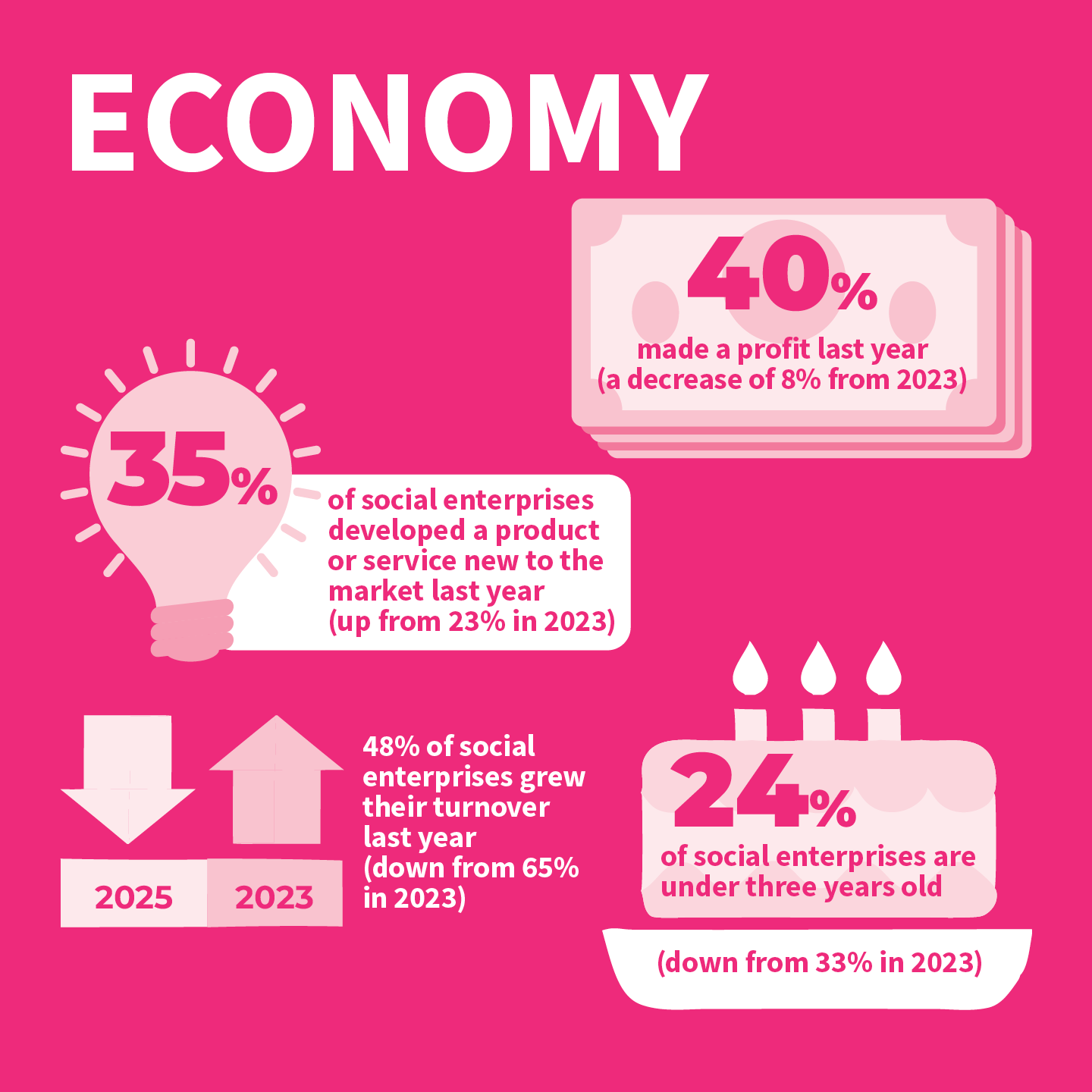
In what’s been a challenging economic climate for all businesses, 48% of social enterprises reported an increase in turnover over the last 12 months. Whilst a significant fall from 2023 levels (65%), this is still 12% higher than other forms of business.
Social enterprises continue to derive the majority of their income from trading, though as a sector, the proportion of income from trading has decreased slightly since 2023. Profitability is also down, with 40% making a profit.
When it comes to trading activities, social enterprises continue to be found across the economy. Education and skills development is the most common trading activity for social enterprises, with business support and consultancy, and the creative industries also being more prominent activities.

Mission and impact
Social enterprises are businesses set up to address some of the biggest challenges we face as a society, using trade to help them achieve their missions.
The report looks at what the main social and environmental objectives of the sector are. With people and communities continuing to be affected by the cost-of-living crisis, the 2025 survey shows that social enterprises are there to help people through the uncertainty, with the most commonly cited objective being to support vulnerable groups (46%). There was also a notable increase in organisations prioritising mental health and well-being.
43% employ people from disadvantaged groups, and over a quarter employ members of their local community.
Workforce and representation
Social enterprises are more representative of the wider population than other forms of business in terms of ethnicity, disability and sexuality.
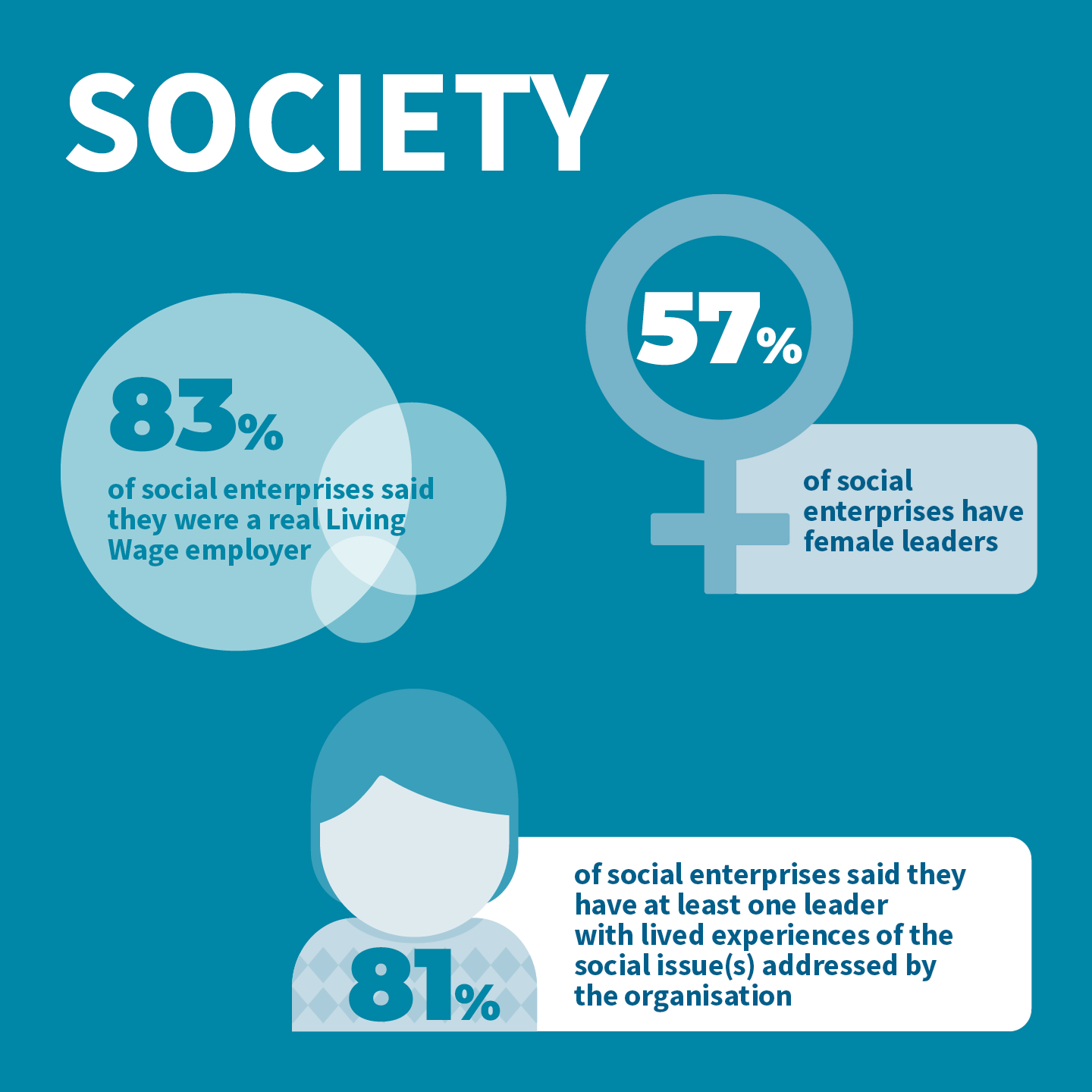
57% of social enterprises are led by women, and 17% of leaders are from a minority ethnic background. 75% of leaders also have lived experience of the social issues their business seeks to address.
When it comes to pay, a vital part of addressing rising costs for the workforce, 83% of social enterprises pay the real Living Wage.
Growth and innovation
Social enterprises are innovators, with 50% having introduced a new product or service in the last year- 35% even developing something new to the market. When it comes to future growth plans, 69% look to develop a new product or service and 68% look to form new public or private sector partnerships.
However, the survey highlighted some key barriers to the sector realising its potential, from difficulties accessing finance to worries about taxation, perhaps linked to the rise in National Insurance contributions.
Within a difficult employment market, social enterprises are also more likely than other businesses to have increased staff numbers over the last year, with 37% having grown their paid staff team.

Environmental sustainability
While some social enterprises prioritise either cost or social and environmental impact when making purchasing decisions, the majority strive to balance both. There has been a slight decline in the adoption of energy efficiency measures compared to 2023 with 26% of social reporting installing energy efficiency measures, representing a decrease from the 33% that did so in 2023.
Despite this, concern about the potential impact of climate change remains high, with 75% reporting being worried about its impact on their business.
Funding and finance
A big part of SOSE looks in depth at how social enterprises engage with external finance. With nearly three-quarters currently using some form of external funding and finance – an understanding of what’s working and what isn’t is vital for ensuring the sector can grow and thrive.
The report shows what types and sources of finance social enterprises are applying for, focusing on repayable finance in its various forms. 60% who applied for funding were successful, but there has been a big decrease in the proportion of businesses securing the full amount of finance they sought.
Find out more about what social enterprises are using finance for, as well as the barriers they face in getting it.
Support and advice
Social enterprises are more likely to use external advice than other forms of businesses, with 77% having used external support providers.
The most common area of support sought was business growth and business planning, with 61% of respondents indicating this need. This was followed by financial advice (45%) and support with marketing (38%).
Find out more about how social enterprises are changing lives, driving innovation and empowering communities on our case studies page.
This report is part of SEUK’s Knowledge Centre, a research hub of social enterprise evidence and insight supported by Better Society Capital and Access – The Foundation for Social Investment. We thank our Knowledge Centre Partners and Fusion 21 for sponsoring this year’s State of Social Enterprise report – your support helps make this work possible.