News and views
Community energy creates social value. How can it scale up?
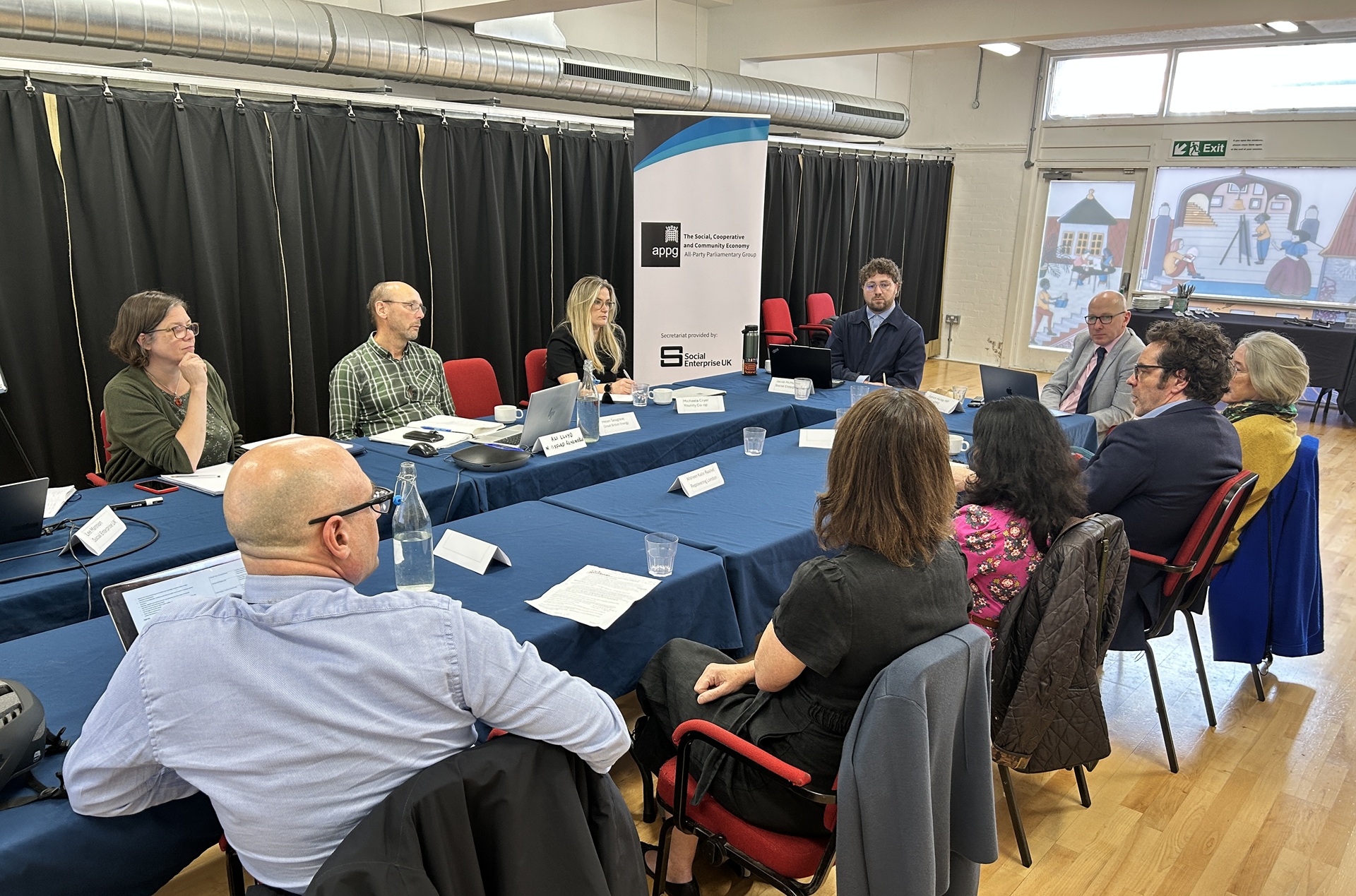
Grid access, funding and revenue certainty are holding community energy back, an evidence session for the Social, Cooperative and Community Econonmy heard.
Although many community energy social enterprises have been patiently plugging away for many years to create locally owned projects that yield a range of social and environmental benefits, they’re now at the centre of a major government initiative.
Established in law in 2025, Great British Energy (GBE) will invest more than £8.3bn over this Parliament to accelerate the country’s transition to clean power. GBE’s Local Power Plan aims to “revolutionise the UK’s local and community energy sector”.
There are more than 600 community energy organisations in the UK, and more than half are community benefit societies, co-operatives or community interest companies, according to Community Energy England. Some 140 manage a community benefit fund, distributing almost £4m.
They include Ambition Community Energy CIC, which, over seven years, built the tallest onshore wind turbine in England, in Lawrence Weston, near Bristol. The profit it makes from selling energy to the grid is being reinvested in the community, including helping local people experiencing fuel poverty. It will also support an Energy Learning Zone, the base for a skills academy for people aged eight to 80.
As well as a just transition to clean energy, it was this kind of social value that attendees of the latest meeting of the All-Party Parliamentary Group for the Social, Cooperative and Community Economy wanted to see recognised.
Chaired by Patrick Hurley MP, the evidence session brought together community energy groups, investors and national bodies, alongside Great British Energy and the Department for Energy Security and Net Zero. Attendees set out the obstacles holding the sector back, and their ideas for overcoming them.
Connecting to the grid
Ailsa Clark, founder of InspirAlba, a Campbeltown social enterprise that helps rural communities in Argyll and Bute build sustainable businesses, said the cost of joining the grid queue is a major barrier. To secure a connection, developers often have to put money down early, including financial security against the cost of network works, which they can lose if the project is cancelled. “Most community or municipal-owned developments are unable to take the risk of putting a big chunk of money down well in advance to get themselves in the queue,” she said.
Helen Seagrave, Director of Local Energy at Great British Energy, responded by saying that GBE is looking at how it can de-risk community projects, including by acting as a partner in them.
Funding volunteer-led organisations
Many community energy organisations are run by volunteers, and the Local Power Plan mainly funds individual projects rather than the organisations behind them. “I don’t think we’re going to get to scale if we’re relying on the goodwill of fabulous people to give up their spare time,” said Michaela Cryer, Managing Director of Younity (a partnership between Midcounties Co-op and Octopus Energy). “We need more paid support to really get these projects moving.”
Even established groups are stretched. Afsheen Kabir Rashid, CEO of Repowering London, said the co-op relies on grants for 90% of its income. “It’s very hard to manage an enterprise based on project funding,” she said.
Revenue certainty
To raise money through community shares, bonds or loans, projects need a reliable long-term income. The feed-in tariff used to guarantee that, but it closed in 2019. Its replacement, the Smart Export Guarantee, only requires suppliers to pay something above zero, and Contracts for Difference, which give large developers a guaranteed price for 15 years or more, exclude projects under 5MW. Deals with suppliers are short term too. “From a supplier’s perspective, the market is only there for three years,” said Barbara Hammond, CEO of Low Carbon Hub, who described the lack of revenue certainty as the biggest barrier.
The difference certainty makes is clear in Kintyre. Fyne Energy, where Clark is a director, developed and built three community-owned turbines with a combined capacity of 6.9MW. They were projected to earn around £750,000 a year for local housing, employability and community projects, but are now making £1.2m to £1.5m a year. The turbines still receive feed-in tariff payments, which give them a guaranteed income floor, and they also sell their power. When wholesale prices soared during the energy crisis, that extra revenue went straight to the community.
Measuring community wealth, not just megawatts
Attendees argued that the Local Power Plan should be judged by the community wealth it creates, not just the megawatts it adds. Hammond said the plan is there “to scale that impact, not to scale the input”. Matthew Vickers, CEO of Community Energy England, said community energy brings together “two streams of value that not many places do”: benefits for the place, and for the energy system, because local generation can reduce the need for new grid infrastructure.
The clearest message was that community energy should be treated as part of Britain’s economic and social infrastructure, not simply another way of generating electricity. That means patient capital, investment in local organisations as well as installations, community ownership of larger schemes, public procurement that values social impact, and a clear role for Great British Energy.
The evidence will feed into the APPG’s inquiry, including the community energy chapter of a report due in 2027.