
News and views
The rules are there – so why aren’t councils using them?
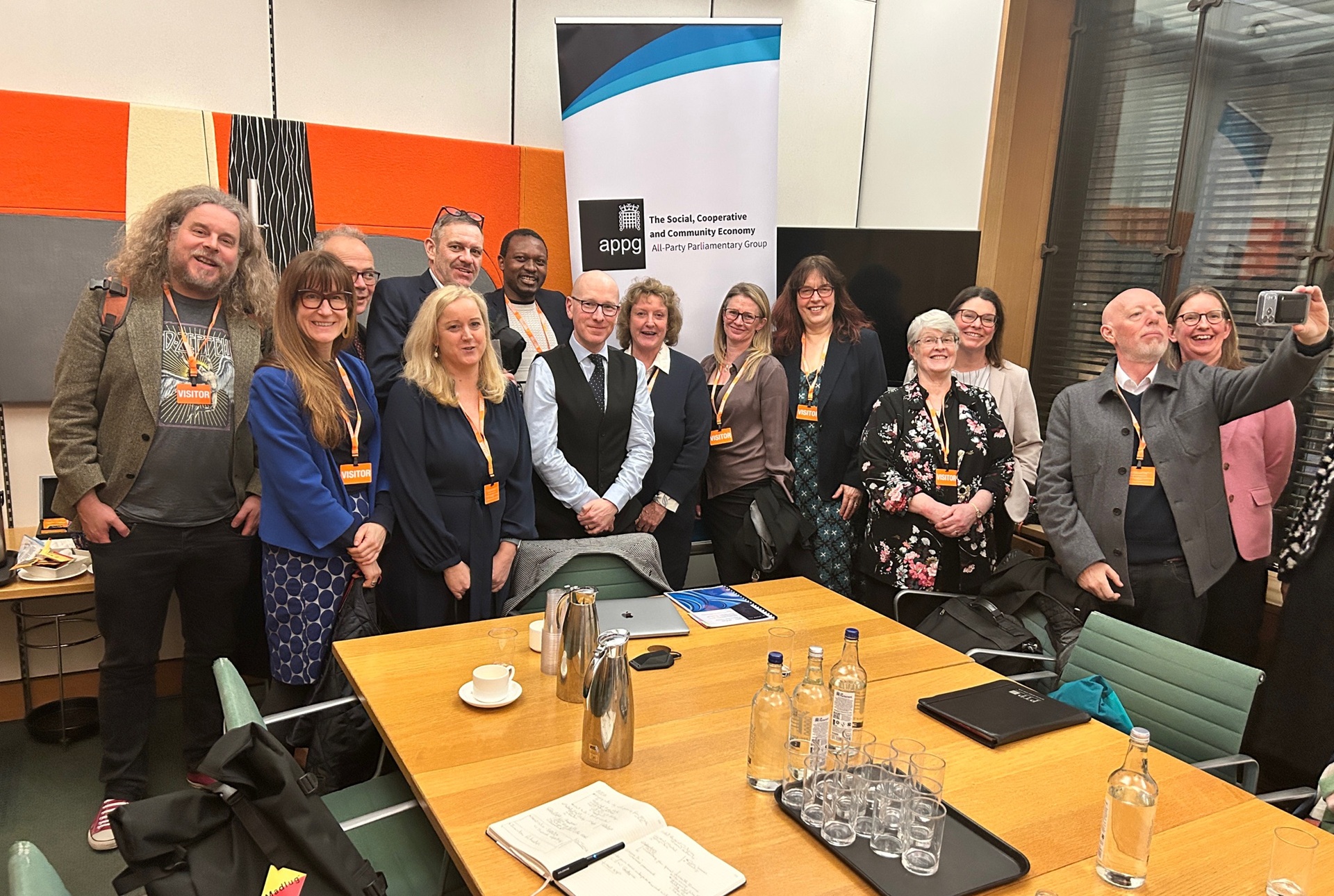
Social enterprises, local authority councillors, corporate supporters and legal experts recently met with MPs to discuss why existing procurement legislation is failing to deliver the social value it promises – and what needs to change. Why are local authorities not making greater use of the powers they already have to procure from voluntary, community and social enterprise (VCSE) organisations? That question framed the latest meeting of the All-Party Parliamentary Group on the Social, Cooperative and Community Economy, chaired by Patrick Hurley MP. Social enterprises, councillors, corporate partners and legal experts shared evidence with MPs on the barriers preventing procurement legislation from delivering greater social value through public supply chains. The backdrop for the discussion was the Procurement Act 2023 and the National Procurement Policy Statement, which together set clear expectations that public bodies should use procurement to deliver wider social, economic and environmental outcomes. The challenge under scrutiny was straightforward: if the legislative levers already exist, why are so few councils using them effectively? Is TOMS the wrong tool? A consistent theme was the over-reliance on the Themes, Outcomes and Measures (TOMS) framework as a proxy for social value. Mark Simms, Group Chief Executive of P3, argued that TOMS is poorly suited to people-centred services. He described procurement exercises where required metrics – such as apprenticeship numbers or job creation – bore little relation to the realities of service delivery. This, he argued, disadvantages honest providers while rewarding those willing to over-promise. Sandra Hamilton, Consultant at Stone King LLP, went further, suggesting that people-focused services require a fundamentally different procurement approach. With adult and children’s social care now accounting for an estimated 75% of local authority spending, she argued that a one-size-fits-all market procurement model is structurally unfit for purpose. Bristol City Council has already acted on this insight. Councillor Sibusiso Tshabalala confirmed that the authority has moved away from TOMS entirely, replacing it with contextual measures aligned to contract size and local priorities. Capacity, risk and the guidance gap Anne Epsom, Assistant Director at Surrey County Council, offered a candid local authority perspective. She acknowledged that under-resourced councils often default to TOMS because it is readily available and familiar. Her call was for clearer, centralised guidance: a shared methodology that would reduce the burden on individual officers trying to drive best practice through lengthy internal processes. She also highlighted the persistent gap between what the Procurement Act mandates for central government and what is binding on local authorities – a distinction that undermines consistency and ambition. Levelling the playing field Terry Murphy, CEO of Sheffield Social Enterprise Network, proposed a simple structural change. Rather than requiring social enterprises to repeatedly evidence their social value through lengthy tender responses, commissioners could ask a single, binary question: is the organisation legally required, through its governance, to deliver social or environmental benefit? Verification could be as straightforward as a Companies House check, with a positive answer attracting a score. If social value is embedded in an organisation’s legal structure, Murphy argued, it should not need to be restated in every procurement exercise. Amanda Johnston of Social Enterprise Northern Ireland highlighted another underused lever: government minimum thresholds. A small legislative amendment allowing direct awards to social enterprises below this level, without challenge, could significantly increase access to public contracts at the lower end of the market. Towards honest procurement A broader cultural shift also emerged as essential. Several speakers called for a move from transactional to relational procurement, particularly in complex, people-centred services. Mark Simms reflected on P3’s role in the Covid-era Everyone In programme, where services were mobilised rapidly on the basis of trust and shared risk to safeguard homeless people from infection, often before contracts were finalised. Transparent discussions about costs, risks and delivery constraints enabled faster and more effective responses. He described this as an example of “honest procurement” – focused on problem-solving rather than contractual compliance. Sue Racster from Amey echoed this approach, describing the company’s shift towards more intentional partnerships with VCSEs, shaped by listening to what social enterprises need in practice rather than imposing top-down solutions. Accountability and transparency Finally, Councillor Tshabalala raised the issue of accountability. He proposed the use of civic platforms rooted in neighbourhood forums, enabling communities themselves to verify whether promised social value has been delivered locally. Such approaches could build on existing place-based infrastructure and give residents visibility over commitments made in their name. He also highlighted a persistent imbalance: while councils routinely require suppliers and grant recipients to report on impact, they publish no equivalent account of the social value generated through their own procurement. A standardised framework for annual social value reporting by local authorities, aligned with budget decisions, could close this gap and strengthen public accountability. What happens next The APPG will continue to gather evidence throughout April, with a report expected in late spring or early summer. The aim is to clarify what local authorities can already do under existing legislation – and to identify where further changes to law, guidance or practice are needed to unlock the full potential of social value in public procurement.
4 min