News and views
Bringing together cross-sector leaders to shape the future of social value – reflections on the Social Value Leaders’ Summit
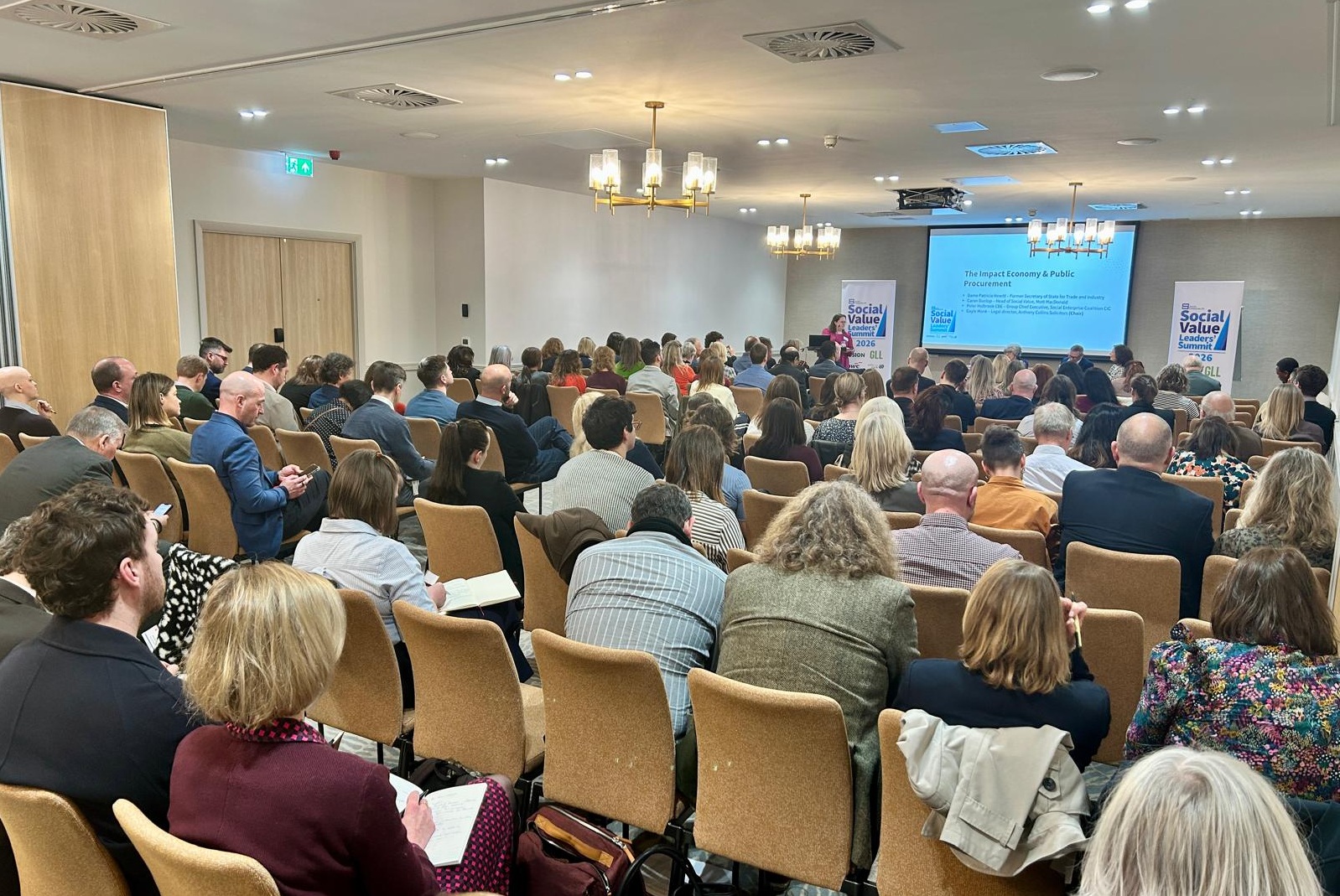
On Wednesday 25 March 2026, leaders from across the private, public and social enterprise sectors came together at the Strand Palace Hotel to discuss and debate the future of social value, one year after the passing of the Procurement Act and the opportunities it presented to social enterprises.
The Summit opened with an introduction from Nancy Park, Social Value leader at event partner PwC. She set the tone for the day, stating that “social value is no longer a footnote, it is a differentiator.”
Josh Babarinde OBE MP delivered our opening keynote and praised the bold language of the government’s National Procurement Policy Statement (NPPS) and its commitment to maximising procurement spend with VCSEs.
Yet he was frank about the gap between ambition and reality: over the last five years, only 4% of public sector contracts were won by social enterprises, and only around 5% of the sector engages in government contracting at all, hinting that he had some idea why that was.
As a former social entrepreneur himself, he said he understood the burden of completing a 200-page pre-qualification document as a small organisation with limited resources.
His verdict on the ambitions of the Procurement Act were frank: “The Act gave us the tools, the statement gave us the direction, what we now need is the political will to follow through and the cultural change needed across the economy.”
The gap between policy and practice proved to be a recurring theme throughout the day.
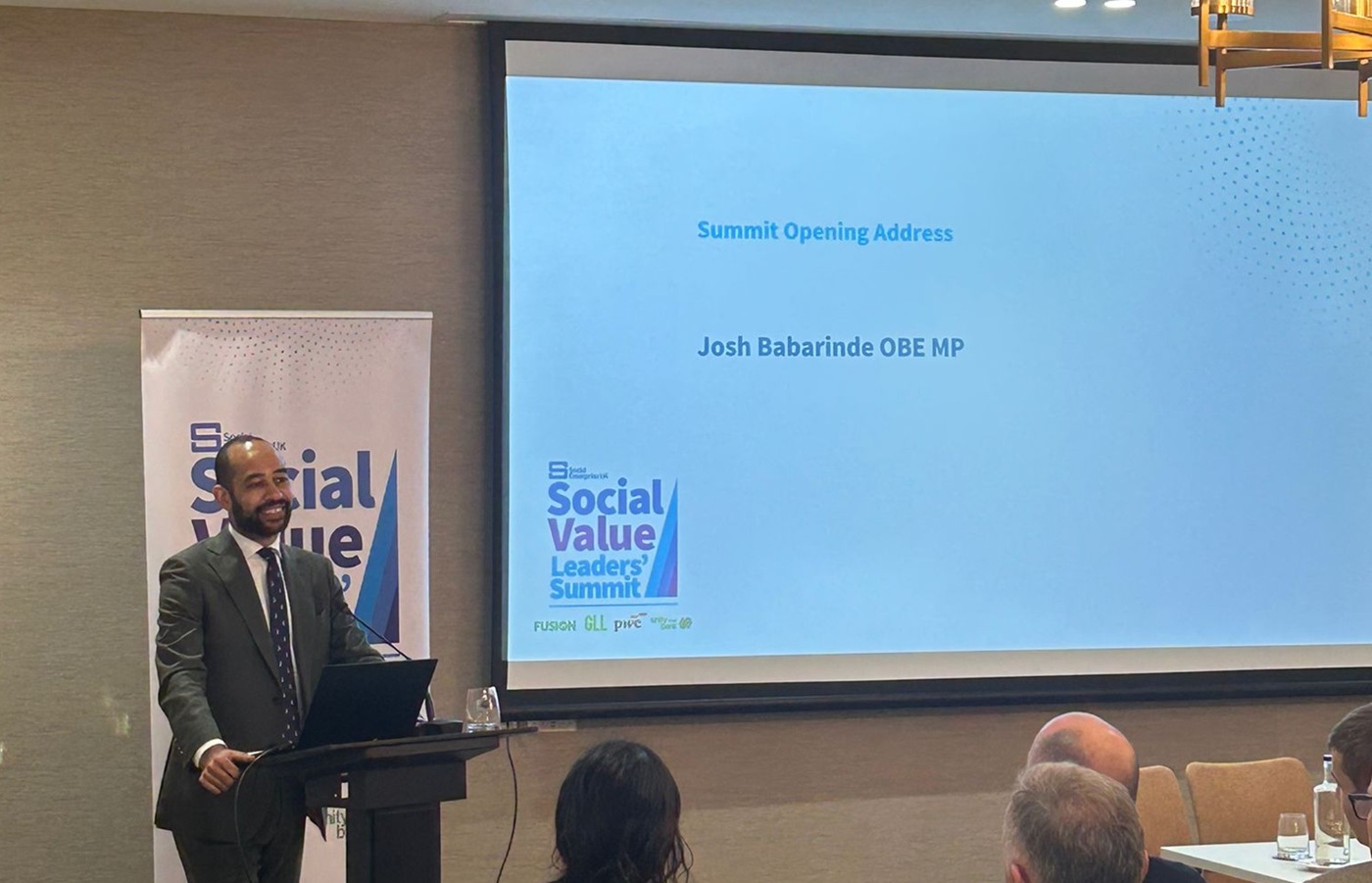
Josh Babarinde OBE MP
Co-creation, missions and creating a common good economy
Our second keynote was delivered by Mariana Mazzucato CBE, Professor in the Economics of Innovation and Public Value at University College London, who in a sweeping speech covered everything from the social value inherent in the Notting Hill Carnival to the moon landings.
The overarching themes of her speech were the importance of co-creation and lived experience in designing procurement systems, the importance of uniting across sectors to tackle the “wicked challenges” we collectively face, and the need for new economic thinking to underpin systems and create a “common good economy”.
She gave a passionate argument for embedding missions as a unifying factor to bring different economic actors together around a common purpose, and also warned of the dangers of the state being too reliant on outsourcing to consultants when it should be empowered to proactively shape markets, not just fix them.
But what of procurement? Professor Mazzucato stressed the vital role of procurement in driving forward towards an economic system that works for people. It can be a tool to work with communities to shape services and can also serve to unite sectors in a common purpose, creating new markets and directing spend towards the achievement of a particular goal – after all “the first thing they did to get to the moon was redesign procurement.”
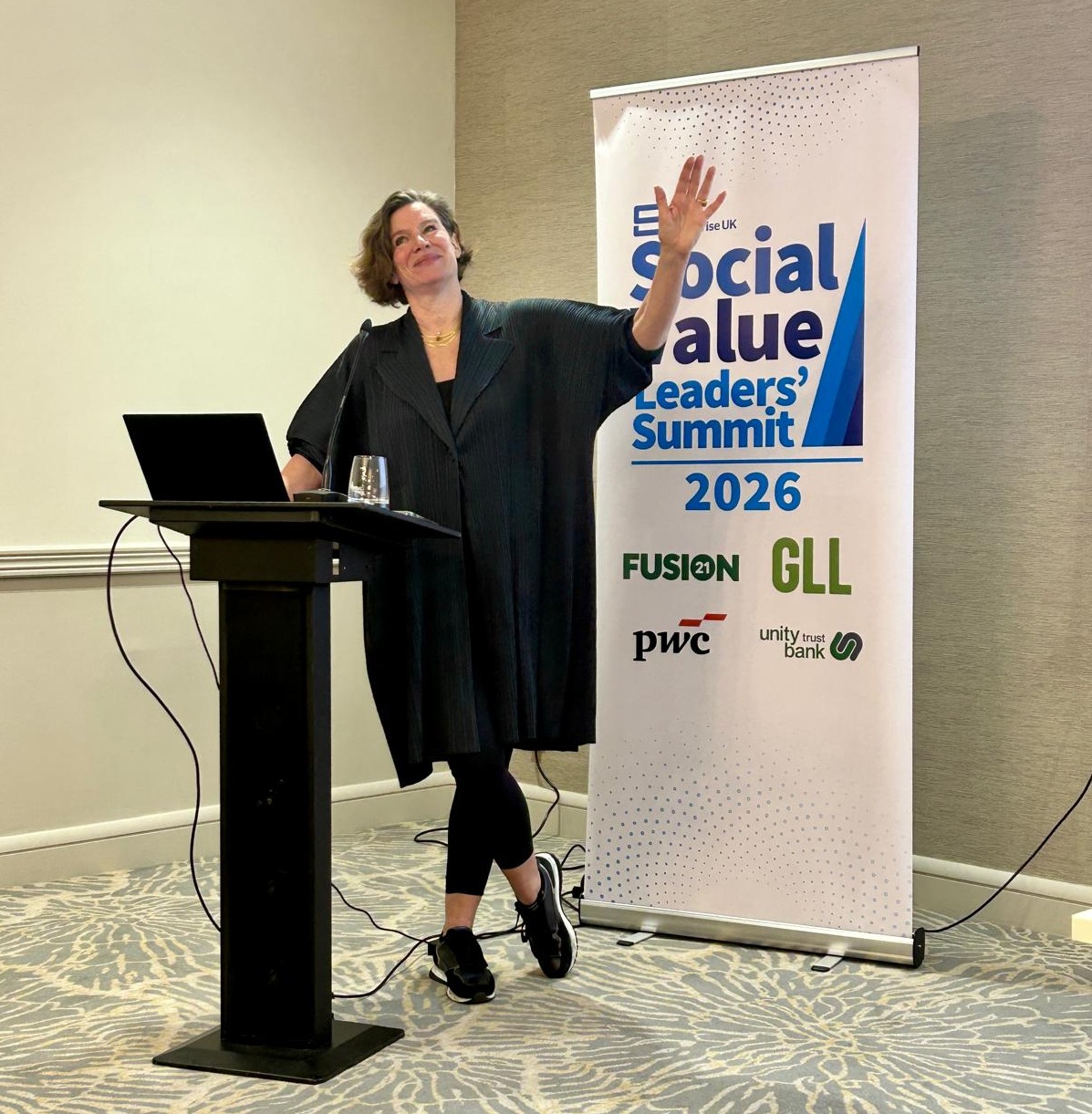
Professor Mariana Mazzucato CBE delivering her keynote
How is public sector procurement changing and what is the role of the impact economy?
Crown Representative for the VCSE sector Claire Dove CBE confirmed that VCSE spend targets set under PPN01 (a procurement notice looking at how central government departments should implement the NPPS) will be subject to quarterly ministerial review and re-profiled upward if insufficiently ambitious. Both she and the Department of Transport’s Robert Vaughan stressed the importance of VCSEs registering on the new central digital platform, noting that a “lack of pipeline visibility” remains a key barrier to more VCSEs being in the supply chain.
Jo Jarvis of National Highways recognised progress in more VCSEs being in supply chains, but agreed with Babarinde, who had earlier highlighted the limitations in government department VCSE spend being only recognised on direct contracting. Jarvis also that this should be extended to indirect spend as well, given that so much work is done through sub-contractors.
What was apparent from the panel was that this is very much a turning point for how government departments engage with social value and in government being held accountable for purchasing from social enterprises. As Claire put it, “the conversation on how to build in social value is (now) normal.”
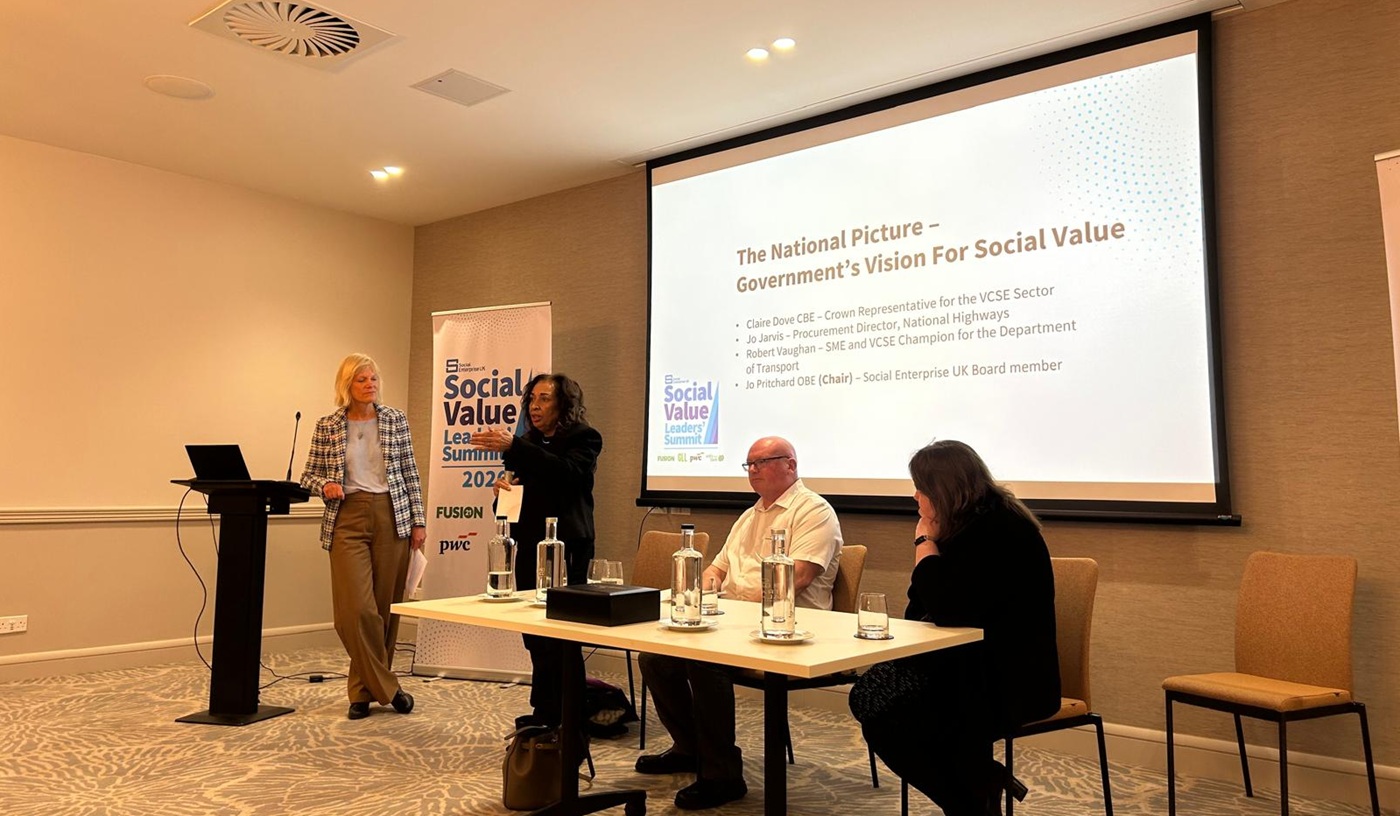
Jo Pritchard OBE, Claire Dove CBE, Robert Vaughan and Jo Jarvis
The final panel session of the morning looked at how recent developments, such as the creation of the Office for the Impact Economy affect and impact public procurement and social value. Dame Patricia Hewitt opened by stating that “there has been a huge amount of positive change on social value over the recent years.” However, the main focus of the discussion hinged on the reality of the challenges social enterprises are currently facing, and the limitations of the Office for the Impact Economy, with Peter Holbrook saying that it’s “focus on philanthropy and impact investment should be a means to an end rather than an end in itself.”
Whilst talk of the impact economy was welcome, there is a danger that government may forget the immediate issues facing social enterprises from the impact of the rise in employer NI contributions to how social enterprises working within the NHS have once again been left out of being funded to meet a new NHS pay deal, which will make it harder for them to compete with other organisations in the health service. Caron Dunlop, speaking from her experience driving social value at Mott MacDonald, said that the Office for the Impact Economy is, “part of a long-term journey to bring change” and that theres is a need to improve contract management, saying that “contract management is where the gaps are” when it comes to unlocking real social value.
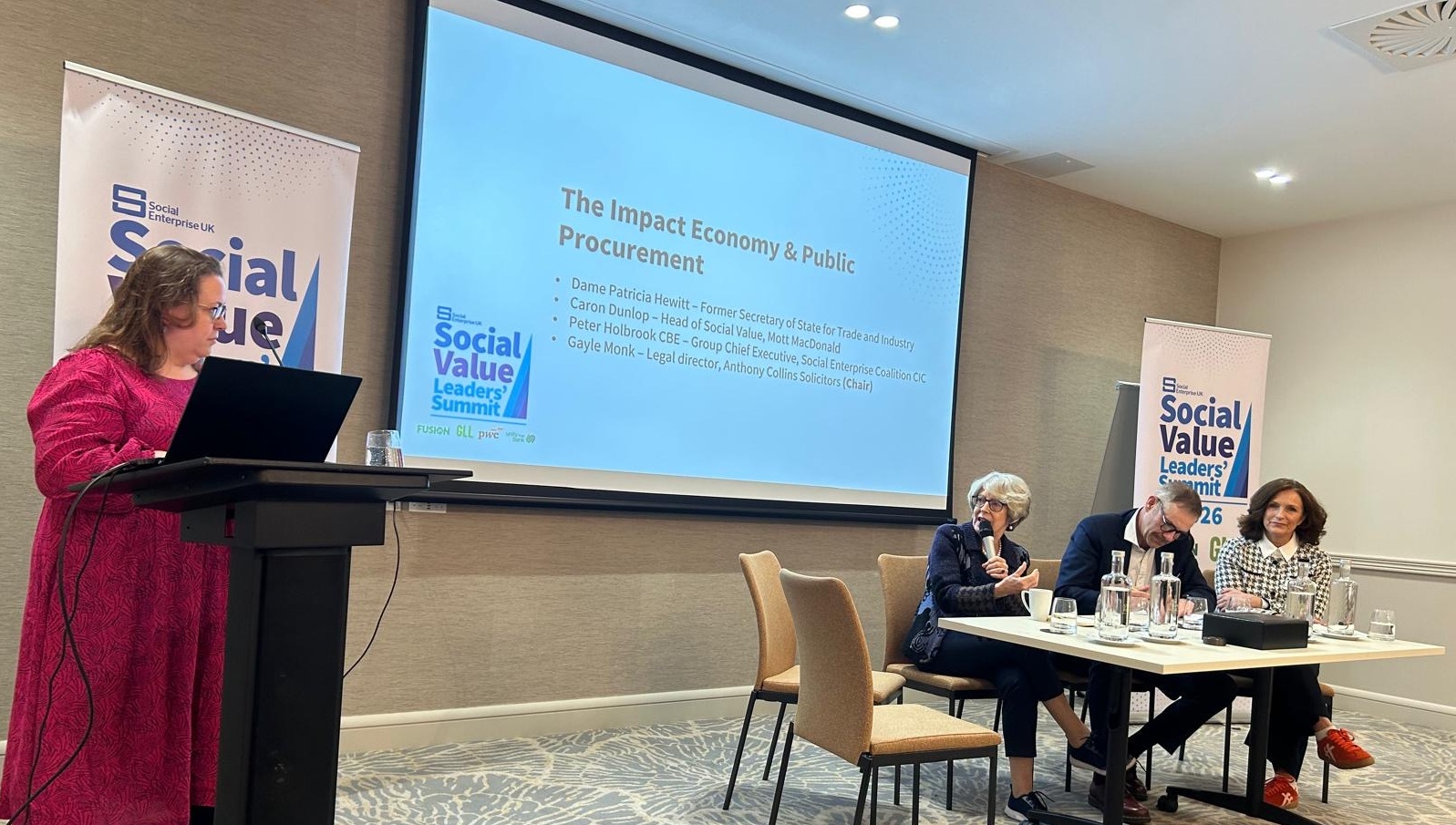
Gayle Monk, Dame Patricia Hewitt, Peter Hobrook CBE and Caron Dunlop
Bringing the experiences of those in the room to the front of discussions
Workshop discussions highlighted three consistent themes: social value is too often treated as an add-on rather than a core contract requirement; buyers and suppliers need to agree desired outcomes upfront rather than leaving social value to be measured retrospectively; and impact measurement tools such as the TOMs framework risk shifting focus away from real outcomes and towards a tick-box exercise. Some of these insights will be included in a report by the All-Party Parliamentary Group on the Social, Cooperative and Community Economy later this year.
A big thank you to our workshop chairs for facilitating the discussions and feeding back to the whole room – Clare Connolly, Gareth Hart, Alison Ramsey and Kate Welch.
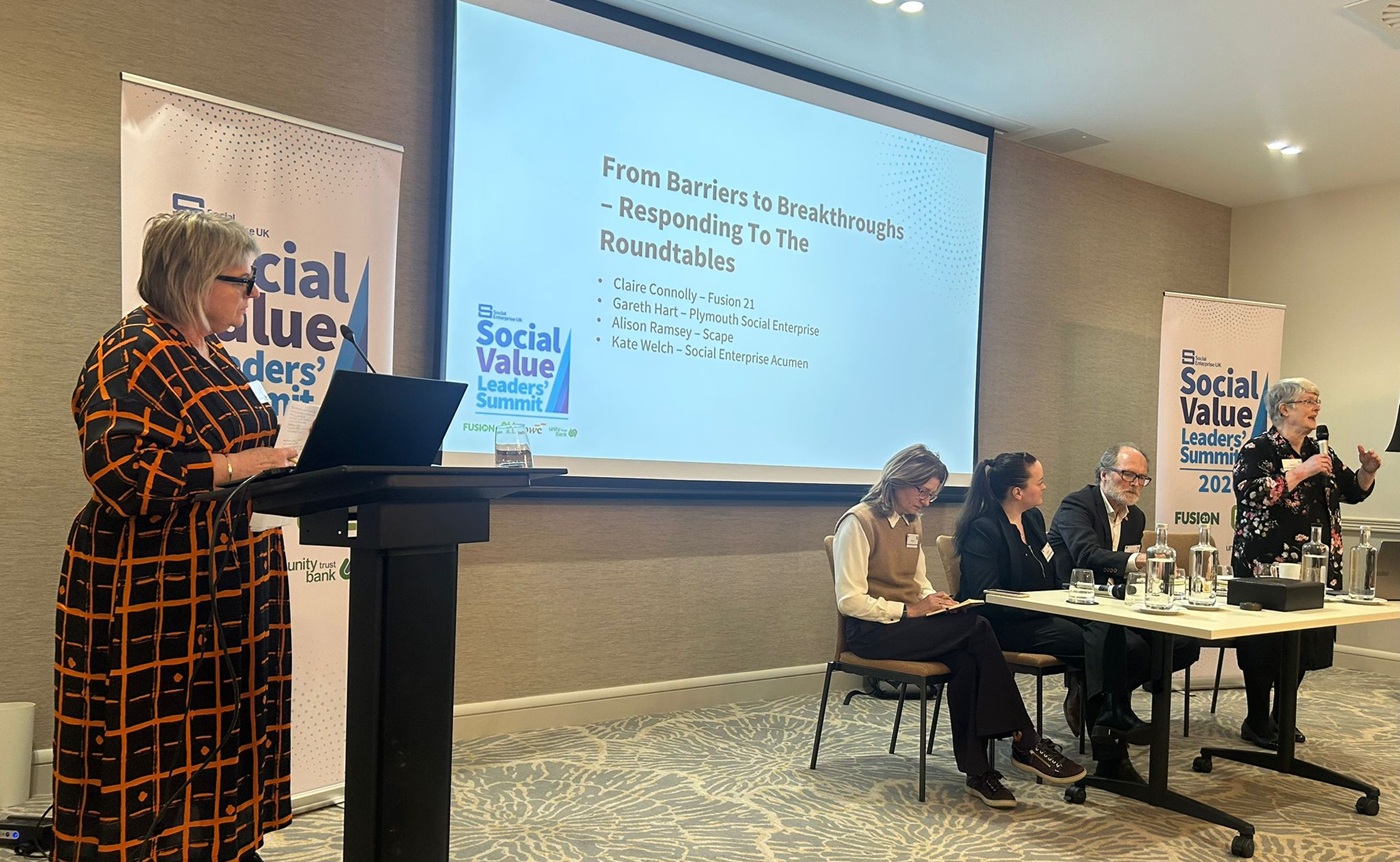
Sarah Crawley Beaumont OBE, Alison Ramsey, Clare Connolly, Gareth Hart and Kate Welch OBE feeding back the findings of the roundtables
From rewilding to community energy – combining environmental and social impact
What have beavers got to do with social value? This is one of the things we found out from Deputy Mayor of London for Environment and Energy Mete Coban MBE, who not only mentioned the rewilding of London (introducing beavers back to the city – the first two being called Justin and Sigourney Beaver…) but how effective environmental policy is fundamentally linked to improving social outcomes and the lives of disadvantaged communities who are disproportionately impacted by the climate crisis.
He talked about how Hackney Light and Power, a community energy scheme, inspired Ed Miliband to create Great British Energy and how investment in renewables and in community energy can empower local communities to take control of their own energy and save money on their bills.
Echoing Professor Mazzucato’s comments on the need to co-create and include communities in decision-making, Mete ended his speech by stressing that “how you do policy is important – you’ve got to bring communities into it.”
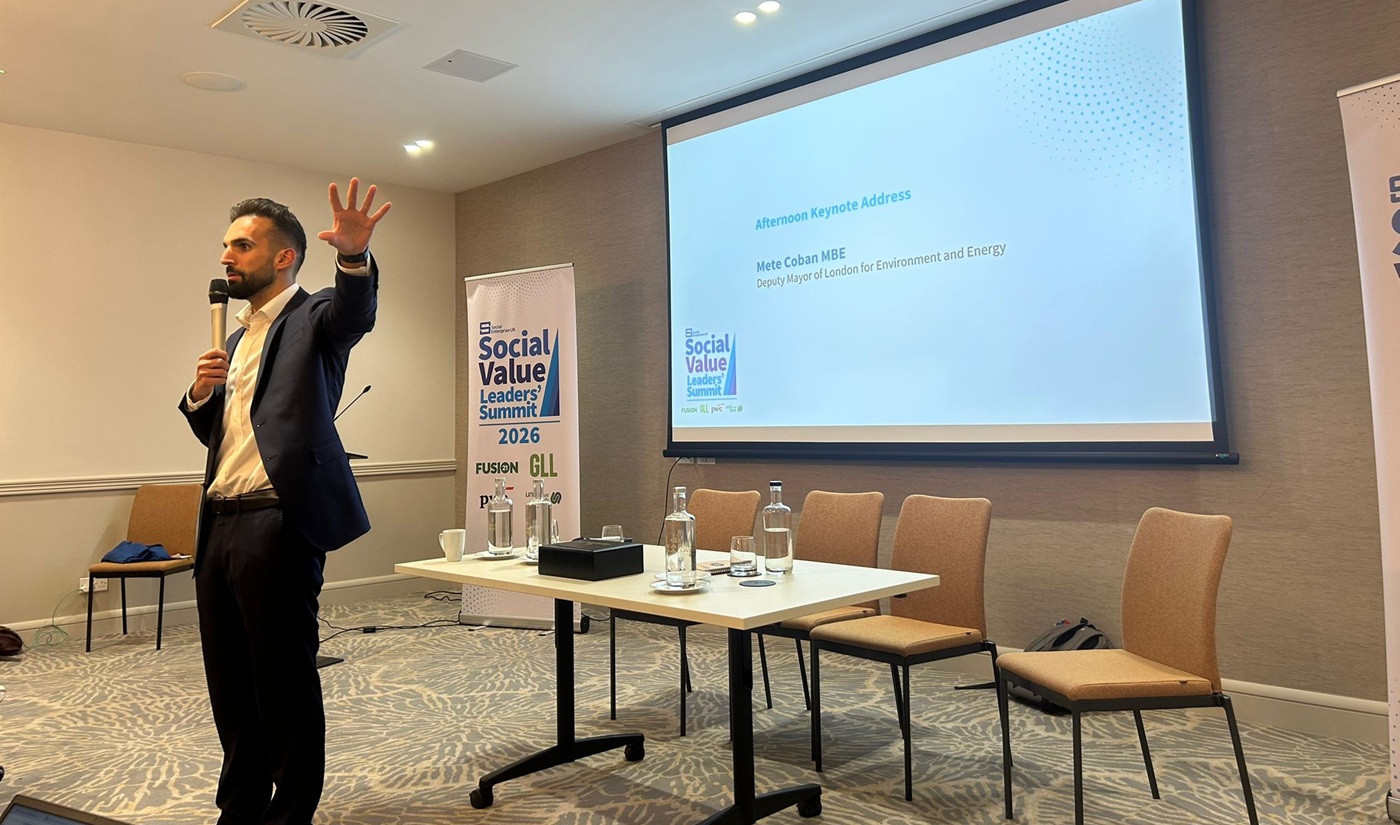
Mete Coban MBE delivering the afternoon keynote
A new way to fund social value
Innovation like this was also on show in the final session on new ways to fund social value. Karl Harder introduced Abundance, an investment platform that allows the public to invest in local authority schemes and receive interest on their investment – a low-cost borrowing model for councils that builds trust and creates a “community of place-based citizen lenders.” Matthew Conroy concluded the proceedings by showing how Unity Trust Bank is offering an alternative to mainstream banking with its commitment to investing in social enterprises and other purpose-driven organisations.
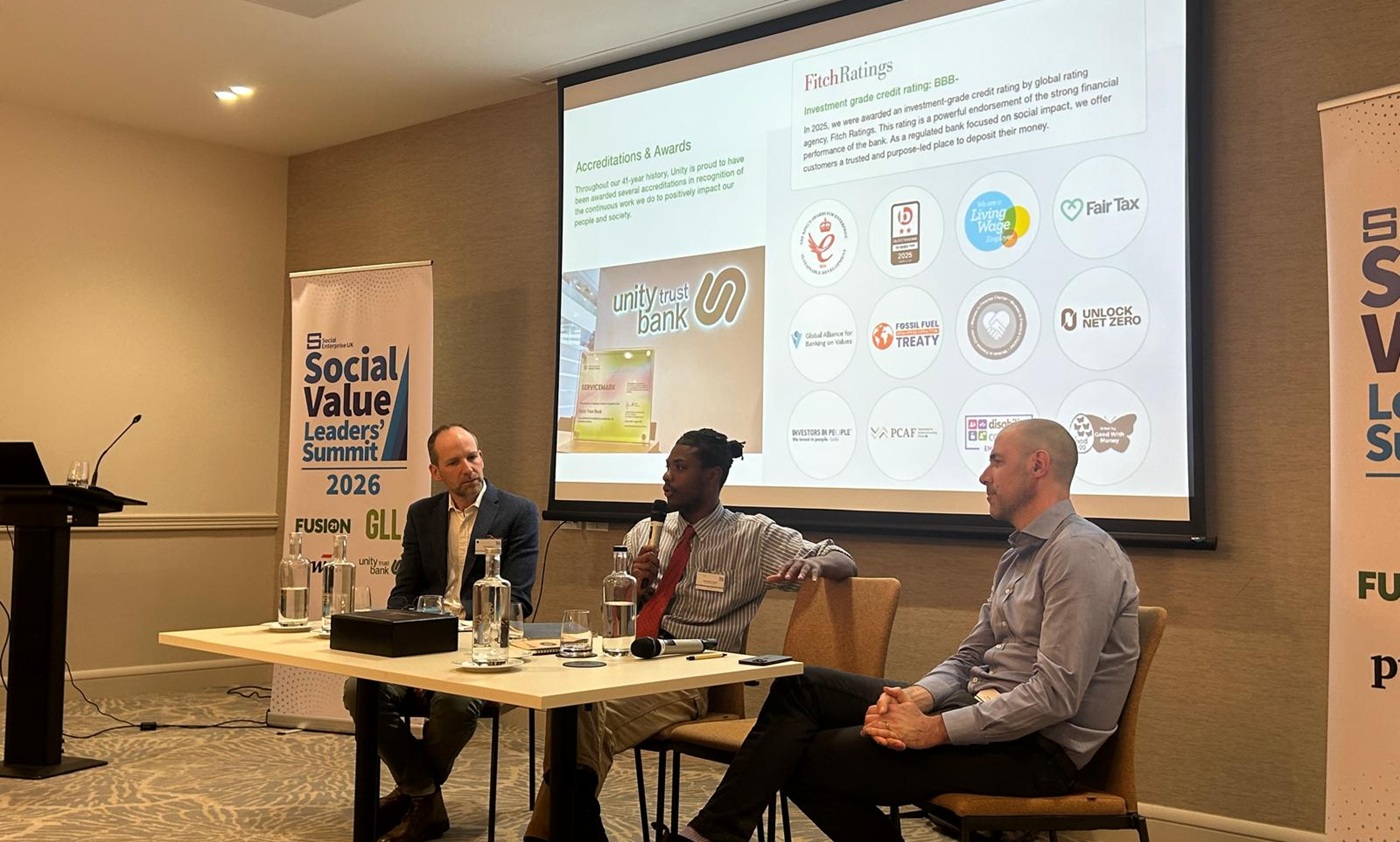
Matthew Conroy, Jovan Owusu-Nepaul and Karl Harder
Thank you to all our speakers and to everyone who took part in the Summit, especially our partners – Fusion21, GLL, PwC and Unity Trust Bank. Big thank you to our fantastic compere, Sarah Crawley Beaumont OBE and to the Strand Palace Hotel for hosting the event.

Our Social Value Leaders’ Summit partners
Continue the conversation and join the Better Commissioning Coalition
What was clear throughout the summit was that we’re at a pivotal moment when it comes to embedding social value in public and private sector procurement. The ambition is there to use social value as a tool to improve the livelihoods of communities up and down the UK, but the practicalities of embedding it across contracts remain difficult, with too many barriers still in place for both VCSEs and the forward-thinking organisations which look to work with them. The Better Commissioning Coalition seeks to bring together a group of cross-sector experts committed to developing a programme of work that demonstrates what procurement can do when social value is placed at its core. If you’re interested in finding out more or would like to be a part of this timely, exciting new programme, visit this page and fill out the expression of interest form at the bottom.
The Social Value Leaders’ Summit Summary Report
This short report summarises some of the key discussion points which emerged from the workshops, panel discussions and keynote speakers.
It brings together an overview of the recent changes to the procurement landscape and the opportunities they provide for VCSEs, and also looks in detail at the main challenges raised by attendees when it comes to embedding social value at the heart of public and private contracts.